
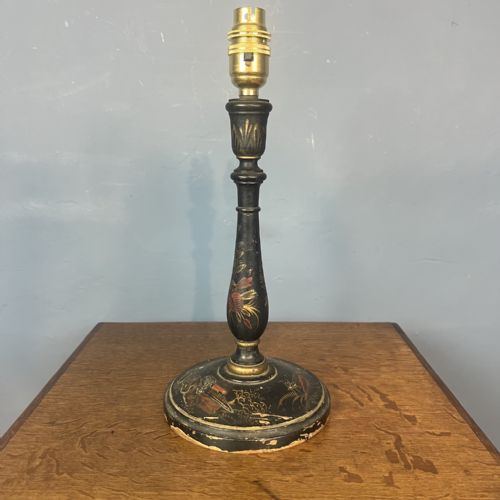
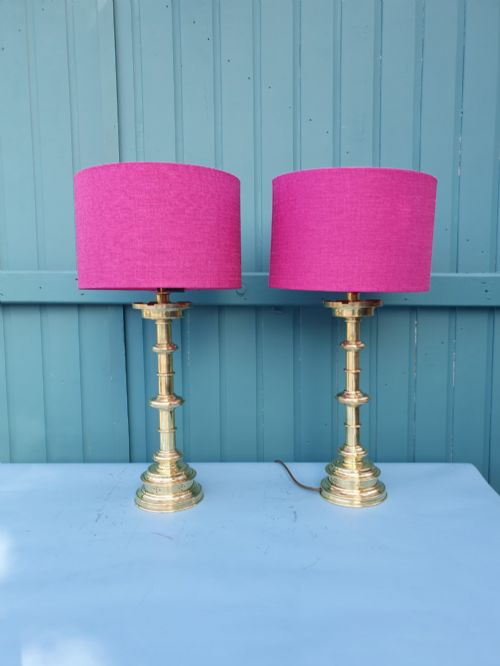


Turned Brass Lamp
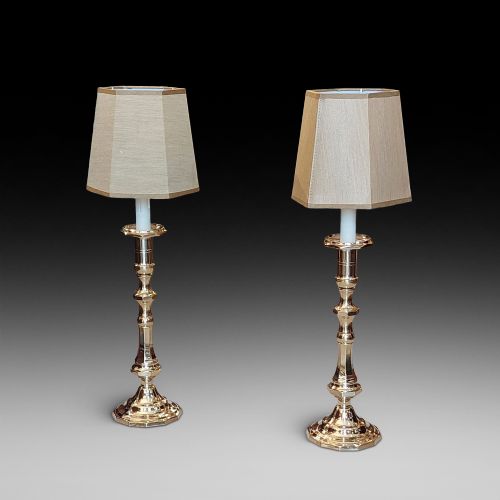
These turned brass lamp examples bring solid metal construction and period character to a room, offering both practical illumination and genuine historic presence.
Turned Brass Lamp
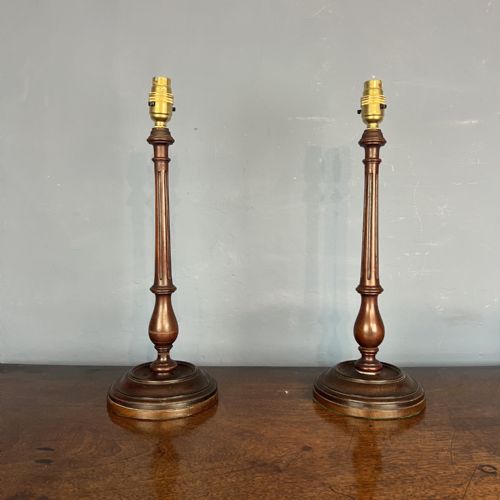
A turned brass lamp draws on the craft of the metalworker, shaping solid alloy on a lathe to create balanced columns and weighted bases. When you search for a turned brass lamp, you encounter pieces spanning the nineteenth and twentieth centuries, from austere Victorian candlesticks converted for electricity to decorative Edwardian standards and later twentieth century designs.
The forms on this page include table lamps, desk lamps, and taller floor lamps, often appearing as pairs alongside single specimens. Alongside standard polished metal, you find examples incorporating painted surfaces, glass components, or mounted marble bases, reflecting the tastes of successive decades from eighteen ninety to nineteen thirty.
Assessing quality
Quality in a turned brass lamp rests upon the crispness of the lathe work and the weight of the metal utilised in the construction. Superior examples display deep, clean mouldings and heavy gauge brass that resists bending, whereas lesser pieces rely on thin pressed sheet metal and hollow components.
The integrity of the original components also dictates the standing of a piece, with factory turned threads and intact weighted bases marking out better workshops. Surface finish plays a role, with carefully polished or naturally aged patination outranking modern lacquered coatings that obscure the underlying metal.
Materials paired with brass across these records include marble, glass, oak, and painted finishes.
Holland & Sons
The Turned Brass Lamp Glossary
- Lathe turned
- A manufacturing process where metal rotates against a cutting tool to create symmetrical cylindrical or vase-shaped columns. This technique produces the characteristic rings and profiles found on period stems.
- Pricket lamp
- A lighting form featuring an upward-pointing metal spike originally designed to secure a wax candle. Converted versions retain this central spike while concealing electrical wiring.
- Secessionist
- A stylistic movement from the late nineteenth and early twentieth centuries favouring geometric forms and stylised floral motifs over ornate historicism. This influence appears in streamlined brass bases from nineteen hundred.
- Benson style
- A design category associated with nineteenth-century metalwork featuring clean lines, adjustable joints, and copper or brass construction. These pieces reflect Arts and Crafts ideals of utility and honest material.
Turned Brass Lamp: Frequently Asked Questions
How do I date a turned brass lamp?
Dating relies on examining the wiring channels, switch types, base construction, and stylistic cues such as reeding or stepped footings. Victorian examples often show heavier castings and conversion evidence from oil or candle use, while nineteen thirty versions incorporate glass shades and integrated switches.
Secondary materials provide further clues, as marble mounts and painted brass details align with Edwardian and interwar manufacturing preferences. Comparing the assembly methods against known period furniture and lighting standards helps narrow the decade of production.
Were these always electric lamps?
Many survivors started life as oil lamps, paraffin burners, or candlesticks before receiving electrical conversions in the twentieth century. Component adaptations, such as threaded brass bushings replacing original burners, indicate these secondary changes.
Original factory-wired examples become more common toward nineteen twenty and nineteen thirty as domestic electricity supply expanded. Traces of soot, wax residue, or burner galleries often survive beneath the modern bulb fittings on earlier pieces.
Can I use modern shades on these lamps?
Standard shade carriers and bridge fitters accommodate most contemporary shades provided the harp or shade ring matches the bulb holder diameter. Standard slip rings and spider fittings suit the typical bayonet or screw sockets found on these standards.
Proportion remains the primary consideration when selecting a replacement shade, ensuring the diameter complements the weighted brass base without causing instability. Historic fabric or glass shades matching the period of the base offer an alternative aesthetic.
How should I clean polished brass?
Gentle dusting with a soft, dry cloth preserves the aged patina that accumulates over decades of handling and exposure to air. Avoid abrasive metal polishes that strip away the historical surface character and leave an overly bright finish.
If cleaning is necessary, mild soapy water applied with a soft sponge removes grease before immediate drying with a lint-free towel. Unlacquered brass responds best to minimal intervention, allowing natural oxidation to continue developing.