



Brass Tripod Lamp
A brass tripod lamp brings industrial weight and warm metal reflection into a room, spanning Victorian oil burners to early twentieth-century adjustable designs.
Brass Tripod Lamp
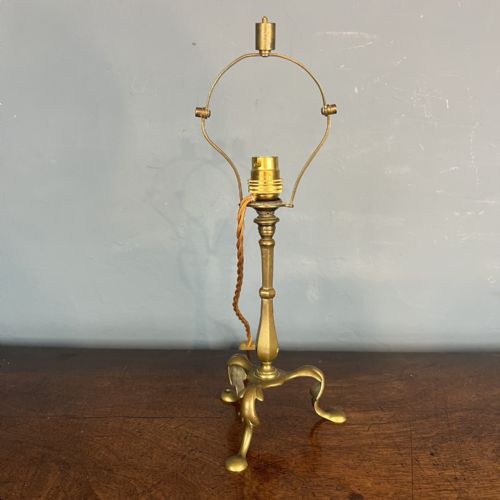
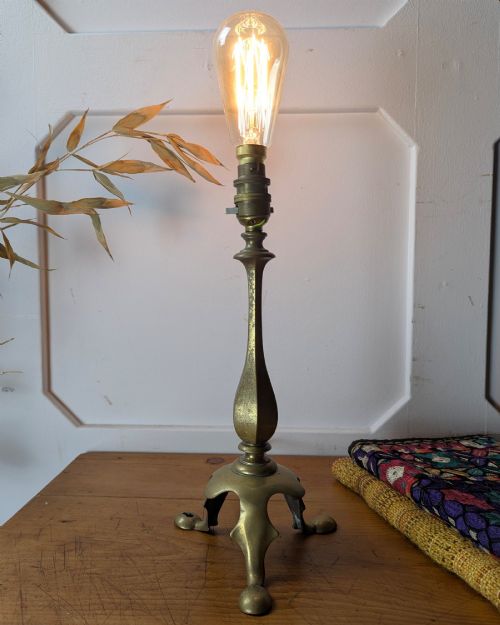
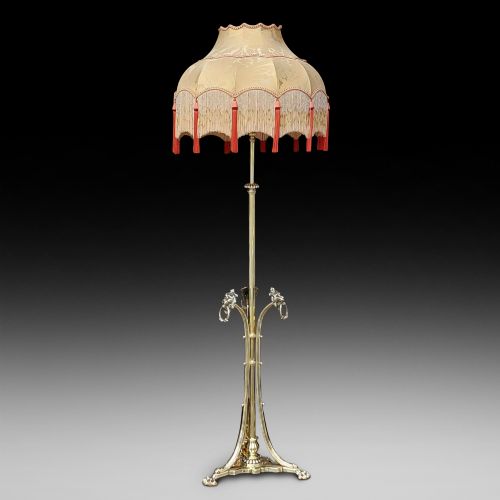
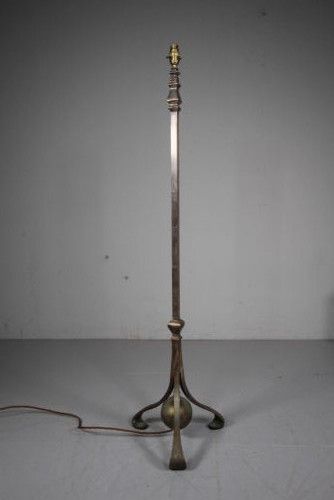
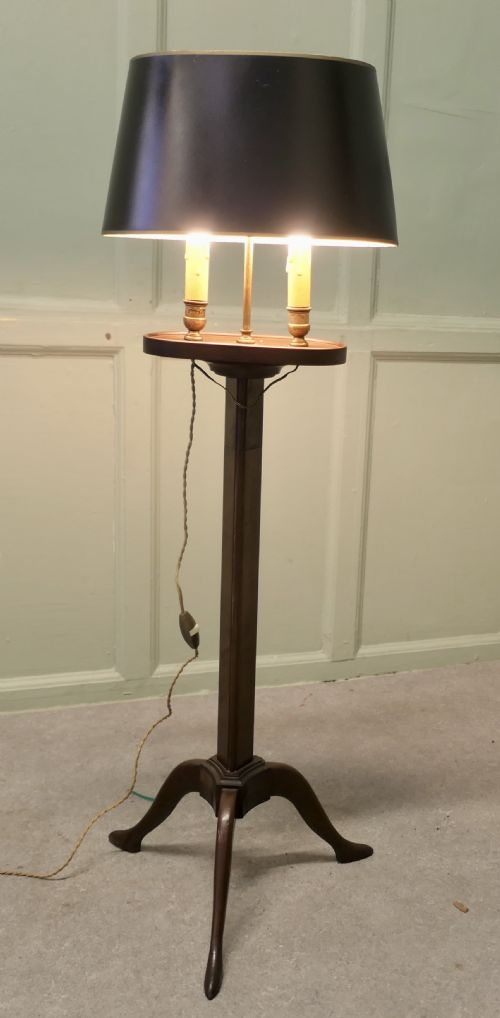
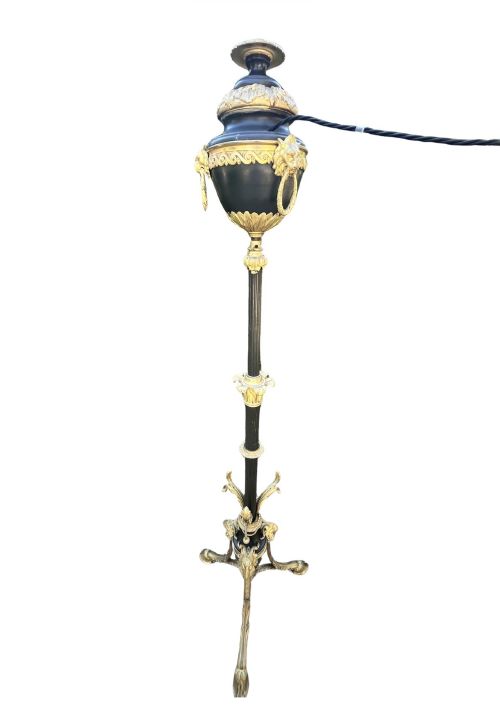
A brass tripod lamp provides functional illumination raised on three slender or cast legs, appearing frequently across Victorian, Edwardian, and early twentieth-century periods. These pieces range from substantial floor-standing standard lamps and converted oil burners to compact table models designed for domestic spaces.
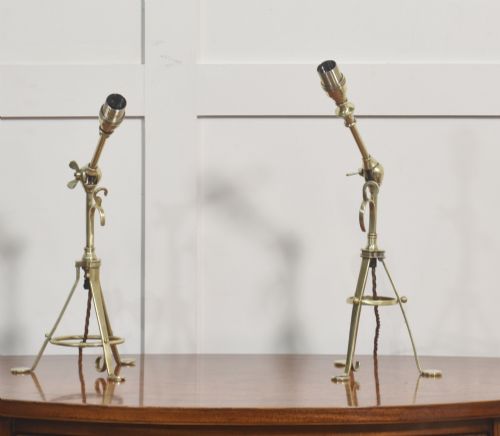
Many examples incorporate adjustable heights, telescopic columns, or rotating joints originally engineered for reading or task work. Alongside standard vertical forms, the selection includes pieces paired with fabric shades, ceramic components, or glass elements.
Makers adapted these three-legged structures for specific uses, creating railway Pullman lamps, heavy cast floor stands, and torcheres with claw feet. The resulting objects combine structural stability with the polished glow of period metalwork.
Materials and Construction
Makers utilised solid cast brass and spun sheet brass for the main framework, often combining copper or silver plate to create contrast in standard and table lamps. Bases frequently feature heavy claw feet or weighted iron cores hidden beneath brass housings to ensure stability on three slender legs.
Adjustable mechanisms rely on sliding telescopic brass tubes, screw keys, and rise-and-fall counterweights that allowed users to alter the height of the light source. Surfaces were polished to a bright finish or left with the textured tool marks characteristic of Arts and Crafts production.
Early twentieth-century motorists relied on heavy searchlights to pierce the dark, now repurposed to illuminate modern living rooms.
Assessing Quality and Execution
The distinction between ordinary production and finer workshop pieces lies in the weight of the casting and the precision of the mechanical joints. Superior examples feature cleanly turned collars, robust threading on telescopic stems, and substantial gauge brass rather than thin spun plating.
Design ambition also separates standard commercial lighting from distinctive works by notable makers such as W.A.S. Benson or Faraday and Sons. Better pieces integrate decorative elements like hand-riveted brackets, sculptural floral motifs in Art Nouveau styles, or precise brass stringing.
W.A.S. Benson·Faraday and Sons·C Winn·Bleriot·George Bullock
The Brass Tripod Lamp Glossary
- Tripod base
- A support structure utilising three legs that provides stability on uneven floorboards. This configuration is common on standard lamps and torchere stands.
- Telescopic
- An adjustable column design where one metal tube slides inside another to alter the overall height. These sections are typically secured with a thumbscrew.
- Standard lamp
- A tall floor-standing lamp designed to illuminate a room from a corner or beside seating. Many period examples began life as oil lamps before conversion to electricity.
- Pullman lamp
- A compact lighting fixture originally engineered for railway carriages, featuring a secure mounting and a low centre of gravity. They are often adaptable for wall or table use.
- Ormolu
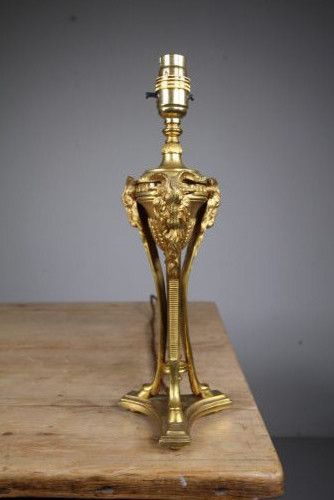
- Gilded bronze or brass applied to decorative mounts and decorative fittings. It gives a rich, golden tone to nineteenth-century luxury pieces.
Brass Tripod Lamp: Frequently Asked Questions
How do I date a brass lamp?
Dating relies on manufacturing techniques, switch types, and stylistic indicators such as Art Nouveau whiplash curves or Regency neo-classical mounts. Heavy cast brass bases and older wiring channels often point towards Victorian or Edwardian origins.
Makers' marks, registration numbers stamped into the metal, and specific patent mechanisms also help narrow the production decade. Comparing the weight and construction style against documented workshop pieces provides further clarity.
Were these always electric lamps?
Many taller standard lamps and table lights started as oil burners or paraffin lamps before being converted for electricity during the twentieth century. Burner galleries and font chambers are common remnants of this earlier domestic utility.
Original oil-burning components add historical interest for collectors, though most pieces available today have been rewired for modern domestic use. Conversions were often carried out sensitively to retain the original telescopic and rise-and-fall mechanisms.
How do I place one in a room?
A floor-standing tripod model suits corners, beside reading armchairs, or next to low side tables where the height can be adjusted over the seating. Their slender legs occupy minimal floor space while introducing warm metallic tones to an interior.
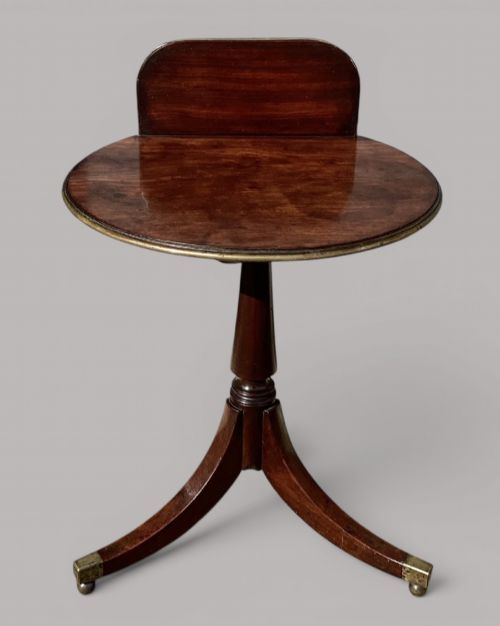
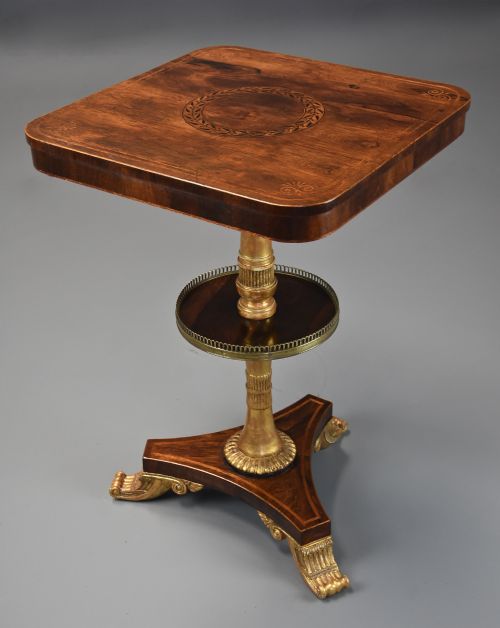
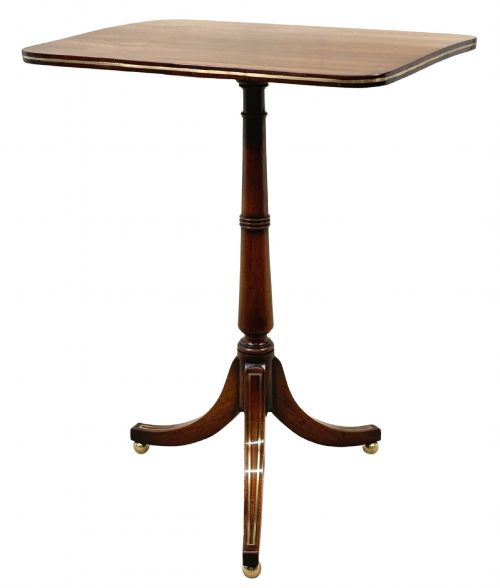
Smaller table versions work well on occasional tables made from rosewood, mahogany, or oak. Pairing the metal finish with complementary period furniture enhances the overall aesthetic.
What is a rise and fall lamp?
A rise and fall mechanism uses a weighted pulley system or a sliding counterweight to let the user raise or lower the light source smoothly. This engineering was essential for reading and task illumination in nineteenth-century interiors.
These systems demand careful handling during adjustment to protect the internal cords and brass tracks. Their presence indicates a higher grade of manufacture intended for practical daily use.