





Turned Boxwood
Turned boxwood objects are dense, pale items shaped on a lathe, prized for their fine grain and precise detail.
Turned Boxwood
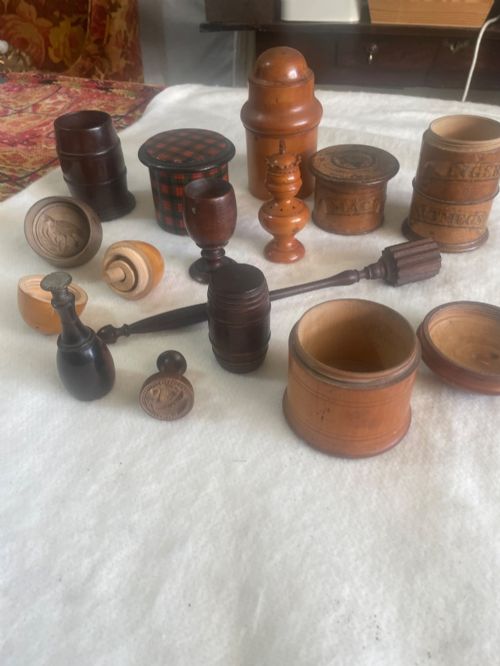
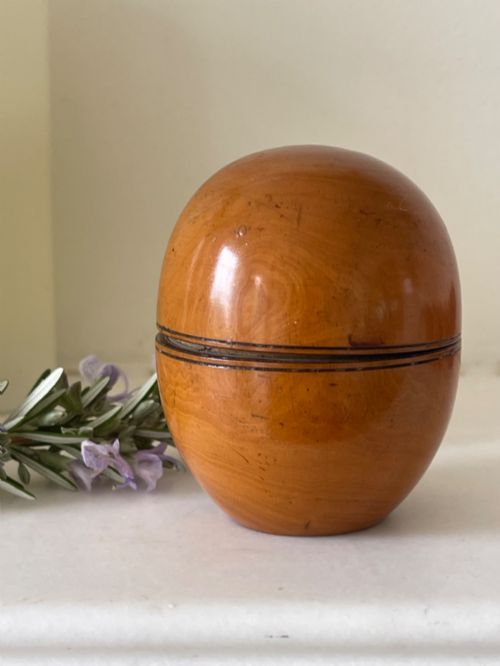
Turned boxwood pieces span several centuries of domestic and utilitarian craft, with the nineteenth century supplying the largest share of surviving examples on this page. Buyers seeking turned boxwood encounter small treen items, gaming sets, and scientific instruments shaped by the lathe.
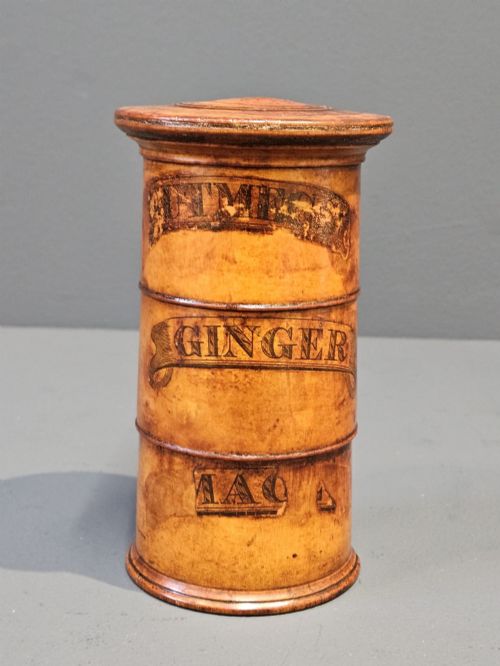
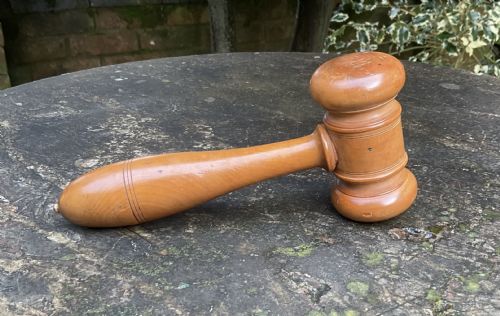
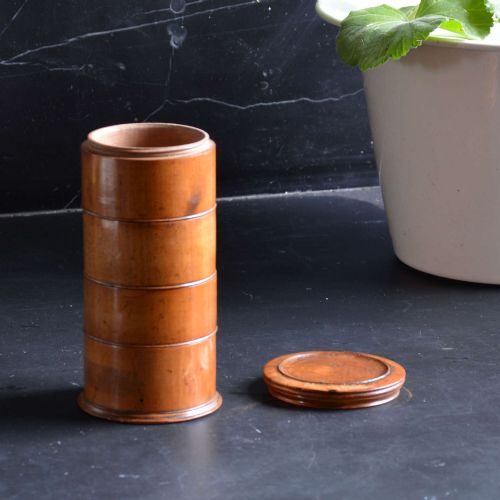
Forms range from multi-tiered spice towers and chemist jars to chess sets, pill silverers, and pocket compasses. Victorian and Georgian periods dominate the selection, showing how makers utilised the hard, pale timber for items requiring crisp handles and tight lids.
Assessing Quality and Execution
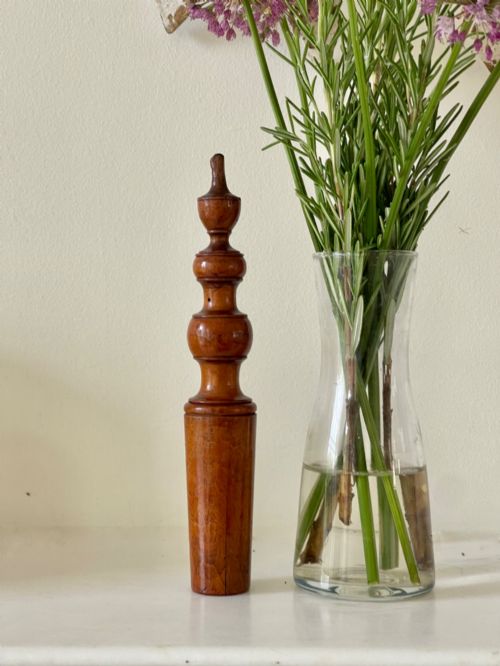
Quality rests upon the crispness of the turning and the retention of the original surface patina. Pieces that display sharp mouldings, clean threads, and unchipped rims demonstrate superior lathe work.
The integrity of assembly matters greatly in multi-part objects like spice towers and nested containers. Finer examples maintain their original colour and alignment without warping or replacement elements.
Turned Boxwood Retail Price Guide 2026
Typical asking prices for turned boxwood among the pieces listed under this phrase on Sellingantiques today, from the lower quarter to the upper quarter. They describe what is for sale here now, not the wider market.
Victorian households relied on turned boxwood bird calls to lure pigeons, proving that fine lathe work had surprisingly wild applications.
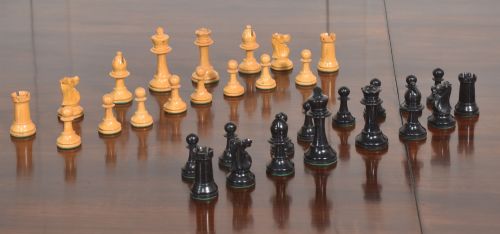
British Chess Company·Whitty
The Turned Boxwood Glossary
- Boxwood
- A dense, hard yellow-white timber with a fine, even grain that accepts intricate lathe work without splintering. It served as the primary material for precision treen and gaming sets.
- Treen
- Small handmade wooden objects for domestic or personal use. Turned boxwood forms a distinct category within this broader field.
- Staunton
- A standard design of chess pieces created in the mid-nineteenth century, characterised by conventionalised architectural shapes. Boxwood and ebony versions dominate this style.
- Spice tower
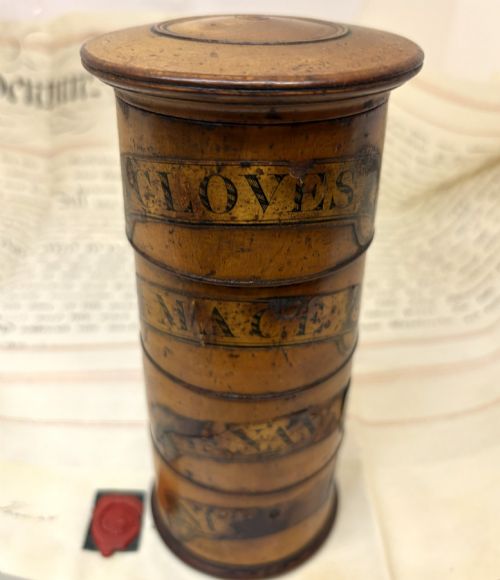
- A multi-tiered cylindrical wooden container designed to hold various culinary spices. Sections typically screw or fit tightly together.
- Ebonised
- Wood treated to imitate ebony, often applied to contrasting boxwood chess pieces or decorative mouldings.
Turned Boxwood: Frequently Asked Questions
What is turned boxwood?
Turned boxwood refers to objects shaped on a woodturning lathe from the dense, pale wood of the box tree. These items range from utilitarian treen containers to gaming pieces.
The wood's tight grain allowed makers to cut fine threads and minute details that survived heavy daily handling.
How do I date boxwood antiques?
Dating relies on style, context, and the tool marks left during manufacture. Georgian and Victorian pieces often show distinct proportions and regional turning habits.
Associated items like Staunton chess designs or specific chemist labels narrow the production window to precise decades.
Were these items used daily?
Many turned boxwood items served practical functions in domestic kitchens, apothecaries, and parlours. Spice towers, pill rounders, and compasses were working tools of the trade.
Over decades of use, human hands imparted a warm, honey-coloured patina to the pale wood surfaces.
How should I care for boxwood?
Boxwood benefits from stable indoor humidity and protection from direct sunlight, which can darken or dry the timber. Avoid excessive moisture and harsh chemical polishes.
Gentle dusting with a dry cloth preserves the natural patina built up over generations.