





Turn Over Top Table
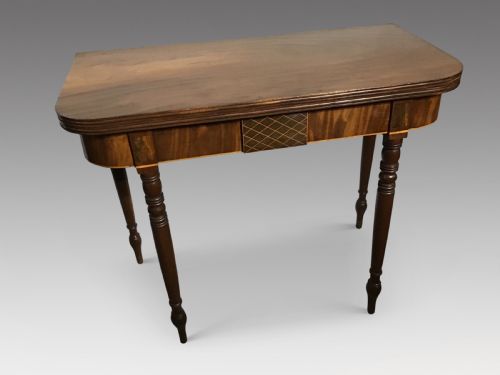
A turn over top table is a versatile folding piece designed to double its surface area when opened, shifting easily from console to game board.

Turn Over Top Table
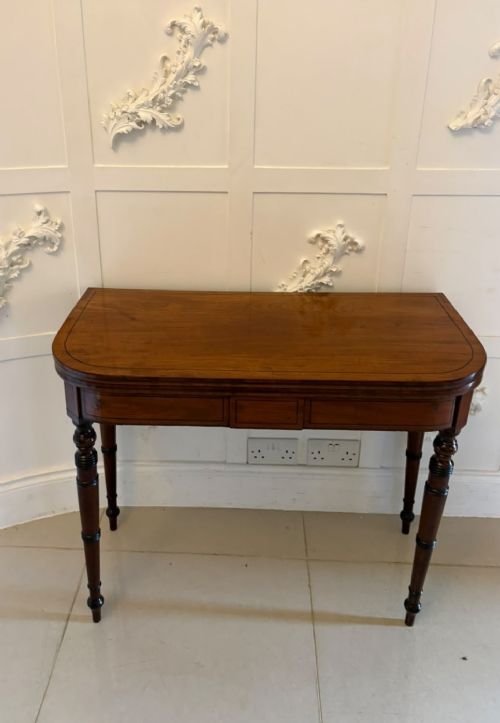
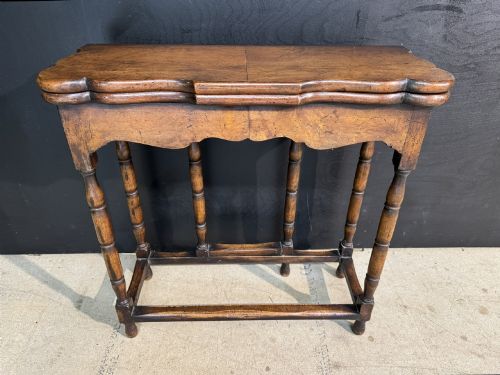
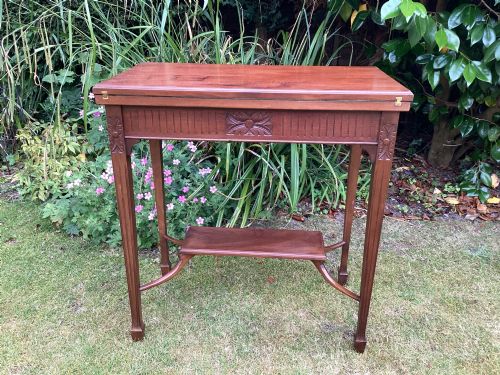
A turn over top table presents as a compact console, side, or occasional table until the hinged or pivoting leaf swings open to reveal a larger surface. The evidence shows these pieces spanning Georgian, Victorian, and Edwardian periods, appearing in forms such as card tables, tea tables, and games tables.
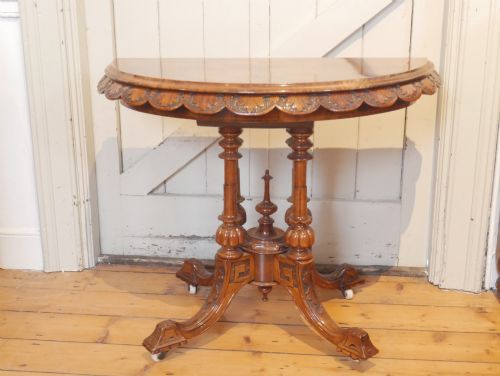
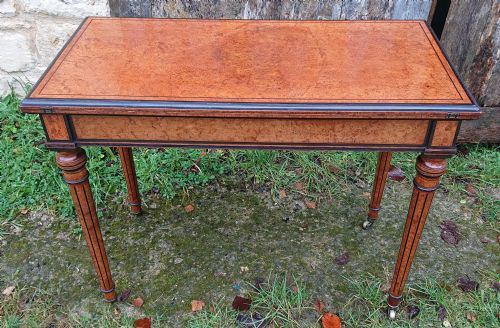
Mahogany and walnut dominate the selection, often enriched with satinwood, ebony, and intricate wood inlay. You will encounter forms ranging from George III mahogany tea tables with concertina actions to Victorian burr walnut examples designed for parlor games.
Regional variations also emerge from the records, including Irish and Scottish pieces alongside English craftsmanship. The underlying mechanism remains consistent: a folding top supported either by swinging legs or a pivoted framework.
Materials and construction
Cabinetmakers relied heavily on dense hardwoods like mahogany and walnut to provide structural stability for the folding leaves and hinges. Burr walnut and satinwood veneers added decorative grain patterns to the outer surfaces.
Inlay work utilised contrasting woods such as ebony and lighter satinwood to create geometric or pictorial borders. Brass fittings frequently secured the folding mechanisms and internal storage wells.
Listings feature turn over top tables spanning the Georgian, Victorian, and Edwardian periods, constructed predominantly in mahogany and walnut.
Assessing quality and execution
The sophistication of the opening mechanism marks the distinction between standard and superior pieces, such as concertina actions that expand evenly with the frame. Precision in the wood inlay and the selection of figured burr walnut veneers also elevate the standing of a table.
Proportion and timber choice dictate the visual balance when the leaf is both closed and open. Hand-painted detailing and secondary woods of high grade further separate workshop output.
Gregory and Co
The Turn Over Top Table Glossary
- Concertina action
- An expanding frame mechanism that allows the rear legs of a card table to pull outward symmetrically when the top unfolds. This design provides robust support for the opened leaf without obstructing the players.
- Demi lune
- A half-moon shape used for table tops and consoles designed to sit flat against a wall. When turned over, the hinged leaf reveals a full circular or square surface.
- Card table
- A specialised folding table equipped with a baize-lined interior surface for playing historical card games. They often include corner wells for counters or candles.
- Tea table
- A small domestic table designed to hold tea service equipment before folding away against the wall when not in use. They frequently feature plain or dished wooden tops.
- Inlay
- A decorative technique where pieces of contrasting wood, such as ebony or satinwood, are fitted into recesses in the primary timber. This creates flat ornamental patterns across the top and apron.
Turn Over Top Table: Frequently Asked Questions
What is a turn over top table?
A turn over top table is a folding piece of furniture designed to double its surface area by swinging or pivoting the upper leaf. These tables function as compact console or side tables when closed and expand into larger card, tea, or games tables.
The design allowed households to maximise living space in smaller rooms while providing adequate surface area for dining, tea service, or card playing when required.
How do you use a turn over top table?
To use the table, you lift or swivel the hinged top leaf ninety or one hundred and eighty degrees so that it rests flat upon the extended frame or support leg. The unfolded surface often reveals a lined playing area or a polished timber top suited for entertaining.
When not in use, the leaf folds back over the base, returning the furniture to a slim console or side table profile against the wall.
How can you tell a Georgian table from a Victorian one?
Georgian tables generally display restrained classical proportions, rectilinear or serpentine forms, and timber choices like dense mahogany with minimal heavy ornamentation. Victorian examples frequently feature darker finishes, burr walnut veneers, and more exuberant carved or inlaid details.
Examining the internal framing, secondary woods, and hinge hardware also helps establish the manufacturing period.
What were these tables used for historically?
Historical uses depended on the specific internal configuration of the table, ranging from serving afternoon tea to hosting evening card games like whist or quadrille. Cartographer's folio tables provided stable surfaces for handling large maps and documents.
They served as multi-purpose furniture items in domestic parlors and reception rooms where flexibility of space was essential.
How should I care for an antique wooden folding table?
Keep wooden folding tables away from direct sunlight and sources of artificial heat to prevent the timber and veneers from drying out or splitting. Maintain a stable indoor humidity level to protect the delicate hinges and concertina mechanisms.
Dust the surfaces regularly with a soft, dry cloth and avoid using harsh chemical polishes that can degrade historical finishes.