

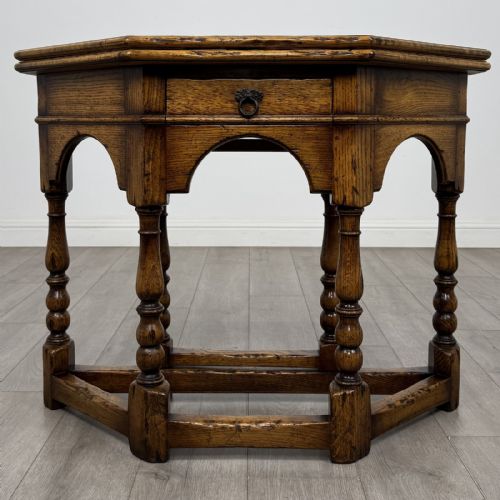
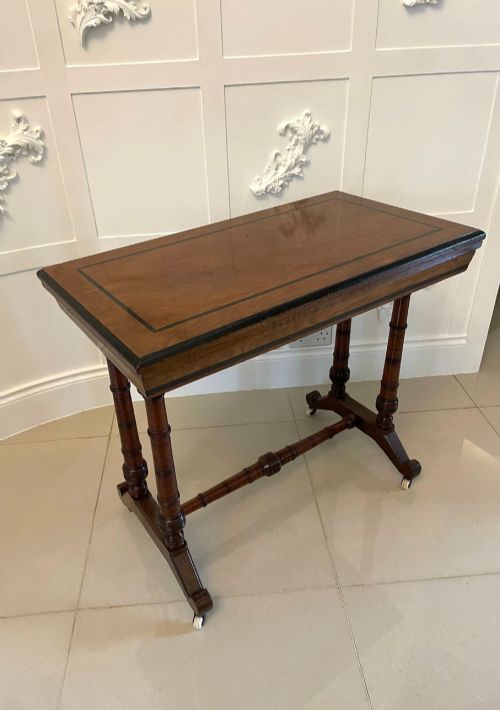
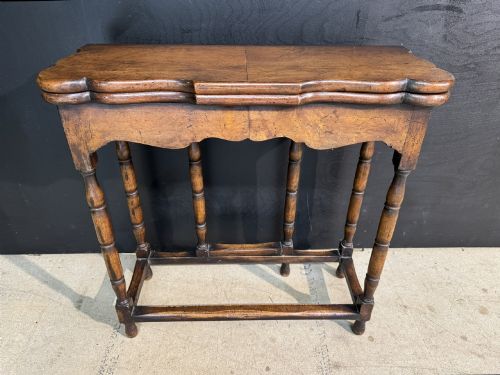
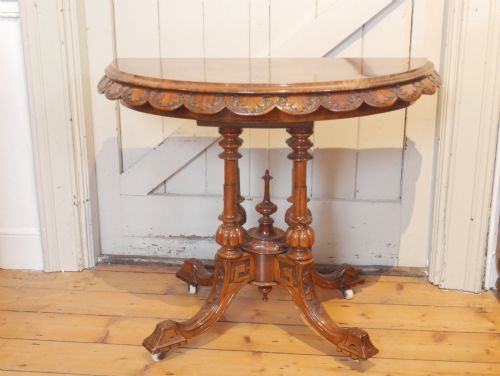
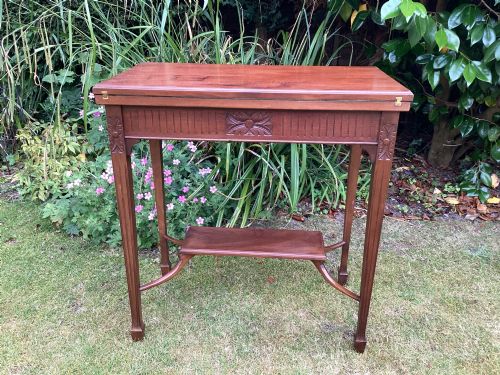


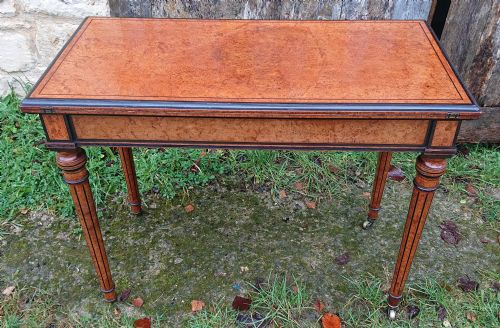

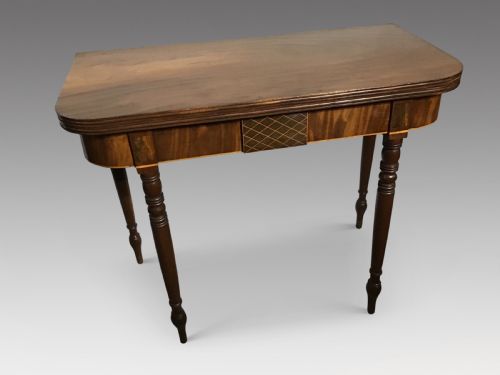
Turn Over Top Card Table
A turn over top card table is a clever piece of domestic furniture designed to transform from a modest side or tea surface into a playing area.
Turn Over Top Card Table
A turn over top card table is primarily designed for domestic leisure, featuring a hinged or rotating leaf that unfolds to double the surface area for card games or tea. These items emerge across multiple periods, including the Georgian, Victorian, and Edwardian eras, reflecting changing social habits in the British home.
Makers and workshops from various centuries adapted the basic design into console tables, side tables, and occasional tables, meaning a single piece often served multiple functions in a room. The forms range from simple rectangular tops to shaped demi-lune designs suited for corners.
How they were made
Cabinet makers utilised dense hardwoods such as mahogany and walnut as the structural foundation, often enhancing the timber with figured veneers or contrasting borders. Wood inlay and brass hardware frequently accent the main structure without compromising the stability of the folding leaf.
The engineering of the turn over mechanism relies on sturdy wooden hinges, pivots, or pivoting rear legs that swing out to bear the weight of the unfolded leaf. Craftspeople also applied hand-painted decoration and delicate stringing to satinwood and mahogany surfaces during the Georgian and Edwardian periods.
Turn Over Top Card Table Retail Price Guide 2026
Typical asking prices for turn over top card table among the pieces listed under this phrase on Sellingantiques today, from the lower quarter to the upper quarter. They describe what is for sale here now, not the wider market.
Object types include specific games tables alongside versatile side tables, console tables, and tea tables.
What varies in quality
The grade of timber selection and the precision of the wood inlay establish the visual distinction between standard examples and finer items. Tables featuring figured burr walnut, satinwood, or elaborate hand-painted decoration generally represent more ambitious workshop production.
Structural integrity in the hinge mechanism and the alignment of the top when closed separate high-grade tables from simpler utility pieces. The smoothness of the turn over action and the tightness of the joints indicate the original skill of the cabinet maker.
Gregory and Co
The Turn Over Top Card Table Glossary
- Demi-lune
- A half-moon shape used for table tops and frames. This design allowed furniture to sit flush against a wall when folded.
- Inlay
- A technique where contrasting materials are inserted into recessed cavities of a wooden base. It creates decorative patterns across the surface of the top.
- Veneer
- A thin layer of finely figured wood applied over a secondary timber base. Burr walnut and satinwood were frequently used in this manner.
- Stringing
- A narrow strip of contrasting wood or light-coloured material embedded into the surface. It outlines panels and edges on Georgian and Edwardian tables.
Turn Over Top Card Table: Frequently Asked Questions
What is a turn over top card table?
A turn over top card table is a multi-functional piece of furniture featuring a hinged top that folds or rotates open to double its surface area.
These tables were designed to serve as side or tea tables during the day and converted easily for card games in the evening.
How do I date a turn over top card table?
Dating relies on observing the timber choices, construction methods, and prevailing styles associated with periods like the Georgian or Victorian eras.
Mahogany and walnut construction combined with specific inlay techniques or painted decoration often point to the workshop practices of a particular century.
How were these tables used originally?
Originally, these tables functioned primarily as decorative console or tea tables against a parlour wall when closed.
When guests arrived for entertainment, the top was turned over and supported by a swing leg to create a stable surface for card playing.
What timbers should I expect to see?
The listings show a strong presence of mahogany and walnut, alongside decorative accents in satinwood, ebony, and burr walnut.
Secondary woods and brass fittings also appear depending on the specific period and style of the piece.