


Turn of Century Settee
A turn of century settee brings solid Victorian and Edwardian character into a modern room through generous upholstery and timber frames.
Turn of Century Settee
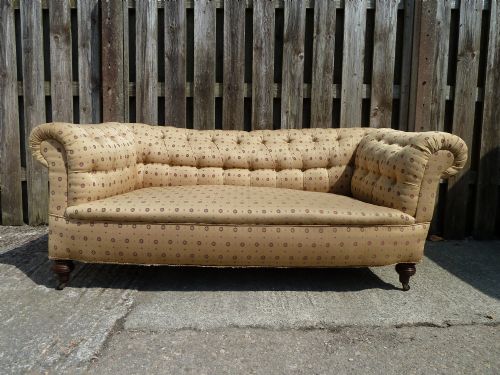
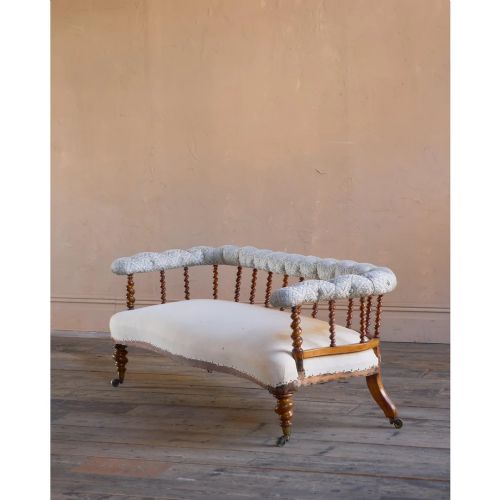
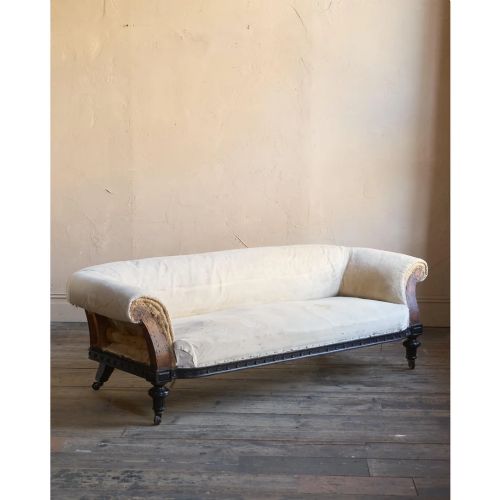
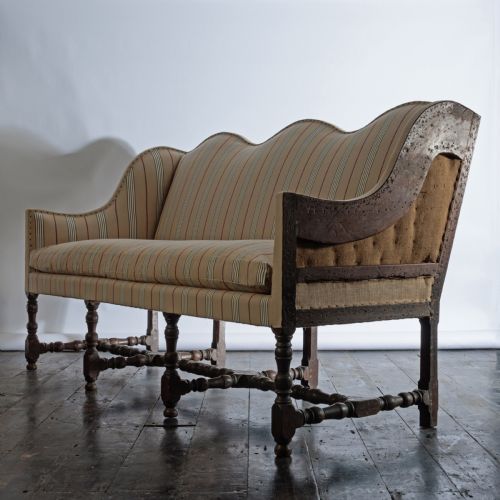
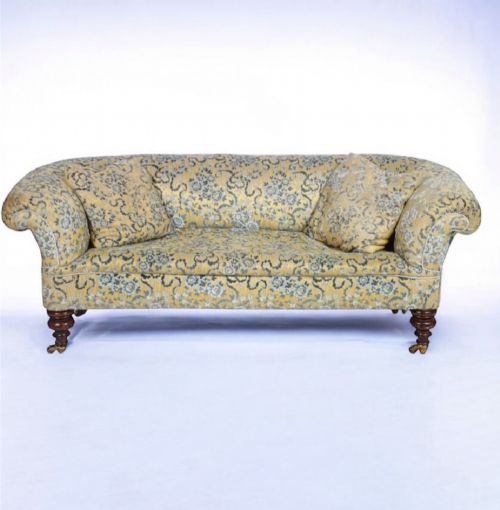
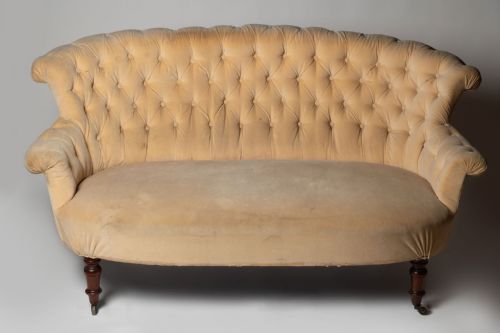
When you search for a turn of century settee, you encounter a wide array of upholstered seating originating primarily from the Victorian and Edwardian eras, alongside select French and Regency examples. These pieces range from deep-buttoned Chesterfields and salon sofas to spindle-backed benches and chaise longues.
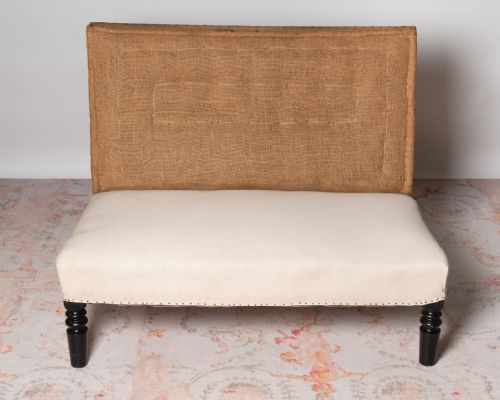
The selection here draws heavily on late 19th-century craftsmanship, featuring substantial country house sofas alongside lighter French banquettes and triple-back settees. Timber frames of walnut, mahogany, and stinkwood support various forms of fabric, velvet, and leather upholstery.
Buyers most frequently meet nineteenth-century Chesterfield sofas alongside nineteenth-century French and English salon seating on this page. The forms span robust upholstered frames designed for country houses to more decorative bobbin-turned or painted frames.
How they were made
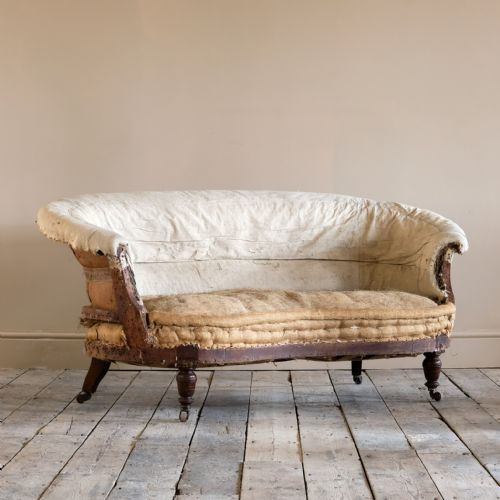
Upholstery involves traditional stuffing materials enclosed in fabrics, velvet, leather, or plain textiles awaiting new covering. Detail work incorporates exposed brass tacks, bobbin turning, and painted finishes on the wooden structural elements.
Listings feature timber varieties including mahogany, walnut, and stinkwood alongside brass and leather materials across 19th-century periods.
What varies in quality
The distinction between tiers rests upon the integrity of the underlying timber frame and the authenticity of the period construction. Pieces bearing maker stamps or attribution to established workshops command attention for their documented provenance.
Quality also manifests in the ambition of the woodwork, from simple turned legs to intricate bobbin turning, lyre-shaped arms, or painted triple-back structures. The retention of original upholstery materials or sympathetic restoration work defines the upper bracket.
C. Hindley & Sons·Hampton & Sons·Holland & Sons·Howard And Sons
The Turn of Century Settee Glossary
- Chesterfield
- A deep-buttoned, heavily upholstered sofa traditionally featuring arms and back of the same height. This form anchors many Victorian seating arrangements.
- Chaise Longue
- An elongated chair for reclining, combining a sofa seat with a headrest back. Examples here span French styles and nineteenth-century English workshops.
- Banquette
- A long upholstered bench or settee, frequently of French origin. These pieces offer compact seating with exposed wooden frames.
- Bobbin Turned
- Furniture legs or structural members shaped on a lathe to resemble a series of wooden bobs or spools. This decorative turning appears on nineteenth-century frames.
- Stinkwood
- A dense, dark timber native to South Africa utilised in regional nineteenth-century furniture. It yields heavy, durable benches and seating frames.
Turn of Century Settee: Frequently Asked Questions
How do I identify a Victorian Chesterfield?
A Victorian Chesterfield typically presents deep button tufting, rolled arms matching the back height, and a low profile supported by turned timber legs. The frame relies on heavy nineteenth-century timber construction beneath its upholstery.
These sofas were built for country houses and formal reception rooms, offering deep seating designed for upright or relaxed lounging.
Where should I place a chaise longue?
A chaise longue fits well in a bedroom, dressing room, or a spacious drawing room where it can stand clear of walls. Its asymmetrical back and extended seat require floor space around it to be fully appreciated.
Position the piece to follow the natural light of a window or alongside a fireplace for reading and resting.
What is a salon suite?
A salon suite consists of matching upholstered seating, such as a settee paired with open armchairs, designed for formal entertaining. These sets date around the turn of the twentieth century and share uniform wood finishes and fabric.
Arranging them together creates a cohesive conversational grouping within a drawing room or formal parlour.
How do I care for leather upholstery?
Leather upholstery requires conditioning to prevent the hide from drying out, particularly on nineteenth-century pieces. Regular dusting and avoidance of direct sunlight preserve the dyed surface.
Restored leather develops a patina over time, benefiting from gentle cleaning with appropriate balms rather than harsh chemical treatments.