
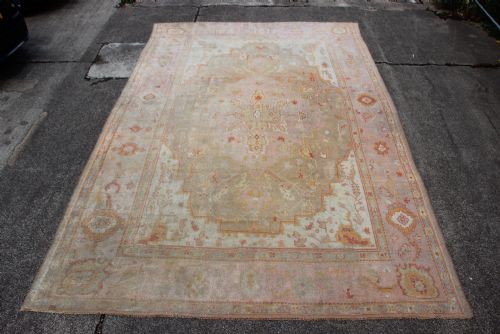
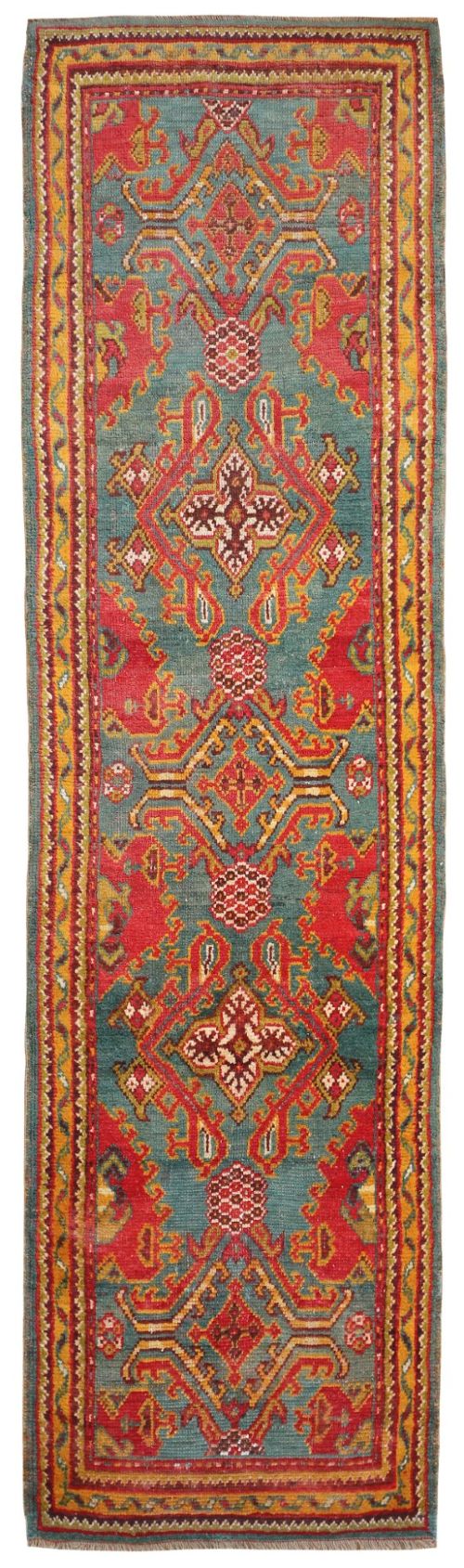
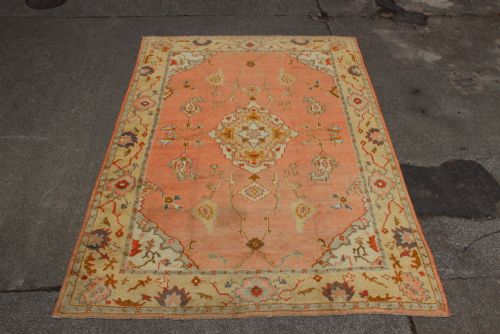
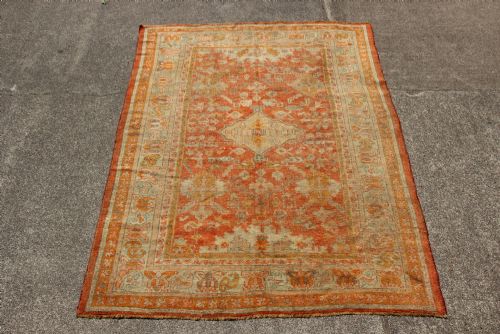
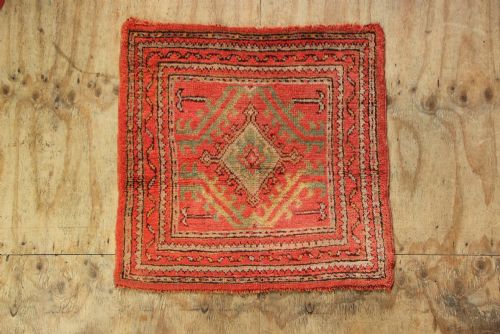


Turkish Oushak Area Rug
A turkish oushak area rug brings warmth and historic pattern into a room through generous scale and softened wool pile.
Turkish Oushak Area Rug
A turkish oushak area rug represents a traditional woven floor covering originating from Western Turkey, appearing across formats like large carpets, runners, squares, and kilims. These pieces span the late nineteenth century through the early twentieth century, encompassing Victorian eras and periods around eighteen eighty to nineteen twenty.
The aesthetic falls under Ottoman, Anatolian, and specific Oushak styles, often showcasing specific design attributes such as willow tree motifs, pale blue tones, beige fields, or pink grounds. Buyers encounter everything from grand carpets measuring over five metres down to compact square formats and narrow runner rugs.
How They Were Made
These textiles rely principally on wool and cotton, with specific variants incorporating angora wool for distinct texture. Weavers tied hand knotted pile structures onto sturdy foundation threads, creating durable floor coverings designed for heavy use.
Natural dye traditions and traditional hand knotting techniques produced the faded colour palettes and muted surfaces seen across these Anatolian workshops. The resulting structures balance flexible drape with dense fibre packing.
Certain specimens sneakily display whimsical willow tree branches hiding in plain sight among the grand geometric fields.
What Varies In Quality
Quality rests in the precision of the hand knotted execution and the integrity of the wool foundation. Finer examples maintain structural balance across expansive fields, while lesser grades show uneven pile retention.
The distinction also lies in the clarity of regional design execution and the subtlety of colour shifts across the wool and cotton fibres. Well preserved pile depth elevates certain items above heavily worn equivalents.
The Turkish Oushak Area Rug Glossary
- Oushak
- A traditional style of rug originating from the town of Usak in Western Turkey, known for large scale floral motifs and soft wool.
- Kilim
- A flatwoven textile produced without a pile, utilised as a rug or covering within Anatolian weaving traditions.
- Angora wool
- A specialised fibre sourced from Angora goats, providing a softer texture and distinct handle to specific antique pile rugs.
- Ghiordes
- A historic weaving centre in Turkey and a term applied to specific traditional carpet styles sharing knotting characteristics.
Turkish Oushak Area Rug: Frequently Asked Questions
How do I clean an antique rug?
Gentle surface vacuuming without a beater bar removes loose debris from the wool pile safely.
Professional specialist washing remains essential for deep cleaning to protect fragile cotton foundations and historic natural dyes.
Where were these rugs made?
Weavers produced these textiles in Western Turkey, specifically centred around the historic town of Oushak and surrounding Anatolian regions.
Local workshops supplied both domestic Ottoman markets and international export trades during the late nineteenth and early twentieth centuries.
Can I place rugs in high traffic areas?
Sturdy wool and cotton construction allows these pieces to handle moderate foot traffic in living spaces and hallways.
Placing a quality underlay beneath the rug prevents slipping and reduces fibre friction against hard flooring.
How do I identify a Victorian period rug?
Dating relies on recorded production years spanning the late nineteenth century, matching stylistic traits from eighteen eighty to nineteen hundred.
Structural examination of the hand knotted wool pile and traditional Anatolian design motifs confirms the historical era.