


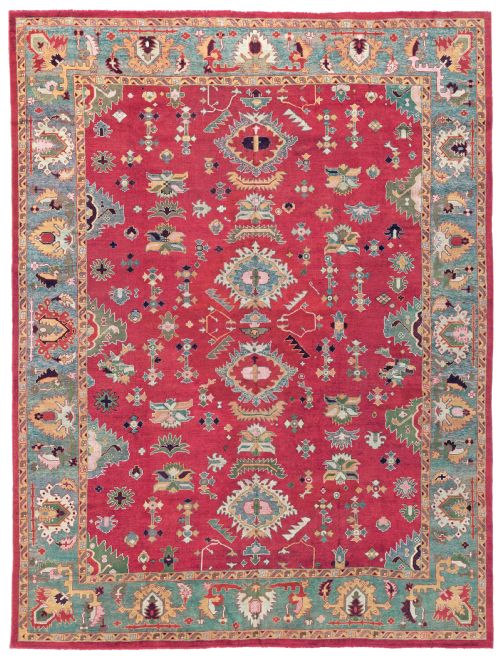

Turkish Decorative Rug
These turkish decorative rug pieces bring deep wool warmth and historic Ottoman style directly into a room.
Turkish Decorative Rug
A turkish decorative rug covers large floor spaces and smaller areas through formats like kilim rugs, area rugs, and expansive carpets. Buyers seeking this category encounter traditional weaves originating from Anatolian workshops and classical Ottoman centres.
The pieces on this page span the late nineteenth century into the early twentieth century, specifically covering periods around eighteen eighty, eighteen ninety, nineteen hundred, and nineteen twenty. Ushak carpets dominate the selection, alongside Kayseri kilims and column prayer rugs.
Forms range from intimate kilim rugs to massive carpets measuring over five metres, suiting varied architectural scales. Each turkish decorative rug carries the traditional motifs and palette of its specific weaving district.
How they were made
Makers constructed every turkish decorative rug using natural wool and cotton fibres for both pile and foundation. Weavers knotted or flat-wove these materials by hand on traditional vertical looms.
Dyers utilised natural organic colourants to achieve the rich ivory fields and saturated tones seen across the surviving carpets and kilims. Artisans then finished the edges and ends by hand to secure the structure.
Turkish Decorative Rug Retail Price Guide 2026
Typical asking prices for turkish decorative rug among the pieces listed under this phrase on Sellingantiques today, from the lower quarter to the upper quarter. They describe what is for sale here now, not the wider market.
One extraordinary column prayer rug carries the unmistakable hand of Tuduc, proving that imitation can sometimes be an art form in its own right.
What varies in quality
The fineness of the knotting and the complexity of the wool pile separate standard regional output from exceptional master-woven examples. Superior pieces display crisper drawing within the traditional Ottoman and Ushak floral or geometric motifs.
Condition and original scale heavily influence the stature of each piece, with large decorative carpets maintaining greater architectural presence. The integrity of the foundational cotton and wool weave dictates long-term durability.
Tuduc
The Turkish Decorative Rug Glossary
- Ushak
- A major carpet-weaving town in western Anatolia known for large-scale floral designs and soft wool palettes. These carpets were prized across Europe for centuries.
- Kilim
- A flat-woven carpet or rug made without a pile by tightly interweaving warp and weft threads. They often feature geometric Anatolian designs.
- Prayer rug
- A small rug featuring a mihrab or arch design indicating the direction of prayer. Transylvanian examples reference historical carpets preserved in European churches.
- Field
- The central background area of a rug enclosed by the borders. This space often displays ivory or coloured tones.
- Anatolian
- Pertaining to the geographic region of Asia Minor encompassing traditional Turkish weaving centres. It describes historical pieces originating from this cultural heartland.
Turkish Decorative Rug: Frequently Asked Questions
What is a turkish decorative rug?
A turkish decorative rug is a hand-woven textile originating from Anatolian weaving centres like Ushak and Kayseri. These pieces utilise wool and cotton to create patterned floor coverings.
Historically produced during the late nineteenth and early twentieth centuries, they reflect traditional Ottoman design vocabulary.
How do I date a turkish decorative rug?
Dating relies on stylistic analysis, material examination, and structural characteristics typical of specific decades. Pieces on this page span from eighteen eighty to nineteen twenty.
Structural traits and regional weaving traditions help narrow down the period of manufacture.
Where were these rugs made?
These textiles were woven in traditional workshops across Anatolia, including specific centres renowned for carpet production. Ushak and Kayseri represent the primary geographical origins found in this selection.
Local artisans passed down weaving techniques through generations within these Turkish regions.
How should I clean my rug?
Regular gentle vacuuming without a rotating brush helps remove surface dirt from the wool pile. Professional antique textile cleaning is recommended for deep maintenance.
Avoid harsh chemical treatments and excessive moisture to preserve the natural wool fibres and dyes.