
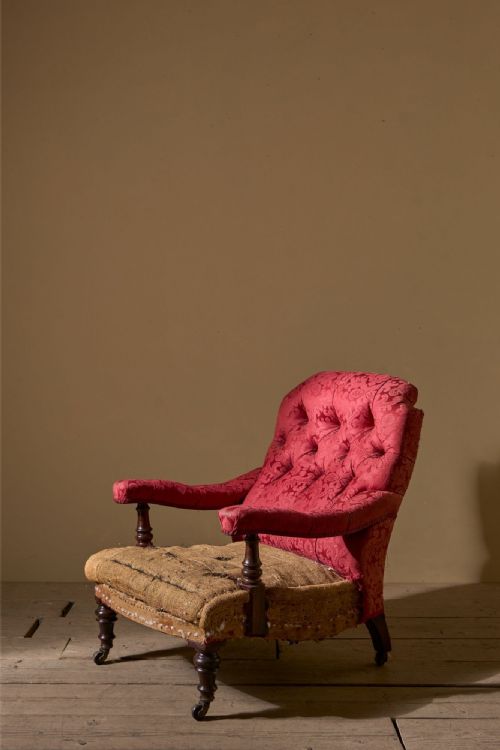
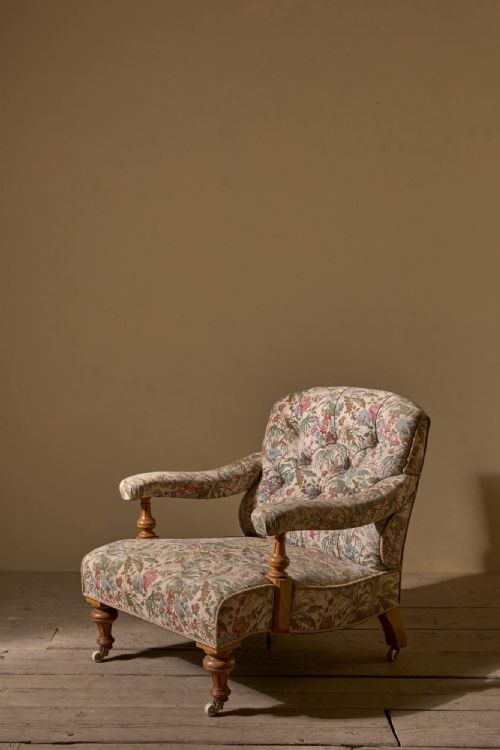
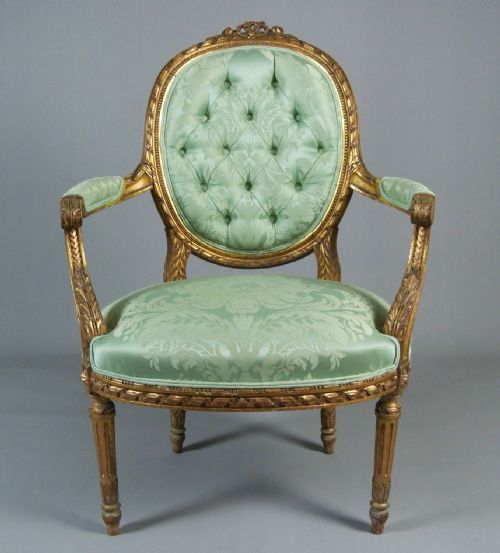
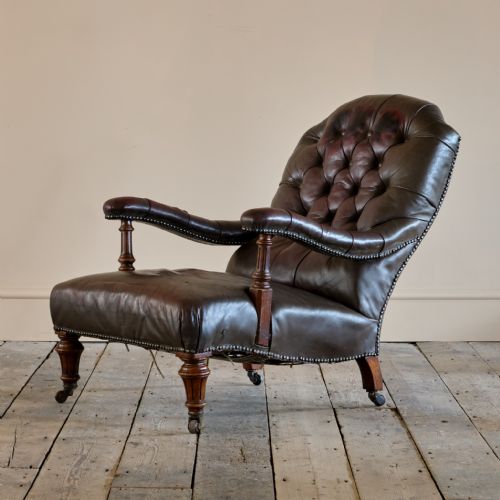






Tufted Open Arm Chair
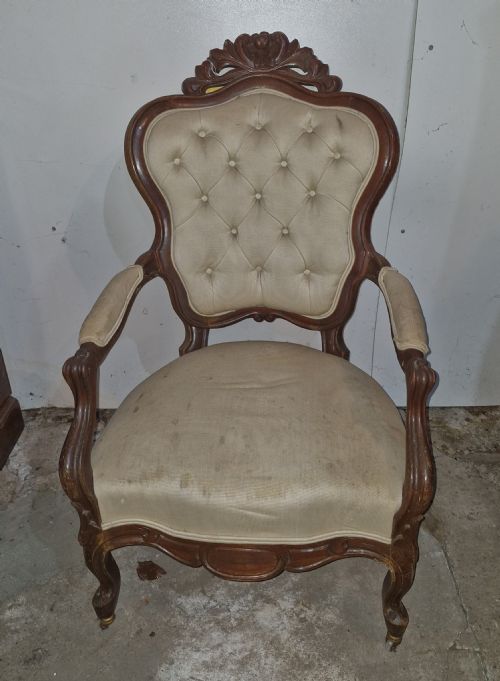
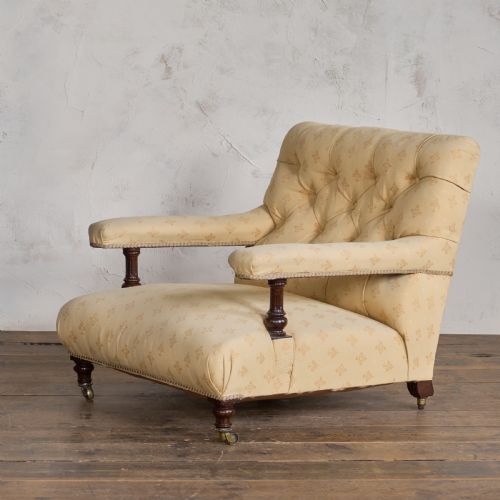
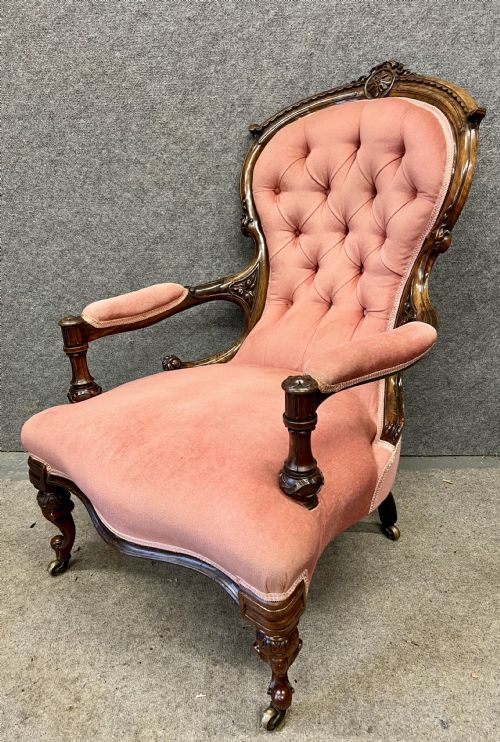
These tufted open arm chair pieces offer deep buttoning and exposed frames, bringing a formal nineteenth-century seat into a modern room.
Tufted Open Arm Chair
A tufted open arm chair brings together exposed timber frames and deeply buttoned upholstery, spanning the eighteenth and nineteenth centuries. The selection here leans heavily towards Victorian walnut examples alongside country house pieces and Howard style designs.
Buyers will encounter various stylistic revivals, from George III neoclassical pieces to Napoleon III and Rococo Revival forms. Most listings show armchairs designed for parlours, libraries and firesides, featuring open wooden arms rather than fully padded enclosures.
Origins stretch across English and Scottish workshops, encompassing mahogany, walnut and rosewood frames. The common thread across these chairs is the combination of structural wooden arms with sprung, upholstered seats and backs.
How they were made
Makers shaped frames from hardwoods including walnut, mahogany, rosewood and giltwood, often carving details into the show wood of the arms and legs. Brass castors frequently support the feet, while internal construction relies on hessian webbing and traditional stuffing to build the seat profile.
Upholstery techniques involve deep buttoning through fabric, velvet, linen or leather, securing the tufts to create regular geometric patterns across the backrest. Frames join through traditional cabinet-making joints designed to withstand the tension of heavy springing and daily use.
Periods represented span from eighteenth-century George III pieces through to late Victorian and 1900 designs.
What varies in quality
The refinement of the carved walnut or mahogany frame sets finer examples apart from simpler country workshop pieces. Crisp detailing on the open arms and balanced proportions indicate the skill of the original maker.
The integration of the upholstery work relative to the timber frame defines the overall execution. Superior pieces maintain crisp buttoning tension and harmonious fabric choices that complement the exposed wood without masking its form.
Thomas Chippendale·Howard and Sons
The Tufted Open Arm Chair Glossary
- Tufted
- Upholstery finished with deep buttons arranged in a grid pattern to secure the filling and create a padded, faceted surface. This technique provides both structural stability to the stuffing and a decorative texture.
- Open Arm
- A chair design featuring unpadded wooden arms that expose the structural frame rather than enclosing the sitter in upholstered padding. This form lightens the visual weight of the seat.
- Howard Style
- A nineteenth-century seating design known for deep comfort, low profiles and precise proportions, often associated with the maker Howard and Sons. These pieces combine generous springing with understated upholstery.
- Giltwood
- Timber coated with a thin layer of gold leaf over a prepared gesso ground, frequently utilised on neoclassical and revival frames. It creates a bright, reflective surface finish.
- Hessian
- A coarse woven fabric made from jute fibres, utilised as a traditional foundation layer beneath upholstery stuffing. It provides a stable base for the internal springs and materials.
Tufted Open Arm Chair: Frequently Asked Questions
How do I identify a Howard style chair?
Look for low proportions, deep comfort, and specific maker stamps on the castors or back legs if present. These pieces balance relaxed lounging with restrained frame carpentry.
They often feature understated lines that distinguish them from more ornate Victorian revival models.
What is the difference between walnut and mahogany frames?
Walnut frames typically date from the mid-to-late Victorian era and offer a rich, dark grain with softer warm undertones. Mahogany examples often point to earlier Georgian or mid-nineteenth-century cabinet-making.
Both timbers provide the structural strength needed to support open arm designs.
Are these chairs suitable for daily use?
Most nineteenth-century armchairs are built on sturdy hardwood frames with traditional sprung seats designed for sitting. Their open wooden arms and robust joinery handle regular domestic use well.
Checking the internal webbing and upholstery support helps ensure long-term comfort in a modern home.
How do I date a tufted open armchair?
Dating relies on timber choice, carving styles, and the upholstery method used in the construction. Victorian pieces often use walnut with buttoned backs, while earlier George III examples show neoclassical details.
Comparing the stretcher arrangement and leg form against known period styles provides further clues.