
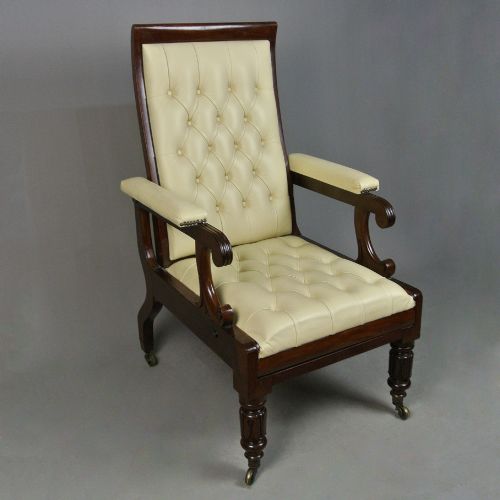
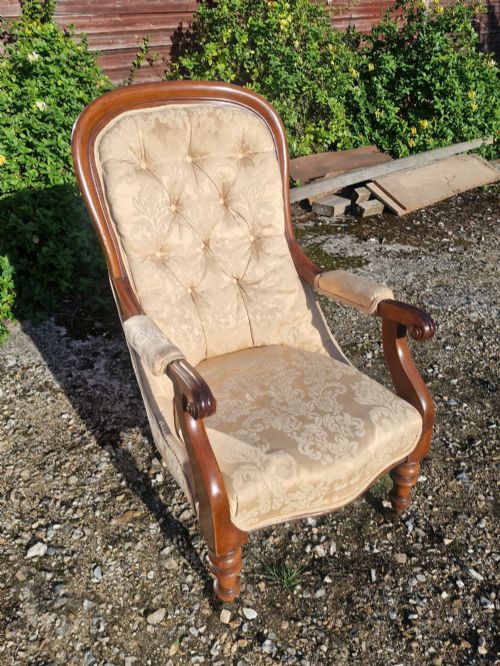
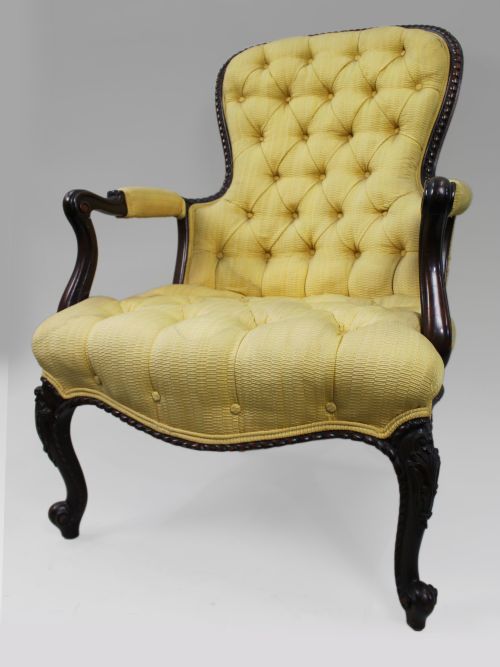
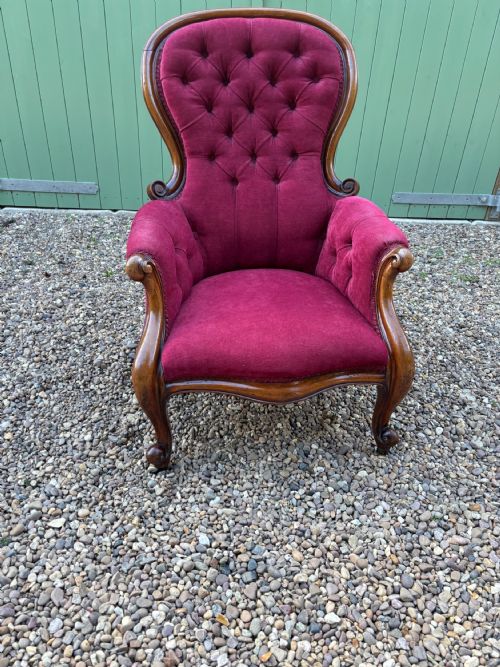

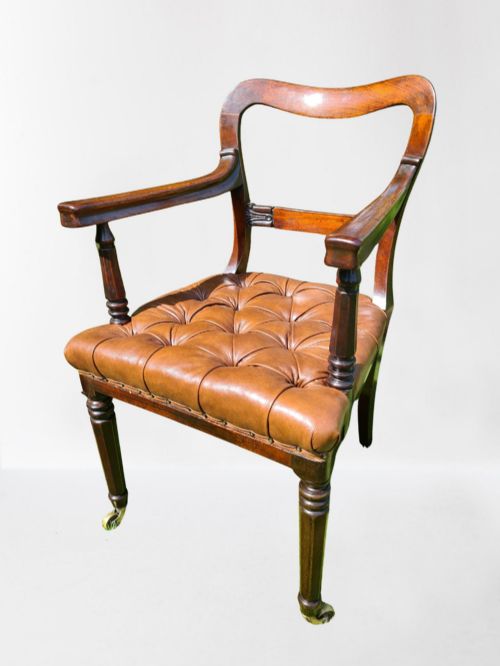
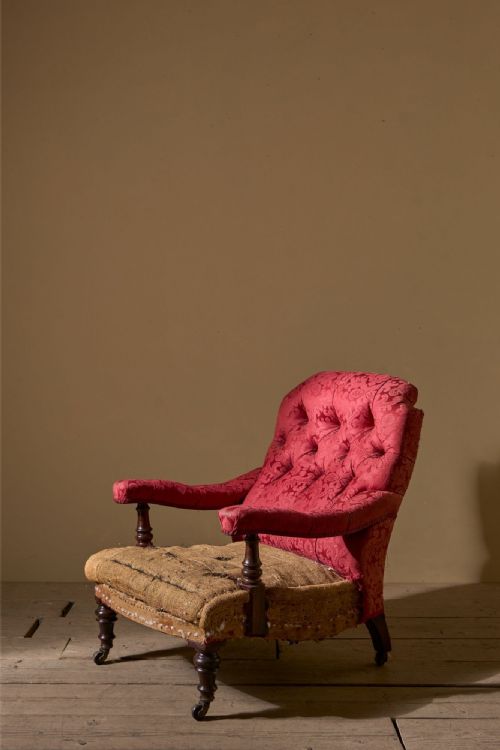
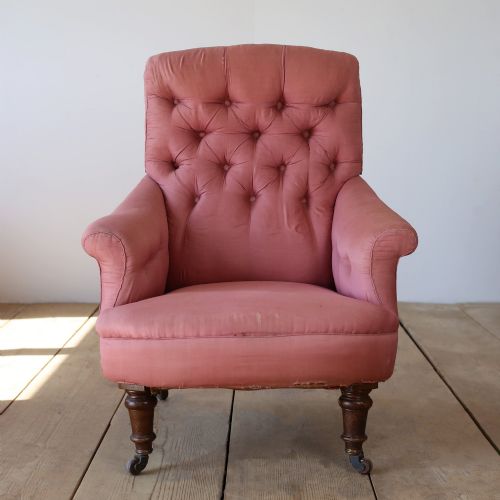
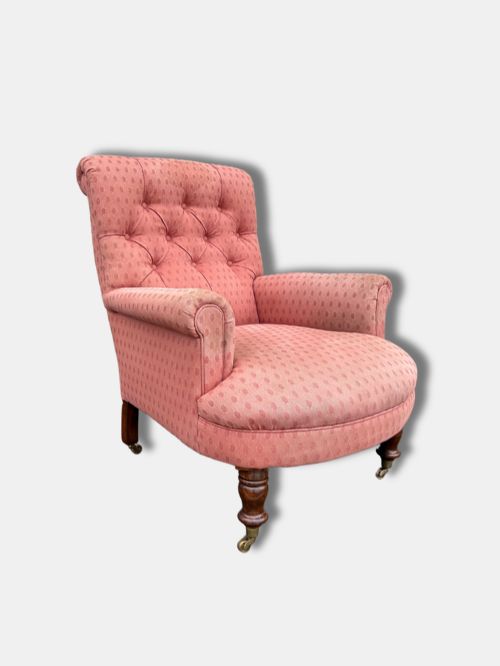
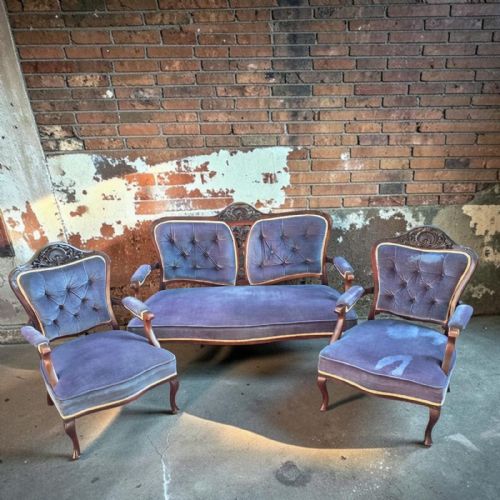
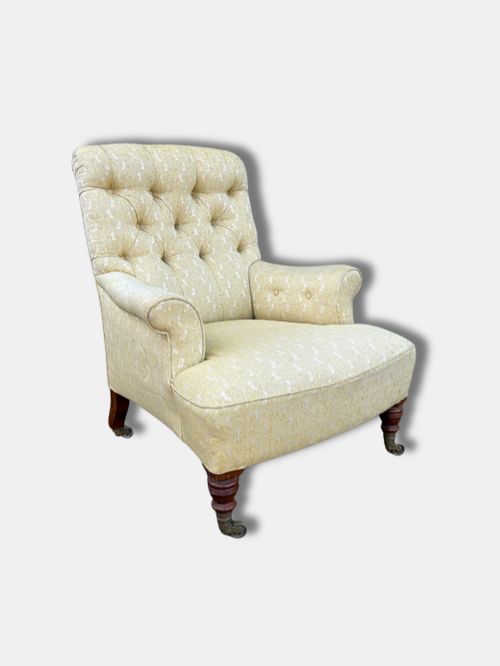
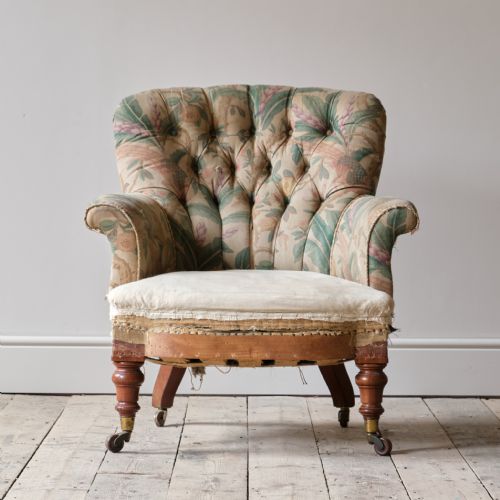
Tufted Mahogany Armchair
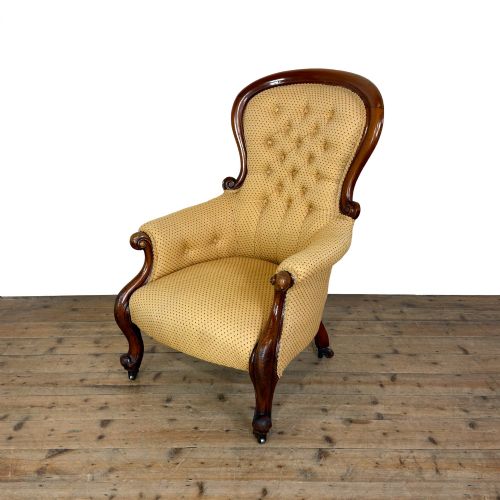
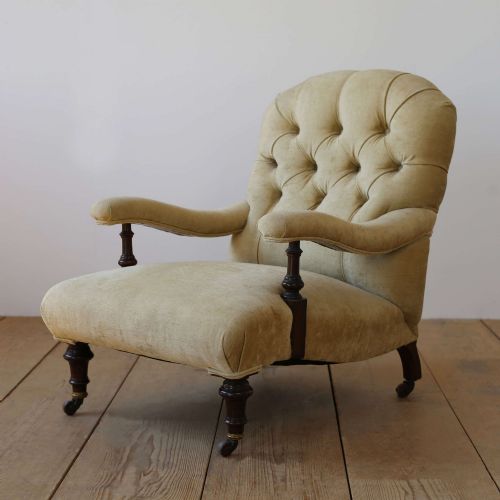
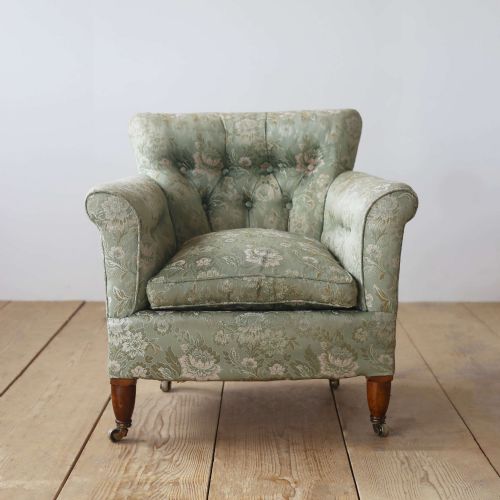
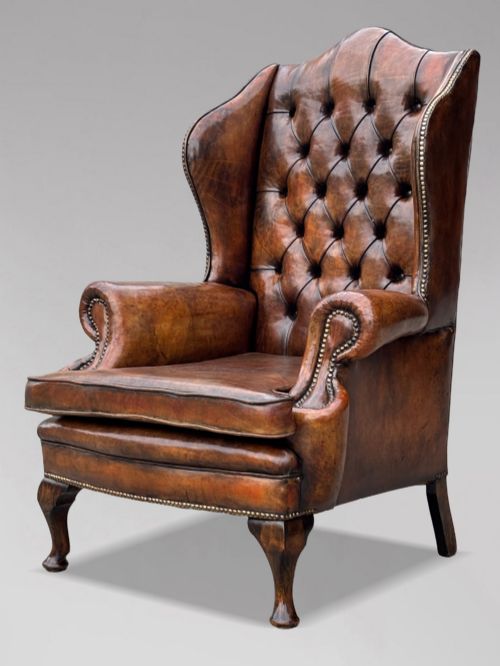
A tufted mahogany armchair brings solid timber frame construction and deep buttoning together for proper study and library seating.
Tufted Mahogany Armchair
A tufted mahogany armchair combines a dense hardwood frame with buttoned upholstery designed for a library, desk, or study. Buyers searching for a tufted mahogany armchair meet nineteenth-century Victorian and Regency forms most frequently on this page.
The selection ranges from revolving desk chairs and wing armchairs to open armchairs and library seating. These pieces originate primarily from nineteenth-century English workshops.
Makers built these chairs for sustained daily use at a writing table or beside a reading stand. The proportion of the arms and the rake of the back determine whether a chair serves for writing or resting.
How they were made
Cabinetmakers shaped solid mahogany for the structural frames, legs, and arm supports, often incorporating brass castors and brass inlay. The timber provides a heavy, stable skeleton that resists warping over decades of service.
Upholsterers secured leather, velvet, damask, or fabric over internal stuffing using hessian webbing and deep buttoning. This technique pulls the covering tight into regular indentations to hold the padding firmly in place.
Joinery relied on mortise and tenon joints locked with wooden pegs or screws to bear the weight placed upon the arms and back. Turning and carving on the mahogany frame remained crisp and defined through hand-chiselling.
Some nineteenth-century sitters required a built-in reading stand bolted to the arm to hold heavy folios steady.
What varies in quality
The density and grain of the mahogany set the foundation, with straight-grained timber providing superior strength compared to plain secondary woods. Carved details on the arm terminals and legs show the hand of a skilled carver rather than a factory mould.
The depth and symmetry of the buttoning dictate the standard of the upholstery work. Hand-pleated folds that hold their tension evenly across the back indicate superior interior stuffing and attachment.
Howard and Sons·Holland and Sons
The Tufted Mahogany Armchair Glossary
- Button back
- A method of upholstery where recessed buttons are pulled deep into the padding to create a diamond pattern of tufts. This technique keeps the internal stuffing from shifting during use.
- Mahogany
- A durable tropical hardwood prized for its deep reddish-brown colour and resistance to shrinkage. Cabinetmakers used it extensively for nineteenth-century seating frames.
- Wingback
- An armchair featuring protective side panels attached to the arms to deflect draughts from the sitter's head and shoulders. This form appears frequently in leather upholstery for libraries.
- Slipper chair
- A low-seated bedroom chair designed without arms to allow easy movement while dressing. The compact frame sits close to the floor.
- Revolving desk chair
- A swivelling seat mounted on a central pivot mechanism for movement at a writing table. These chairs often feature a height-adjustment screw beneath the seat.
Tufted Mahogany Armchair: Frequently Asked Questions
What is a tufted mahogany armchair used for?
These chairs served primarily as functional seating at a library table, partner's desk, or reading stand in nineteenth-century homes. Their robust timber frames and supportive upholstered backs made them suitable for long hours of writing or study.
Today, they find places in studies, home offices, and sitting rooms where sturdy construction and traditional seating support are required.
How do I date a tufted mahogany armchair?
Dating relies on observing the timber choice, leg style, and upholstery construction methods visible beneath the chair. Regency examples often display brass inlay or sabre legs, while Victorian pieces lean towards heavier carved mahogany frames and buttoned leather.
Makers' stamps, patent marks, and structural clues such as hand-cut screws or webbing help narrow the decade of manufacture between the early and late nineteenth century.
Are these chairs comfortable for daily use?
The deep buttoning and sprung interiors provide firm, upright support designed for working rather than lounging. The solid mahogany armrests and supportive back angles encourage good posture during desk work.
Original padding uses traditional materials like horsehair and hessian, which feel firmer than modern foam fillings but offer lasting resilience.
How should I care for the leather and wood?
Maintenance involves feeding the leather upholstery with a suitable conservation wax or balm to prevent cracking over time. Regular dusting with a soft cloth keeps the mahogany finish clean and preserves the surface sheen.
Keeping the chair away from direct heat sources and strong sunlight prevents the timber from drying out and protects the hide from fading.