



Mahogany Spoonback Armchair
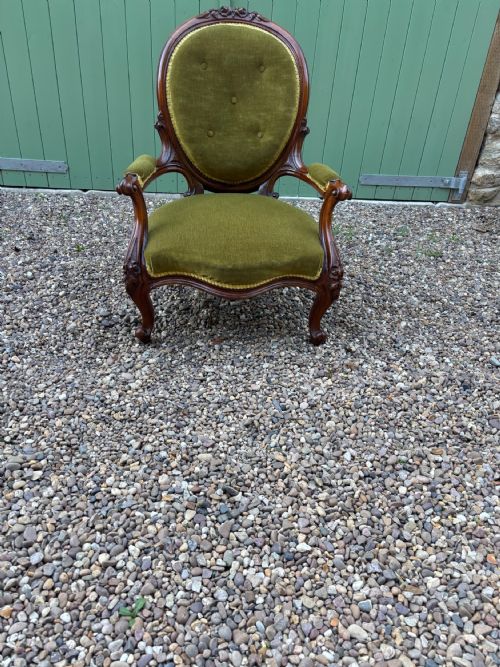
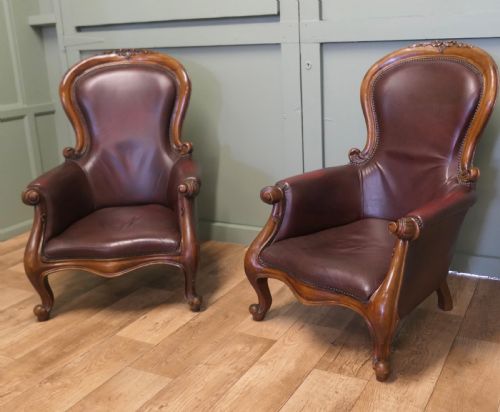
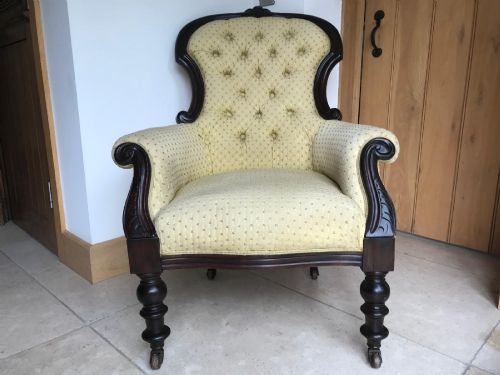
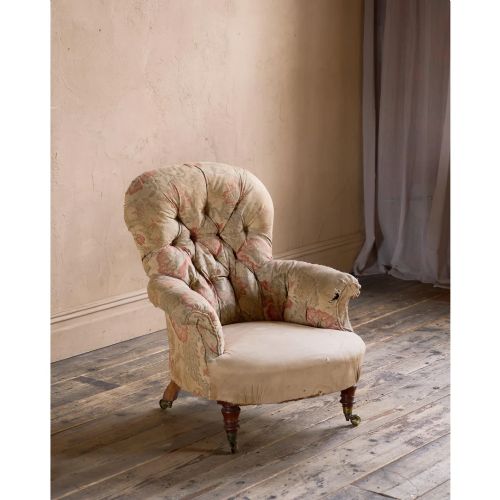
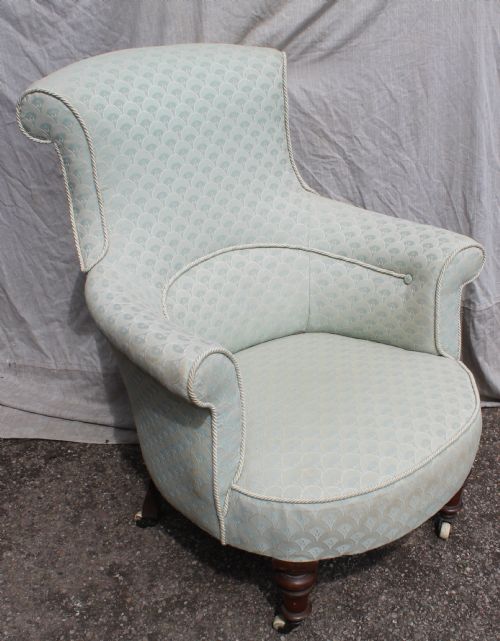
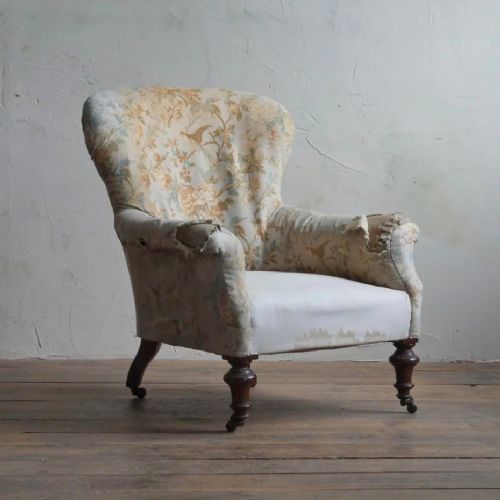
A mahogany spoonback armchair is a nineteenth-century seating form designed for the parlour or fireside, offering shaped comfort and rich timber tone.
Mahogany Spoonback Armchair
A mahogany spoonback armchair belongs firmly to the Victorian period, appearing across the nineteenth century from eighteen-fifty to eighteen-eighty in formats such as parlour chairs, fireside seats, and salon suites.
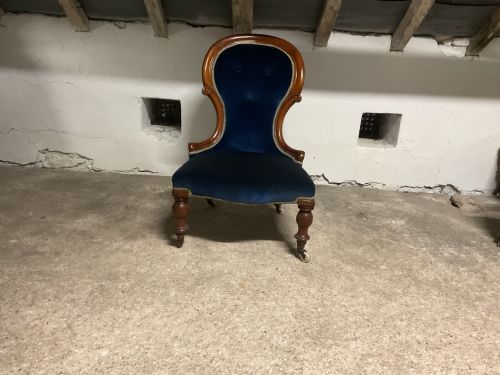
The characteristic curved backrest mirrors the contour of the human spine, giving rise to the term spoonback in Victorian seating design.
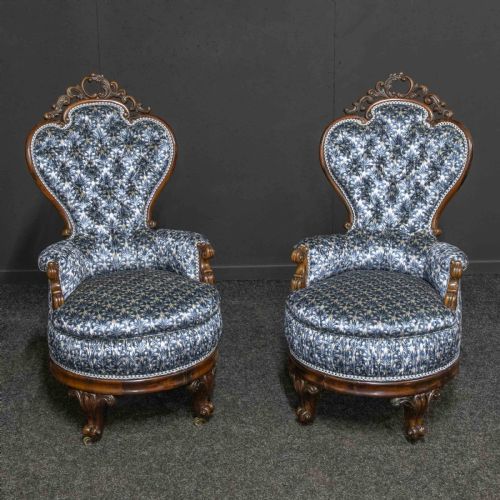
Makers shaped these frames in mahogany, often pairing them with cabriole legs, ceramic castors, and low seating heights suited to domestic interiors of the era.
Timber and Construction
Cabinetmakers utilised solid mahogany for the structural frames, steam-bending or carving the curved back rails from dense stock to achieve the signature spoon profile.
Upholstery methods involved traditional webbing and stuffing secured beneath fabric, leather, or velvet, while brass and ceramic castors were fitted to the feet for mobility.
Current and archive listings show these armchairs spanning the Victorian period from eighteen-fifty to eighteen-eighty, constructed primarily in mahogany with leather, velvet, and fabric upholstery.
Judging the Workmanship
Quality rests in the crispness of the timber carving along the crest rail and the elegance of the cabriole legs, where superior pieces retain fine detail without sanding erosion.
The integrity of the mahogany frame construction dictates longevity, separating sturdy gentleman's and ladies' reading chairs from simpler parlour seating.
Holland & Sons·C. Hindley & Sons
The Mahogany Spoonback Armchair Glossary
- Spoonback
- A padded chair back curved in three dimensions to resemble the bowl of a spoon. This ergonomic shape defines mid-nineteenth-century Victorian seating.
- Cabriole leg
- A furniture leg that curves out and then narrows down to a foot. It draws inspiration from animal legs and appears frequently on Victorian mahogany frames.
- Ceramic castors
- Small wheels made of porcelain or ceramic fixed to the base of chair legs. They allowed heavy Victorian armchairs to move easily across carpets.
- Gentleman's armchair
- A wider, open-armed fireside seat designed for men. These pieces provide a sturdier frame compared to smaller nursing or ladies' chairs.
Mahogany Spoonback Armchair: Frequently Asked Questions
How do I spot a true Victorian spoonback armchair?
Look for dense mahogany framing with hand-carved details and traditional joinery methods typical of the nineteenth century.
Examine the backrest for the characteristic curved contour that defines the form and check for period brass and ceramic castors on the feet.
Were these chairs used in the parlour or bedroom?
Victorian mahogany spoonback armchairs served multiple domestic functions, appearing as fireside reading chairs in sitting rooms and lower nursing seats in bedrooms.
Larger open armchairs were suited to gentleman's studies, while pairs often furnished formal Victorian drawing rooms.
What is the difference between ladies and gentleman's chairs?
Gentleman's armchairs typically feature broader proportions and open arms to accommodate heavier frames and formal attire of the period.
Ladies' and nursing chairs are often narrower or lower to the ground, designed for comfort during domestic tasks.
How should I care for the mahogany frame?
Keep the timber away from direct heat sources and strong sunlight to prevent the nineteenth-century mahogany polish from drying out or fading.
Apply a traditional beeswax polish occasionally and buff with a soft cloth to maintain the natural lustre of the wood.