







Tufted Leather Library Seat
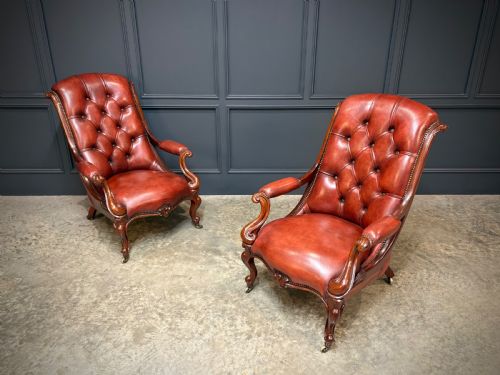
A tufted leather library seat brings heavy timber frames and deep buttoning together for long hours of reading.
Tufted Leather Library Seat
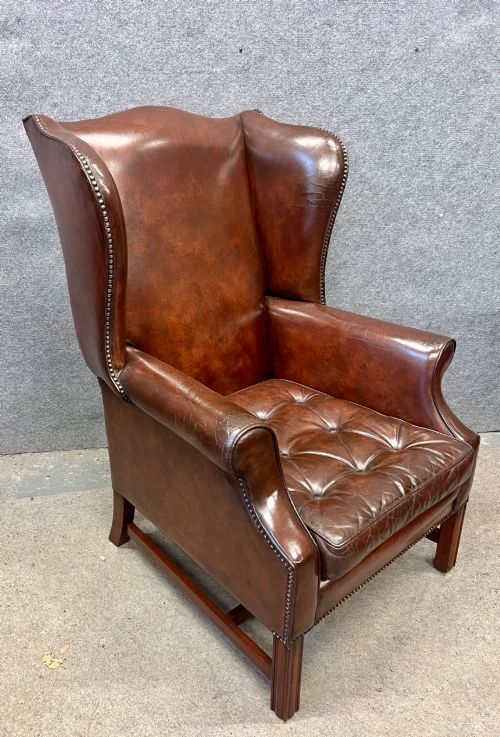
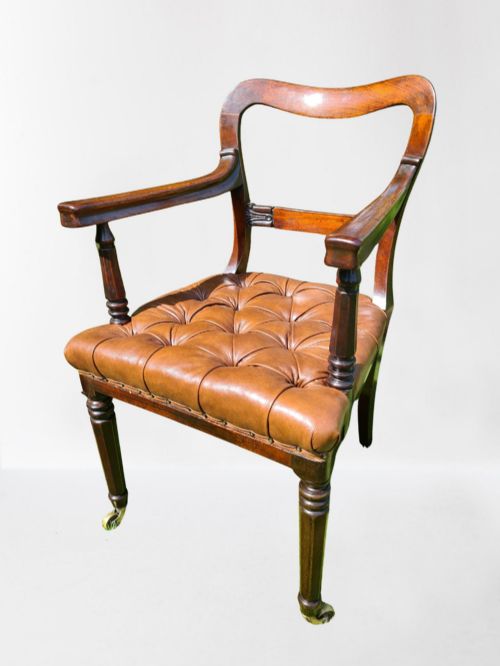
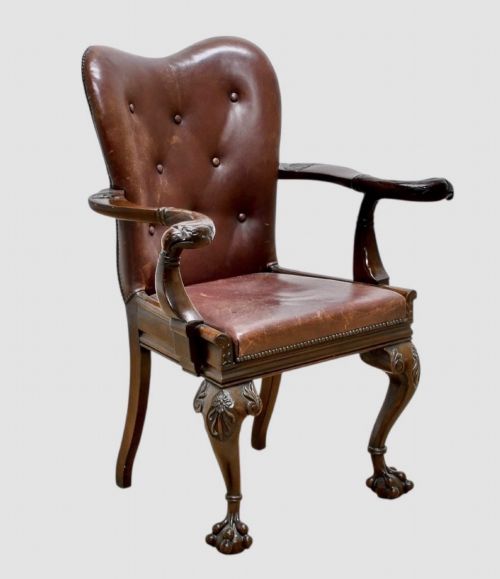
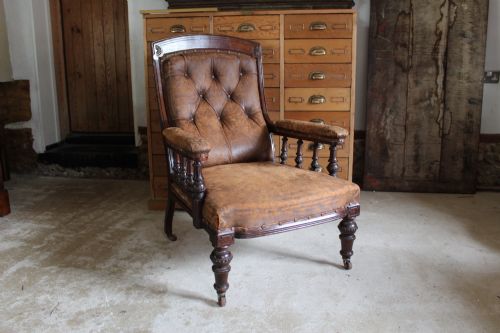
A tufted leather library seat is a sturdy armchair or desk chair designed for study rooms, libraries and studies across several centuries. These pieces combine heavy timber frames with sprung seats and buttoned leather upholstery.
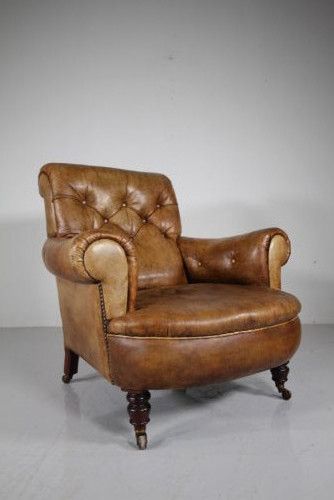
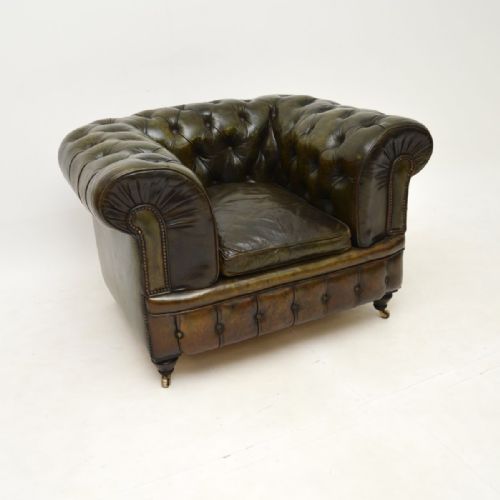
Most examples found here date from the 19th century and the Victorian era, though earlier Georgian and Regency specimens appear alongside later Victorian designs. They take the form of large armchairs, compact desk chairs and spacious club seating.
Makers built these chairs for comfort and durability, employing rich woods like mahogany, oak, walnut and rosewood. The upholstered surfaces feature deep buttoning in dark red, green and brown leather.
How they were made
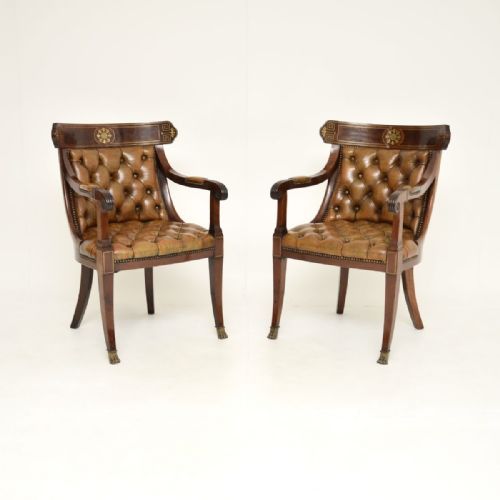
Cabinetmakers constructed the supportive frames using solid mahogany, oak, walnut and rosewood, often shaping the timber with carved details or brass inlay. Metal components such as castors and brass studs reinforced the construction.
Upholsterers applied layers of stuffing to webbed bases before securing the leather hide with hundreds of individual metal pins. The characteristic tufted surface relies on deep buttoning pulled tight into the padding to create regular diamond patterns.
Tufted Leather Library Seat Retail Price Guide 2026
Typical asking prices for tufted leather library seat among the pieces listed under this phrase on Sellingantiques today, from the lower quarter to the upper quarter. They describe what is for sale here now, not the wider market.
Period styles span from 18th-century Georgian designs through Regency and Victorian eras up to the 1930s.
What varies in quality
The density of the timber framing and the weight of the underlying woods set the structural standard for each chair. Dense mahogany and solid oak provide greater rigidity than lighter secondary timbers.
The grade of the leather hide and the regularity of the buttoning determine the finish of the upholstery. Finer pieces display supple leather paired with precise, deep pleats across the backrest and arms.
Howard And Sons·Gillow
The Tufted Leather Library Seat Glossary
- Buttoned
- An upholstery technique where twine pulls the leather tight into the padding and secures it with buttons, forming a diamond pattern. This method holds the internal stuffing firmly in place.
- Library chair
- A heavy, comfortable armchair designed for reading rooms and studies, often featuring padded arms and a low back. These seats prioritise long-term support.
- Regency
- A British design period spanning the early 19th century, known for classical influences, rosewood timber and brass inlay. Pieces from this era display clean architectural lines.
- Bergère
- An enclosed upholstered armchair with wooden frames visible around the sides and back. It offers a lighter silhouette than fully stuffed club chairs.
- Gothic Revival
- An architectural and furniture style drawing on medieval forms, featuring pointed arches and carved oak. This aesthetic was popular during the 19th century.
Tufted Leather Library Seat: Frequently Asked Questions
How do I date an antique leather chair?
Dating involves examining the timber species, the framing methods, and the style of the legs and armrests. Regency pieces often use rosewood and brass inlay, while Victorian examples frequently employ mahogany or oak.
Upholstery techniques and hardware nails also help narrow down the period of manufacture. Earlier 18th-century pieces tend to show simpler frames compared to heavily carved Victorian iterations.
Where should I place a library chair?
These substantial chairs suit studies, home libraries and spacious sitting rooms where their generous proportions fit the floor plan. They pair well with writing desks and low tables.
Because they feature finished backs in many cases, they can sit away from walls in the centre of a room. Proper clearance allows the chair to function as a primary reading seat.
How do I care for antique leather?
Antique leather requires gentle cleaning with a soft cloth and occasional treatment with appropriate conservation balms to prevent drying. Avoiding direct sunlight and strong heat sources protects the hide from cracking.
Regular dusting keeps grit from wearing down the surface grain and the thread used in the buttoning. Careful maintenance preserves the original patina built up over generations.