

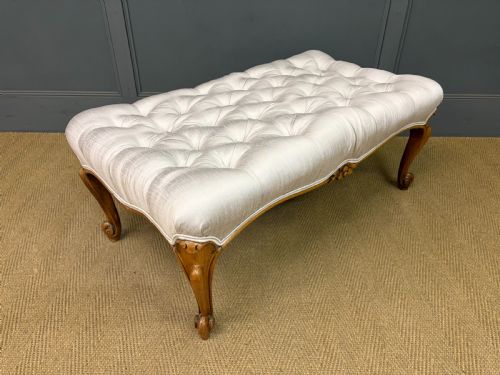
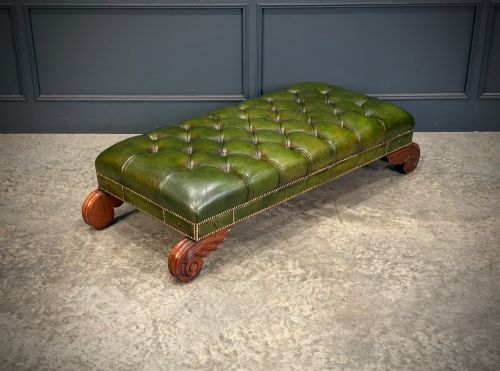
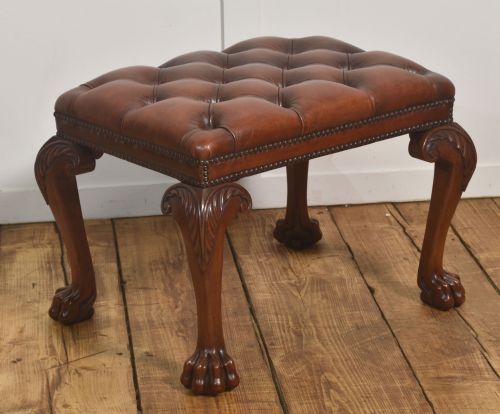
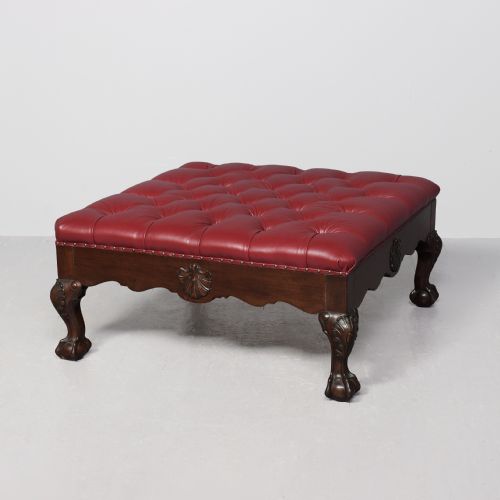


Tufted Footstool
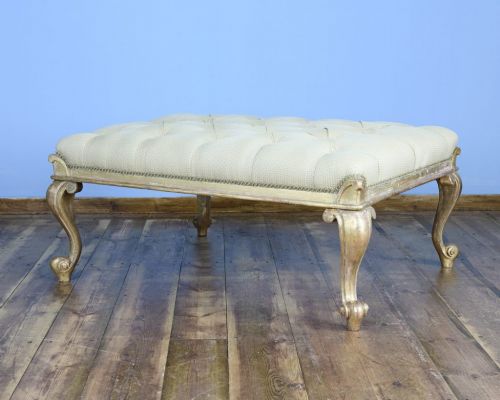
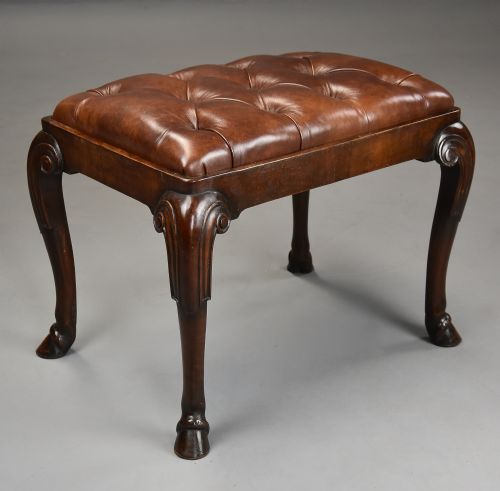
A tufted footstool offers low seating or leg support, pairing deep buttoning with polished timber frames.
Tufted Footstool
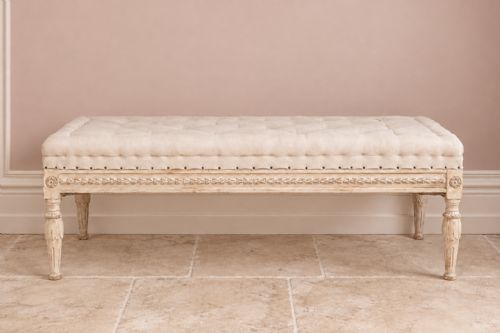
A tufted footstool combines deep buttoned upholstery with timber frames across periods from the Regency era through to the early twentieth century. You will frequently encounter Victorian examples alongside nineteenth century styles.
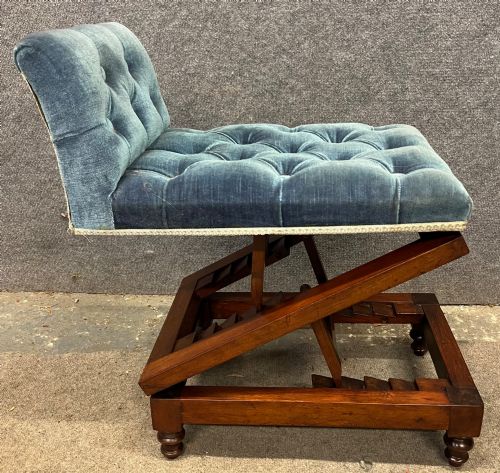
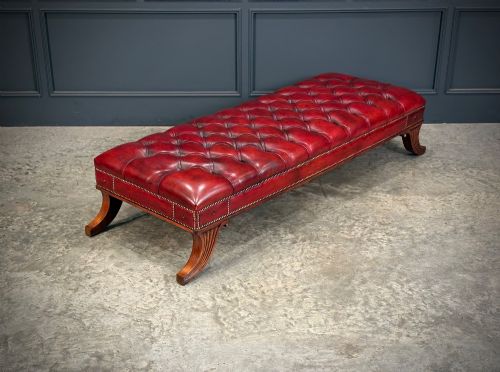
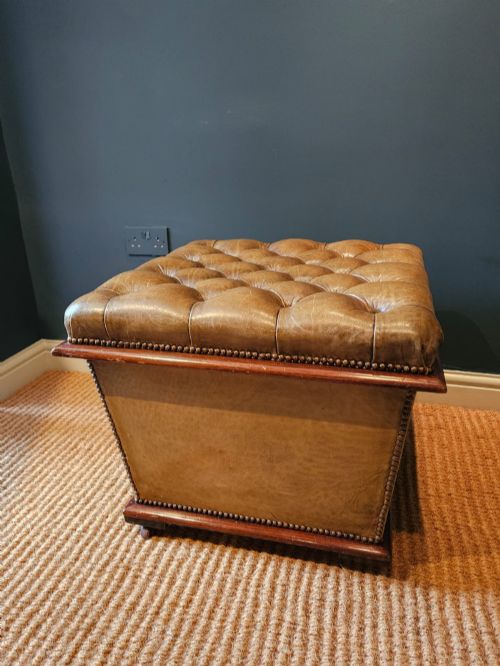
The timber frames utilise woods such as mahogany, walnut, rosewood and oak, supporting leather, velvet or fabric upholstery. Formats range from compact gout stools to large country house ottomans and long library window seats.
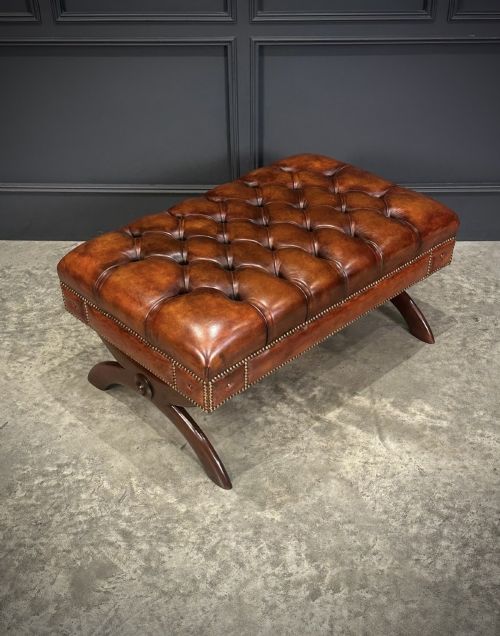
Makers and designers from the past created these pieces in traditional English, Chippendale, Queen Anne and Chesterfield styles. Many feature cabriole legs, brass castors or X-frame supports.
Materials and construction
Frames are constructed from dense hardwoods like mahogany, walnut and rosewood, joined with traditional craft methods to bear weight and resist movement. Turnings, cabriole legs and parcel gilt details are carved directly into the timber structure.
Upholstery relies on leather, velvet or silk secured with deep buttoning techniques. Brass-studded trim often fastens the hide or fabric to the wooden frame, whilst internal padding provides a firm, resilient surface.
Tufted Footstool Retail Price Guide 2026
Typical asking prices for tufted footstool among the pieces listed under this phrase on Sellingantiques today, from the lower quarter to the upper quarter. They describe what is for sale here now, not the wider market.
Listings feature woods including mahogany, walnut, rosewood, oak and brass alongside leather, velvet and silk upholstery.
Judging quality in a tufted footstool
Quality rests upon the weight and selection of the timber frame, where dense mahogany or figured walnut indicates superior cabinetmaking. Refined carving on cabriole legs or crisp parcel gilding distinguishes finer pieces from plain utility items.
The execution of the deep buttoning and the grade of the leather or fabric determine the finish at the upper end of the scale. Hand-dyed hides and properly secured brass studs show meticulous attention to detail.
James Shoolbred·A.M.E. Fournier
The Tufted Footstool Glossary
- Buttoning
- A method of upholstery where cords or twine are pulled through padding and secured to form a diamond pattern. This technique keeps the stuffing evenly distributed.
- Cabriole leg
- A furniture leg that curves out and then in, commonly found on eighteenth and nineteenth century seating. It mimics the shape of an animal's leg.
- Gout stool
- An adjustable footrest designed to elevate a foot or leg for comfort. These compact pieces often feature in nineteenth century studies.
- Ottoman
- A low, upholstered seat or footstool without a back or arms. Large versions serve as central room seating in country houses.
- X-frame
- A structural base formed by two intersecting diagonal members shaped like the letter X. This design provides sturdy support for stools and window seats.
Tufted Footstool: Frequently Asked Questions
What is a tufted footstool used for?
These pieces provide a low surface to rest feet when seated in an armchair or library chair. Larger versions function as centre tables or auxiliary seats in drawing rooms.
Their robust timber frames and upholstered tops make them versatile additions to studies, bedrooms and living spaces.
How do I date a tufted footstool?
Dating relies on timber choices, leg profiles and upholstery methods visible in the piece. Regency and Victorian examples often feature mahogany or rosewood with turned or cabriole legs.
Later nineteenth century pieces frequently display deep buttoned leather or velvet, aligning with Chesterfield and country house styles.
Are these footstools comfortable?
The combination of firm internal padding and deep buttoning creates a supportive surface for resting legs. Leather and fabric coverings provide a durable yet tactile top.
Original padding offers a firmer feel compared to modern foam seating, reflecting historical upholstery standards.
How do I care for leather upholstery?
Leather upholstery requires conditioning to maintain flexibility and prevent the hide from drying out over time. Regular dusting with a soft cloth preserves the surface finish.
Keep these pieces away from direct heat sources and strong sunlight to protect hand-dyed colours and natural grain.