



Tufted Chesterfield Settee
A tufted chesterfield settee brings deep buttoning and sturdy Victorian character into a room, offering substantial seating built to last.
Tufted Chesterfield Settee
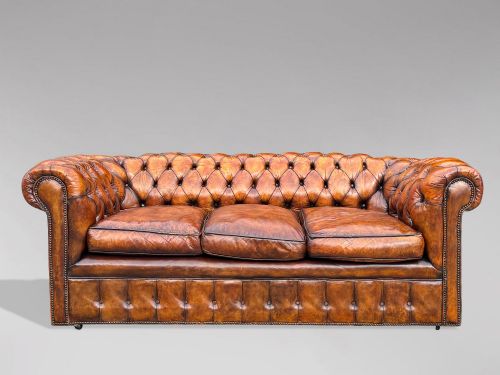
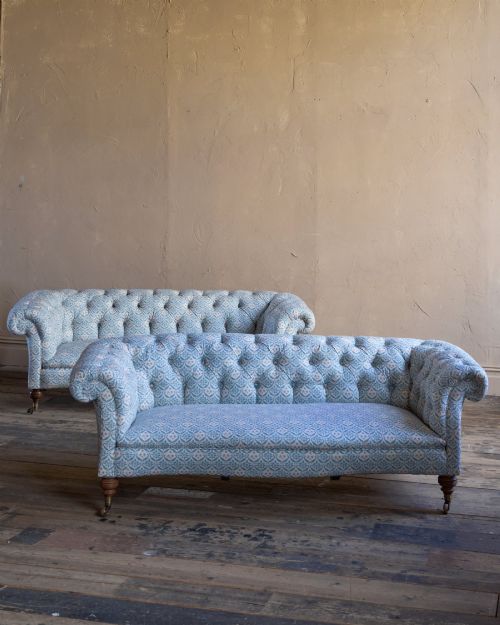
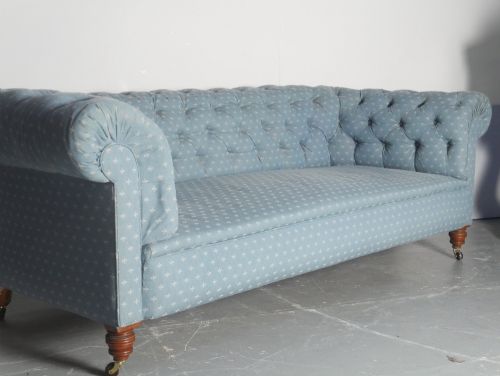
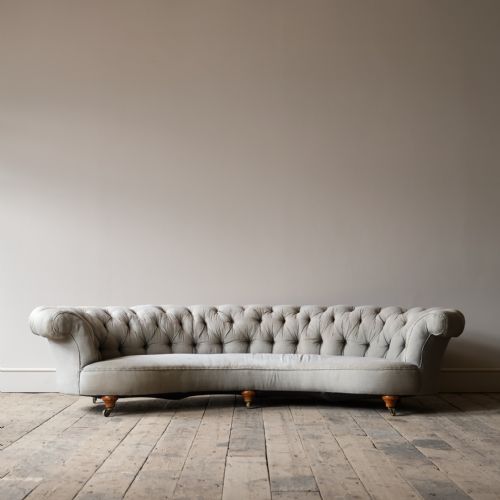
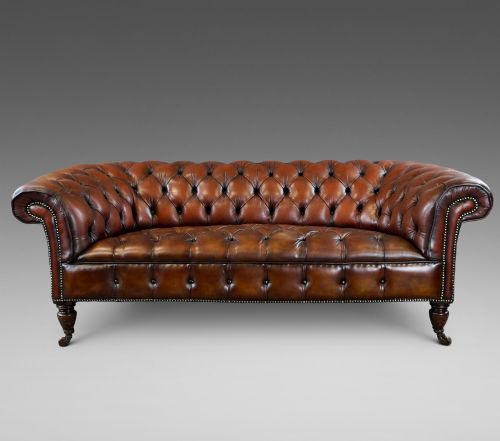
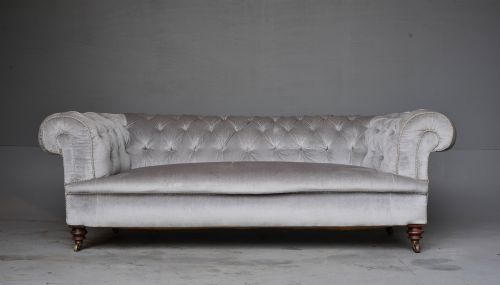
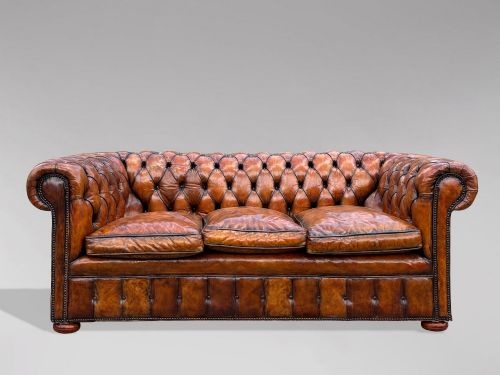
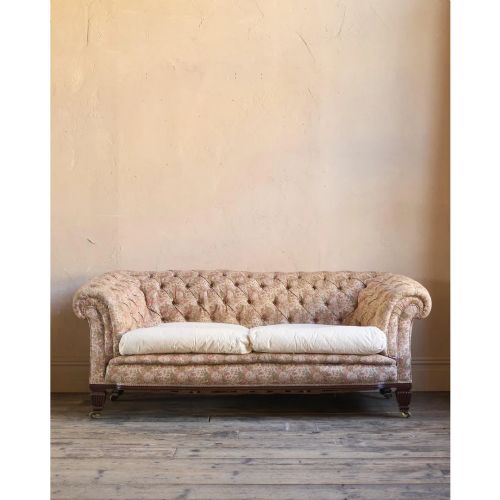
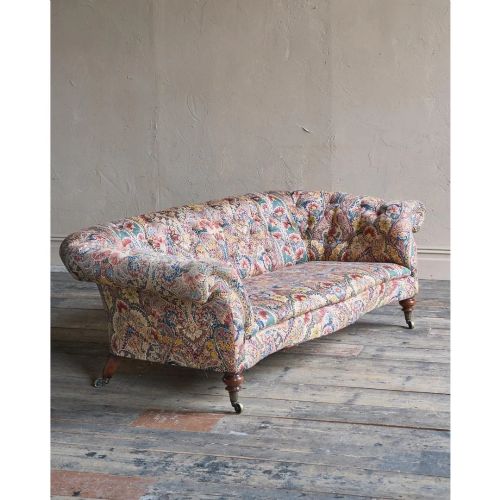
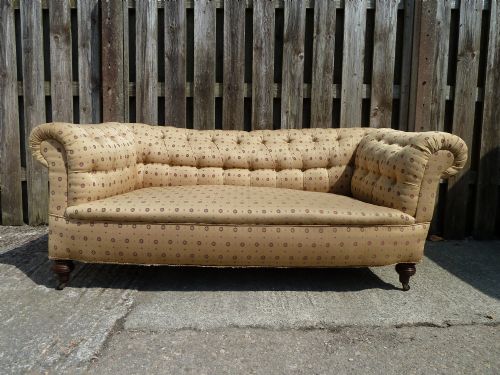
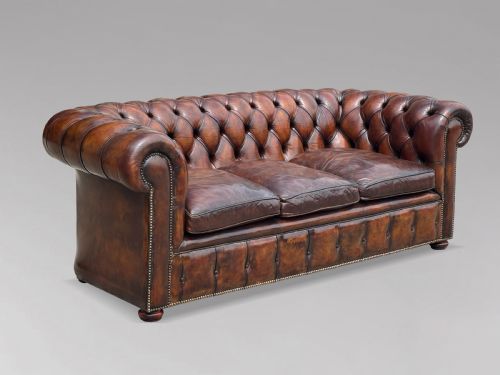
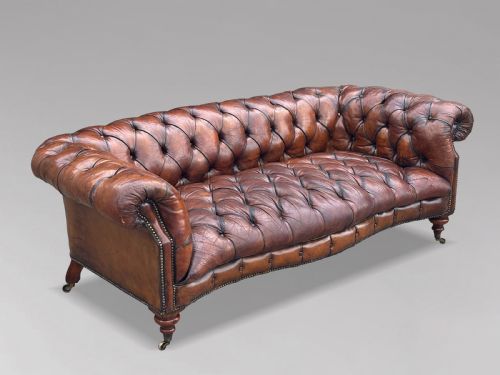
A tufted chesterfield settee is a classic seating form defined by rolled arms and deep buttoning across the back. The versions you meet on this page primarily date from the nineteenth century through the 1930s, reflecting Victorian, Edwardian, and Art Deco influences.
Makers such as Howard and Sons, Jas Shoolbred, Gillows, and Hampton and Sons produced notable examples during the nineteenth century. These seating pieces appear as three-seaters, two-seaters, corner sofas, and chaise longues, often paired with mahogany, walnut, or carved wood frames.
While most examples are upholstered in brown, green, or red leather, you also encounter pieces finished in velvet and fabric, or left in raw leather for custom dyeing. Some pieces retain show frames in carved wood, whilst others use traditional coil springing and horsehair filling.
Construction and Materials
Makers built these settees using sturdy hardwood frames, incorporating mahogany, walnut, or general timber to ensure long-term stability. Traditional construction relied on hand-tied coil springing and horsehair stuffing to support the deep buttoned upholstery.
Upholstery materials range from durable cattle hide and raw leather to velvet and standard fabric. Brass tacks often secure the leather edges, while exposed wooden frames display hand-carved details or turned legs.
Tufted Chesterfield Settee Retail Price Guide 2026
Typical asking prices for tufted chesterfield settee among the pieces listed under this phrase on Sellingantiques today, from the lower quarter to the upper quarter. They describe what is for sale here now, not the wider market.
Listings span from the early nineteenth century through the 1930s, featuring Victorian, Edwardian, and Art Deco periods.
Assessing Quality and Craftsmanship
Quality rests in the integrity of the internal stuffing and the execution of the deep buttoning. Pieces built with horsehair stuffing and properly tied coil springs maintain their structural support and comfort far better over decades.
The choice of frame timber and the precision of the woodwork also divide standard output from superior workshop production. Maker attribution to firms like Howard and Sons or Gillows often indicates finer timber selection and superior joinery.
Howard and Sons·Jas Shoolbred·Gillows·Hampton and Sons
The Tufted Chesterfield Settee Glossary
- Chesterfield
- A large upholstered sofa or settee traditionally characterised by rolled arms of the same height as the back and deep button tufting. This form remains a staple of traditional English seating.
- Buttoned
- An upholstery technique where indentations are formed across the surface by pulling twine or thread through the padding and securing it with buttons. It creates the characteristic diamond pattern on the backrest.
- Chaise longue
- An elongated seat designed for reclining, combining the backrest of a settee with an extended foot platform. Examples often feature a single scrolled end.
- Horsehair
- A traditional upholstery filling material valued for its resilience and breathability. Makers used it to stuff the deep seats and backs before synthetic alternatives existed.
Tufted Chesterfield Settee: Frequently Asked Questions
How do I date a chesterfield settee?
Dating relies on examining the frame construction, wood type, and upholstery methods used beneath the leather. Nineteenth-century examples often display hand-turned legs, heavier hardwood frames, and traditional horsehair stuffing.
Later pieces from the 1920s and 1930s may show different stitching patterns, altered spring tensions, or alternative timber choices like mahogany or general hardwood.
Are all chesterfield settees made of leather?
Not all examples use leather, though it remains the most common finish found in historical workshops. You also encounter pieces upholstered in velvet, fabric, or raw leather prepared for custom dyeing.
Underneath the outer cover, the core materials typically consist of hardwood frames, coil springs, and horsehair padding regardless of the chosen top cover.
How do I care for antique leather?
Preserving antique leather requires maintaining its natural moisture using appropriate leather balms or waxes suited for older hides. Avoid placing the settee in direct sunlight or near heat sources to prevent cracking.
Regular dusting and gentle conditioning help protect hand-dyed finishes and raw leather surfaces over time.