
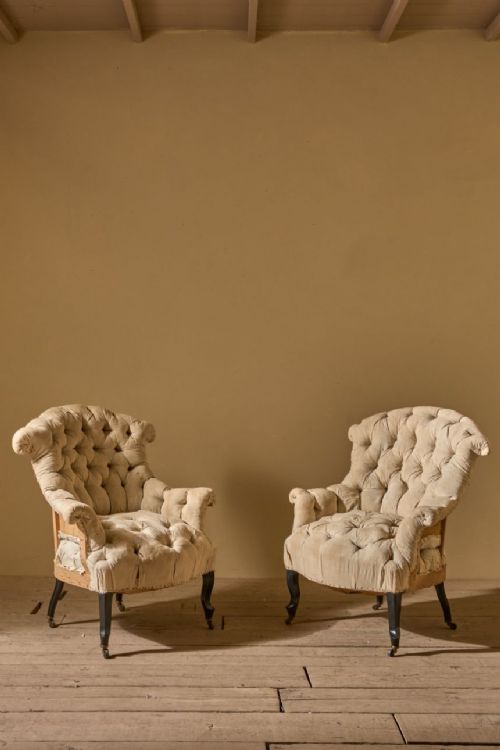
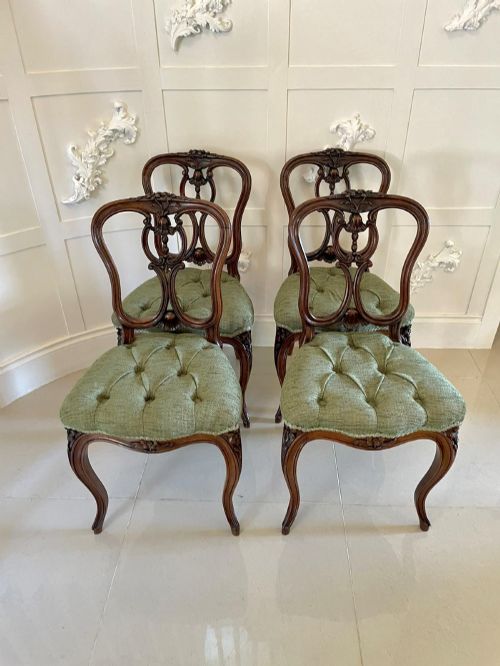
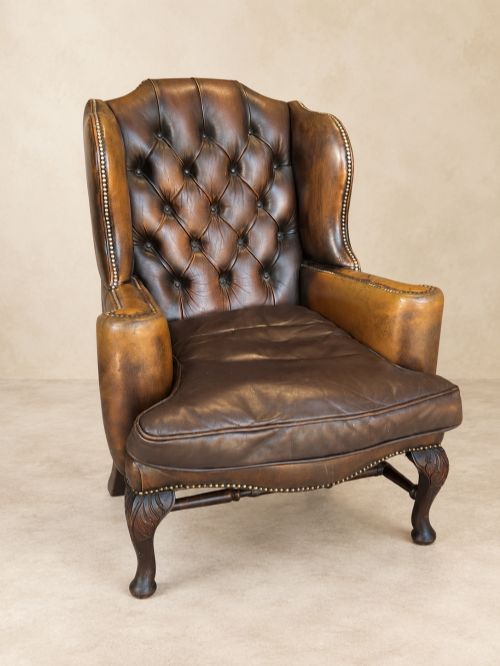

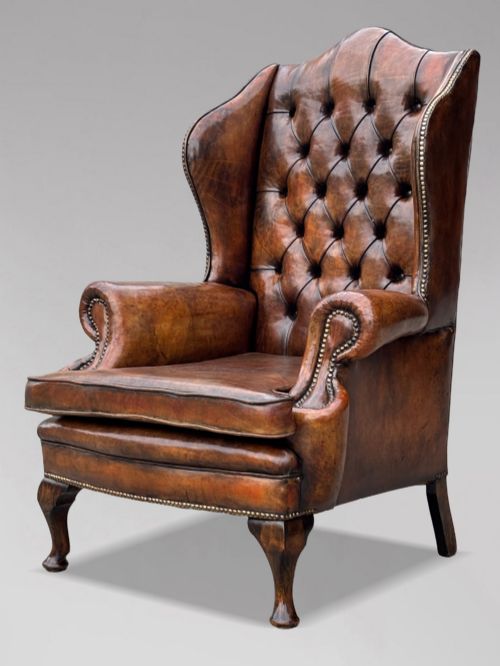
Tufted Back Chair
When you search for a tufted back chair, you find seating upholstered with deep buttons across the backrest, spanning Victorian, 19th Century and later periods.
Tufted Back Chair
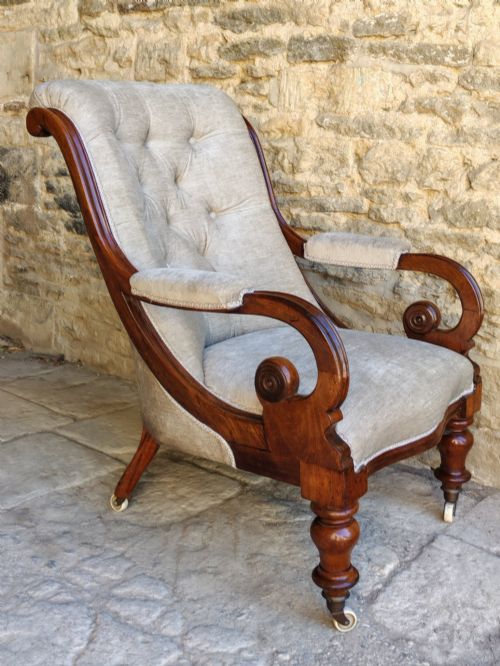
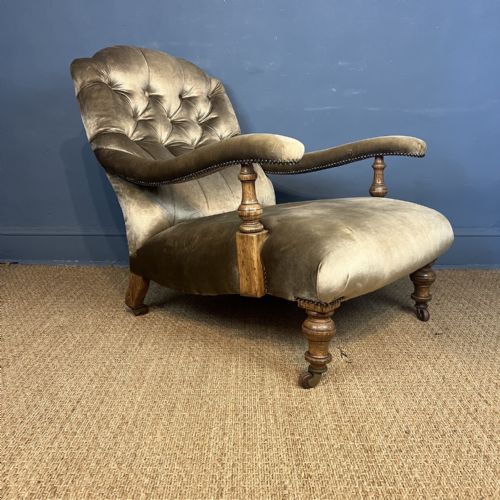
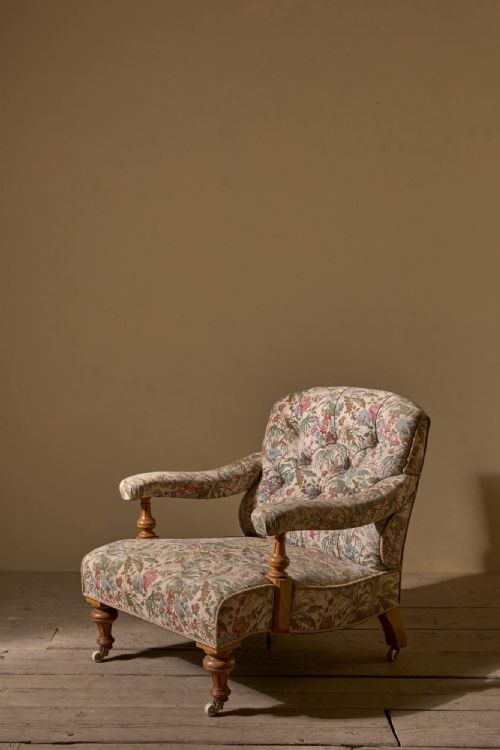
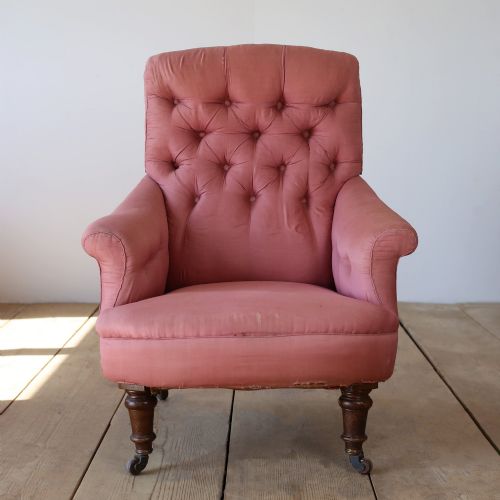
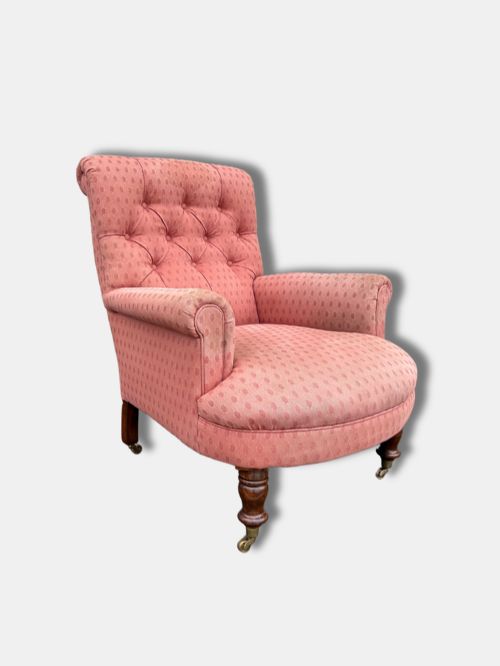
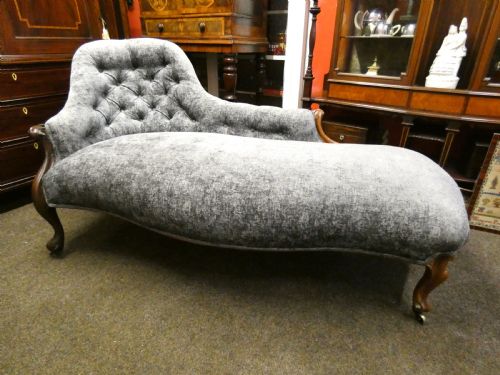
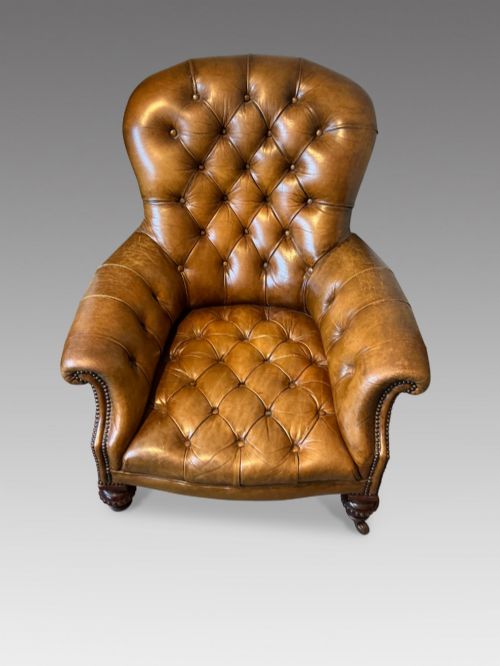
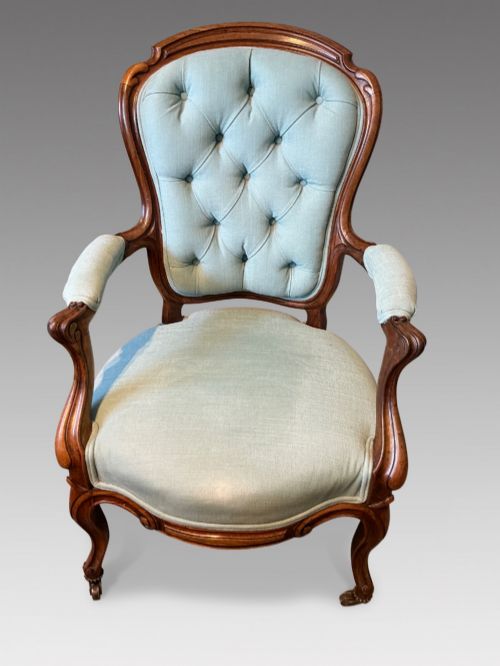
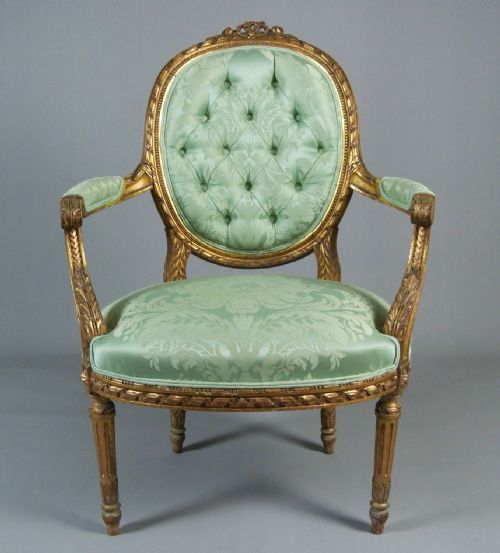
A tufted back chair relies on buttoning drawn tight through the upholstery to create a distinct pattern of dimples and folds across the inner backrest. These pieces appear in forms ranging from library armchairs and wing chairs to slipper chairs and chaise longues.
The selections recorded on this page lean heavily towards the Victorian period and the nineteenth century, alongside pieces from the 1920s. Woods like mahogany, walnut, oak and rosewood form the structural frames.
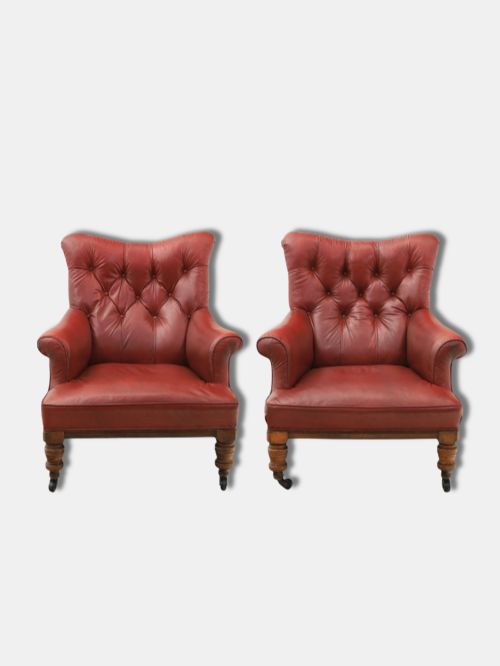
Buyers encounter armchairs upholstered in leather, velvet, damask and fabric. Many examples carry specific stylistic influences such as French Napoleon III, Rococo Revival and the distinctive workshop aesthetic associated with Howard and Sons.
Materials and construction
Makers built the structural frames from solid timbers including mahogany, walnut, oak and rosewood, often carving the exposed woodwork on arms, rails and legs. Wood framing provides the rigid skeleton required to bear the heavy tension of deep buttoning.
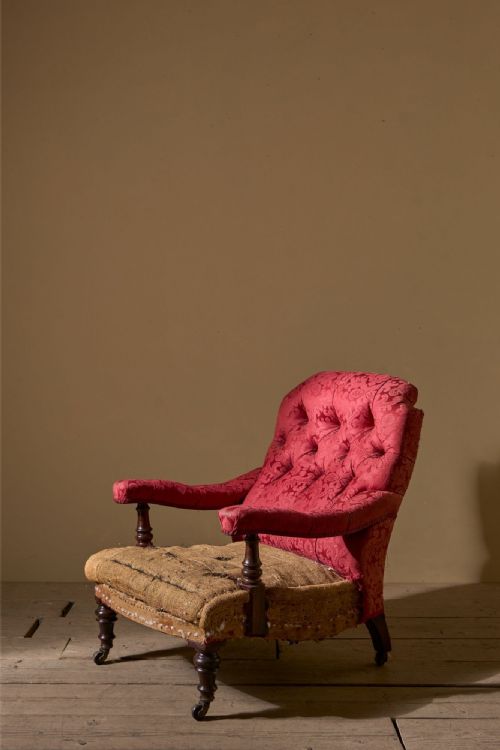
Upholsters layered stuffing within the backrest and secured the surface using twine pulled through to the rear or interlining, creating the characteristic tufted pattern with linen thread and traditional buttons. Covering materials applied over this foundation include leather, velvet, damask and plain fabric.
Brass castors frequently support the legs of nineteenth-century armchairs and chaise longues, allowing movement across heavy carpets. Brass studwork sometimes borders the leather upholstery on library chairs and Chesterfield models.
Materials recorded on this page include brass, mahogany, fabric, leather, velvet, walnut, wood and damask.
Judgements of quality
Quality rests upon the proportion of the timber frame and the crispness of any hand carving on walnut, mahogany or rosewood. Heavier framing and balanced open arms indicate careful cabinetmaking.
The execution of the tufting dictates the finish of the backrest. Evenly spaced buttons, precise folds in the leather or velvet, and firm support distinguish superior pieces from simpler utilitarian seating.
Howard and Sons·Thomas Chippendale·Holland and Sons·Shoolbred
The Tufted Back Chair Glossary
- Button back
- Upholstery pulled into deep indentations by twine secured with buttons. This technique secures the internal stuffing while creating a textured surface.
- Wing armchair
- An upholstered seat featuring protective side panels attached to the backrest. These wings shielded sitters from drafts in older rooms.
- Chaise longue
- An elongated seat designed for reclining, combining an armchair back with a footrest extension. Examples appear in Victorian rosewood and mahogany.
- Library armchair
- A sturdy seat built for reading rooms, frequently upholstered in brown or tan leather. These often feature padded arms and robust wooden frames.
- Slipper chair
- A low-seated bedroom chair designed without arms to ease the process of putting on shoes and garments. Victorian makers produced these in various wood types.
Tufted Back Chair: Frequently Asked Questions
How do I identify Victorian periods?
Victorian seating often exhibits dark timbers like walnut, rosewood and mahogany alongside deep buttoning and turned wooden legs. Stylistic clues include Rococo Revival curves and heavy proportions.
Comparing frame construction and upholstery details helps distinguish mid-nineteenth-century examples from later reproductions.
Where were these chairs used?
Earlier owners placed these chairs in libraries, drawing rooms, country house studies and bedrooms. Library armchairs served readers, while slipper chairs sat in dressing rooms.
Chaise longues provided reclining space in formal receiving rooms and large bedrooms.
How do I care for leather?
Leather upholstery requires regular dusting and occasional treatment with appropriate leather dressings to prevent drying. Avoiding direct sunlight protects the colour of nineteenth-century hides.
Gentle maintenance preserves the patina on tan, brown and oxblood leather surfaces.