


Trumpet Bowl Glass
These trumpet bowl glass pieces combine elegant flared silhouettes with tactile historical stems, offering collectors a direct link to Georgian dining and Victorian display.
Trumpet Bowl Glass
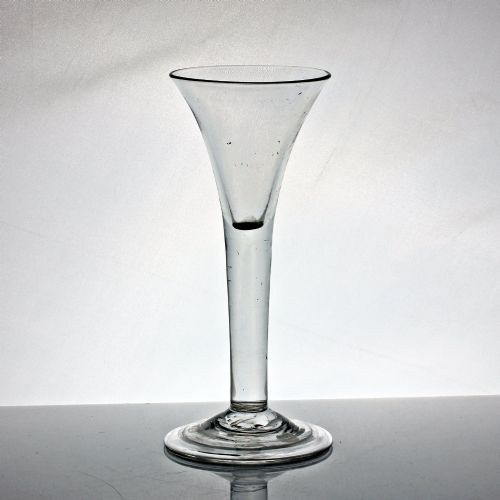
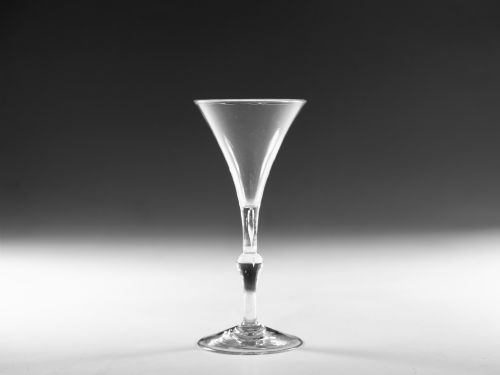
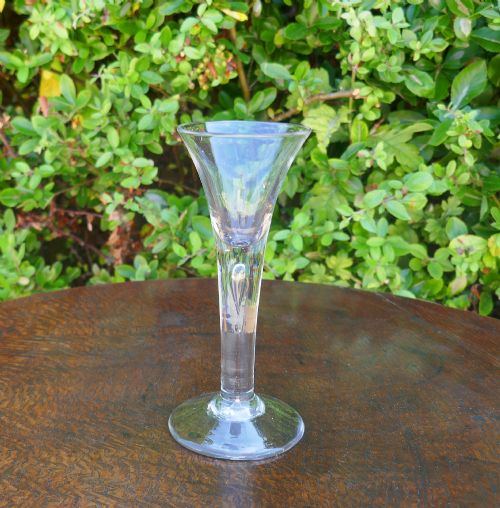
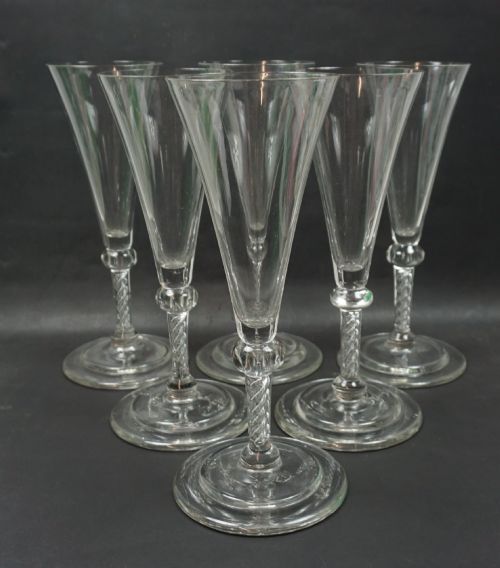
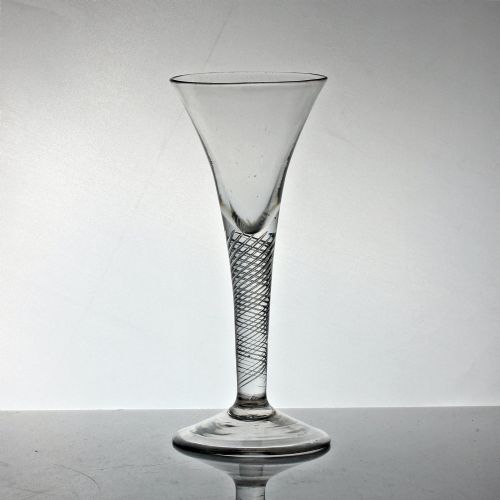
When you search for trumpet bowl glass, you encounter drinking vessels and display pieces defined by a distinctive flaring bowl that widens steadily from the base to the rim. The majority of examples belong to the eighteenth century, taking the form of wine glasses, firing glasses, and dram glasses produced in lead glass.
Beyond drinking vessels, the selection extends to centrepieces, vases, and epergnes originating from later periods such as the Victorian era and the nineteen-thirties. These larger decorative forms incorporate moulded or cut crystal elements paired with carved wooden stands or multi-piece arrangements.
The profile remains consistently open and upward-reaching across both drinking glasses and table centrepieces. This form allows the vessel to showcase the clarity and light-refractive qualities of the material.
Quality factors
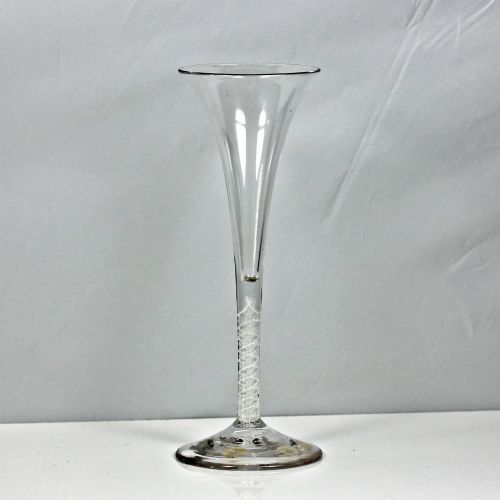
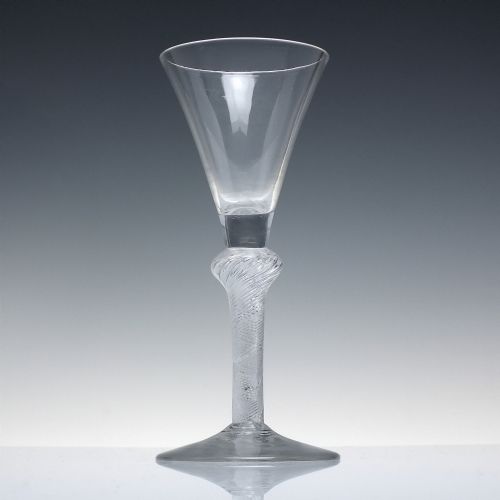
The refinement of the stem formation largely determines the quality of eighteenth-century drinking vessels. Regularity within air twists or opaque twist threads and the absence of internal flaws indicate superior glasshouse execution.
Proportion and weight distinguish finer examples from standard production pieces. A well-balanced bowl paired with a folded foot or a substantial baluster stem demonstrates greater skill in handling molten lead glass.
Listings combine eighteenth-century lead glass drinking vessels with nineteenth-century cranberry glass epergnes and twentieth-century Art Deco centrepiece vases.
Baccarat Crystal·Julien Glass
The Trumpet Bowl Glass Glossary
- Air twist
- A decorative stem technique where elongated bubbles are drawn into a spiral within the glass. This method requires considerable skill from the glassblower.
- Opaque twist
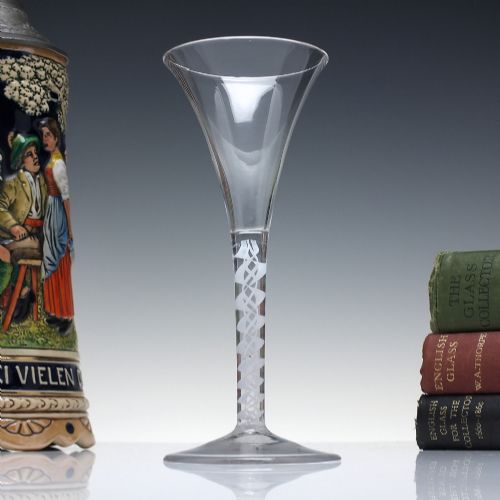
- A stem featuring white or coloured enamel glass rods drawn into threads and twisted. These threads create intricate internal patterns beneath the bowl.
- Folded foot
- A base edge turned under while hot to add weight and stability. This feature appears frequently on earlier drinking vessels.
- Balustroid
- A stem style mimicking architectural balusters with swelling knops. It represents a transitional form between heavy baluster stems and lighter Georgian styles.
- Firing glass
- A small drinking vessel with a notably thick, heavy foot designed to be banged on a tavern table. The sturdy base prevented breakage during toasts.
Trumpet Bowl Glass: Frequently Asked Questions
What is a trumpet bowl glass used for?
These vessels served primarily for consuming wine, drams, or beer during eighteenth-century social gatherings and formal dinners. Later Victorian and twentieth-century forms functioned as table centrepieces and decorative vases.
The open profile of the bowl suited the consumption of structured wines and the arrangement of floral displays on dining tables.
How do you date an eighteenth-century wine glass?
Dating relies on examining the stem construction, bowl form, and foot characteristics recorded across period examples. Air twists and balustroid profiles generally point towards the middle decades of the eighteenth century.
Material composition also provides context, as heavy lead glass production evolved significantly between the reigns of George II and George III.
Are these glasses safe for daily use?
Historic lead glass and delicate twist stems require careful handling and hand washing rather than modern dishwasher use. Thermal shock and impact can easily damage eighteenth-century material.
Most collectors choose to display these pieces or reserve them for occasional careful toastings rather than regular dining.
What distinguishes an air twist from an opaque twist?
An air twist contains trapped elongation bubbles drawn into a helical pattern inside the clear stem. An opaque twist incorporates solid white or coloured enamel rods twisted into threads.
Both techniques create internal patterns, but opaque twists introduce distinct colour contrast against the clear metal of the bowl.