
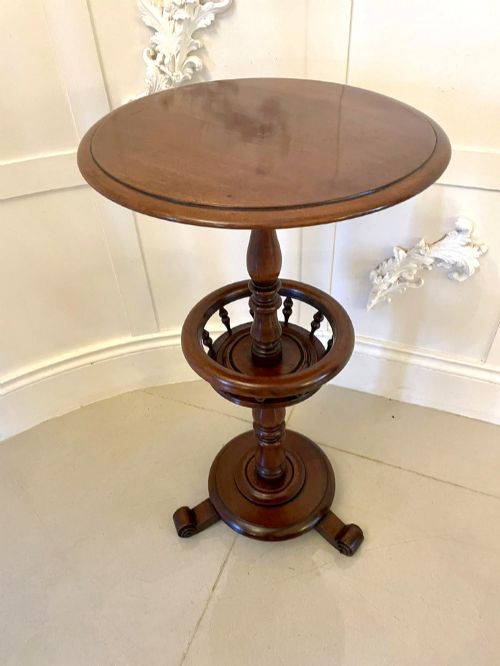
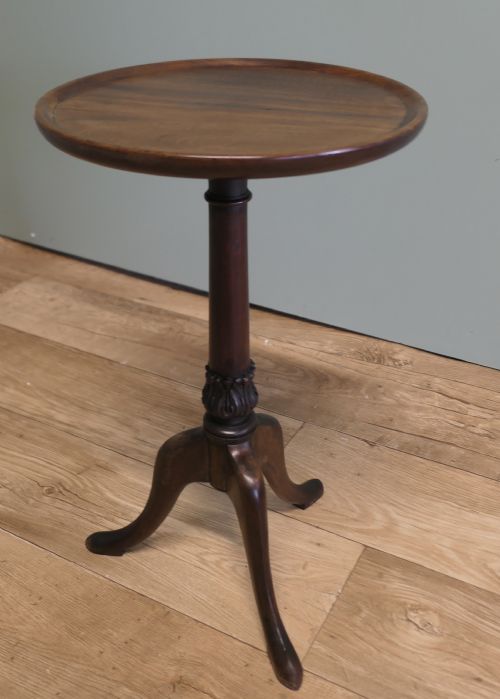
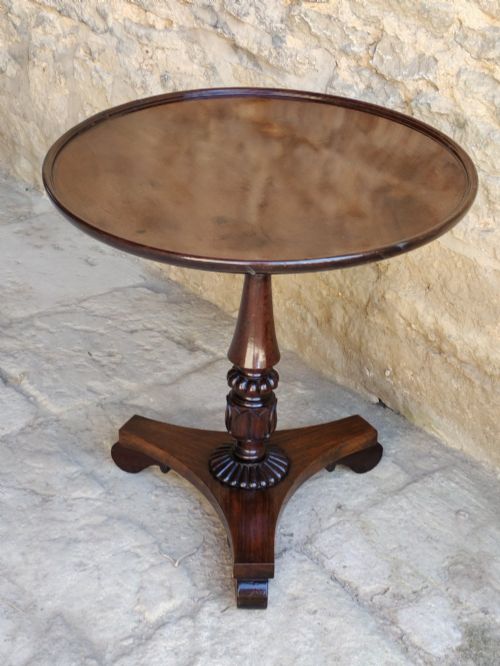
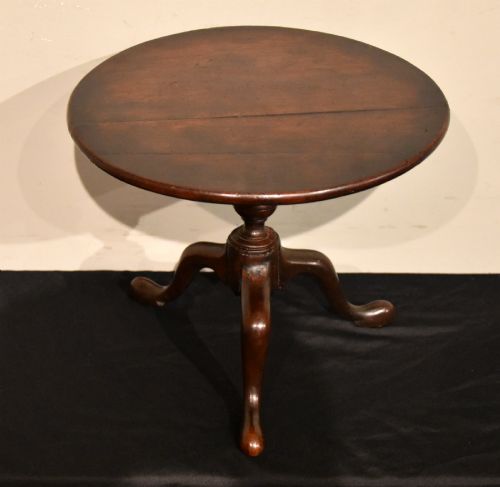
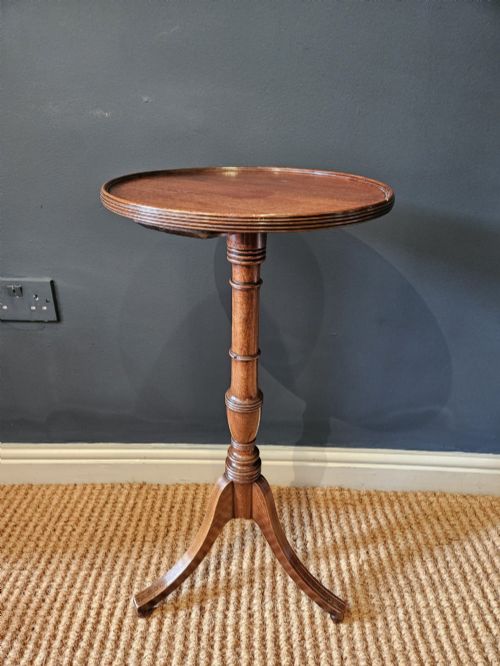
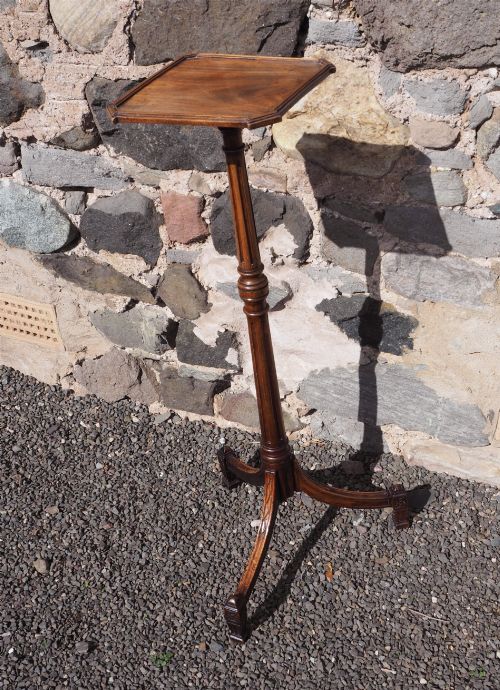
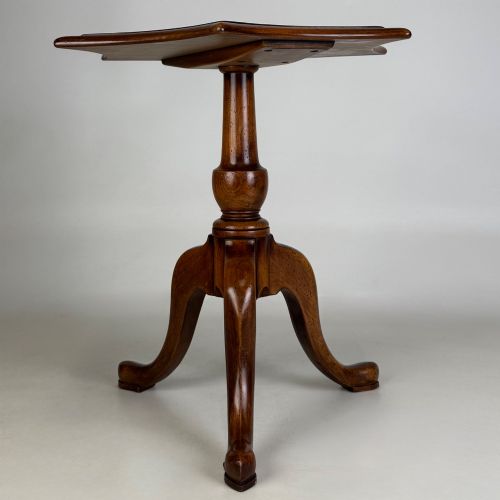
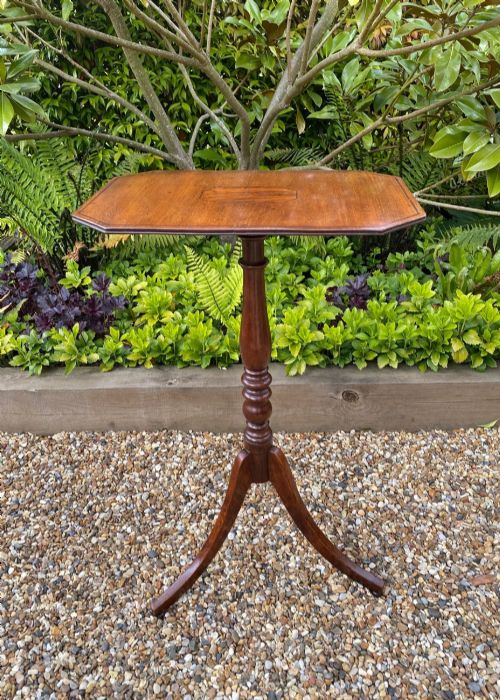
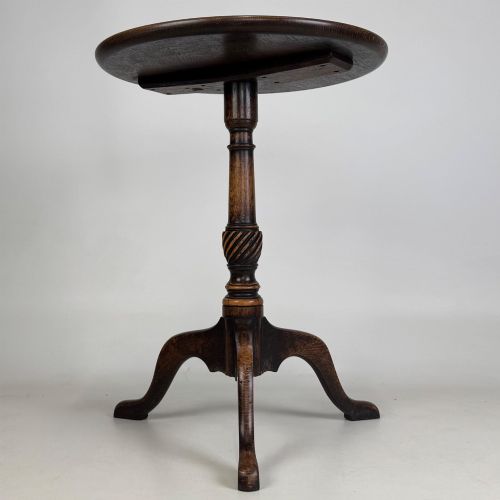
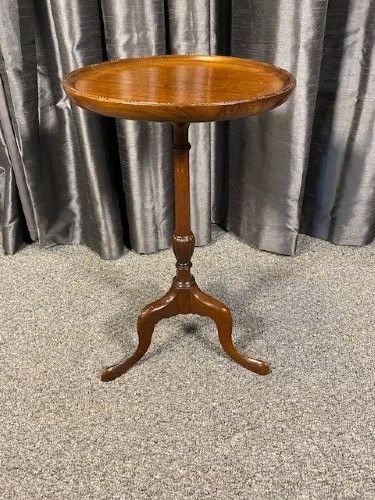
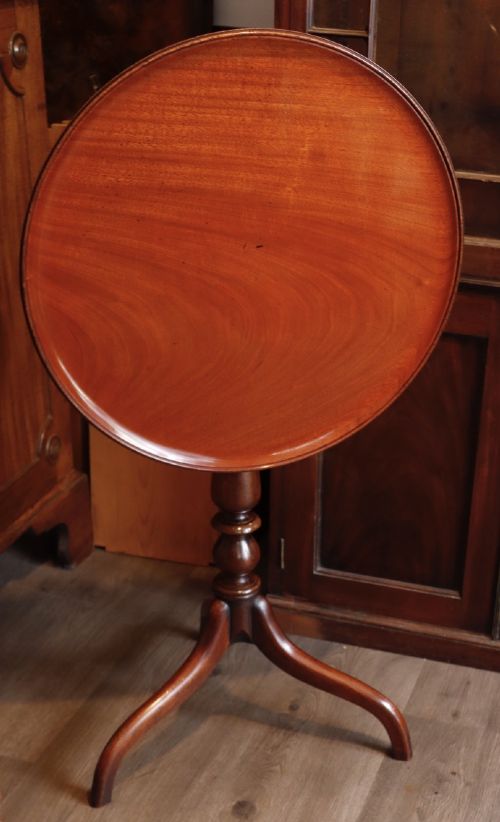
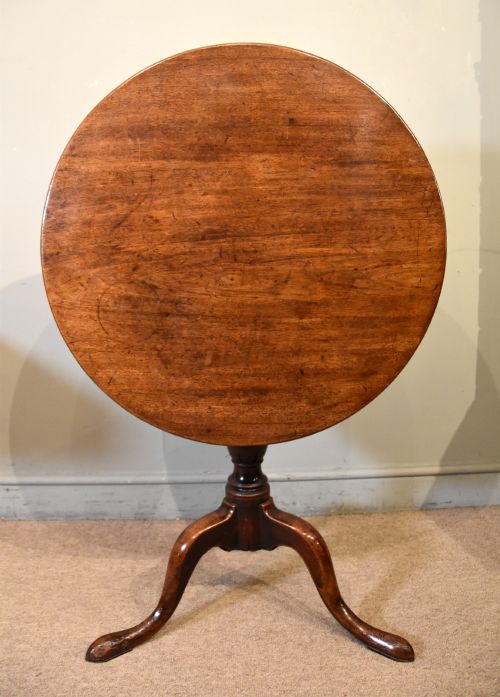
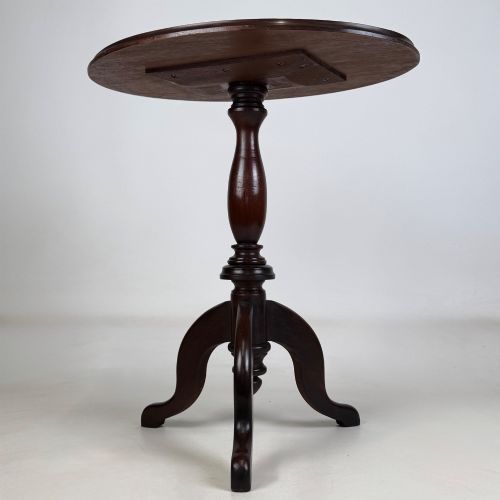
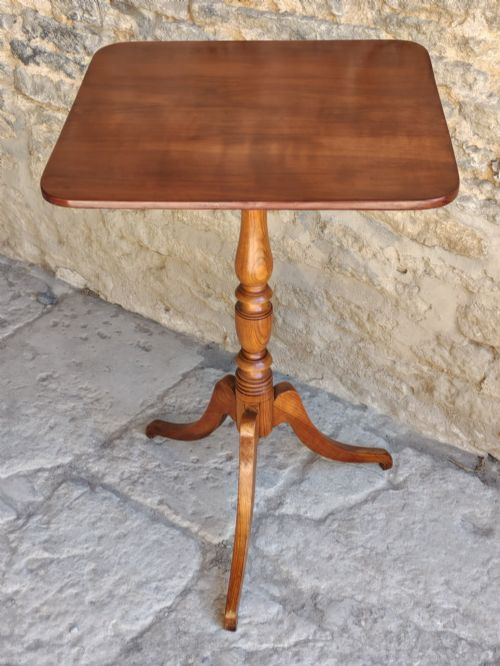
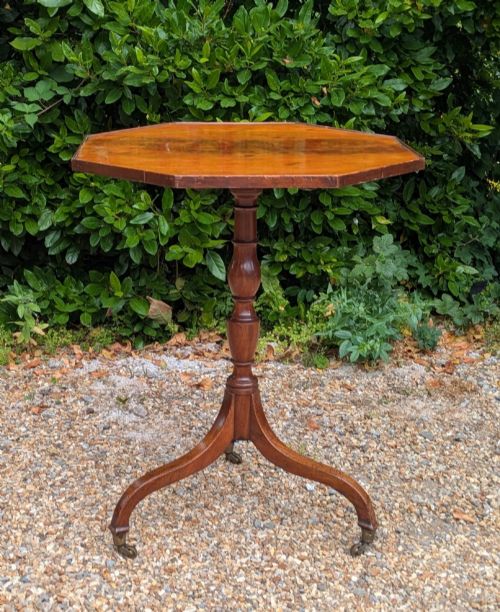
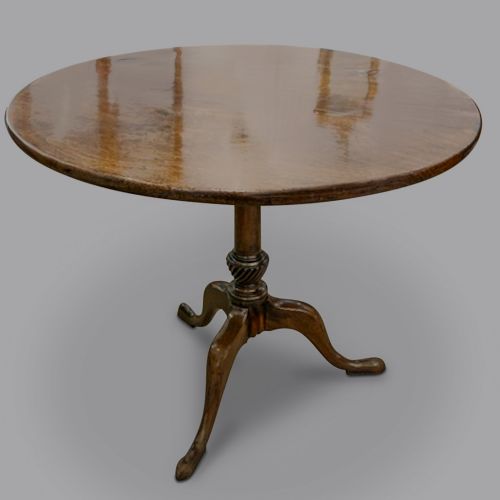
Tripod Stem Candle Stand
A tripod stem candle stand provides a sturdy three-legged support for illumination, bringing elegant height and compact practicality to traditional rooms.
Tripod Stem Candle Stand
A tripod stem candle stand appears across multiple historical periods, including the Georgian, Regency, and Victorian eras, alongside Edwardian examples. These elevated surfaces served to hold light sources safely above floor level in rooms requiring concentrated illumination.
The inventory on this page consists predominantly of compact occasional tables, wine tables, and torcheres functioning as candle stands. Pieces range from simple country furniture in oak and fruitwood to refined town pieces in figured mahogany and rosewood.
Makers utilised various top designs, from fixed circular surfaces to tilt-top mechanisms allowing the table to rest flat against a wall when not in use. Stem configurations vary from straightforward turned supports to gun barrel profiles and barley twists.
Evaluating Craftsmanship
Quality reveals itself in the selection of timber figures, such as plum pudding mahogany or figured walnut, matched with balanced proportions between the top, stem, and base. Superior pieces exhibit crisp joinery where the legs meet the pillar and smooth operation in any tilting mechanism.
The finesse of the turning on the central stem and the carving detail on the tripod legs distinguish standard utility items from high-status examples. Original surface patination and minimal timber replacement further elevate the standing of an individual piece.
Listings feature tripod stem candle stands spanning the 18th, 19th, and 20th centuries, constructed from mahogany, oak, walnut, rosewood, and fruitwood.
The Tripod Stem Candle Stand Glossary
- Tilt-top
- A tabletop mounted on a pivot mechanism that allows the surface to rotate vertically for storage against a wall. This space-saving design became common in Georgian dining and drawing rooms.
- Torchere
- A tall, slender stand designed specifically to support a candle or lamp. These tall supports elevate light sources to eye level in dark corners.
- Gun barrel stem
- A central table pillar turned with a profile resembling the barrel of a flintlock musket. This graceful contour is frequently seen on late 18th-century tripod tables.
- Plum pudding mahogany
- A dense variety of mahogany timber showing mottled, circular growth marks resembling fruit in a pudding. Cabinetmakers reserved this highly decorative grain for top-tier occasional furniture.
- Barley twist
- A spiral turning resembling a twisted rope, carved into the central stem of a table. This decorative technique appears on Victorian and later pieces.
Tripod Stem Candle Stand: Frequently Asked Questions
Where were tripod candle stands placed?
These compact stands typically stood beside armchairs, near writing desks, or in corners where additional light was required for reading or needlework. Their small footprint allowed them to fit easily into tight spaces without obstructing movement.
Because they lifted candles away from flammable hangings and upholstery, they provided a safe, portable source of illumination throughout domestic interiors before gas and electric lighting.
How does a tilt-top mechanism work?
The tabletop secures to a wooden block fitted with a pivot pin, which passes through the upper section of the central stem. A spring catch or wooden wedge locks the surface in the horizontal position during use.
When released, the top tips backward into a vertical plane, allowing the entire stand to tuck flat against a wall or into a corner when the room needed to be cleared.
What woods were used for these stands?
Workshop production relied heavily on dense hardwoods like mahogany and walnut for formal urban pieces, while regional makers utilised native timbers including oak, elm, beech, and fruitwood. Selected items feature decorative veneers or contrasting wood inlay.
The choice of material often reflects the date and region of manufacture, with country pieces favouring local fruitwoods and town workshops employing imported tropical hardwoods.
How do I date a tripod stand?
Dating relies on examining the construction methods of the leg joints, the profile of the central stem, and the timber species. Earlier 18th-century examples often feature simple oak or mahogany structures with pad feet, while Regency and Victorian pieces introduce bolder turnings, rosewood, and barley twist pillars.
Tool marks left by hand saws and lathes on interior surfaces also help establish whether a piece belongs to the Georgian period or later revivals.