
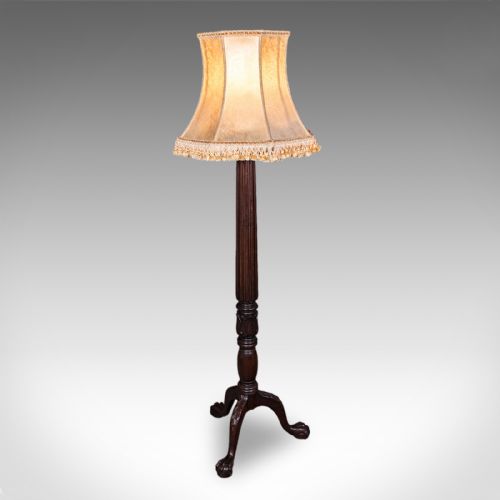
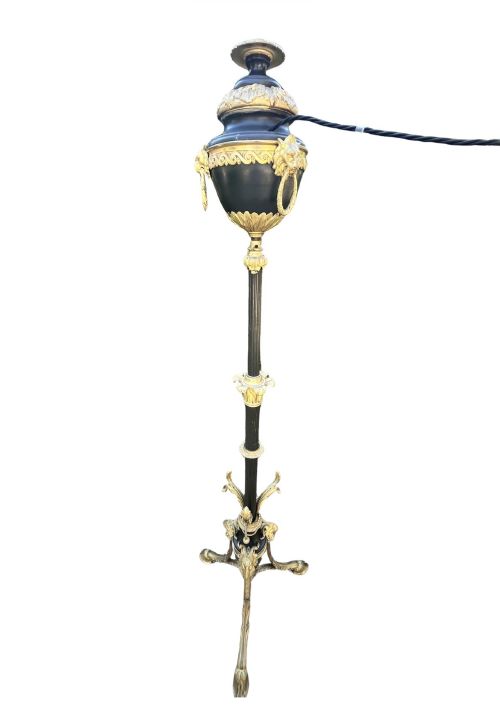
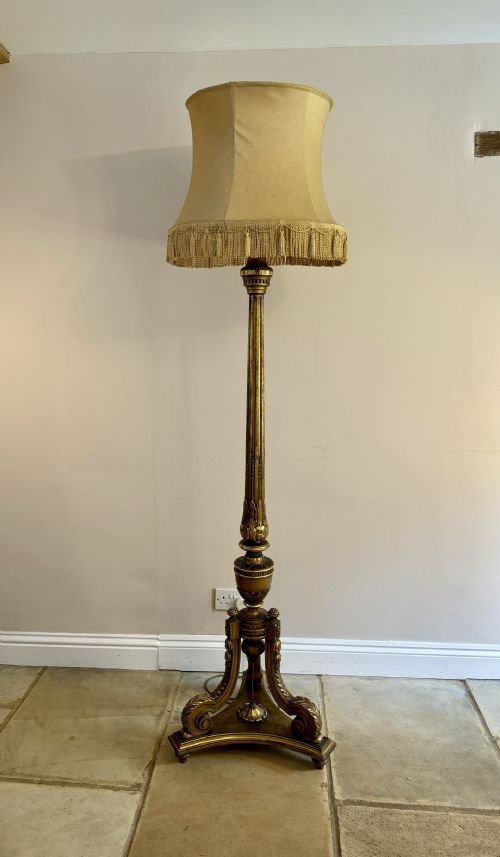
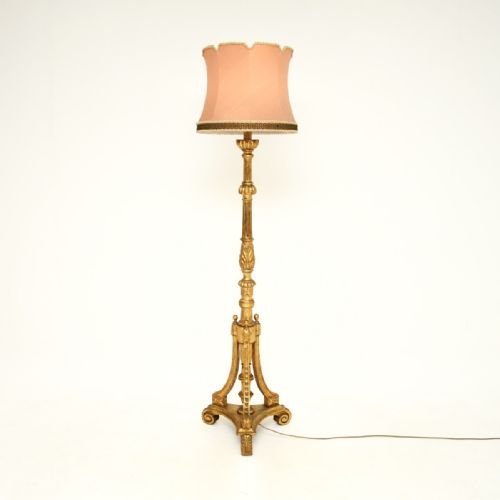



Tripod Standard Lamp
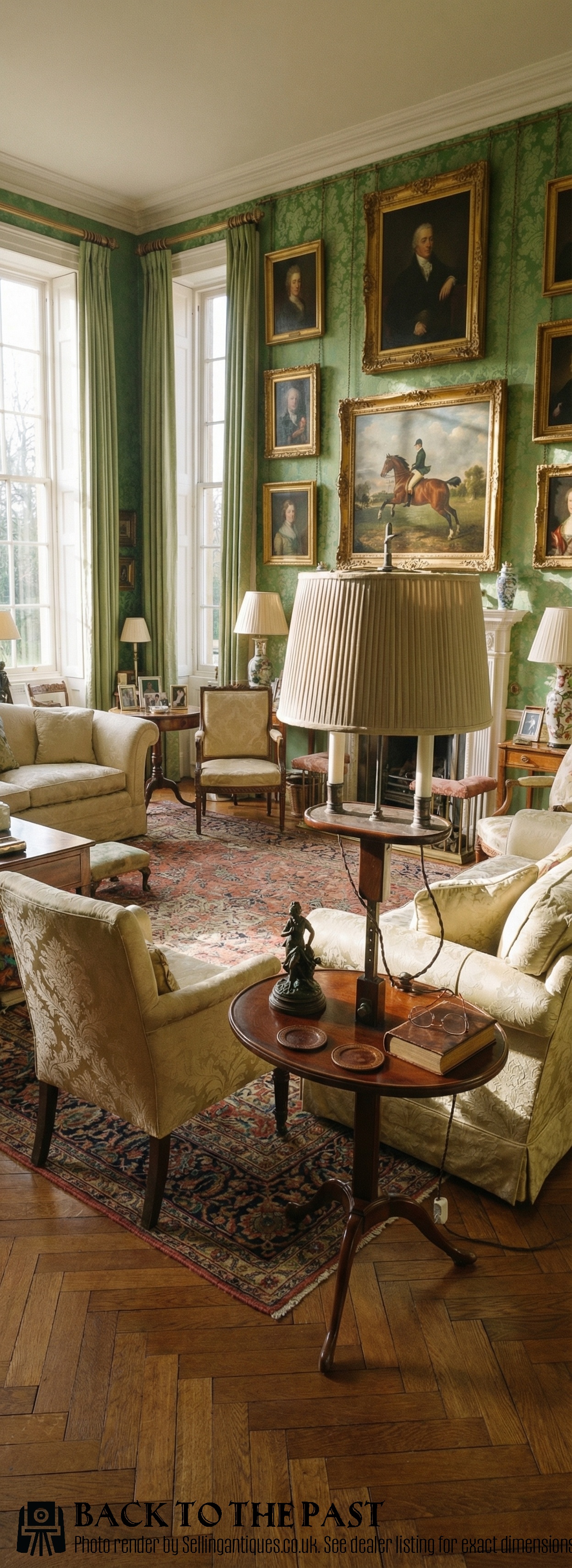
A tripod standard lamp brings height, poise and directed illumination to a room, standing as a reliable anchor for period interiors.
Tripod Standard Lamp
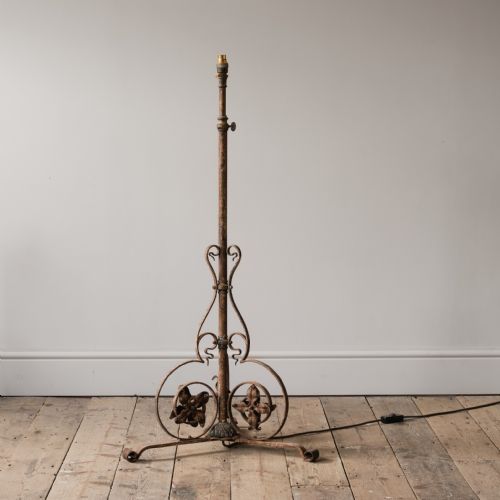
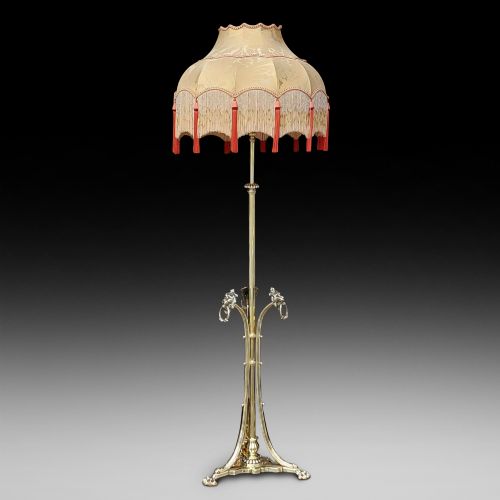
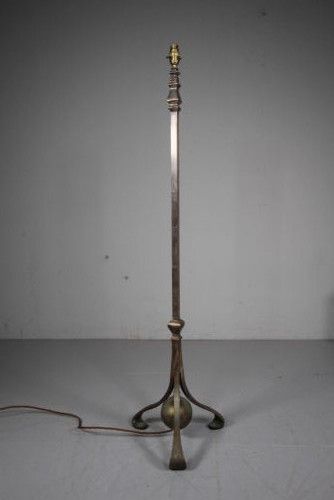
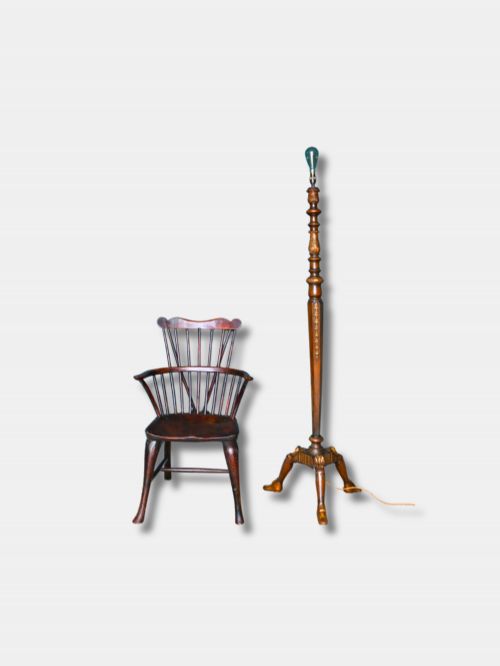
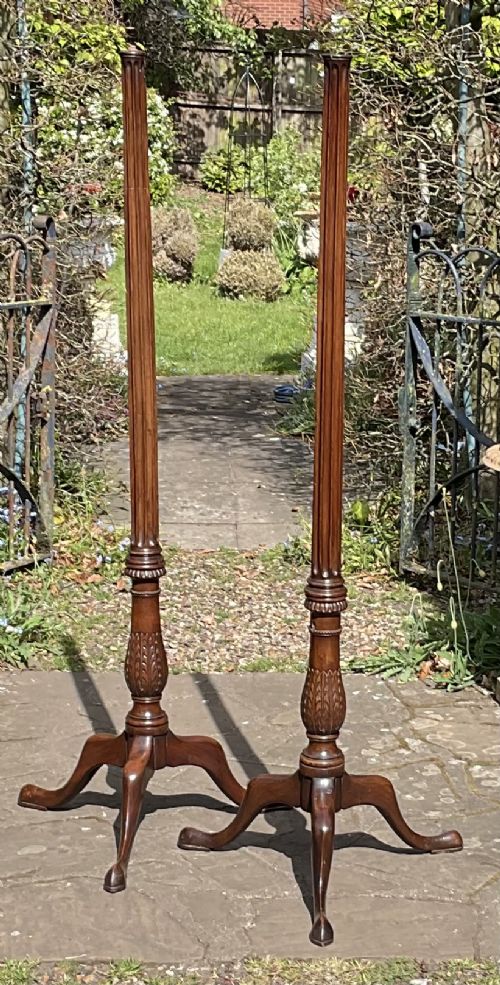
A tripod standard lamp is a tall floor-standing light fixture supported by a three-legged base, providing a stable foundation for vertical illumination. When you examine a tripod standard lamp on this page, you encounter pieces originating from the nineteenth century through to the 1930s, spanning Victorian, Edwardian, Arts and Crafts and Art Nouveau aesthetics.
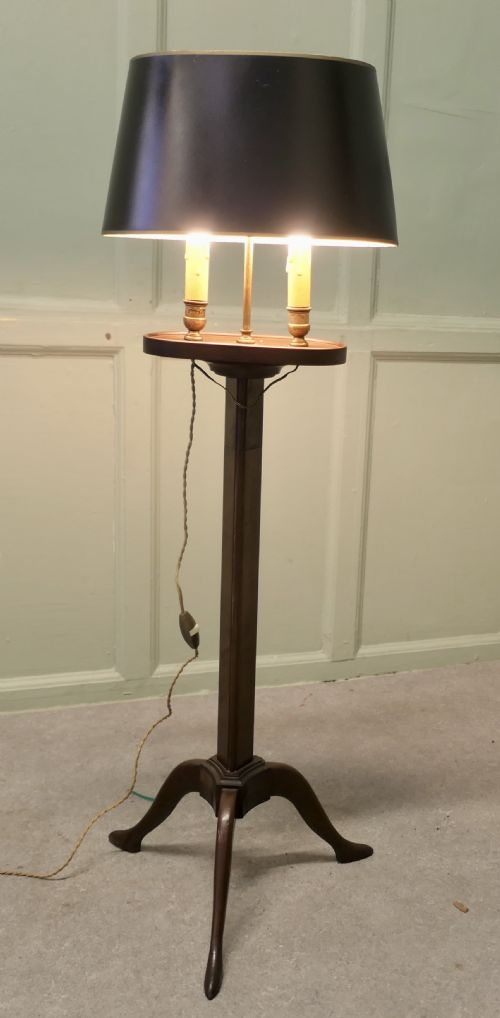
The primary forms take shape as adjustable oil lamps, telescopic uplighters, and converted candle or searchlight designs. Mahogany, walnut and giltwood timber versions appear alongside structural metal iterations in brass, copper and wrought iron.
Makers and designers from past centuries engineered these pieces to serve practical reading and task roles while doubling as decorative focal points. The most frequent variants met here combine brass telescopic columns with sturdy tripod feet, often adapted from earlier oil-burning formats to modern electrical wiring.
Assessing build quality and refinement
The distinction between ordinary and superior examples rests in the heft of the metalwork and the rigidity of the three-legged junction. Heavy cast brass bases and thick-gauge copper tubing provide a stable centre of gravity that prevents wobble, unlike lighter, thin-walled alternatives.
Artistic execution in the carving of wooden tripod legs or the intricacy of Art Nouveau botanical brass castings elevates a piece significantly. Furthermore, original mechanical extension actions that move smoothly without slipping indicate superior workshop engineering from the period of origin.
Some nineteenth-century standard lamps doubled as wine tables, letting you keep a glass close while you read by the light.
Maison Ramsay Paris
The Tripod Standard Lamp Glossary
- Telescopic standard lamp
- A floor lamp featuring a sliding inner shaft that allows the overall height to be adjusted up and down. This mechanism often uses a brass key screw to lock the stem in position.
- Standard oil lamp
- A tall lighting standard originally designed to burn oil in a reservoir at the top before later conversion to electricity. These frequently retain burner assemblies or brass galleries.
- Arts and Crafts
- A design movement prioritising honest construction, visible hand-craftsmanship and simple materials over machine-made ornamentation. Objects in this style avoid excessive surface decoration in favour of functional integrity.
- Giltwood
- Timber that has been coated with a thin layer of gold leaf or gilt composition paint. This treatment provides a bright, reflective finish popular in grander nineteenth-century interiors.
- Tripod base
- A three-legged support structure designed to distribute weight evenly and maintain stability on uneven floor surfaces. These legs often terminate in pad feet, claws or scroll terminals.
Tripod Standard Lamp: Frequently Asked Questions
How do I adjust the height on an antique standard lamp?
Many period floor lamps utilise a telescopic mechanism secured by a thumbscrew or brass key on the vertical shaft. Loosening this fastener permits the upper column to rise or lower to the desired elevation.
Care must be taken to support the weight of the upper section with one hand while adjusting the screw to prevent sudden drops that might strain internal wiring or older metal threads.
Were these lamps originally wired for electricity?
Most pieces dating from the nineteenth century or early twentieth century started life as oil-burning standards or candle lamps. They were subsequently adapted for electrical use during the twentieth century to accommodate modern bulbs.
When living with an adapted standard lamp, ensure the internal cord path is safely insulated and that the heavy base provides adequate counterbalance for the weight of contemporary flex and shades.
What is a steamer lamp?
A steamer lamp is a specialised Edwardian lighting standard engineered with a weighted or extra-stable base designed to prevent tipping on moving ships or passenger vessels. Their robust construction made them equally popular in busy domestic settings.
These pieces typically feature utilitarian metal components and practical adjustment arms suited to reading in confined or dynamic spaces.
How do I distinguish Arts and Crafts from Art Nouveau lamps?
Arts and Crafts standard lamps emphasise straightforward construction, hammered brass textures and visible rivets, reflecting a philosophy of honest handicraft. They keep ornamentation tied directly to the function of the object.
Art Nouveau lighting leans instead toward fluid, organic lines inspired by natural forms, featuring whiplash curves, stylized floral motifs and botanical brass or copper castings.
Can I place a tripod lamp on a wooden floor?
A tripod base distributes weight across three distinct points, making it generally stable on flat timber floors. However, the outward splay of the legs requires careful placement to avoid obstructing walking routes.
Adding small felt pads beneath the feet protects polished floorboards from indentations caused by the heavy cast brass or timber terminals.