



Tripod Gueridon Table
A tripod gueridon table provides a compact, elevated surface supported by three legs, bringing architectural balance and French neoclassical flair to any interior.
Tripod Gueridon Table
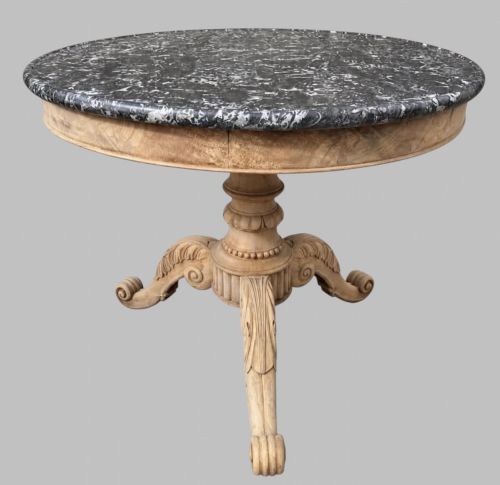
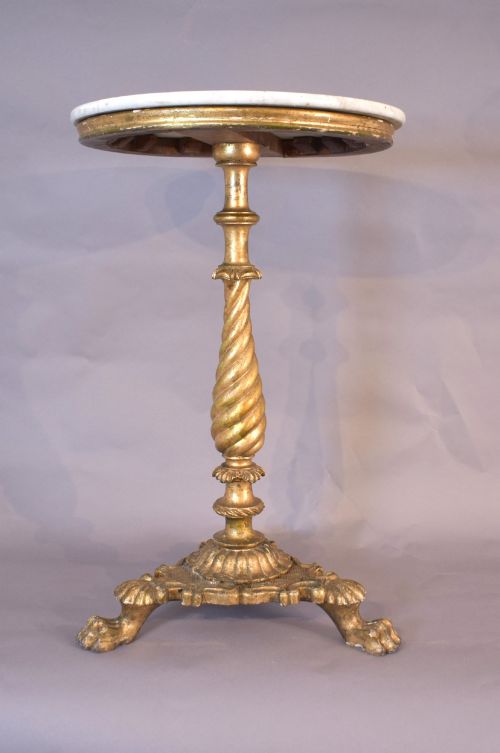
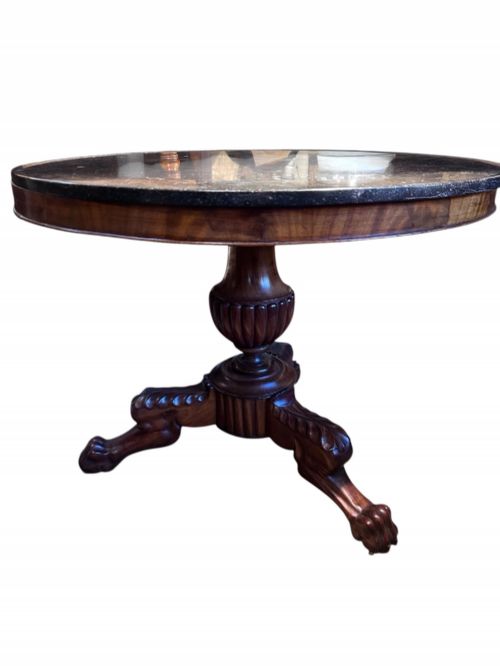
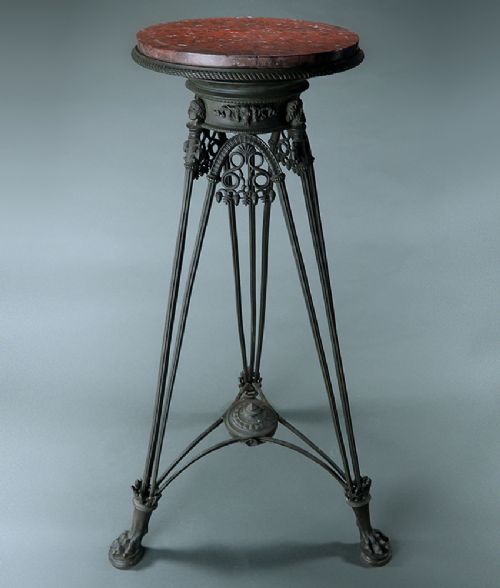
When you search for a tripod gueridon table, you encounter small round tables traditionally used as plant stands, occasional tables, or centre pieces. Most examples originate from the nineteenth century, encompassing French Empire, Regency, and Louis Philippe styles.
Distinctions in quality
The calibre of a piece rests heavily on the selection of materials, such as finely figured burr walnut or substantial monolithic marble tops rather than thin veneers over secondary woods. Heavier cast brass mounts and crisp, deep hand-carving on the tripod base separate finer workshop productions from simpler country pieces.
Structural integrity of the central column joint and the alignment of the three supporting legs dictate long-term stability. Pieces retaining original fire-gilt mounts or untouched patination on the timber display greater material authenticity.
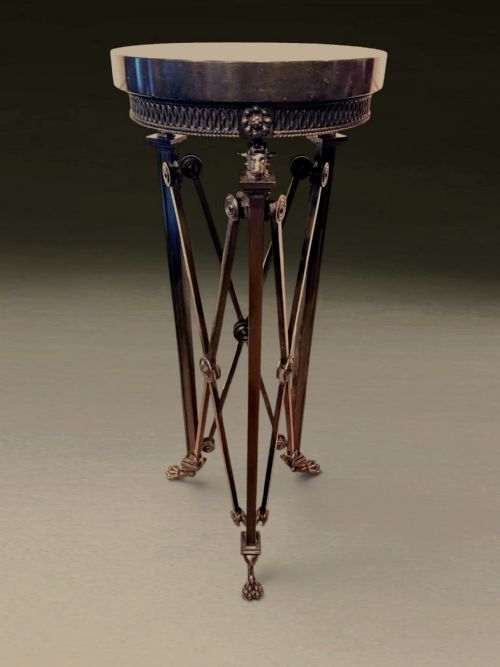
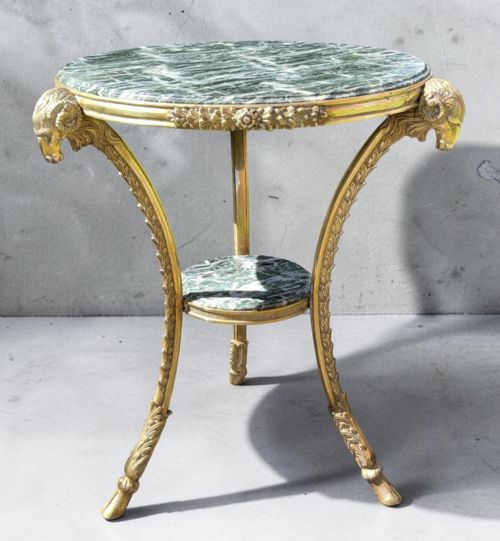
Some nineteenth-century makers could not resist adding cast brass rams heads to the knees of otherwise sober walnut tables.
Thomas Hope
The Tripod Gueridon Table Glossary
- Gueridon
- A small French table, often round and supported by a pillar and tripod base, originating in the seventeenth century as a stand for a torch or candlestick.
- Ormolu
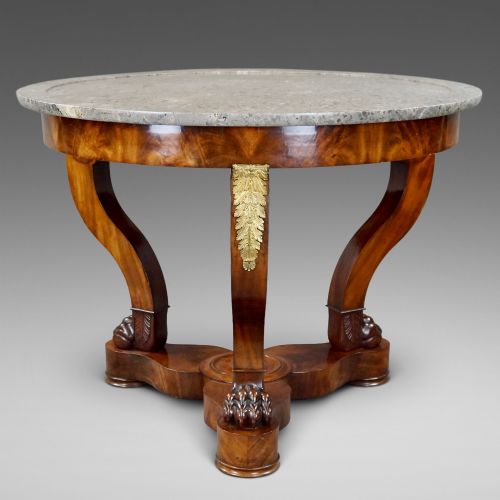
- Gilded bronze used for decorative mounts and feet on nineteenth-century furniture, providing a bright metallic contrast to dark mahogany.
- Marble top
- A stone slab fitted into the upper surface of a table, offering a cool, durable finish frequently seen on French Empire and nineteenth-century examples.
- Tripod base
- A three-legged support structure that provides stable contact on uneven floors while allowing compact placement in smaller rooms.
- Restauration
- A French design period spanning the early nineteenth century between the fall of the Empire and the July Revolution, noted for cleaner lines in mahogany.
Tripod Gueridon Table: Frequently Asked Questions
How were tripod gueridon tables used originally?
These pieces served multiple functions in period interiors, acting as stands for candlesticks, small lamps, or decorative urns. Their portable size allowed servants to move them easily around reception rooms for tea or card games.
Over time, they evolved into permanent display surfaces for art objects and indoor plants, fitting comfortably beside seating or within empty corners.
How do I identify a French Empire gueridon?
French Empire examples typically feature dark mahogany veneers contrasted with cast brass mounts, architectural columns, and classical motifs such as swans or rams heads. The bases often display heavy, stable tripod configurations designed to support inset marble tops.
Cabinetmakers of this period focused on symmetry and formal classical references derived from ancient Rome and Greece.
Where should I place a marble top table?
Marble top tables function well in hallways, living rooms, and bedrooms as lamp tables or plant stands. The stone surface provides natural resistance to minor moisture and heat from drinks, making them practical for daily use.
Keep them away from direct heat sources and avoid using acidic cleaning products that can etch the polished stone surface.
How do I date a nineteenth century walnut table?
Dating relies on examining the timber grain, construction joints, and decorative style markers such as the presence of Louis Philippe or Etruscan Revival motifs. Secondary woods inside the frame and the method of securing the top provide further chronological clues.
Comparing the carving depth and mounting style to documented pieces from around 1840 to 1890 helps narrow the period of manufacture.