




Triple Pedestal Dining Table
A triple pedestal dining table provides grand proportions and seating flexibility for large rooms, drawing on centuries of formal dining design.
Triple Pedestal Dining Table
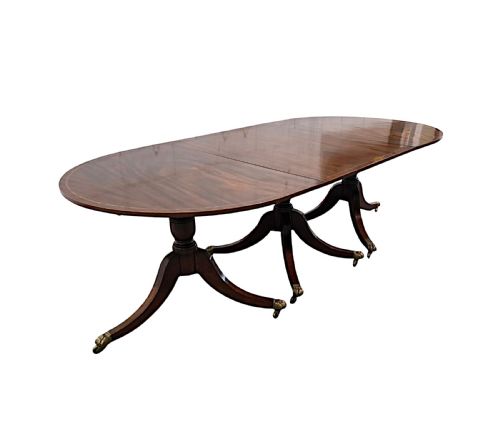
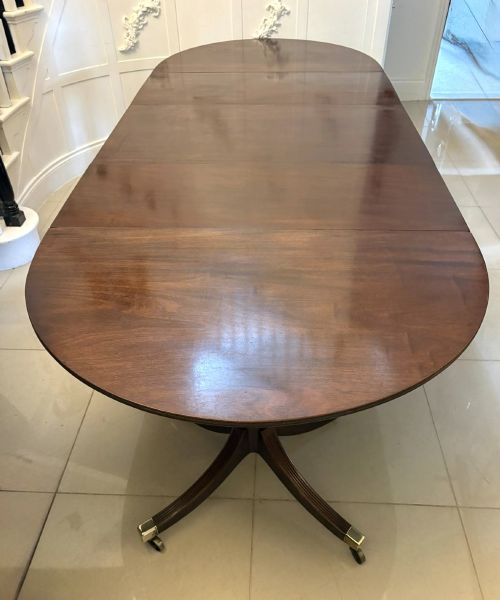
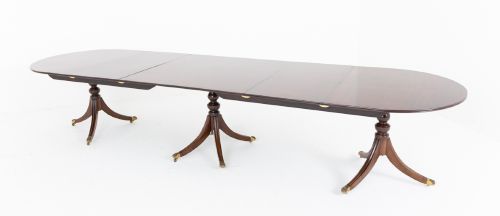
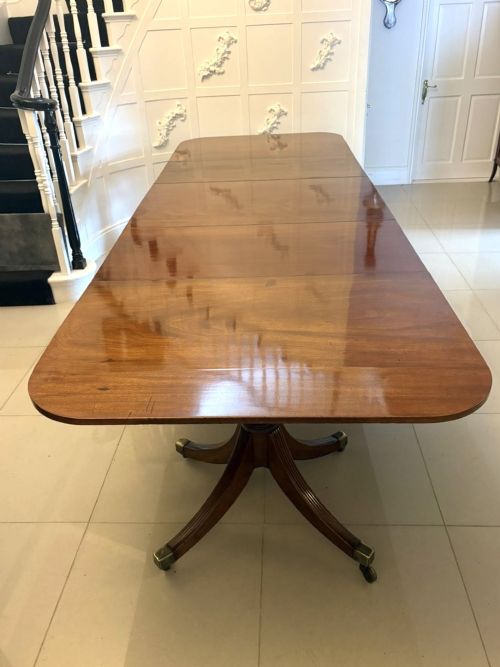
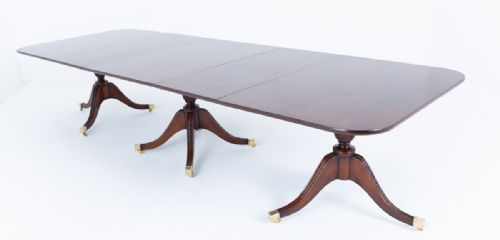
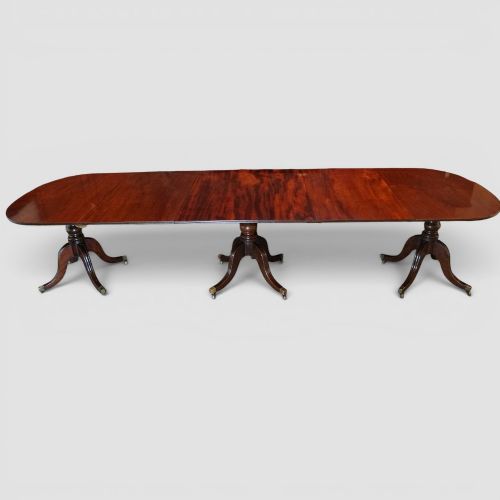
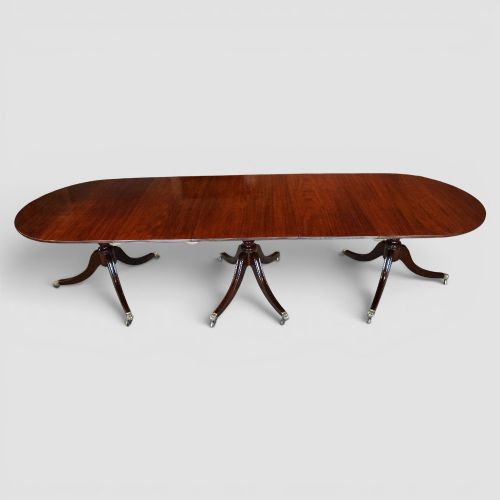
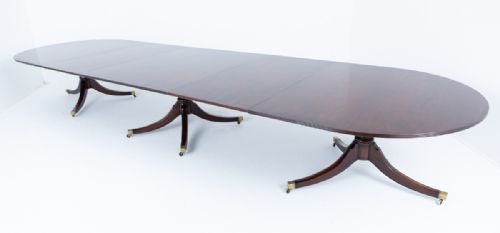
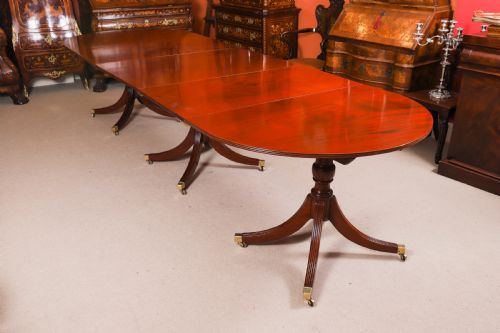
A triple pedestal dining table is a large dining table supported by three distinct pillars or pedestals, designed to accommodate significant numbers of guests. When you search for a triple pedestal dining table, you encounter substantial dining furniture intended for expansive rooms and frequent hosting.
The pieces on this page span several periods, including Georgian, Regency, William IV, Edwardian, and the early twentieth century. Mahogany is the predominant wood, accompanied by occasional walnut, reflecting the traditional preferences of cabinet makers across these eras.
How They Were Made
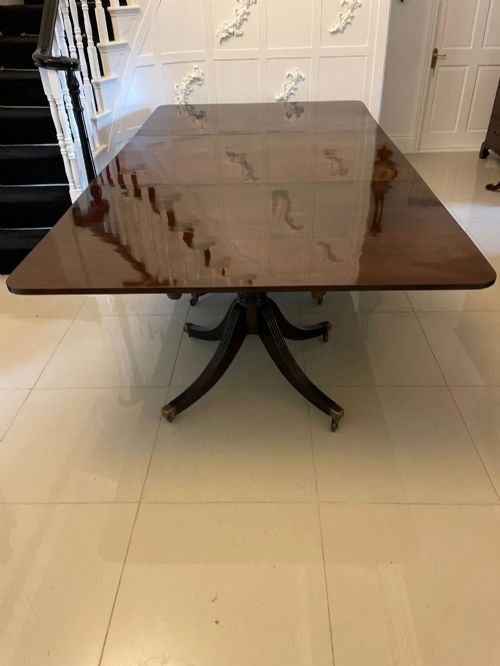
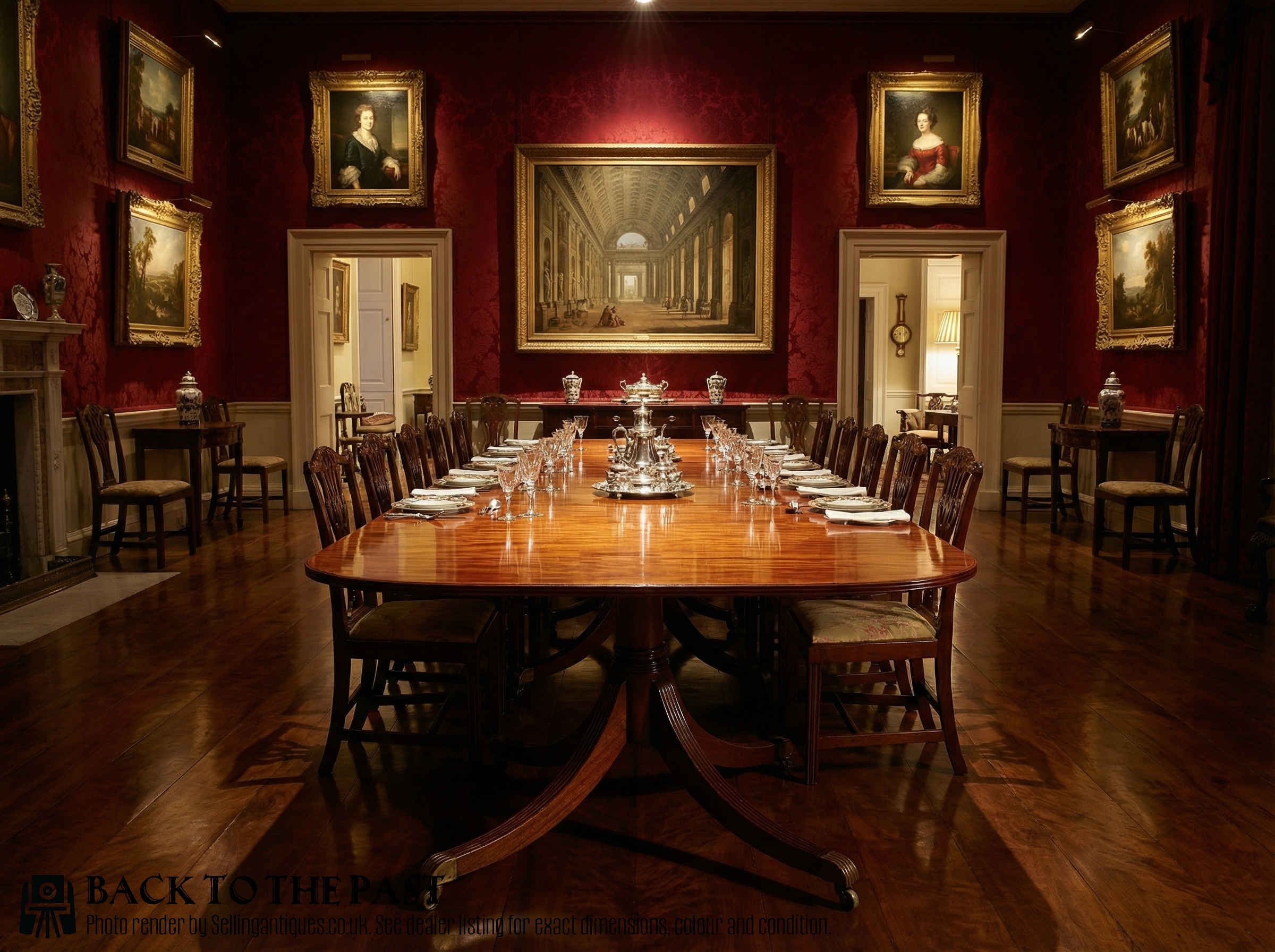
Makers constructed these tables primarily from solid and figured mahogany, utilising timber selected for its rich grain patterns and deep colour. Brass castors frequently fitted to the feet of the pedestals allowed these heavy pieces to move smoothly across floor surfaces.
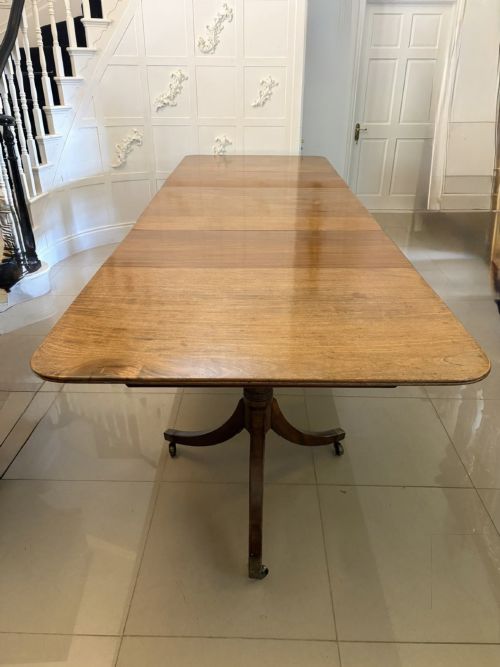
Extending mechanisms incorporated additional removable leaves supported by the three pillars, allowing the overall length of the table to adapt. Joinery methods relied on sturdy pedestal bases branching into multiple legs for balanced weight distribution.
Triple Pedestal Dining Table Retail Price Guide 2026
Typical asking prices for triple pedestal dining table among the pieces listed under this phrase on Sellingantiques today, from the lower quarter to the upper quarter. They describe what is for sale here now, not the wider market.
Listings feature mahogany and walnut woods across Georgian, Regency, and Edwardian periods.
What Varies in Quality
The choice of timber grain determines much of the visual distinction, with highly figured mahogany commanding greater attention than plain stock. Selection of veneer figure and the depth of natural polish indicate the level of care invested in the construction.
Proportion and the stability of the three pillar structure separate standard examples from finer works. The integration of the extending leaves and the crispness of any inlaid details reflect the skill of the original workshop.
Whytock & Reid
The Triple Pedestal Dining Table Glossary
- Pedestal
- The central vertical pillar supporting the tabletop, usually dividing into three or four carved legs at the base.
- Extension leaf
- A removable board inserted into the centre of the table to increase its overall length for seating more people.
- Figured mahogany
- Timber exhibiting distinctive, decorative grain patterns such as flame or curl, highly prized for cabinet furniture.
- Castor
- A small wheel fitted to the base of each table leg to assist with movement and repositioning.
- William IV
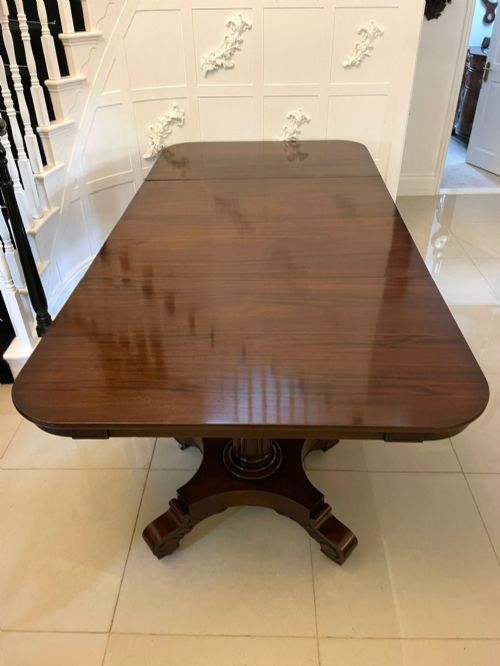
- A British design period spanning the 1830s, characterised by heavy proportions and robust classical revival forms.
Triple Pedestal Dining Table: Frequently Asked Questions
How many people can sit at a triple pedestal dining table?
These large tables commonly seat between ten and sixteen guests, depending on the specific length and the addition of extension leaves.
Larger versions appearing in the records can extend to accommodate twenty or more diners comfortably.
What periods do these dining tables come from?
The pieces span the eighteenth, nineteenth, and early twentieth centuries, covering Georgian, Regency, William IV, and Edwardian eras.
Revival styles from later decades also replicate these classical proportions.
Do all triple pedestal tables extend?
Most examples utilise an extending mechanism supported by the three pillars, allowing owners to alter the length using leaves.
Fixed-size models also exist, maintaining a constant span across the three pedestals without removable sections.
What timber was used to build them?
Mahogany serves as the primary wood across the majority of these tables, frequently selected for its strength and rich red-brown hue.
Walnut appears in select examples, offering a different grain pattern and lighter natural tones.