

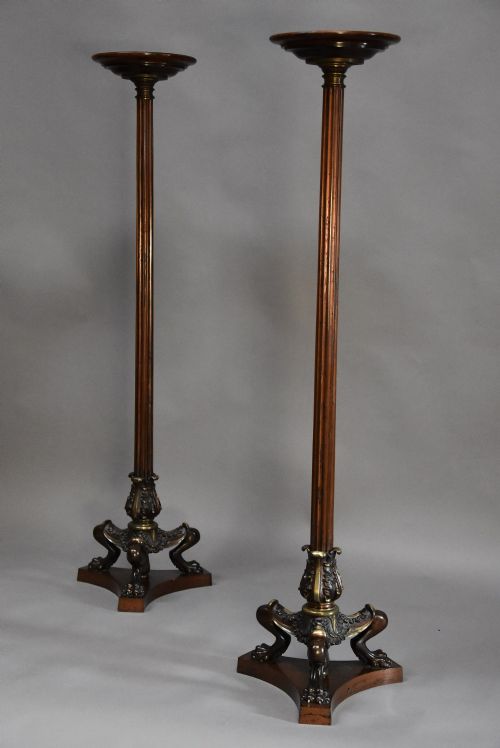
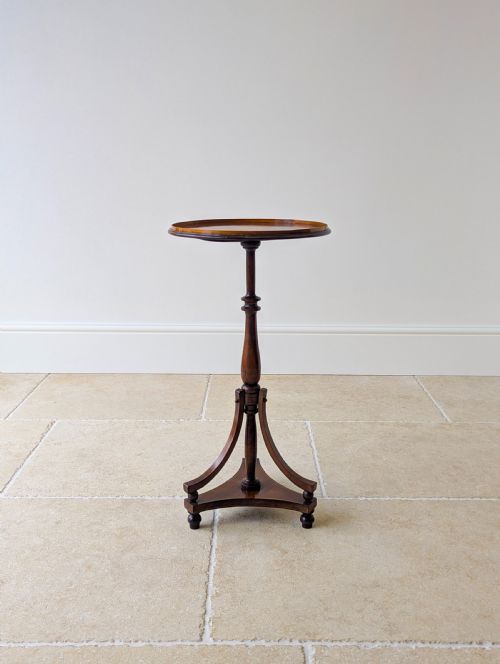


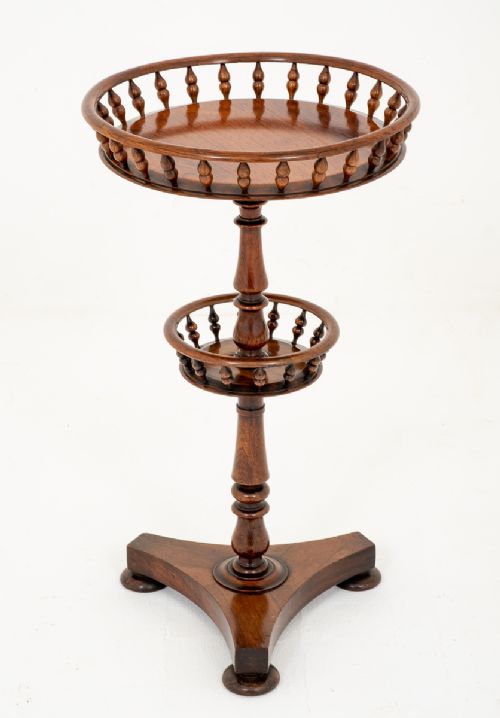


Triform Base Plant Stand
A triform base plant stand elevates botanical displays upon a distinctive three-sided foundation, combining sculptural presence with practical support.
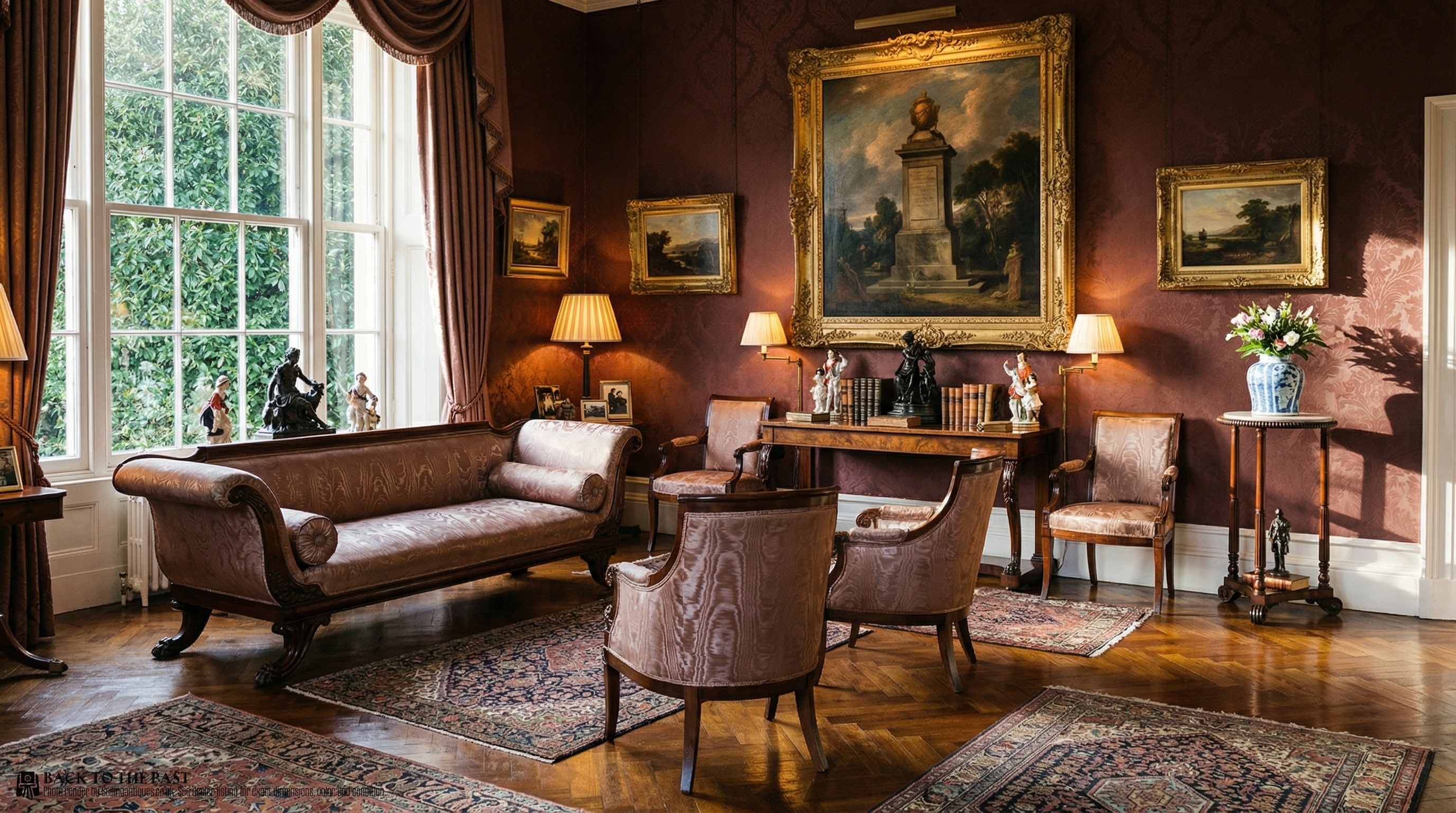
Triform Base Plant Stand
A triform base plant stand provides a stable, three-footed platform designed to display decorative foliage, jardinieres, or occasional ornaments within period interiors. When exploring a triform base plant stand, buyers encounter a diverse selection of forms including torchères, pedestals, and planter tables originating from the Georgian, Regency, and Victorian eras.
The material vocabulary of these pieces leans heavily towards rich timbers such as mahogany and rosewood, frequently accented by marble tops or giltwood details. Pieces range from the restrained elegance of early nineteenth-century designs to the more elaborate revivals of the late Victorian and Edwardian periods.
How they were made
Cabinetmakers constructed these stands using dense timbers like mahogany and rosewood, often shaping the central columns and three-sided bases with carved or turned details. Gesso and giltwood additions provide decorative contrast on specific Regency revival examples.
Inset marble tops frequently appear on jardinière stands and torchères to protect the wooden structure from moisture associated with potted plants. Brass and bronze elements are utilised for mounts, gallery rails, and structural joints.
Triform Base Plant Stand Retail Price Guide 2026
Typical asking prices for triform base plant stand among the pieces listed under this phrase on Sellingantiques today, from the lower quarter to the upper quarter. They describe what is for sale here now, not the wider market.
Victorian botanists placed ferns upon these very stands, trusting three wooden feet to bear the weight of damp fronds and heavy ceramic pots.
What varies in quality
The refinement of the carving on the three-sided base and central pillar separates standard production from exceptional studio work. Crisp execution of classical motifs indicates superior workshop execution.
The selection of timber grain on the top and column dictates visual depth, with well-figured rosewood and mahogany commanding greater appreciation. Original marble inserts and intact bronze or brass mounts preserve the integrity of the piece.
The Triform Base Plant Stand Glossary
- Triform
- A three-sided architectural or furniture base, typically featuring three feet or legs radiating from a central point.
- Torchère
- A tall, slender stand designed to hold a light or a decorative urn, often taking the form of a pedestal.
- Jardinière
- An ornamental pot or stand intended for holding plants or flowers, frequently lined with metal or fitted with a marble top.
- Giltwood
- Wood that has been coated with gold leaf or a gold-coloured finish, common in decorative revival styles.
Triform Base Plant Stand: Frequently Asked Questions
What is a triform base?
A triform base is a three-sided foundation that provides balanced support for tall stands and pedestals. This geometric configuration appears frequently in classical and revival furniture.
In practice, the three-footed layout ensures stability on uneven floors while adding distinct visual lines beneath the central column.
How were plant stands used?
Plant stands elevated heavy potted plants and floral arrangements to improve visibility and protect interior flooring. They served both decorative and practical functions in grand reception rooms.
Many examples feature marble inserts to safely accommodate damp pots without damaging the surrounding timber surface.
Are marble tops original?
Marble tops on jardinière stands and torchères were typically fitted during the initial construction to handle moisture from plants. Evaluating the fit and edge finish helps determine if the marble corresponds to the period of the base.
Replacement tops do occur, though period examples generally show appropriate weathering and thickness relative to the frame.
How do I date a stand?
Dating relies on identifying stylistic markers, timber choices, and construction techniques associated with periods like Regency or Victorian. Detail work such as carved gesso or bronze mounts often reflects the prevailing taste of the manufacturing decade.
Comparing the turned columns and base geometry against documented furniture patterns helps narrow down the probable era of creation.