

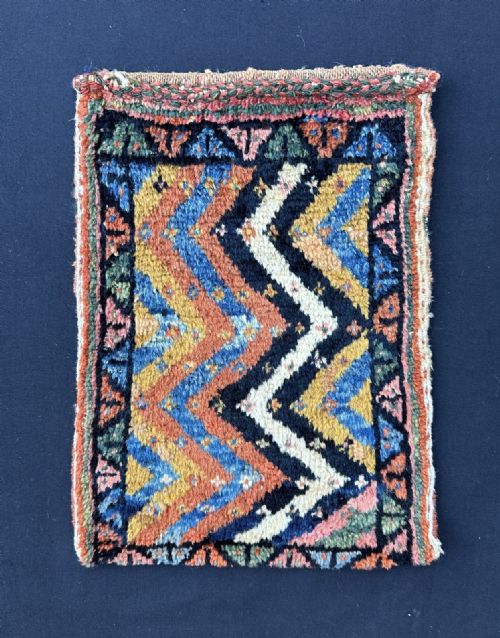
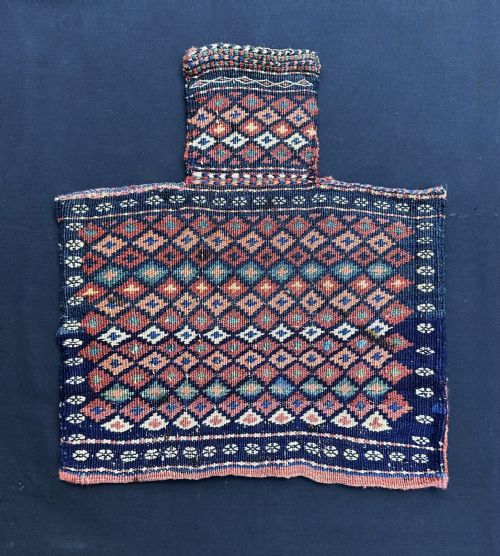
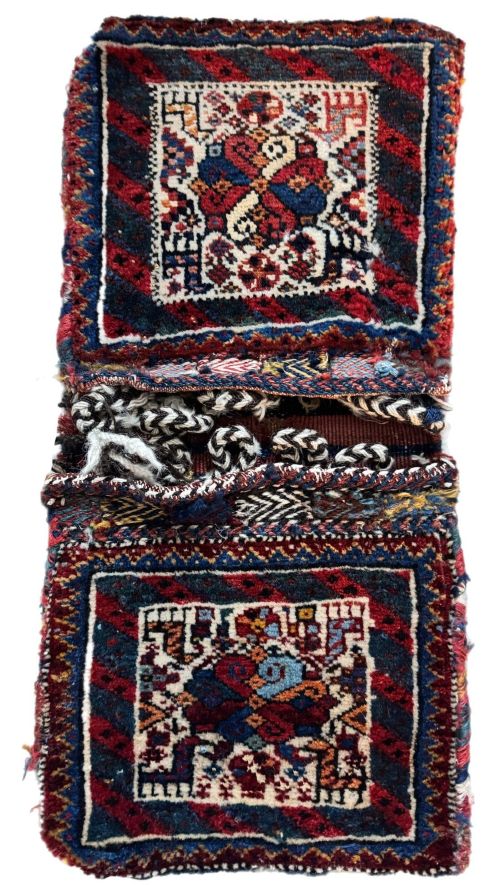
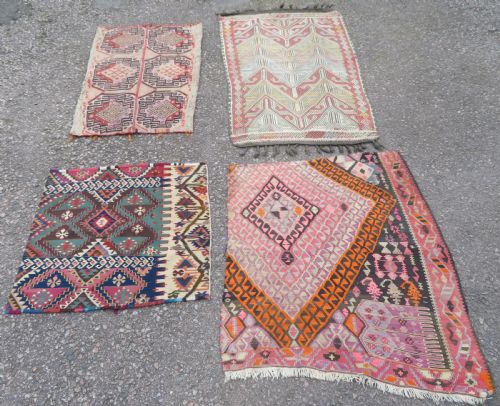
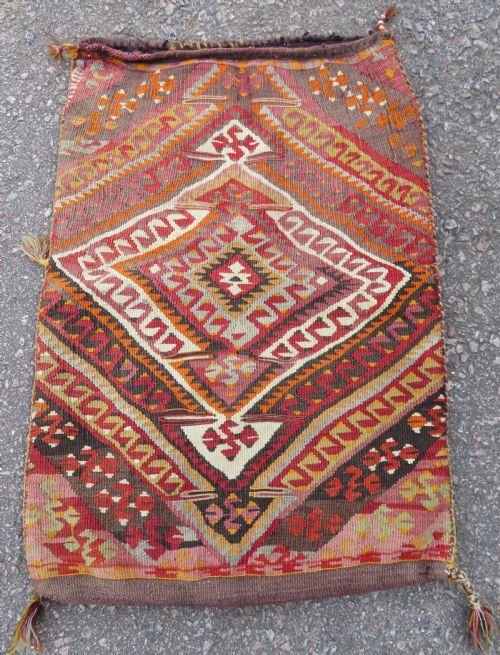
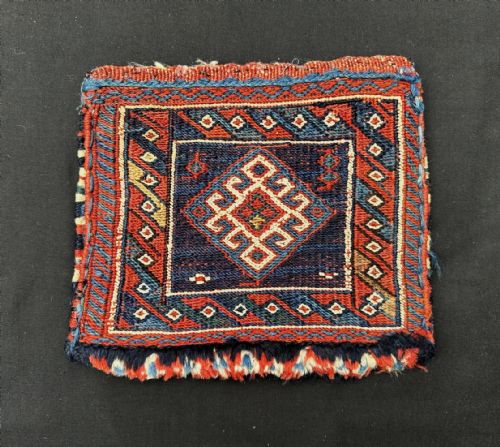
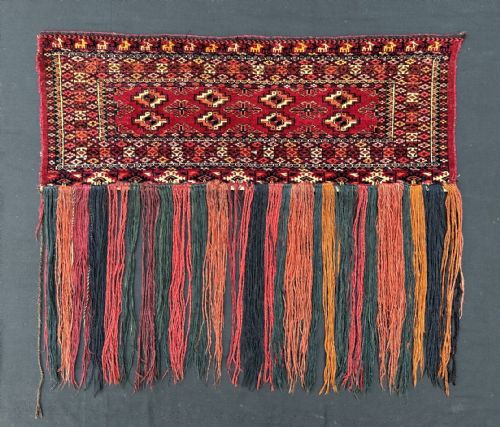
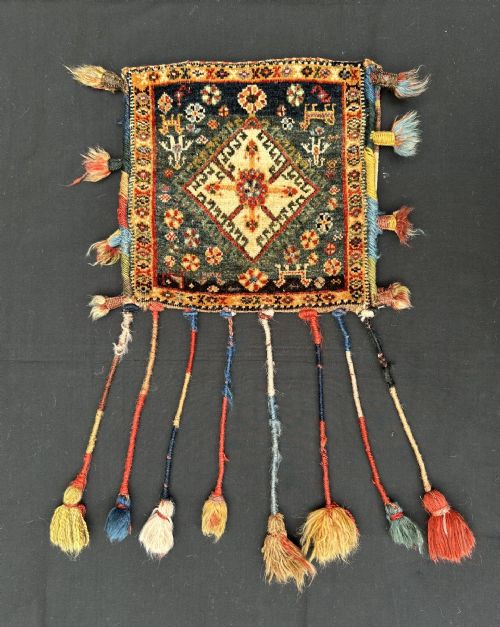


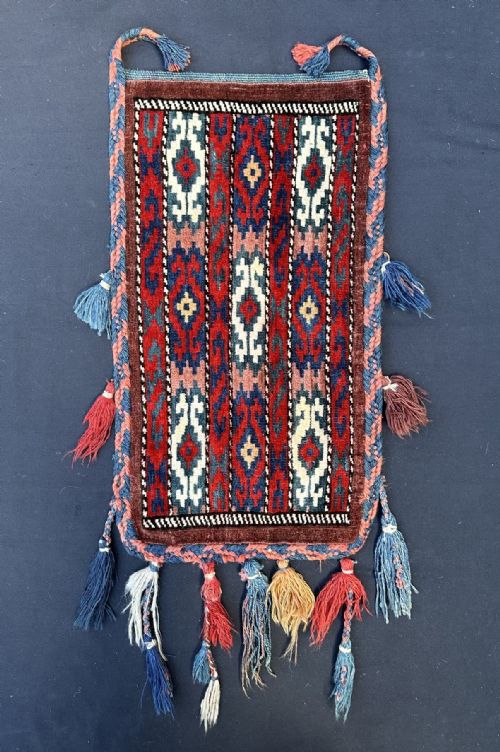
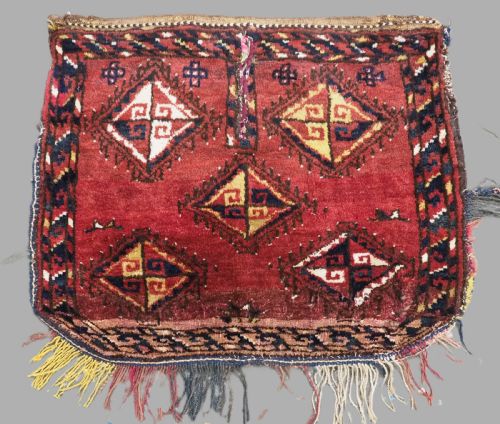
Tribal Woven Bag
When you search for tribal woven bag, you find utilitarian containers fashioned by nomadic and village weavers across Persia, Central Asia, and Anatolia for daily camp life.
Tribal Woven Bag
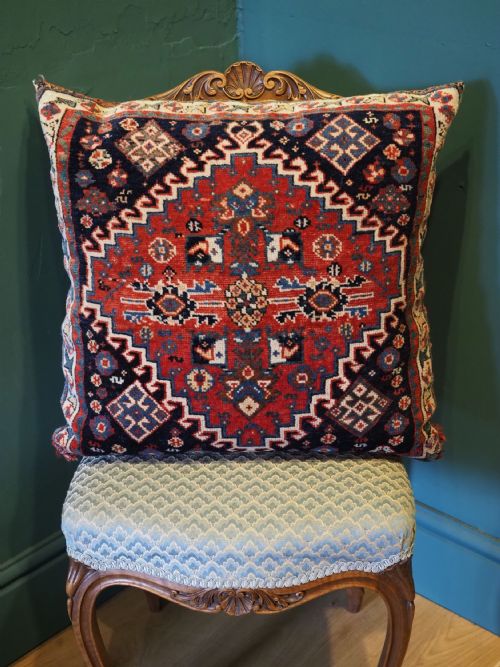
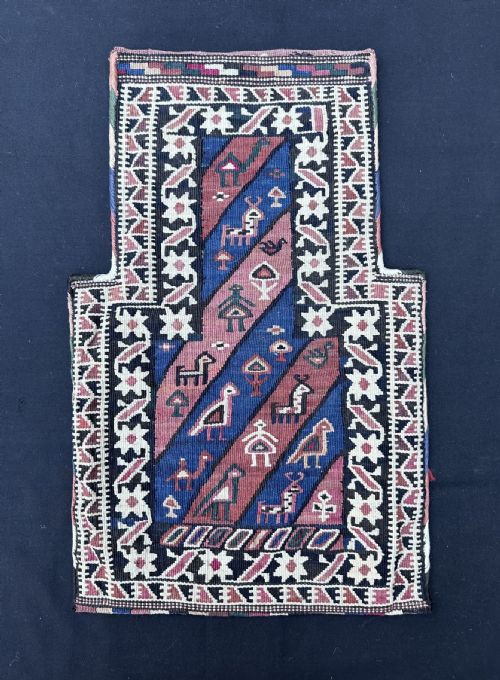
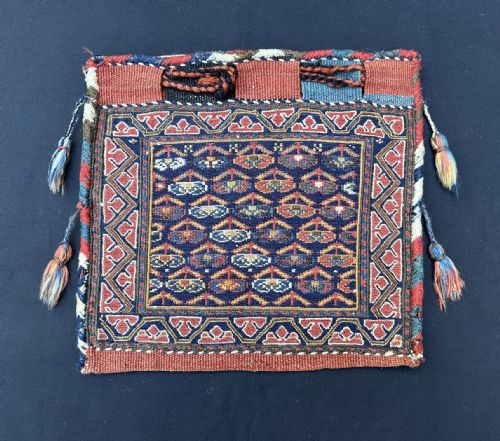
A tribal woven bag serves multiple domestic and pastoral functions, taking the form of vanity bags, salt bags, grain sacks, saddle bags, and tent storage pouches.
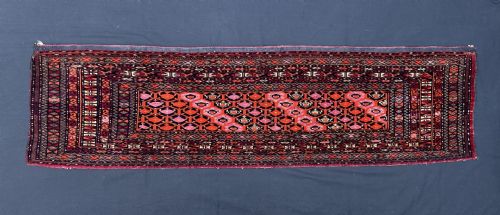
Many examples represent specific nomadic confederacies and tribal groups, including the Qashqai, Afshar, Bakhtiari, Shahsevan, Baluch, and various Turkmen tribes such as the Tekke, Yomut, and Sariq.
The prevalent types date from the latter half of the nineteenth century through the early decades of the twentieth century, reflecting traditional village and tribal weaving practices.
Materials and construction
Weavers utilise wool, hand-spun wool, cotton, and occasionally silk, dyed with natural colorants to build the dense pile and flatweave structures of each bag face.
Surface decoration frequently incorporates supplementary ornamentation like glass beads and cowrie shells, augmenting the tactile quality of the textile.
Tribal Woven Bag Retail Price Guide 2026
Typical asking prices for tribal woven bag among the pieces listed under this phrase on Sellingantiques today, from the lower quarter to the upper quarter. They describe what is for sale here now, not the wider market.
The selection spans from the eighteen-sixties to the nineteen-thirty, covering Persian, Anatolian, and Central Asian nomadic output.
Judging the weave
Quality rests upon the tightness of the knotting or the crispness of the flatweave, alongside the depth and complexity of the tribal design motifs.
The integrity of the remaining wool, the purity of the natural dyes, and the completeness of the original backing or closure mechanisms distinguish finer survivals from heavily worn examples.
The Tribal Woven Bag Glossary
- Chanteh
- A small personal vanity or carrying bag woven by nomadic groups. These small pouches were often used to transport personal items.
- Chuval
- A large tent storage bag produced by Turkmen tribes. They were utilised for bedding and household storage inside the yurt.
- Torba
- A smaller Turkmen storage bag, typically wider than it is high. These were hung against the lattice walls of a tent.
- Khorjin
- A pair of saddle bags designed for transport on animals. One side often survives independently as a half-khorjin or bag face.
- Gul
- A repetitive medallion or floral-like design motif found in Turkmen and other Central Asian weaving. Each pattern often identifies a specific tribe or clan.
Tribal Woven Bag: Frequently Asked Questions
What were tribal bags used for?
Nomadic groups utilised these containers for storing salt, grain, clothes, and personal belongings during seasonal migrations.
Larger sacks hung inside tents for storage, while smaller pouches served as vanity bags or saddle luggage.
How do I identify the tribe?
Attribution relies on specific structural formats, colour palettes, and distinct medallion motifs unique to each confederacy.
Regional characteristics separate Persian nomadic weaving from Turkmen or Central Asian examples.
Are backs usually original?
Many surviving pieces are now bag faces because the plain weave backs wore out or were removed during centuries of use.
Complete examples retaining their original plain weave backs remain particularly prized by collectors.
How should I display them?
Smaller vanity bags and fragments suit mounting and framing behind glass to protect fragile wool and natural dyes.
Larger torbas and chuvals can be hung on walls using conservation-safe sleeves or displayed on flat surfaces.