




Tribal Floor Covering
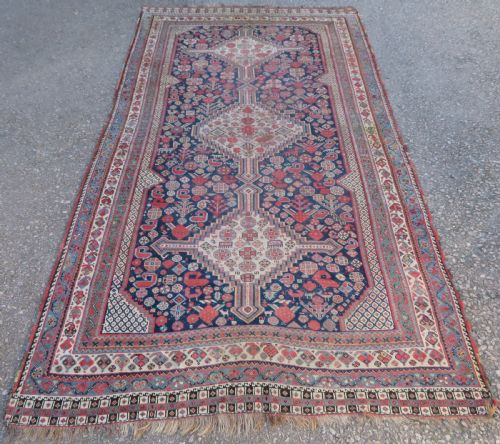
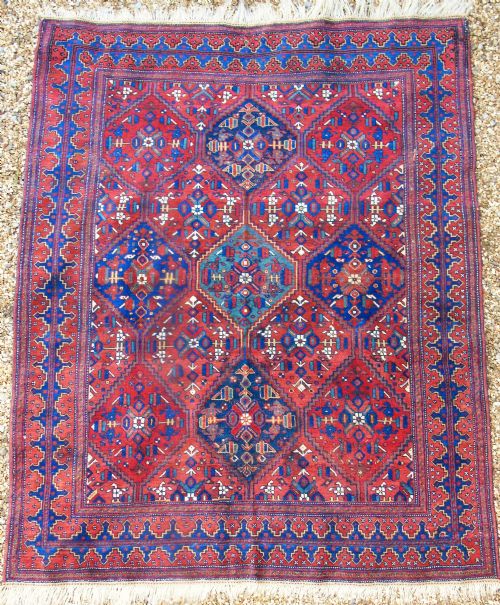
These tribal floor covering pieces bring genuine nomadic heritage into a room, offering rich geometric patterns and deep earthy tones woven by hand.
Tribal Floor Covering
When you search for a tribal floor covering, you are looking at hand-knotted and hand-woven textiles originating from nomadic and village traditions, primarily across Persian and Caucasian regions. These pieces range in date from the mid-nineteenth century through the early twentieth century, encompassing items produced around 1850, 1870, 1880, 1890, 1900, 1920, and 1930.
The selections available here include larger carpets, smaller rugs, and functional domestic items repurposed from larger bags, such as bag faces mounted as cushions and pillows. Formats vary from substantial room-sized carpets down to compact saddlebags and small area rugs.
Specific regional identifiers appear frequently within this selection, pointing to Khamseh, Abedeh, Kashgai, Bakshaish, Afshar from the Neiriz region of Kerman province, and Caucasian or Kazak origins. Buyers seeking these items will encounter distinct tribal motifs, geometric medallions, and stylized animal or plant forms handed down through generations.
How they were made
The construction relies entirely on traditional hand-weaving methods utilising wool, cotton, and hand-spun wool fibres. Weavers knotted or wove these materials manually on upright looms, employing natural dyes to achieve deep saturated hues that deepen gracefully over time.
Structural integrity stems from the use of sturdy wool or cotton foundations onto which the pile is knotted, or in the case of bag faces, durable flatweave and pile techniques. The inclusion of hand-spun wool across several examples indicates traditional yarn preparation methods that produce varied texture and resilience in the finished textile.
Listings span seven decades of production, incorporating pieces dated to 1850, 1870, 1880, 1890, 1900, 1920, and 1930.
What varies in quality
Quality in these textiles rests upon the fineness of the knotting, the complexity and clarity of the geometric design, and the integrity of the surviving wool pile. Pieces retaining strong structural foundations and dense knot counts demonstrate superior initial craftsmanship and better endurance.
The nuance of the colour palette and the quality of the wool also dictate the standing of an individual piece, with hand-spun materials and rich dye variations marking the upper tier of production. Condition plays a role, though minor historical repairs and honest wear often accompany genuine age in nomadic weavings.
Khamseh·Abedeh·Kashgai·Bakshaish·Afshar·Kazak
The Tribal Floor Covering Glossary
- Saddlebag
- A utilitarian container woven in pairs to be draped over pack animals, often featuring intricate face designs that survive today as smaller decorative panels or cushions.
- Pile
- The upright yarn loops or knots that form the soft surface of a carpet, created by tying individual strands to the warp threads of the foundation.
- Warp
- The vertical threads stretched tightly on a loom before weaving begins, providing the primary structural skeleton of the textile.
- Flatweave
- A textile constructed without a raised pile by interlacing warp and weft threads directly, yielding a smooth, durable surface.
- Medallion
- A central ornamental motif positioned in the middle field of a rug or carpet, frequently geometric or floral in tribal weaving traditions.
Tribal Floor Covering: Frequently Asked Questions
How do I clean an antique tribal rug?
Gentle surface brushing and professional specialist cleaning suited to antique wool are essential for maintaining the fibres without causing dye bleed or structural damage. Avoid harsh chemical treatments or aggressive mechanical washing.
Regular rotation prevents uneven wear from foot traffic and sunlight exposure, helping the natural wool pile retain its resilience and character over years of daily use.
Can I use these carpets in high traffic areas?
Sturdy wool construction and dense hand-knotting allow many of these pieces to handle moderate foot traffic in hallways, living rooms, and studies. Placing a suitable breathable underlay beneath the carpet prevents slipping and reduces friction against the floorboards.
Heavier traffic areas benefit from selecting pieces with a robust pile and sound foundation threads, ensuring the textile endures physical use while retaining its visual appeal.
How do I identify a Kazak rug?
Kazak rugs typically display bold geometric medallions, stark primary colours like madder red and indigo blue, and robust wool construction characteristic of Caucasian weaving traditions. The designs favour large-scale octagons, hooked polygons, and stylized animal forms.
Examining the weave structure, fringe finishing, and wool quality helps separate these Caucasian pieces from Persian village counterparts found in the same broader category.
What is a bag face?
A bag face is the decorative front panel of a nomadic storage sack, traditionally used for transporting possessions or household goods. When the surrounding plain wool backing wore out, the artistic face was frequently preserved and trimmed into a cushion or small mat.
These panels concentrate the finest knotting and most intricate tribal patterns into a compact format, making them accessible examples of nomadic textile artistry.