
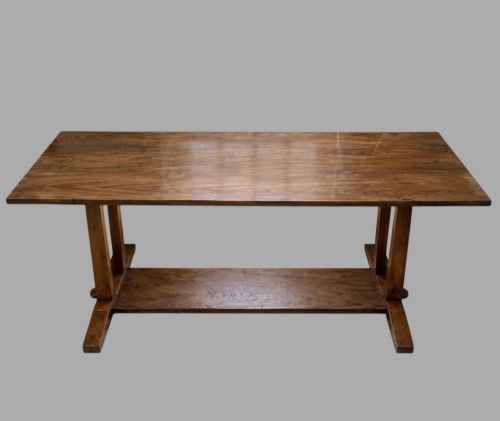
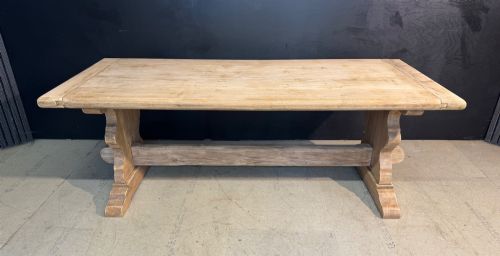
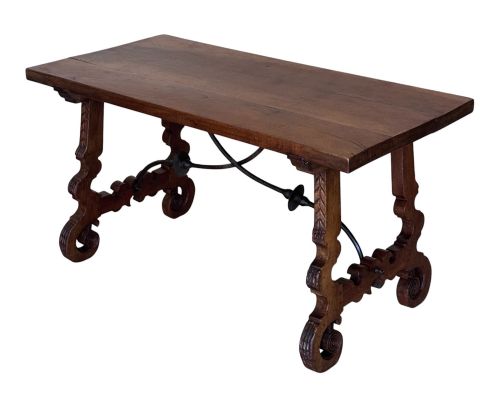
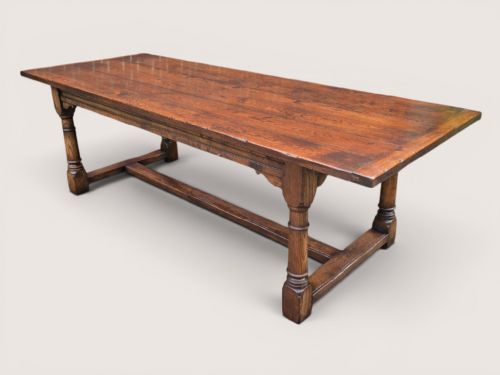
Trestle Base Refectory Table
A trestle base refectory table provides a long, solid surface built for communal dining, rooted in centuries of practical domestic architecture.
Trestle Base Refectory Table
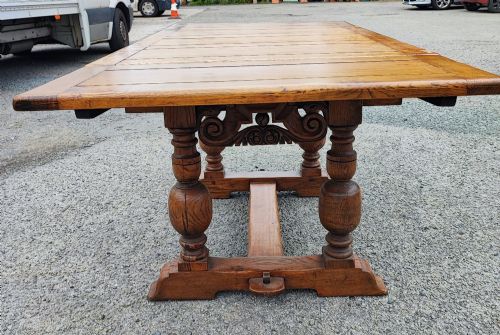
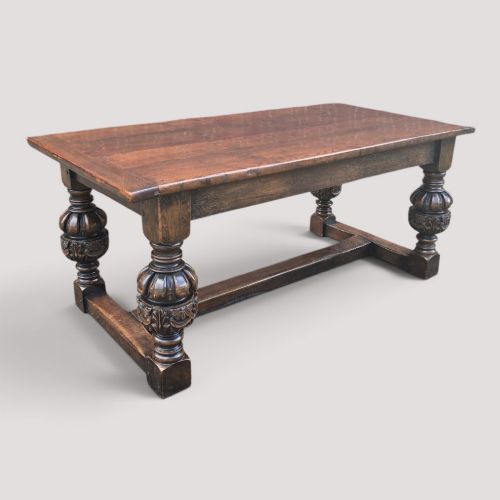
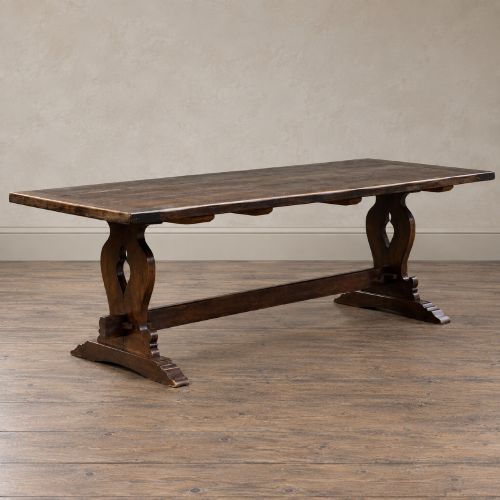
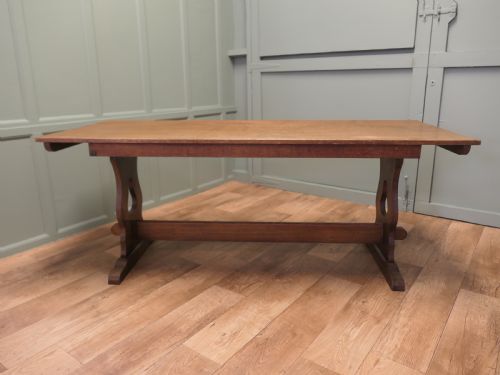
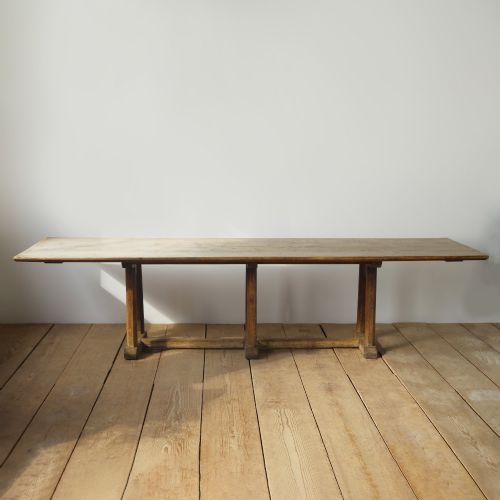
A trestle base refectory table is a substantial dining form characterised by twin supports connected by a central stretcher, designed originally for monastic and baronial halls. When buyers search for this phrase, they encounter heavy timber boards resting on fixed trestles or framed legs.
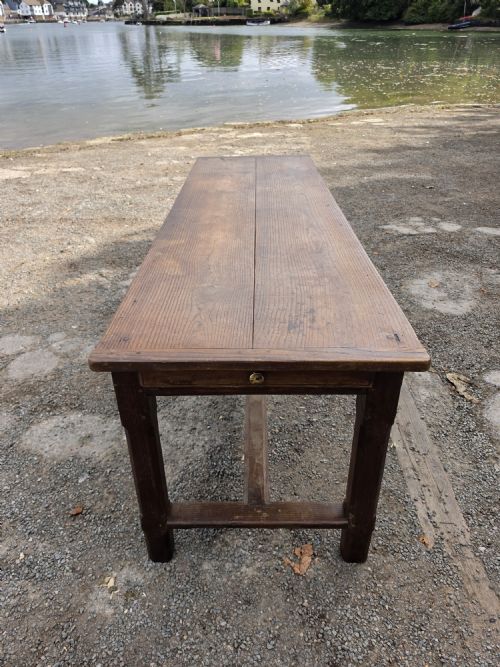
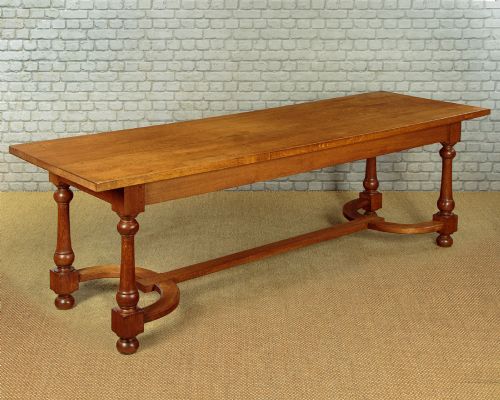
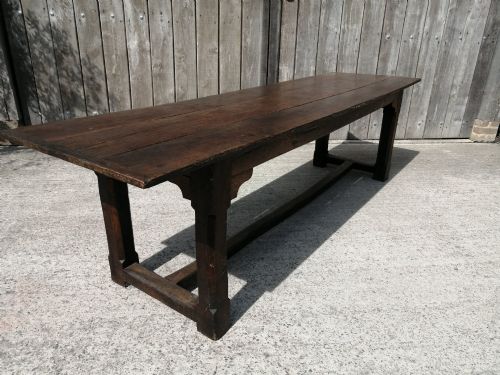
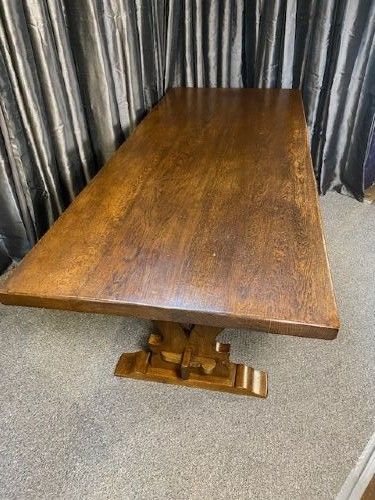
The version most commonly met on this page is the oak dining table from the seventeenth to the early twentieth century, drawing on rustic farmhouse and Jacobean revival styles. These pieces often measure long and narrow, built to seat large gatherings comfortably in country kitchens or dining rooms.
Materials and construction methods
Construction relies primarily on solid timbers such as oak, elm, and walnut, often joined with pegged mortise and tenon joints to withstand heavy daily use. Pine and painted wood also appear, particularly in tavern or farmhouse variants.
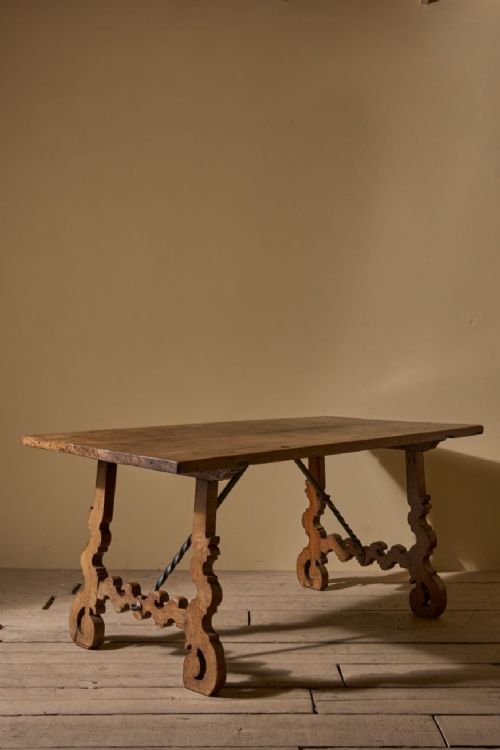
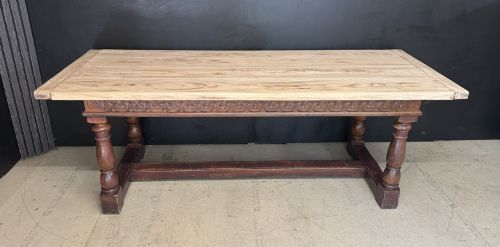
Tops range from single plank boards to multi-plank surfaces fitted with cleated ends to prevent warping, supported by trestle feet, barrel legs, or wrought iron stretchers.
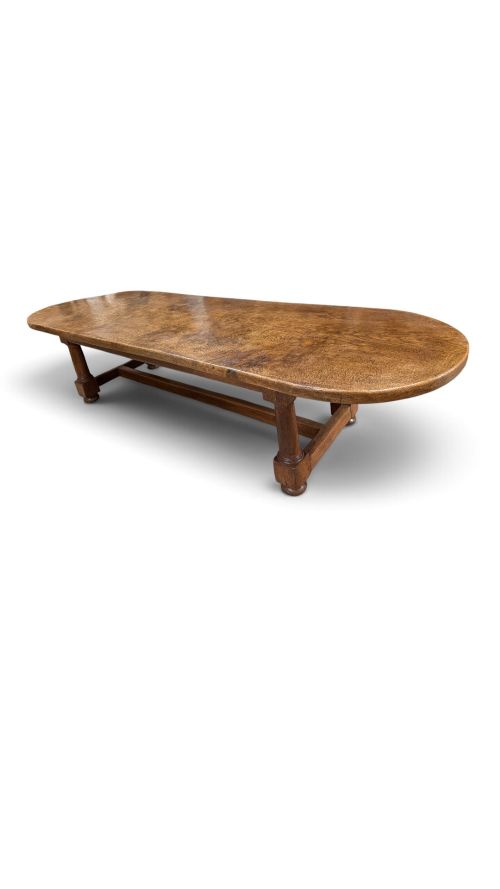
Listings feature oak, pine, walnut, and elm examples spanning from the seventeenth century through the Arts and Crafts period to the twentieth century.
Assessing quality and construction
Quality separates tables built with original period timber and traditional joinery from later revivals or pieces assembled with replacement tops. The integrity of the connection between the top and the base dictates the overall rigidity of the structure.
Surface depth, timber figuring, and the presence of draw leaves or original stretchers elevate certain examples above standard utilitarian dining furniture.
Sir Robert Lorimer
The Trestle Base Refectory Table Glossary
- Trestle base
- A structural support system consisting of two upright feet connected by a horizontal beam or stretcher. This design maximises legroom along the length of the table.
- Draw leaf
- An extension mechanism where auxiliary leaves slide out from beneath the main surface. This allows the table length to increase when needed for guests.
- Cleated ends
- Wooden battens fixed across the short ends of a plank top. They help keep the main boards flat and stable over time.
Trestle Base Refectory Table: Frequently Asked Questions
How many people does a trestle base refectory table seat?
These tables are built long and narrow to accommodate large groups along both sides without obstruction from corner legs. The trestle design specifically allows diners to sit along the entire length.
Capacity depends directly on the length of the top and whether draw leaves are fitted to extend the surface.
Are these tables suitable for everyday family dining?
Solid timber construction and pegged joints make these tables exceptionally sturdy for daily use. Oak, elm, and walnut surfaces withstand regular meals and family gatherings.
Routine maintenance involves using simple wax or oil finishes to protect the wood grain from moisture and daily wear.
How do I identify an earlier period table from a later revival?
Earlier periods show hand-cut joinery, pegged joints, and natural timber movement consistent with age. Later revivals, such as Arts and Crafts or Jacobean styles from the twentieth century, often employ cleaner machine-cut precision.
Examining the underside of the top and the wear patterns around the feet helps determine the age of the base.