



Gothic Arched Oak Table
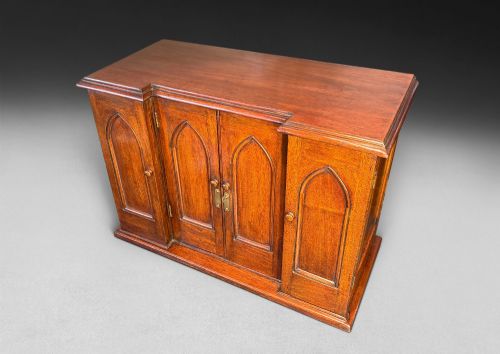
These pieces of gothic arched oak table and related forms bring medieval verticality directly into domestic spaces through pointed structural motifs.
Gothic Arched Oak Table
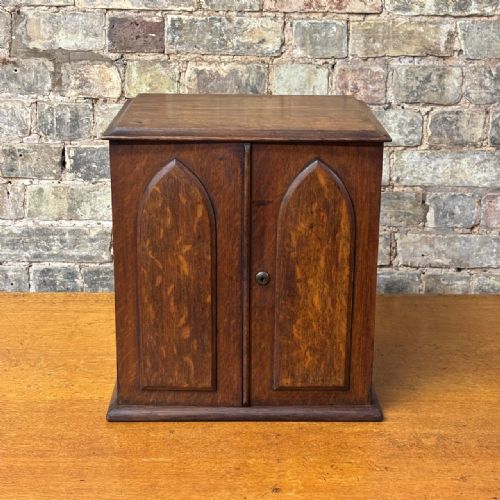
When you search for a gothic arched oak table, you encounter nineteenth-century revival interpretations alongside related furniture forms such as cabinets, stools, and side tables. These items utilise sturdy timber construction and pointed architectural tracery borrowed from ecclesiastical stone buildings.
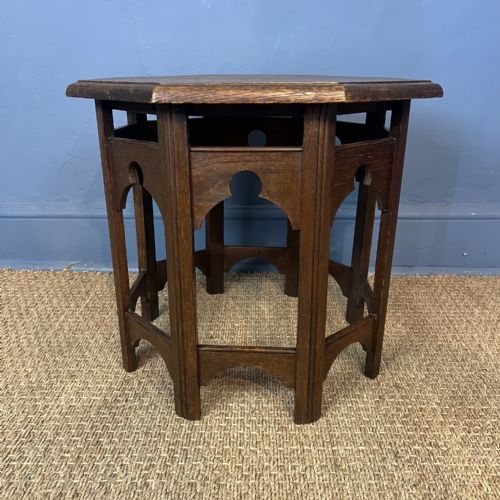
The versions most commonly met on this page span the Victorian period and the early twentieth century, incorporating styles from Gothic Revival to Arts and Crafts and Gothic Reform. They range from small side pieces and octagonal occasional tables to larger dining and refectory forms.
Makers and designers from distinct movements adapted medieval vocabulary for domestic interiors, producing both formal church furnishings and domestic tables with underframes displaying characteristic pointed arches.
How they were made
Makers constructed these pieces primarily using solid oak, occasionally supplemented by chestnut or iron reinforcement and brass fittings. Timber selection favoured durable hardwoods capable of supporting heavy structural frames and deep relief carving.
Joinery techniques relied on traditional framing methods to secure heavy tops and underframes, allowing structural members to accommodate seasonal timber movement. Carvers executed pointed cathedral arches and tracery panels directly into the dense grain of the wood.
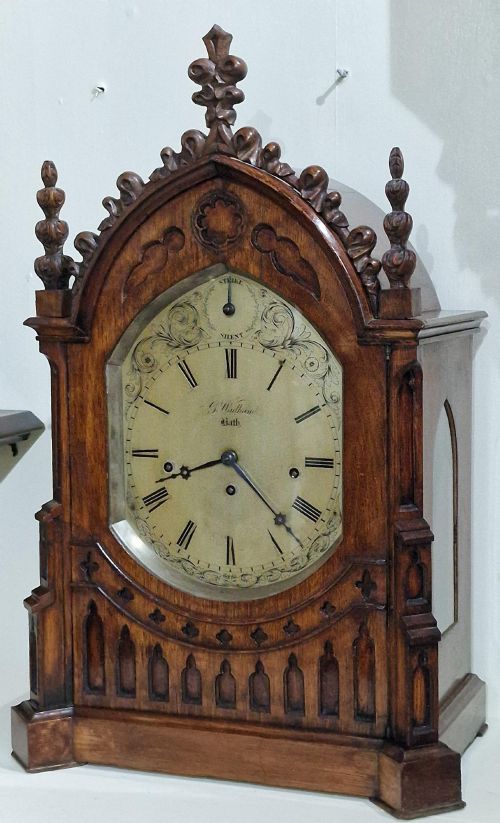
Several clocks and tables share space with a French deed box featuring carved church tracery.
What varies in quality
The sophistication of the architectural detailing distinguishes finer examples from simpler production. Master carvers rendered crockets, cusps, and pointed arches with crisp depth and correct proportion, whereas lesser pieces show blunt edges and repetitive machine profiling.
The integrity of the timber and the weight of the supporting underframe dictate structural stability. Well-proportioned tables combine sound joinery with mature oak stock that has seasoned evenly without excessive splitting.
George Wadham·Sir Robert Lorimer
The Gothic Arched Oak Table Glossary
- Gothic Revival
- A nineteenth-century movement that revived medieval architectural forms in architecture and decorative arts. It heavily influenced domestic furniture through pointed arches and ecclesiastical motifs.
- Tracery
- Openwork stonework or woodwork supporting glass in a window or applied to panels as decoration. In these tables, it often appears carved into doors and underframes.
- Refectory table
- A large dining table traditionally used in monastic refectories and later adopted for domestic halls. Examples often feature heavy stretchers and substantial timber legs.
- Arts and Crafts
- A design movement promoting handcraftsmanship and traditional materials in reaction against mass production. It produced simplified oak furniture with honest construction methods.
- Bracket clock
- A portable household clock designed to sit on a bracket or table. Many Victorian examples incorporated architectural wooden cases styled in the gothic taste.
Gothic Arched Oak Table: Frequently Asked Questions
What is a gothic arched oak table?
It is a piece of furniture incorporating pointed medieval arches and architectural tracery into a timber frame.
These items date predominantly from the nineteenth and early twentieth centuries during various Gothic revival movements.
How do I date a gothic table?
Dating relies on examining the construction methods, joinery marks, and stylistic nuances of the period.
Victorian and Arts and Crafts examples often display characteristic machine assistance or specific revival design traits.
Where were these tables used?
They were designed for domestic halls, libraries, and occasionally ecclesiastical settings.
Their robust timber construction suited both heavy daily use and decorative display in period rooms.
What wood is used?
Solid oak forms the primary material for the majority of these pieces.
Secondary woods such as chestnut or iron hardware occasionally appear in auxiliary components and fittings.
Are these tables sturdy?
Their heavy hardwood frames and traditional joinery provide substantial weight and structural stability.
Properly maintained oak tables easily support everyday domestic requirements.