
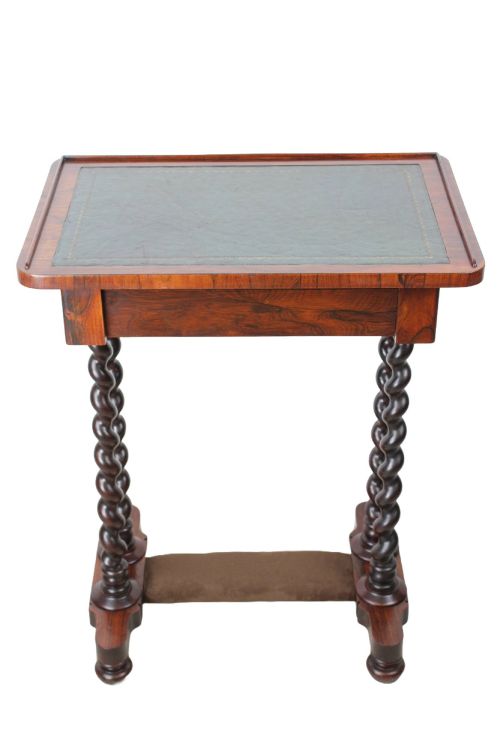
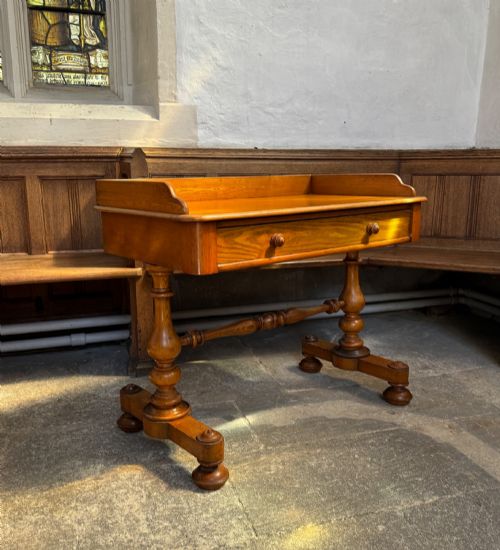
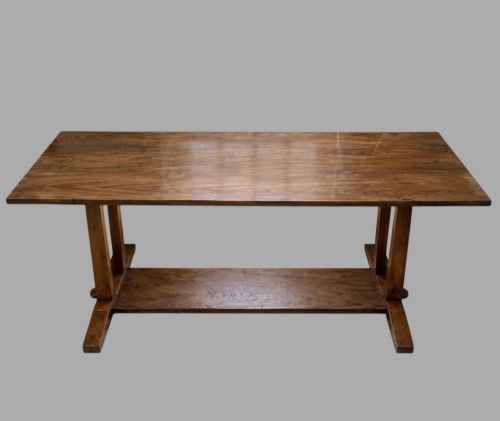
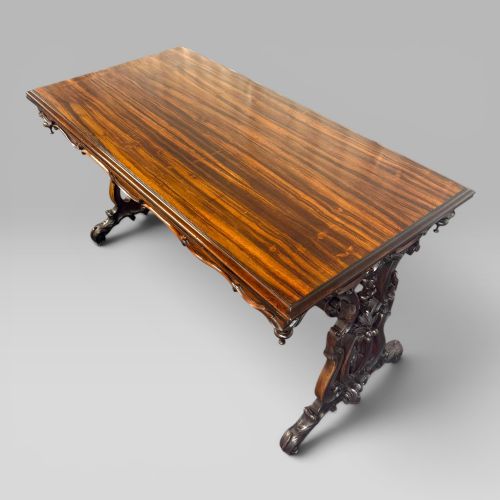


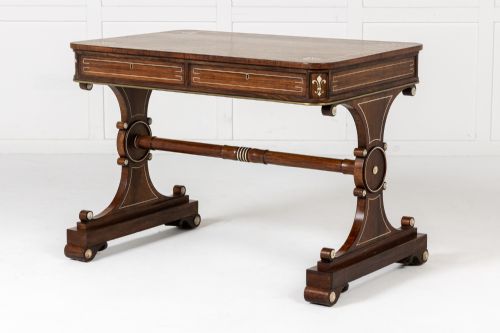


Trestle Base Hall Table
These trestle base hall table pieces combine utility with strong period lines, bringing character and practical surface space into an entrance.
Trestle Base Hall Table
A trestle base hall table serves as a functional surface for an entranceway, drawing on forms originally produced during the 18th century, Regency, and Victorian periods. Buyers seeking a trestle base hall table encounter various related formats on this page, including sofa tables, library tables, and side tables configured with sturdy underframes.
The pieces span multiple historical eras such as the Regency, William IV, Victorian, and Arts and Crafts periods. Oak, mahogany, rosewood, and pitch pine appear frequently as the primary woods utilised for these tables.
Design influences range from plain Gothic Revival and early Victorian iterations to structured Arts and Crafts cross-base constructions. Such tables provide a definitive anchor for a hallway while offering durable utility.
Materials and construction methods
Cabinet makers constructed these tables using dense timbers like mahogany, walnut, rosewood, and oak, often finished with brass inlays, leather inserts, or marquetry details. Structural stability relies on solid timber frames, turned spindles, and heavy cast iron elements.
Joinery techniques matched the demands of the period, from hand-cut joints on Georgian and Regency pieces to pegged and cross-base bracing seen in Arts and Crafts examples. Secondary woods and pitch pine support the primary show woods on larger library and altar forms.
Listings span the 18th century, Regency, Victorian, and Edwardian periods, utilising mahogany, rosewood, walnut, and pitch pine.
Distinctions in quality
The grade of timber selection and the precision of decorative elements separate standard examples from finer pieces. Tables incorporating figured rosewood, burr walnut, intricate brass inlay, or marquetry reflect higher workshop standards.
The integrity of the structural base determines long-term stability, with tightly fitted joints and substantial cross-bracing outperforming simpler configurations. Maker attributions, whether documented or executed in the manner of notable designers, elevate the standing of an individual table.
Gillingtons Dublin·Heal And Son·Gillows
The Trestle Base Hall Table Glossary
- Trestle base
- A support structure consisting of two or more vertical frames connected by a horizontal beam, providing stability for long tabletops. This configuration allows for greater legroom compared to standard four-legged designs.
- Library table
- A large, freestanding table designed for holding books and writing materials, commonly utilised in the centre of a room. These pieces frequently incorporate drawers and leather-lined writing surfaces.
- Sofa table
- A rectangular table traditionally placed against the back of a sofa, typically featuring drop leaves on either end. Regency versions often showcase twin pedestals or trestle supports.
- Marquetry
- The art of applying pieces of veneer to a structure to form decorative patterns and pictures. Makers utilised contrasting woods to create intricate surface designs on tabletops.
- Gothic Revival
- An architectural and decorative style drawing inspiration from medieval forms, prevalent during the 19th century. Pieces in this style often display pointed arches, heavy timbers, and ecclesiastical motifs.
Trestle Base Hall Table: Frequently Asked Questions
Where should a trestle base hall table go?
These tables fit naturally in entrance halls and narrow corridors where surface space is required without a heavy footprint. Their slim proportions allow them to sit flat against a wall while remaining accessible.
They also function effectively behind sofas or within open living spaces as central display points. The sturdy underframe ensures stability in high-traffic thoroughfares.
How do I identify a Regency period table?
Regency pieces typically feature dark timbers such as rosewood and mahogany, often accompanied by brass inlay, sabre legs, or trestle supports. The lines lean toward classical revival influences derived from Greek and Roman precedents.
Proportions remain balanced and elegant, avoiding the heavier ornamentation associated with later Victorian furniture. Details like turned pedestals and brass paw feet frequently indicate this era.
What is the difference between a side table and a library table?
Side tables are generally smaller and designed to stand against a wall, functioning as display surfaces for lamps or decorative objects. Library tables are built larger and heavier, intended to be viewed from all sides in the middle of a room.
Library tables often include functional drawers for documents and superior timber grading. Side tables prioritize a shallower depth to fit narrow circulation areas.
How do I care for antique rosewood surfaces?
Maintain rosewood by keeping it away from direct sunlight and sudden changes in temperature, which can cause the dense timber to split or fade. Regular dusting with a soft, dry cloth prevents particulate accumulation.
Apply occasional appropriate wax polish sparingly to nourish the grain and preserve the natural sheen. Avoid silicone-based sprays that damage historic finishes over time.