
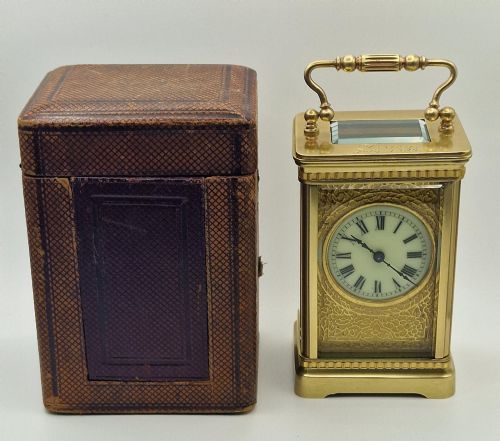
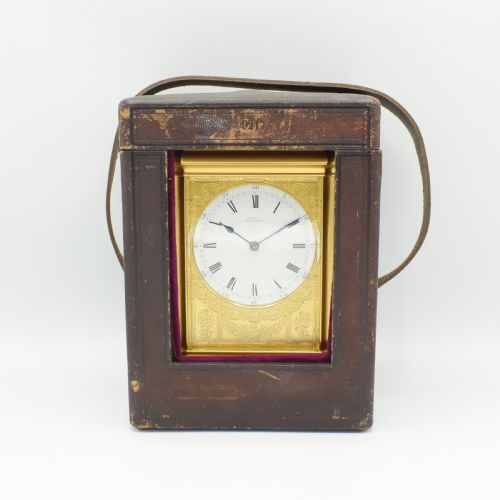
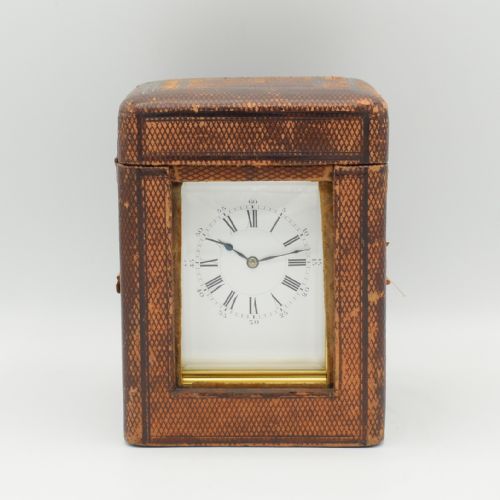
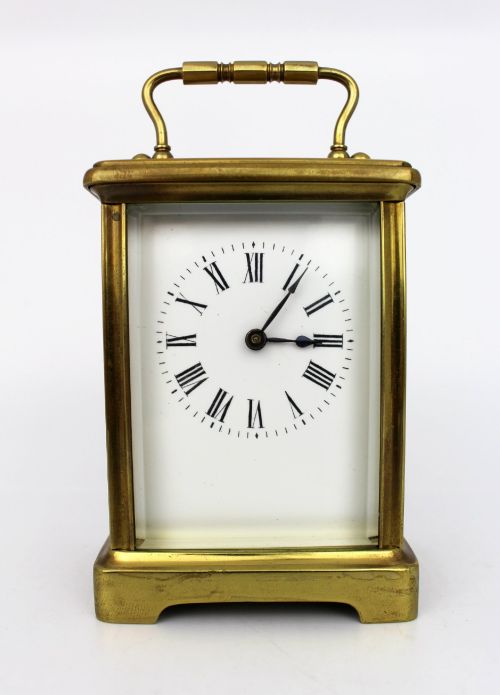



Travelling Clock Case
When you handle a travelling clock case, you hold a piece of engineering built to survive nineteenth-century journeys.
Travelling Clock Case
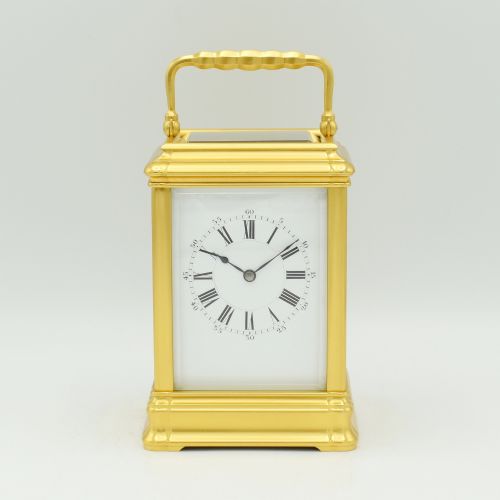
A travelling clock case protects a portable timepiece designed for transit during the Victorian and Edwardian eras. These housings shield delicate brass, glass and silver mechanisms from the knocks of carriage and rail travel.
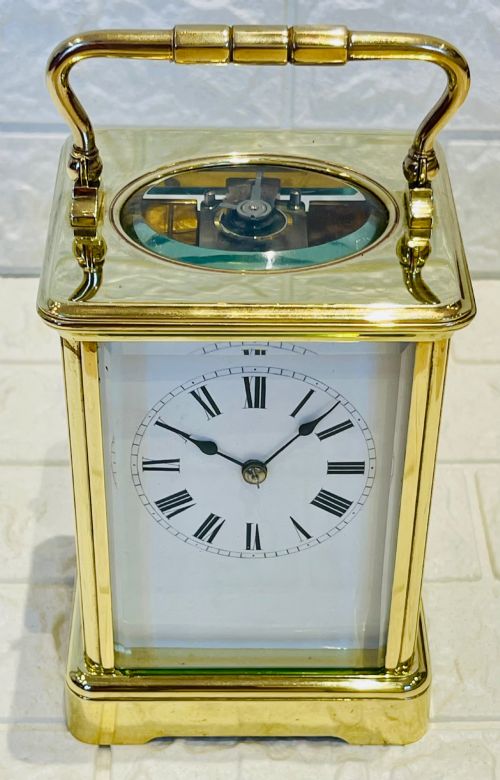
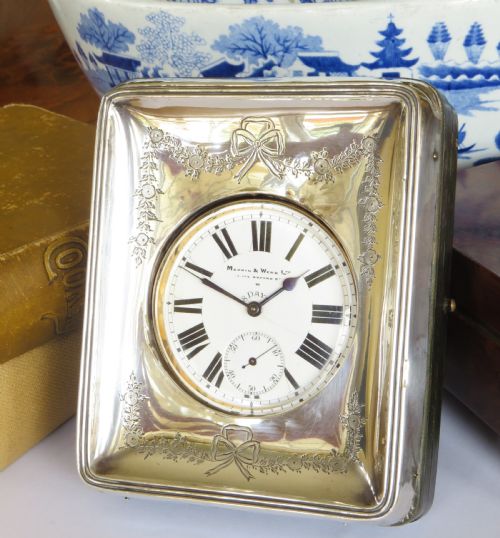
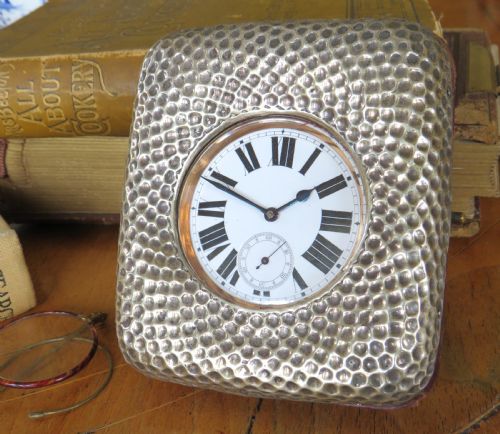
Most examples found in this collection originate from French and English workshops, taking the form of robust brass carriage clocks or specialised leather outer cases. They range from utilitarian pocket versions to large gorge-cased striking clocks.
The primary purpose remains keeping precision instruments accurate while moving, combining structural protection with refined domestic display. Buyers encounter everything from miniature desk accessories to grand exhibition pieces.
Materials and Construction
Makers constructed these housings predominantly from heavy brass, often fire-gilded, combined with bevelled glass panels to reveal the movement. Leather outer cases added a secondary layer of protection against the elements.
Silver and chrome-plated steel appear in later pieces, reflecting shifting tastes toward diverse metal finishes. Enamel panels and intricate hand-engraving frequently decorate the structural framework of the better pieces.
Joinery relied on precise metal-to-metal fitting and dovetailed joints for leather components, ensuring the outer shell withstood constant motion. Original glass panes and retaining bezels required exact tolerances to prevent vibration damage.
Some nineteenth-century travellers required an alarm function just to catch early morning mail coaches.
Quality Variations
Quality rests upon the crispness of the cast or engraved brass framework and the clarity of the bevelled glass lights. Finer examples display deep, sharp hand-chasing rather than shallow mechanical stamping.
The integrity of the original leather outer case and the presence of matching maker marks elevate certain pieces significantly. Superior movements feature complex striking or repeating complications housed within weighty, substantial metal shells.
Henri Jacot·Mappin & Webb·Pickford of London·Drocourt Paris·Antoine Redier of Paris·Margaine Of France·Harrods of London·Richard co·Delépine·James Grohé·Holingue
The Travelling Clock Case Glossary
- Carriage clock
- A portable spring-driven timepiece created for travellers. They typically include a folding handle on top and heavy glass panels.
- Repeater
- A clock mechanism that chimes the hours and quarters upon pressing a button. This allowed travellers to check the time in the dark.
- Petit Sonnerie
- A striking complication that sounds the hours and the current quarter on each quarter-hour. It represents a higher grade of horological manufacture.
- Gilt brass
- Base metal treated with a thin layer of gold through fire gilding or electroplating. This finish provided a rich appearance while resisting corrosion.
Travelling Clock Case: Frequently Asked Questions
What is a travelling clock case?
A travelling clock case is a protective housing designed to secure a portable timepiece during transit. These enclosures safeguarded delicate internal gears from the vibrations of nineteenth-century carriages and trains.
They appear in sturdy brass, silver, and leather-covered outer boxes tailored to specific clock dimensions.
How do I identify the period?
Dating relies on stylistic clues such as case shape, engraving depth, and the evolution of handle designs from the Victorian era onward. Earlier pieces often feature heavy gorge mouldings and fire gilding, whereas later examples lean towards silver or chrome.
Maker signatures stamped on the backplate provide definitive chronological markers.
Were these used for travel?
These items served wealthy travellers who required exact timekeeping away from home. The robust outer leather cases and thick bevelled glass were specifically engineered for the rigours of transit.
Many doubled as desk clocks once the owner reached their destination.
How do I care for my clock case?
Maintain metal surfaces with a dry microfibre cloth to remove dust without damaging original gilding or patina. Avoid harsh chemical polishes that strip away historical finishes.
Keep leather cases away from direct sunlight and excessive humidity to prevent warping.