

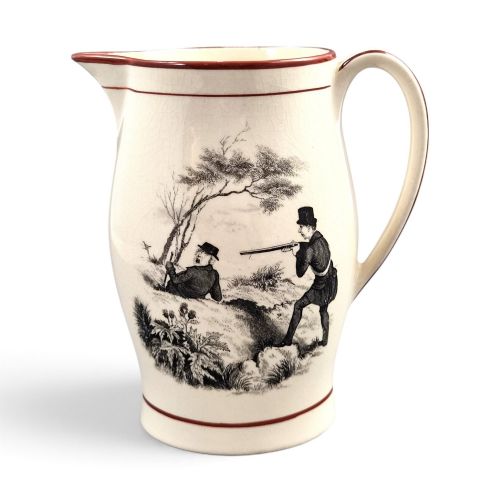
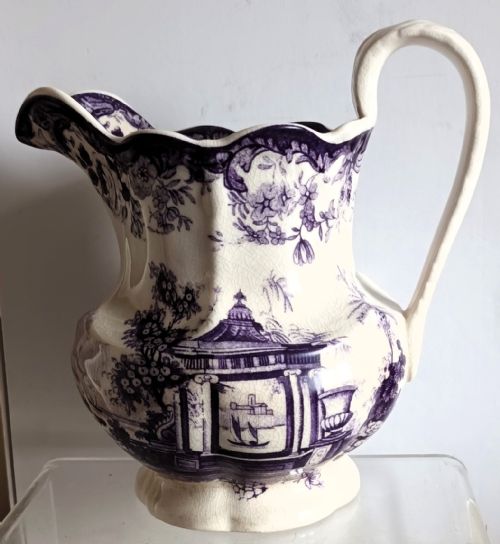


Transfer Printed Pitcher
A transfer printed pitcher brings narrative and colour straight to the table, combining functional earthenware forms with sharp monochrome or vibrant printed scenes.
Transfer Printed Pitcher
A transfer printed pitcher represents a robust tradition of ceramic vessels decorated through applied printed tissue rather than hand-painted brushwork. These pieces span the Georgian, Regency, and Victorian eras, capturing domestic service and decorative display through enduring utilitarian forms.
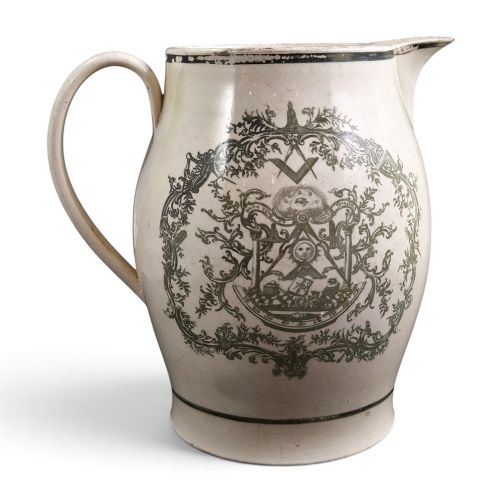
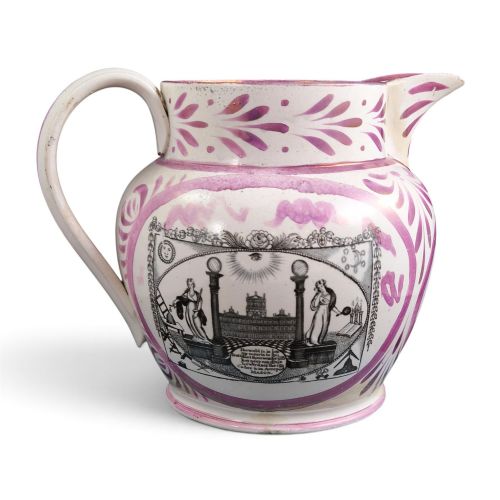
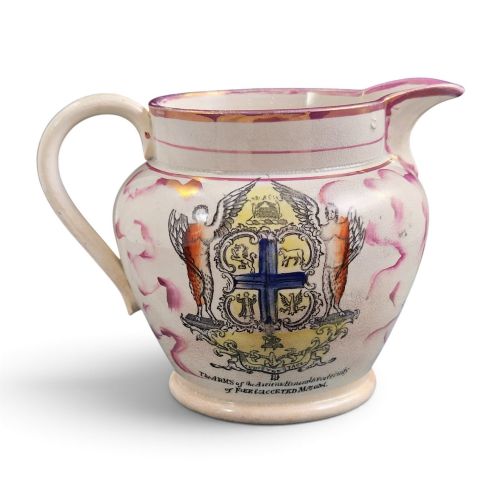
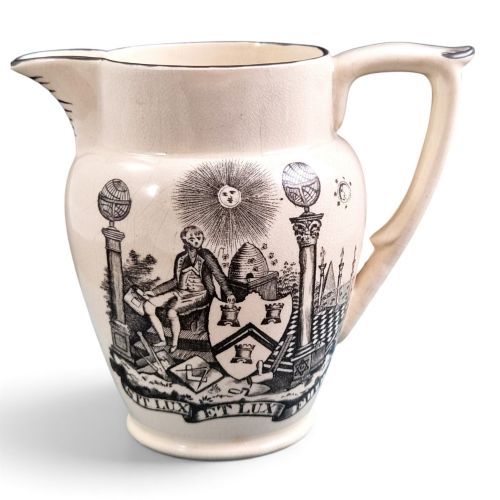
The versions most commonly met on this page are earthenware jugs originating from Staffordshire and Sunderland potteries. Examples range from large one-gallon blue and white serving vessels to smaller earthenware jugs carrying maritime motifs, masonic symbols, and topographical views.
Makers utilised various foundational bodies including creamware, pearlware, and standard ceramic pastes to receive the design. The resulting transfer printed pitcher offers a durable record of early industrial ceramic techniques combined with social history.
How they were made
Potters formed the body from earthenware, creamware, or pearlware, shaping the jug on a wheel or in a mould before initial firing. Once the biscuit body hardened, craftsmen applied the engraved design from a prepared paper tissue directly onto the ceramic surface.
The transferred design underwent a secondary process where pigments such as cobalt blue or black adhered to the porous clay before glazing. Many pieces received additional hand-applied touches of metallic lustre glaze or enamel colours over the print to heighten the visual impact before final kiln firing.
Transfer Printed Pitcher Retail Price Guide 2026
Typical asking prices for transfer printed pitcher among the pieces listed under this phrase on Sellingantiques today, from the lower quarter to the upper quarter. They describe what is for sale here now, not the wider market.
Listings feature earthenware bodies spanning the Georgian and Victorian periods, including creamware and pearlware varieties with lustre glaze highlights.
What varies in quality
The clarity of the printed transfer dictates the visual success of the piece, separating crisp, detailed engravings from smudged or blurred impressions. Precision in the alignment of the printed plate edges shows the skill of the transfer printer working at the pottery.
The richness of the secondary decoration, such as hand-painted pink lustre highlights or complex enamel washes, determines the visual depth of the vessel. The purity of the underlying creamware or pearlware body also influences the overall refinement of the finished pitcher.
The Transfer Printed Pitcher Glossary
- Transfer printing
- A method of decorating ceramics by engraving a design on a copper plate, inking it, and transferring the impression onto paper and then onto the clay body. This technique allowed complex pictorial scenes to be replicated consistently across multiple vessels.
- Creamware
- A refined earthenware developed in the eighteenth century with a pale yellow or buttery tone beneath a transparent lead glaze. It served as a primary canvas for early printed and painted domestic wares.
- Pearlware
- An improved earthenware body containing a small amount of cobalt in the glaze to neutralise the natural yellow tint of the clay, producing a bluish-white surface. This body appeared widely around the turn of the nineteenth century.
- Lustre glaze
- A metallic glaze containing gold, copper, or silver oxides fired in a reducing atmosphere to produce a reflective, metallic sheen. It frequently appears on nineteenth-century Sunderland pottery to frame transfer-printed panels.
- Creamware body
- The porous ceramic substrate composed of refined clays and flint that formed the structural base for many Georgian serving vessels. It provided a stable foundation for both black and coloured transfer prints.
Transfer Printed Pitcher: Frequently Asked Questions
What is a transfer printed pitcher?
A transfer printed pitcher is a ceramic jug decorated by pressing a printed paper design onto the clay body before glazing and firing. These vessels were produced in British potteries during the Georgian and Victorian periods.
They served functional roles in the home for holding liquids while displaying commemorative, political, or maritime imagery.
How are different periods identified?
Periods are identified by examining the ceramic body, glaze characteristics, and the style of the printed engraving. Creamware and pearlware bodies typically point to Georgian and Regency dates, while heavier earthenware indicates Victorian production.
Subject matter such as masonic emblems or specific historical views also helps narrow down the era of manufacture.
Were these jugs used daily?
Many of these large vessels were designed for heavy domestic service, holding water, beer, or milk at the table. Their robust earthenware construction made them practical for everyday household use.
Over time, many surviving examples transitioned from active utility to decorative display due to their striking pictorial designs.
What motifs appear on these pieces?
Common motifs include maritime scenes, clipper ships, masonic symbols, patriotic emblems, and topographical landmarks. Potters tailored these subjects to commemorate specific trades, fraternal orders, or historical events.
Poetic verses and moral inscriptions frequently accompany the printed illustrations on nineteenth-century jugs.