

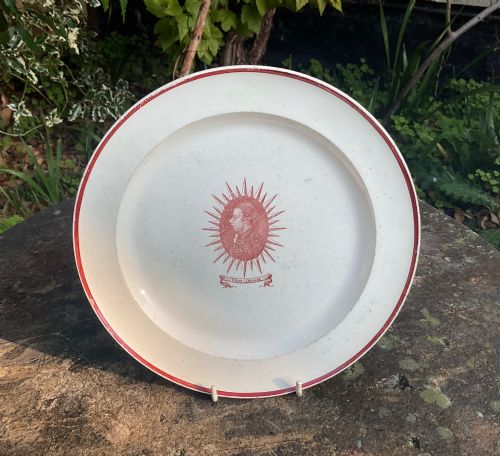
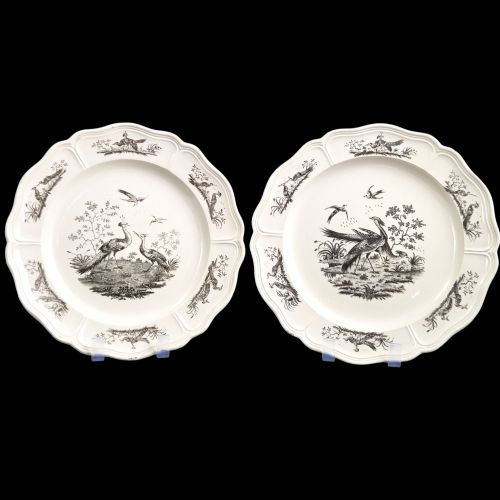
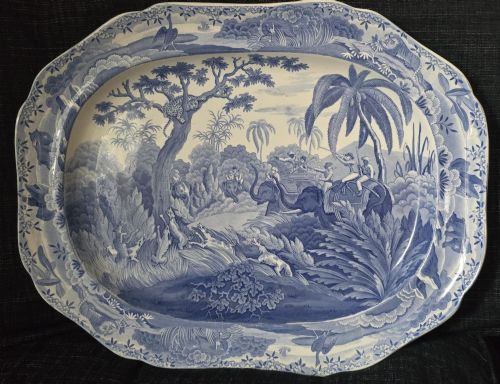
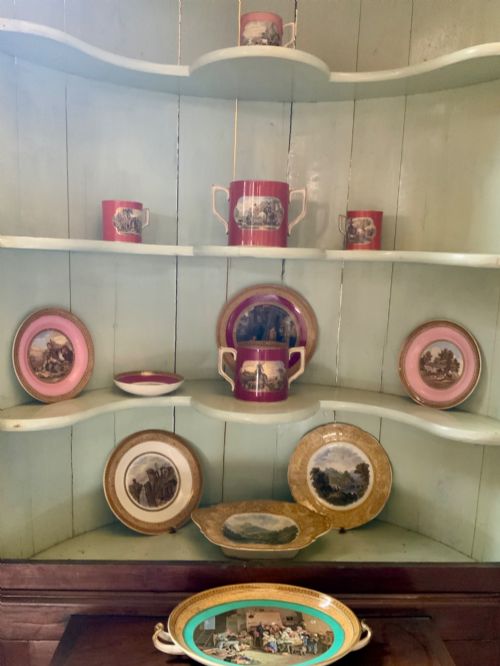




Transfer Printed Earthenware Plate
A transfer printed earthenware plate brings tactile 19th-century domestic narrative straight to your table through bold blue and white imagery.
Transfer Printed Earthenware Plate
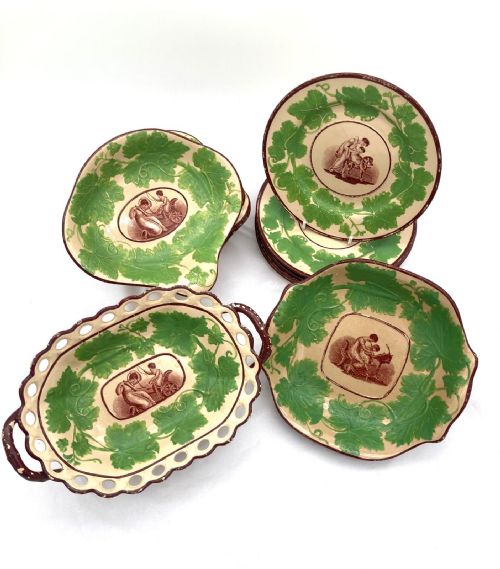
When you search for a transfer printed earthenware plate, you encounter utilitarian and decorative ceramics spanning the Georgian, Regency, and Victorian periods. These pieces range from standard dining plates and dessert services to large meat dishes, serving platters, and bread stands.
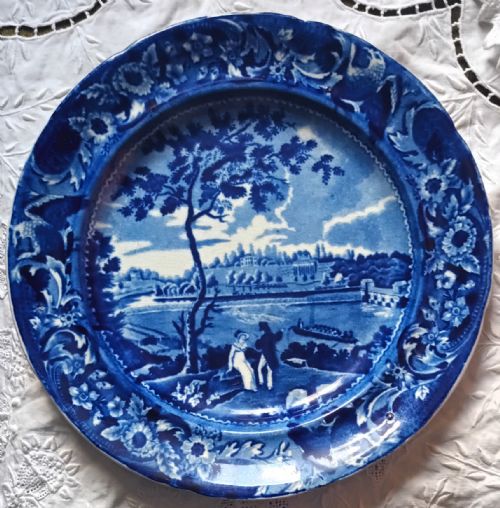
The versions you meet most frequently on this page originate from English potteries, particularly Staffordshire workshops. They carry pictorial patterns depicting classical ruins, rural scenes like The Cowman and The Beemaster, or topographical views such as Fair Mount near Philadelphia.
Makers utilised earthenware, creamware, and pearlware as the base bodies for these domestic items. The resulting objects combine functional utility with robust ceramic durability that survives from the late 18th century onward.
Materials and transfer printing techniques
Potters formed the base plates from porous ceramic bodies including creamware, pearlware, and standard earthenware. These bodies received smooth surfaces through the application of transparent lead glazes.
Makers transferred designs onto the ceramic surface using cobalt pigment applied via engraved copper plates. This mechanical transfer method allowed workshops to produce complex pictorial patterns with remarkable consistency across large sets of plates and platters.
Transfer Printed Earthenware Plate Retail Price Guide 2026
Typical asking prices for transfer printed earthenware plate among the pieces listed under this phrase on Sellingantiques today, from the lower quarter to the upper quarter. They describe what is for sale here now, not the wider market.
Historic dinner guests dined alongside wild leopards, bustling bridges, returning woodmen, and cows captured entirely in cobalt blue.
Distinctions in ceramic and print quality
The refinement of the underlying ceramic body separates standard utilitarian wares from superior production. Creamware and pearlware bodies display finer potting and more even glaze distribution than heavy, utilitarian earthenware plates.
The crispness and depth of the cobalt pigment transfer dictate visual success. Finely engraved copper plates yield sharp pictorial details in complex scenes, whereas worn plates produce blurred edges and pooled pigment.
Leeds Pottery·Stubbs·William Adam·Thomas Lakin·Brameld and Co·John Rogers and Son
The Transfer Printed Earthenware Plate Glossary
- Pearlware
- A refined earthenware body developed in the late 18th century featuring a bluish-tinted lead glaze that pooled attractively in crevices. This material provided a whiter canvas for cobalt blue transfer printing than traditional creamware.
- Creamware
- A fine-grained, cream-coloured earthenware perfected by English potteries during the Georgian era. Its warm tone influenced the aesthetic of early transfer printed plates before pearlware gained widespread popularity.
- Transfer printing
- A method of decorating ceramics by engraving a design onto a copper plate, inking it with cobalt pigment, and pressing it onto paper to transfer the motif onto the biscuit fired ceramic body. This technique revolutionised mass production in the pottery industry.
- Prattware
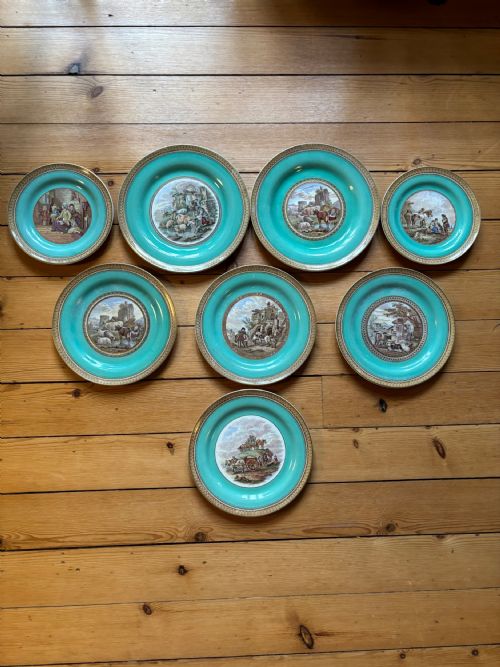
- A type of earthenware produced in the late 18th and 19th centuries characterised by multi-coloured underglaze painting beneath a clear lead glaze. These pieces often take the form of plates and moulded service items.
Transfer Printed Earthenware Plate: Frequently Asked Questions
How were these plates used?
These pieces served practical dining functions, ranging from everyday meat service on large platters to dessert courses on smaller plates. They formed central components of domestic table settings in Georgian and Victorian households.
Beyond functional dining, many plates displayed pictorial narratives that acted as conversation pieces for guests. Their robust ceramic construction ensured they endured daily domestic use.
How do I care for antique earthenware?
Wash these ceramic pieces gently by hand using mild soap and warm water. Avoid mechanical dishwashers, as harsh detergents and high heat damage historic lead glazes.
Store plates securely in plate racks or with padded dividers to prevent chipping the earthenware bodies. Keep them away from rapid temperature fluctuations to protect the ancient glaze.
What is blue and white transferware?
Blue and white transferware is pottery decorated by transferring a printed cobalt design from an engraved copper plate onto the ceramic surface. This technique created uniform patterns depicting landscapes, historical events, and architectural scenes.
Following the transfer process, the piece received a lead glaze and a high-temperature kiln firing to permanently seal the pigment beneath a glossy finish.