




Traditional Woven Kilim
These traditional woven kilim pieces bring tactile history and geometric depth to a room through genuine regional flatweaves.
Traditional Woven Kilim
When you search for a traditional woven kilim, you encounter flatwoven textiles originating from Anatolia, the Caucasus, Persia, and Central Asia, along with European examples from Bessarabia and Romania. The selection centres on rugs, runners, carpets, cushions, and occasional wall-hanging panels made by specific tribal groups.
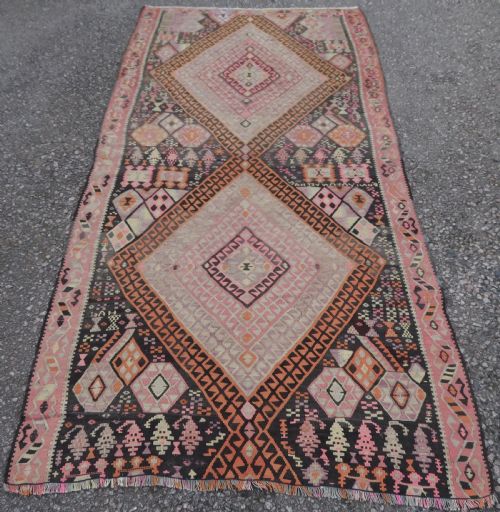
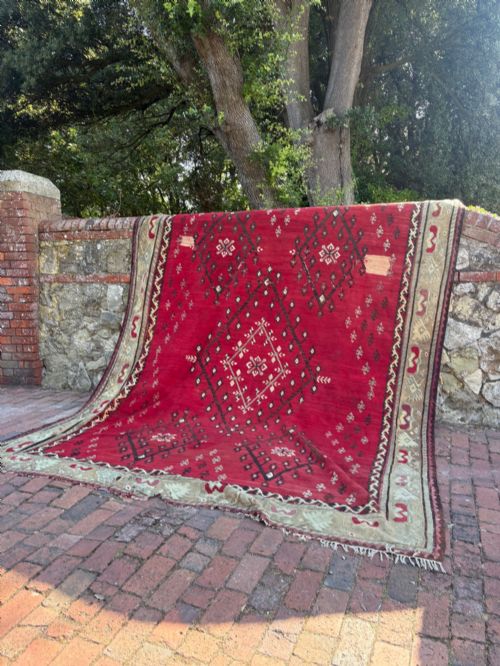
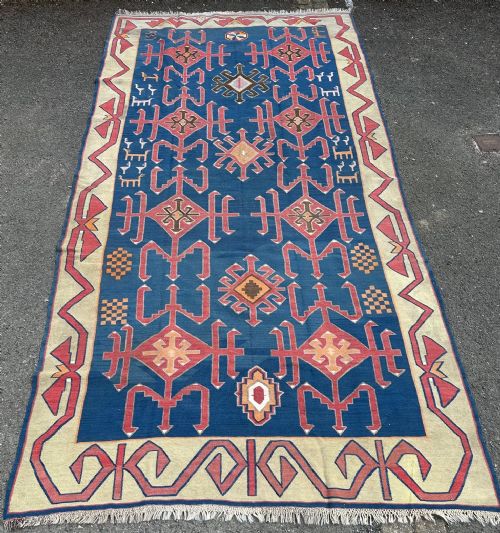
The version you are most likely to meet on this page is a flatwoven rug or carpet from Turkish regions like Konya, Malatya, or Bergama, dating from the late nineteenth century to the early twentieth century. These pieces lack a pile, relying instead on tightly interlaced warp and weft threads to create crisp geometric or floral patterns.
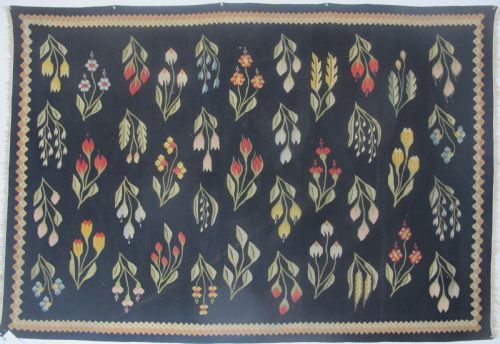
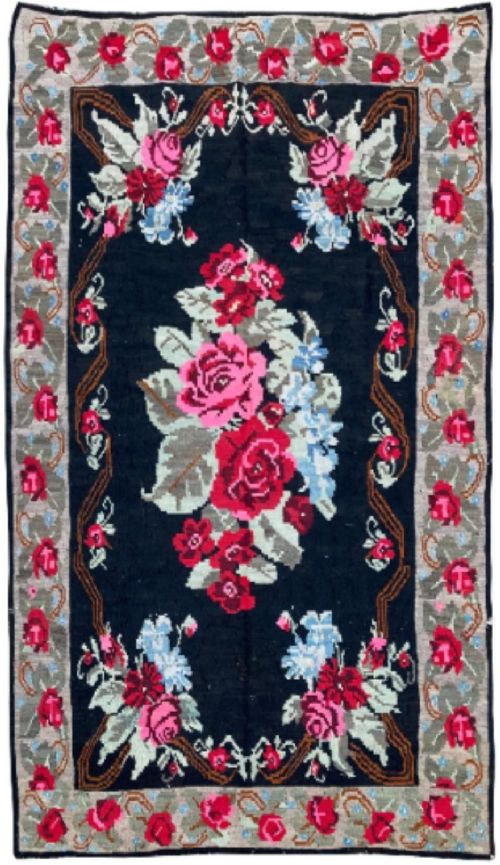
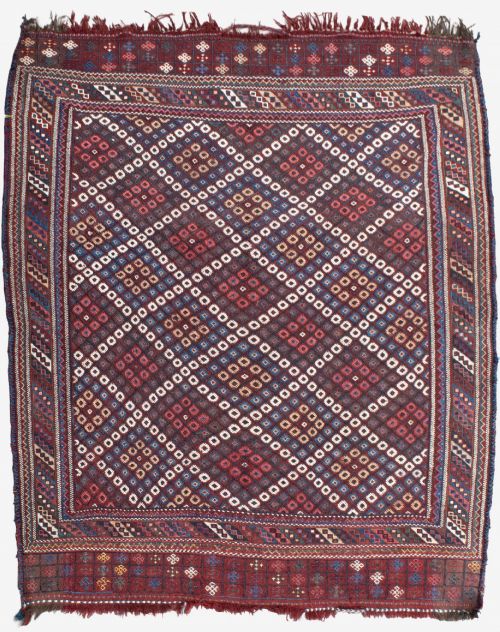
Beyond large floor coverings, the inventory includes smaller format items such as tribal bag faces, sofres, and scatter cushions constructed from repurposed flatweave textiles. Each regional style brings distinct motifs, from the bold bands of Uzbek gajeri kilims to the expressive florals of Bessarabian examples.
How they were made
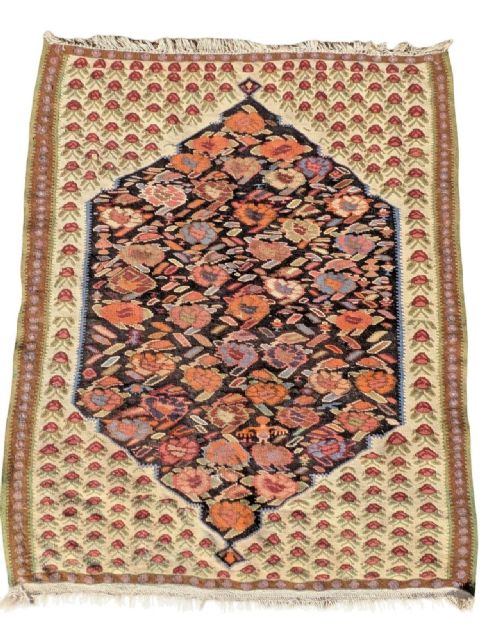
These textiles rely on wool and cotton foundations worked in slit-tapestry or supplementary weft techniques, where pattern yarns wrap around warp threads without creating a raised pile. Natural dyes impart the characteristic soft reds, indigos, and earth tones observed across nineteenth and early twentieth-century examples.
Many larger carpets and floor runners, particularly those from Uzbek regions or specific Turkish districts, are constructed by weaving multiple narrow strips that are subsequently joined together by hand. Embroidery techniques also appear on specialised panels and cushions, adding textural variation to the flat surface.
The listings span periods from the 1850s to the 1930s, incorporating wool, cotton, and natural dyes across tribal and regional styles.
What varies in quality
Quality in these flatweaves rests on the tightness of the weave and the clarity of the structural geometry, which dictate how sharply the pattern contrasts against the background. Finer, denser interlacings demand greater skill from the weaver and generally yield superior durability under foot.
The integrity of the natural dyes and the preservation of the original borders or selvedges further differentiate examples. Pieces retaining strong, unbleached hues and minimal intervention tend to hold greater integrity within traditional weaving traditions.
The Traditional Woven Kilim Glossary
- Kilim
- A flatwoven carpet or rug produced without a pile across various regions of the Middle East, Caucasus, and Eastern Europe. These textiles serve as floor coverings, wall hangings, and domestic furnishings.
- Sofre
- A specialised spread or cloth traditionally used for dining or food preparation among tribal communities. They often feature distinct central medallions and field patterns.
- Warp
- The stationary lengthwise threads stretched across a loom that form the structural foundation of the textile. Weft threads are interlaced horizontally through these warp threads.
- Slit tapestry
- A weaving technique where weft threads of different colours reverse direction at the boundary of a motif, creating a small vertical slit in the fabric. This method defines the sharp geometric edges typical of regional flatweaves.
- Cicim
- A supplementary weft-float technique used to add decorative surface patterns over a plain-weave ground. It results in a textured, embroidered appearance on the textile face.
Traditional Woven Kilim: Frequently Asked Questions
How do I clean an antique kilim?
Gentle surface brushing and careful professional vacuuming without a rotating beater bar help maintain the flatweave structure. Avoid harsh chemical cleaners and consult a specialist familiar with antique wool textiles for wet washing.
Water can destabilise natural dyes and weaken aged cotton or wool foundations if not dried rapidly and evenly. Spot cleaning should be done sparingly with mild, pH-neutral soap by an experienced conservator.
Can I use these flatweaves on the floor?
Most pieces function well as floor coverings in moderate traffic areas when paired with a suitable non-slip underlay. The lack of a pile makes them adaptable for placement beneath furniture or in dining spaces.
Heavily fragile or very finely woven examples, such as specific wall panels or delicate European tapestries, benefit from low-traffic placement or wall mounting to reduce mechanical wear.
How do I tell Anatolian from Caucasian kilims?
Anatolian examples from regions like Konya or Malatya frequently display bold geometric layouts, tribal symbols, and rich earth tones. They reflect the heritage of nomadic and village weavers across modern Turkey.
Caucasian pieces from areas like Shirvan or Karabagh often feature sharper, highly articulated polygonal motifs, star patterns, and crisper primary palettes. The handling of the borders and the specific wool characteristics help distinguish the regional origins.
What is a multi-strip kilim?
A multi-strip kilim is constructed by weaving several narrow horizontal or vertical panels independently on a narrow loom and then stitching them together edge to edge. This technique allowed nomadic weavers to produce room-sized carpets despite the limitations of portable looms.
Uzbek and certain Turkish regions utilised this method extensively, resulting in visible seams that form part of the authentic construction record of the textile.