
Traditional Wooden Trestle Table
A traditional wooden trestle table provides a sturdy dining surface rooted in centuries of vernacular design and solid construction.
Traditional Wooden Trestle Table
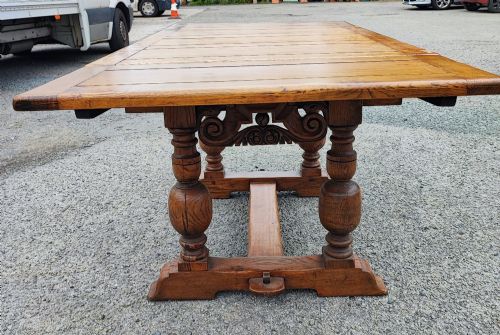
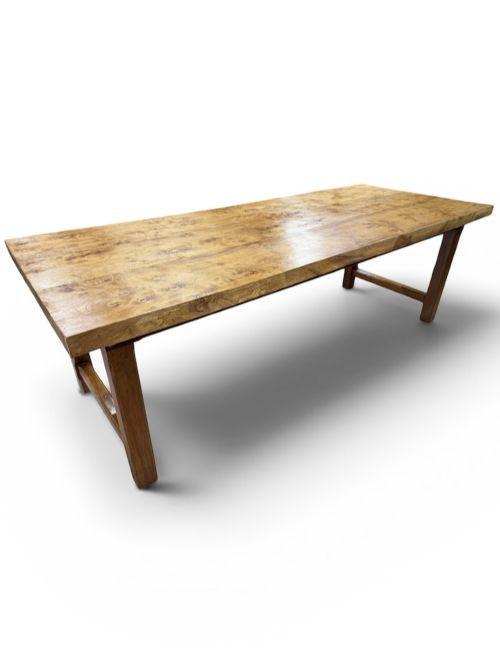
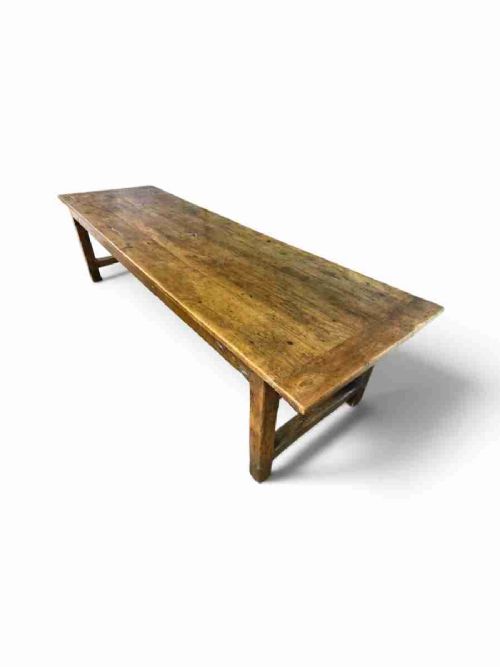
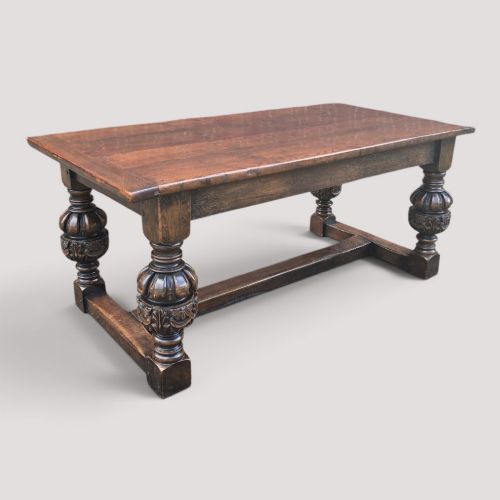
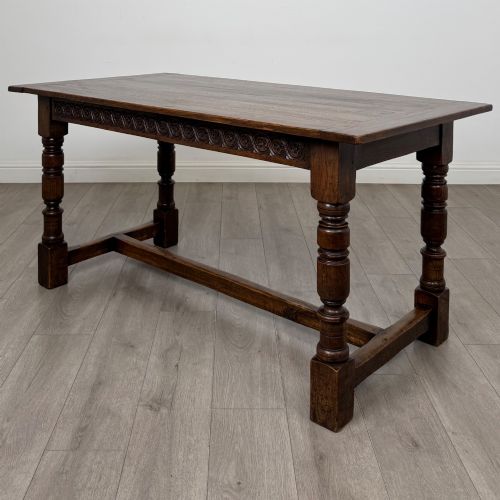
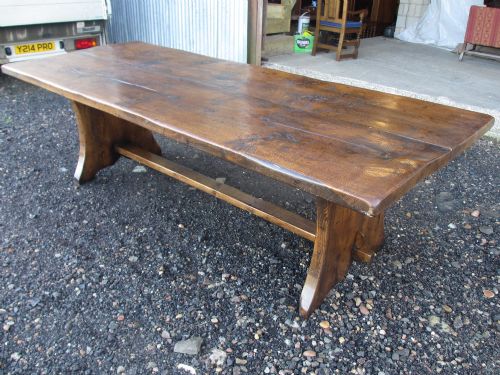
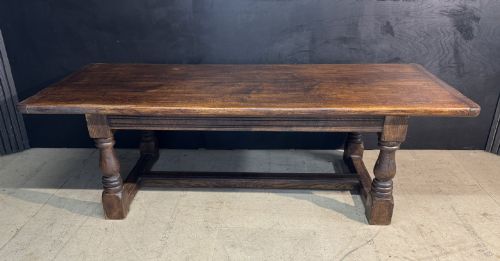
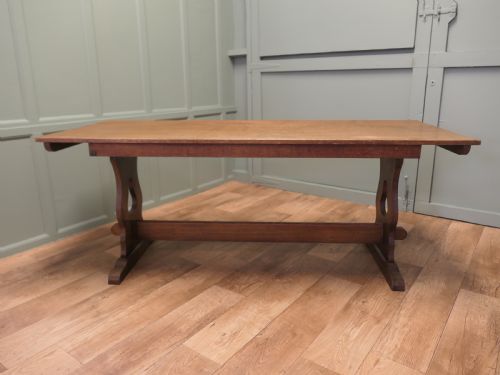
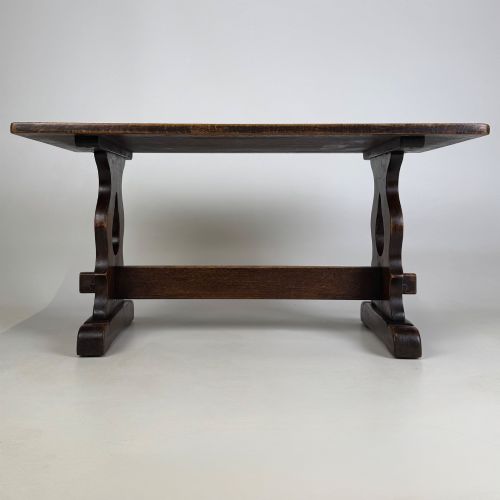
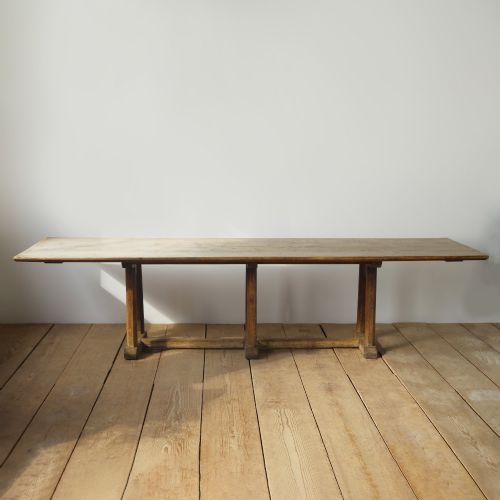
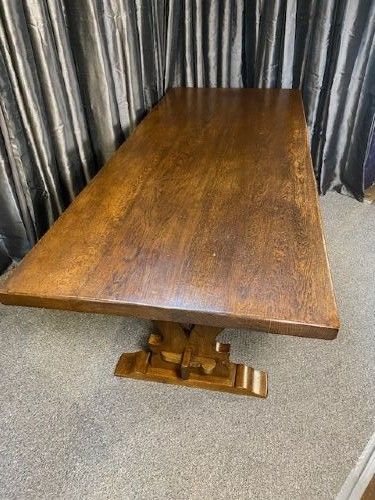
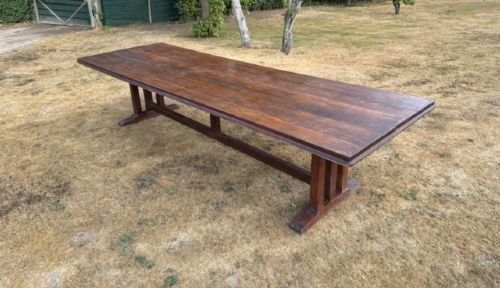
A traditional wooden trestle table is a form defined by long planks supported on upright ends rather than conventional corner legs. Buyers seeking a traditional wooden trestle table will find heavy refectory formats, farmhouse styles, and tavern tables designed for communal gatherings.
The pieces on this page span the seventeenth century through to the mid-twentieth century, drawing on periods such as the Edwardian era, the nineteenth century, and the 1920s. Oak is the predominant timber encountered, alongside pine, elm, walnut, and beech.
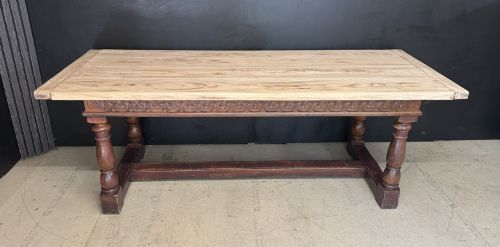
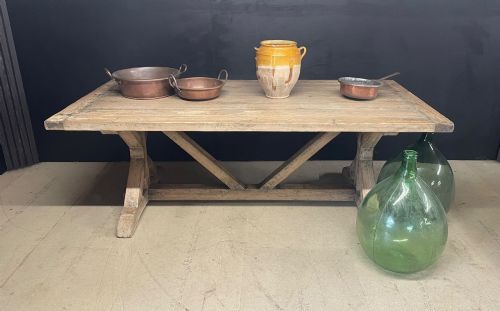
Forms range from large dining and kitchen tables to smaller coffee tables and serving surfaces. Many examples display regional characteristics like Jacobean revival carving, Arts and Crafts simplicity, or French country styling.
Materials and construction
Makers built these tables from native hardwoods and softwoods, utilising solid oak, pine, elm, walnut, and beech. Thick timber planks formed the tops, sometimes constructed from a single board of elm or oak.
Joints and supports relied on solid wood construction, incorporating shaped trestle ends, heavy stretchers, and draw leaf mechanisms for extension. Iron fittings appear occasionally to reinforce the wooden frames.
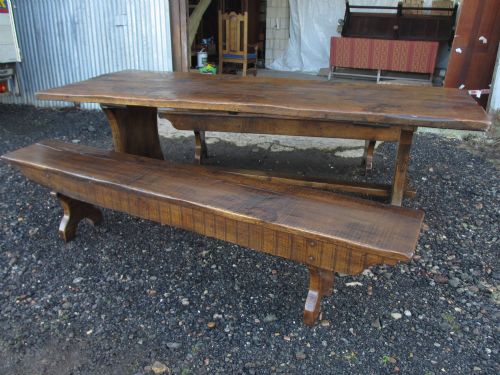
Several tables come with matching bench forms, proving that seventeenth-century diners knew the secret to a properly crowded breakfast.
Assessing quality and proportion
Quality rests in the selection of timber and the integrity of the structural joinery. Tables featuring thick, single-plank tops and heavy, well-carved trestle ends represent superior manufacture compared to lighter, plain constructions.
Proportion and surface patination dictate desirability. Pieces retaining deep colour and original timber surfaces demonstrate age and careful use better than stripped or heavily altered examples.
The Traditional Wooden Trestle Table Glossary
- Trestle table
- A table structure consisting of two or more upright supports connected by a horizontal beam or stretcher. This design maximises legroom along the length of the top.
- Refectory table
- A long, narrow dining table originally used in monastic dining halls. These examples often feature substantial wooden legs or trestle ends linked by low stretchers.
- Draw leaf table
- A dining table equipped with sliding leaves stored beneath the main top that pull out to extend the surface. This mechanism allows the table to accommodate more diners.
- Plank top
- A table surface constructed from parallel boards joined edge to edge. Single-plank versions use one wide board for the entire width of the table.
- Patina
- The surface sheen and colour developed on wood over decades through handling, polishing, and exposure to light. It serves as an indicator of age and honest preservation.
Traditional Wooden Trestle Table: Frequently Asked Questions
How do I choose the right size?
Consider the length of the room and the number of people you need to seat daily. Refectory and farmhouse formats offer ample legroom along the sides because the supports sit at the ends.
Allow sufficient clearance around the table for chairs and movement. Deeper and longer examples suit spacious dining rooms, while smaller refectory styles fit compact kitchens or sitting areas.
Can I use these tables every day?
These tables were built for daily domestic or communal dining, using solid hardwoods like oak, elm, and walnut. Their robust construction makes them well-suited for everyday family use.
Routine maintenance involves wiping surfaces clean and using appropriate natural waxes to nourish the timber. The durable nature of solid wood means minor marks often blend into the existing patinated surface.
What is the difference between refectory and farmhouse styles?
Refectory tables typically feature long, narrow proportions with structured trestle ends or heavy legs linked by low floor stretchers. They derive from monastic and formal dining traditions.
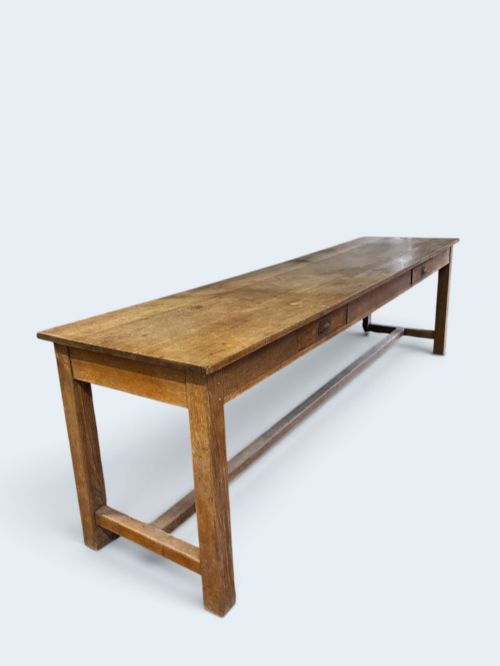
Farmhouse tables often display a more rustic character, sometimes incorporating functional additions like drawers for storage. Both types utilise thick wooden tops and heavy timber framing.
How do I identify the period of a table?
Dating relies on timber characteristics, construction methods, and stylistic details such as Jacobean carving or Arts and Crafts simplicity. Earlier pieces from the seventeenth and eighteenth centuries often exhibit pegged joinery and hand-sawn board marks.
Twentieth-century examples, including Edwardian and 1920s pieces, may show more standardised machining alongside revival styles. Comparing the overall weight, wood species, and form helps narrow down the era of manufacture.