

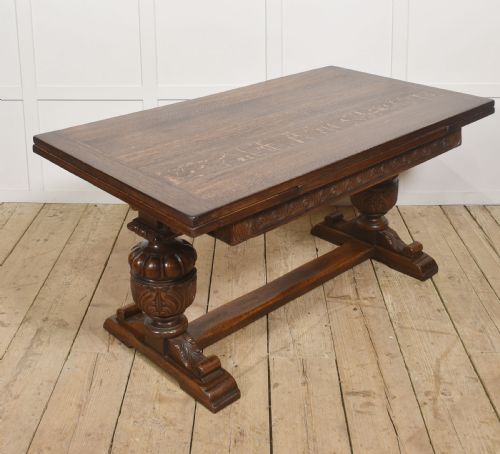


Tudor Style Oak Table
A tudor style oak table brings robust construction and historic character into a modern dining room.
Tudor Style Oak Table
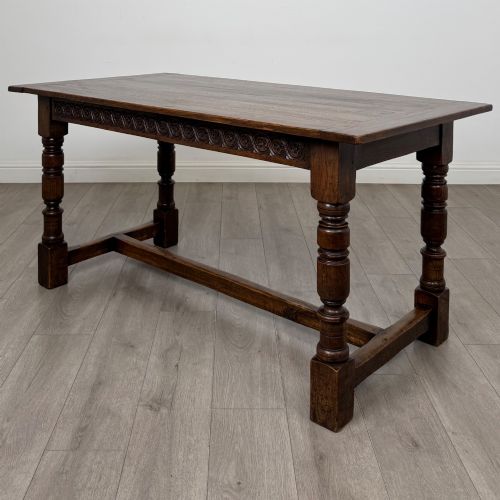
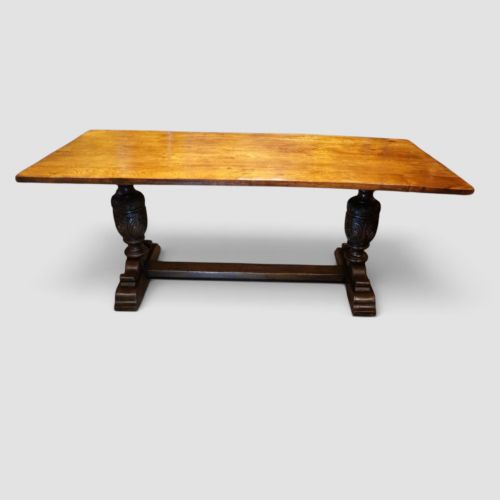
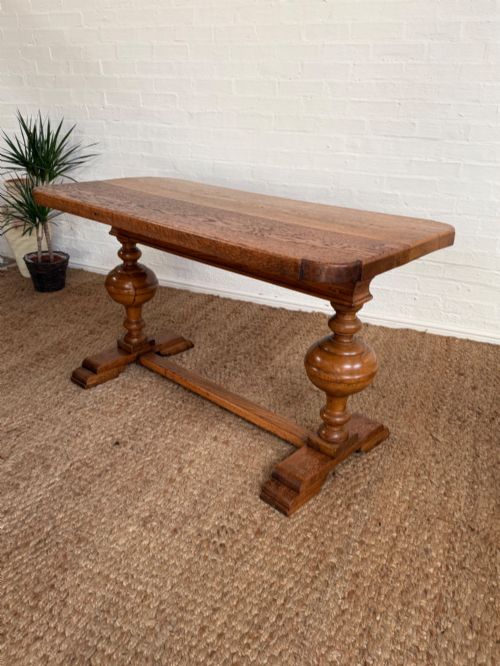
A tudor style oak table represents a heavy, period-inspired form designed for substantial dining spaces or studies. The pieces seen here span revival periods from the nineteenth century through the early twentieth century, alongside specific examples from the nineteen-thirties and nineteen-twenties.
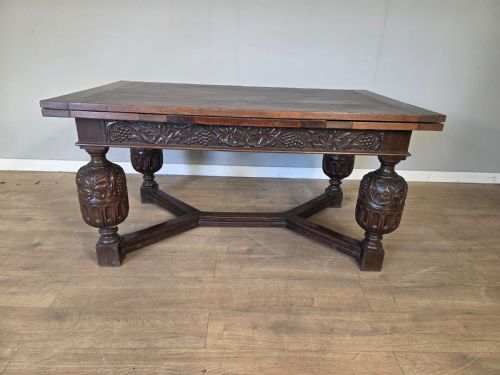
Buyers will frequently encounter refectory tables and extending formats equipped with pull-out leaves or draw leaves. These formats draw upon Elizabethan, Jacobean, and rustic farmhouse styles to recreate sixteenth-century proportions using later timber.
While the search term specifies dining tables, the broader evidence pool includes related oak forms such as cupboards, desks, and hall benches sharing identical revival aesthetics. Most examples rely on solid construction methods and dark finishes typical of early twentieth-century interpretations.
What varies in quality
Quality separates along the depth and crispness of the carved ornamentation on the friezes and legs. Tables displaying deeply hand-chiselled linenfold or geometric patterns demonstrate superior craftsmanship compared to shallow machine-tooled alternatives.
The choice of timber and joining techniques dictates structural integrity, with solid oak extending mechanisms running smoothly and heavy refectory stretcher bases remaining rigid. Tables utilising thick, single-board tops command greater regard than those joined from narrow strips.
Some tables hide their extra seating capacity underground, utilising pull-out leaves that slide out like secret drawers.
The Tudor Style Oak Table Glossary
- Refectory table
- A long, narrow dining table originally used in monasteries and great halls, featuring thick legs joined by a low stretcher rail. This form dominates the available selection.
- Jacobean Revival
- A nineteenth and twentieth-century design movement copying the heavy, geometric carved styles of the early seventeenth century. Furniture from this era mimics original seventeenth-century construction.
- Draw leaf table
- An extending dining table with two sliding leaves hidden beneath the main top that pull out to lengthen the surface. This mechanism provides flexibility for seating extra guests.
- Linenfold
- A style of wood carving representing folded parchment or linen, commonly used on panelled cupboard doors and friezes. It is a defining decorative feature of the Tudor period.
- Joint stool
- A sturdy, low wooden stool constructed with mortise and tenon joints rather than turned legs. Examples range from Georgian pieces to later revival iterations.
Tudor Style Oak Table: Frequently Asked Questions
How do I date an oak table?
Dating relies on examining the tool marks, timber shrinkage, and assembly methods used in the frame. Machine-sawn components and standardised fixings typically point towards nineteenth or twentieth-century revival production.
Period characteristics match the specific stylistic revivals recorded in the evidence, such as Elizabethan or Jacobean interpretations executed during the nineteen-hundreds or nineteen-thirties.
Are these tables solid wood?
Most examples in the evidence utilise solid oak throughout the top, frame, and undercarriage. This heavy timber construction gives the pieces their characteristic weight and durability.
Revival workshops occasionally combined solid planks with stable secondary timbers for hidden structural elements, but primary surfaces remain oak.
How do extending leaves work?
Extending refectory and farmhouse tables typically employ pull-out extensions or draw leaf mechanisms concealed beneath the main surface. These leaves slide outward to increase the overall seating capacity without removing the centre top.
Smooth operation depends on the precision of the wooden runners housed within the table apron.
How do I care for antique oak?
Maintain oak surfaces by dusting with a dry cloth and applying traditional beeswax periodically to nourish the grain. Avoid placing solid wood tables near direct heat sources or in fluctuating humidity to prevent timber splitting.
Spills should be wiped away promptly to protect the polished finish from water marks.