



Traditional Wooden Treen
Traditional wooden treen comprises domestic and decorative objects shaped from timber, offering tactile links to past domestic routines.
Traditional Wooden Treen
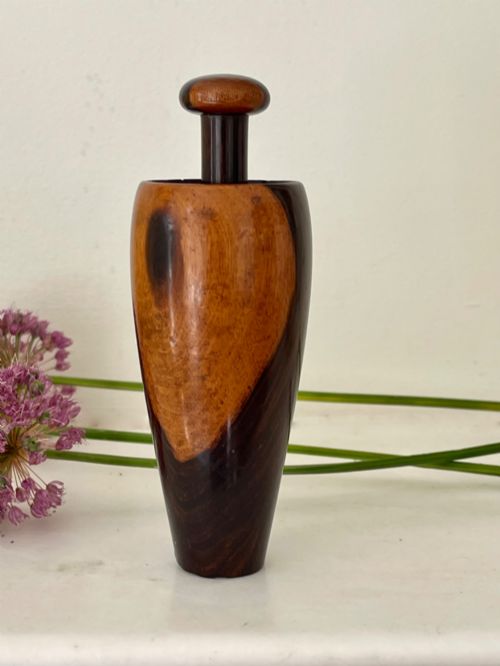
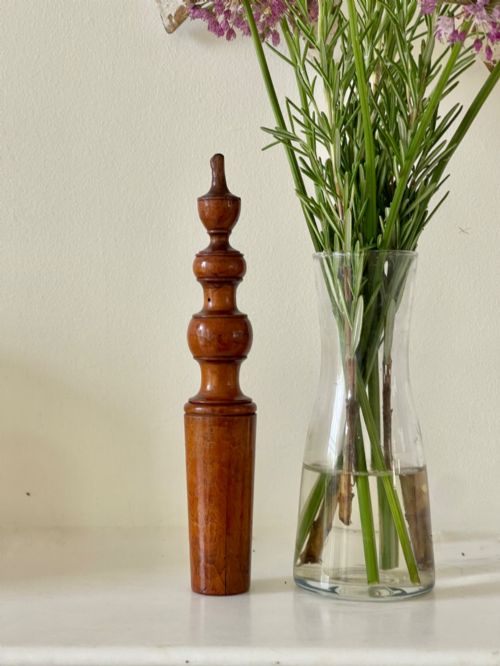
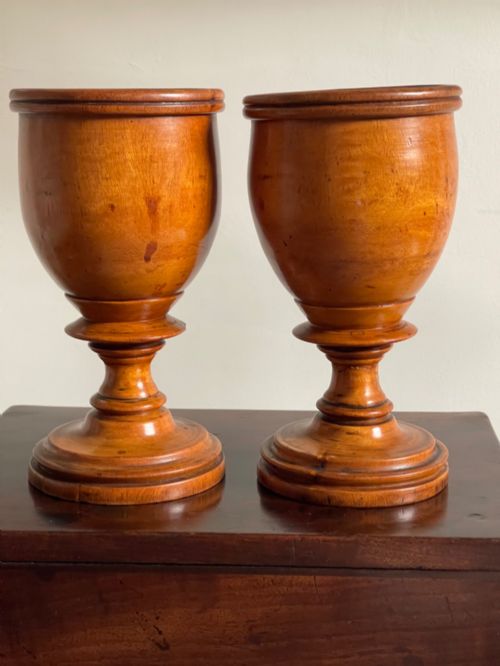
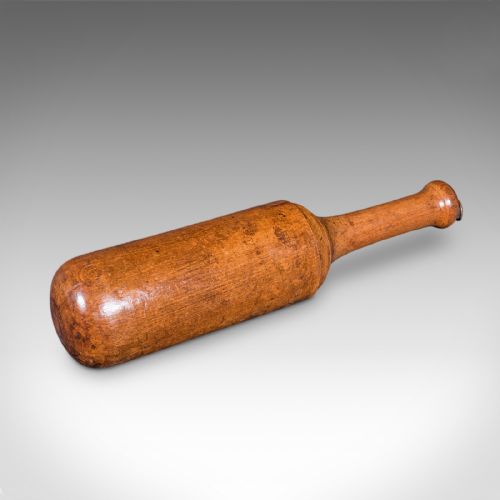
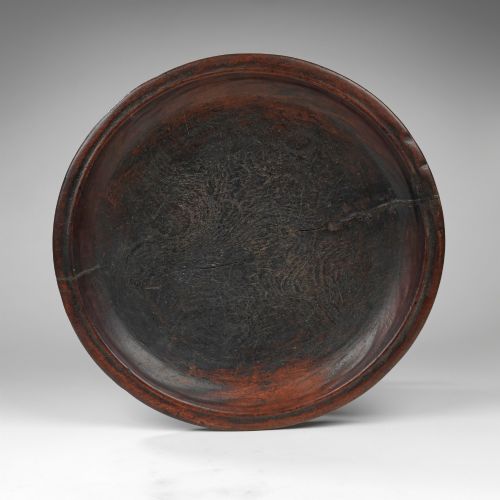
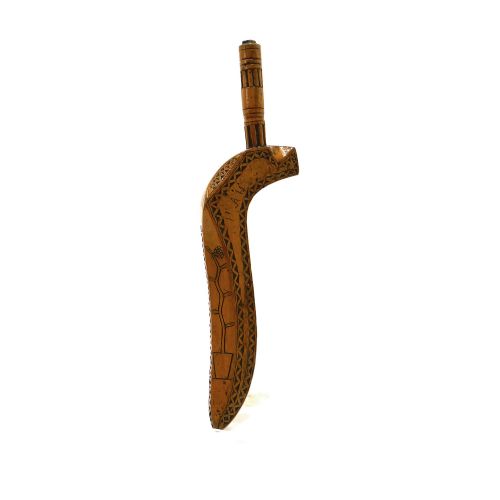
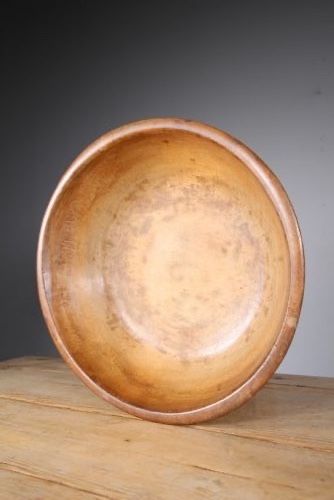
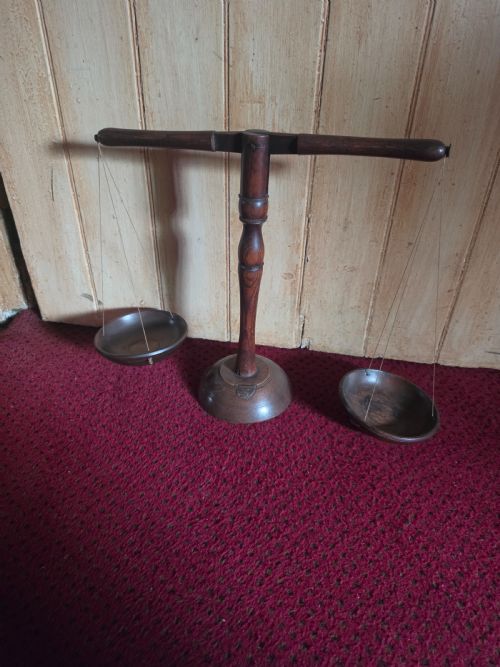
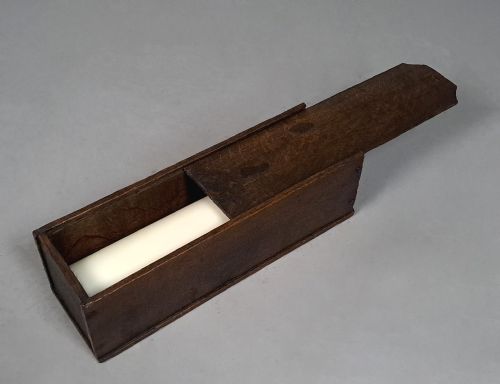
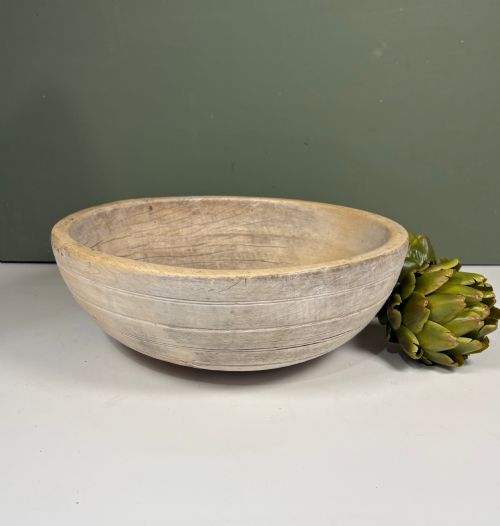
Traditional wooden treen encompasses a wide variety of utilitarian and decorative objects made from timber, spanning the eighteenth, nineteenth, and early twentieth centuries. Buyers seeking these items encounter domestic pieces such as dairy bowls, spice towers, mortar and pestles, and kitchen mallets, alongside folk art objects like knitting sheaths, lovespoons, and puzzle balls.
The pieces on this page lean heavily towards nineteenth-century British and European examples, with notable groupings of Welsh folk art and rustic farmhouse kitchenware. Sycamore, fruitwood, oak, and walnut appear frequently, shaped either by lathe turning or hand carving for everyday household use.
Materials and construction methods
Makers utilised dense native timbers such as sycamore, fruitwood, beech, oak, and walnut, selecting specific woods for their grain and practical properties. Sycamore suited dairy bowls due to its clean taste and pale colour, while harder woods like lignum vitae and walnut served for pestles and mortars.
Construction relied on traditional woodworking techniques including lathe turning, hand carving, and punchwork decoration. Many items show the distinct tool marks of the woodturner's lathe or the knife work of folk carvers creating love tokens and toys.
Listings feature eighteenth and nineteenth-century forms in sycamore, fruitwood, oak, walnut, beech, and yew-wood.
Factors influencing quality
Quality rests upon the crispness of the original turning or carving and the preservation of surface character over time. Pieces that retain tool marks, original punchwork, or complex mechanics such as puzzle balls and bilboquet games stand apart from simpler items.
Patina dictates much of the appeal in traditional wooden treen, where long use imparts a warm, tactile surface to the timber. Objects showing uncompromised form, balanced proportions, and clear regional characteristics command greater attention from collectors.
The Traditional Wooden Treen Glossary
- Treen
- Small domestic wooden objects made by turning or carving. The term derives from an old word for tree.
- Knitting sheath
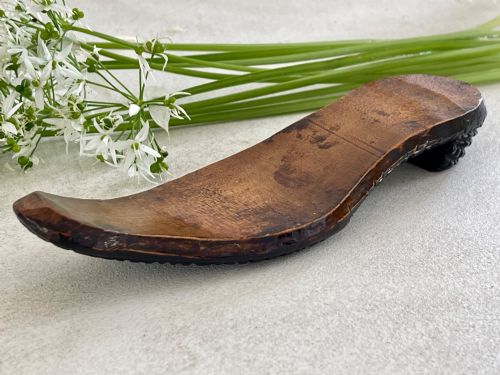
- A small carved holder tucked into a belt or apron to secure a knitting needle while working. These often take folk art forms like shoes or goosewings.
- Lovespoon
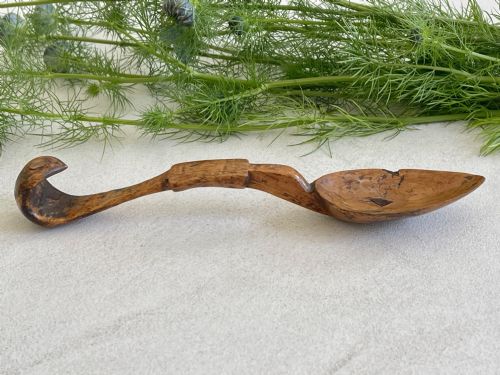
- A decorated wooden spoon carved as a token of affection or betrothal. Makers often embellished them with pierced hearts and vine leaves.
- Dairy bowl
- A large circular vessel used in butter and cheese making. Sycamore remained the preferred timber for these hygienic domestic bowls.
- Spill stem vase
- A slender container designed to hold spills, which were thin strips of wood used to transfer fire from a hearth to a candle or pipe.
Traditional Wooden Treen: Frequently Asked Questions
What is traditional wooden treen?
Traditional wooden treen refers to small, functional, and decorative wooden objects used in the home before mass production. These items range from kitchenware like bowls and spice grinders to folk art such as lovespoons and rattles.
Most pieces date from the Georgian and Victorian eras, reflecting domestic crafts tied to daily life on farms and in rural communities.
How were these wooden items used?
People utilised treen across every room of the house, particularly in kitchens, dairies, and for handcrafts like lace-making and knitting. Items served practical purposes such as tenderising meat, straining liquids, grinding spices, and storing dry goods.
Other objects had social or sentimental functions, including puzzle balls, children's toys, and carved love tokens given as gifts.
Which woods were used for treen?
Turners and makers selected native timbers based on the intended function of the object. Sycamore was chosen for dairy bowls because the wood does not impart a strong flavour or taint food.
Harder timbers like walnut, oak, fruitwood, beech, and lignum vitae provided the strength needed for mortars, pestles, mallets, and small turned vessels.
How do I care for wooden treen?
Wooden treen requires minimal intervention to preserve its historic surface and natural patina. Keeping pieces away from direct heat sources and sudden humidity changes prevents the timber from splitting.
Applying a light coat of neutral beeswax occasionally helps nourish old wood without altering its character or obscuring tool marks.