
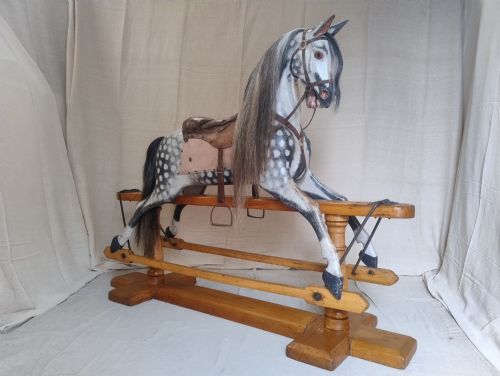


Traditional Wooden Toy Horse
A traditional wooden toy horse brings the weight of the nursery floor into a room, offering the carved presence of nineteenth- and twentieth-century craftsmanship.
Traditional Wooden Toy Horse
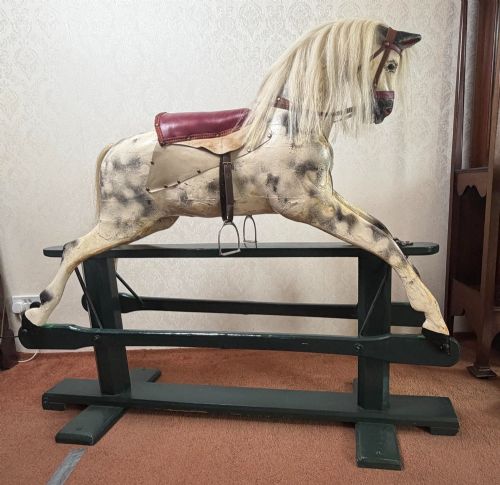
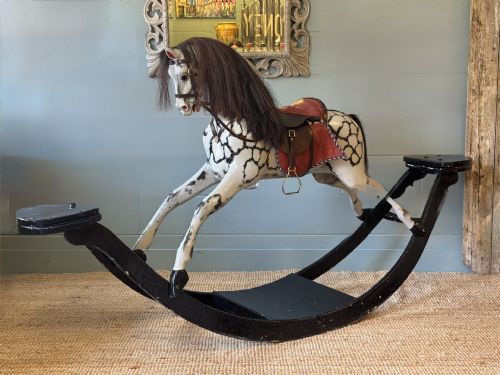
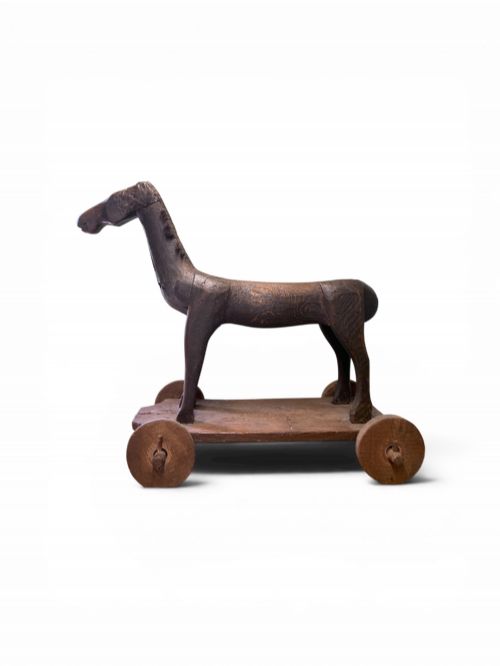
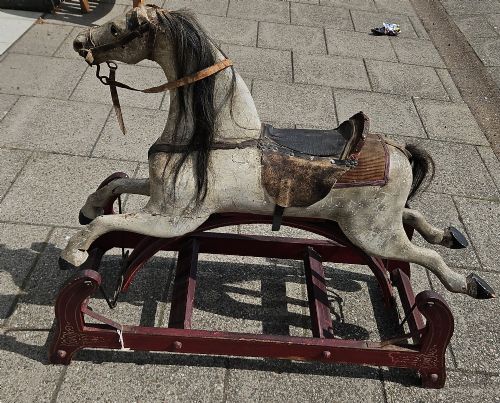
When you search for a traditional wooden toy horse, you encounter sturdy playthings designed for nurseries and playrooms across the nineteenth and twentieth centuries. The selection encompasses large rocking horses on curved wooden rockers, naive folk art sculptures, and pull-along toys.
The version you are most likely to meet on this page is the rocking horse from the Victorian, Edwardian, or interwar periods. These range from substantial carved pine examples to smaller pull-along pieces intended for children.
Origins stretch from British workshops to Spanish and American makers, uniting folk art traditions with commercial toy production. Each object records the shifting tastes in childhood play across the decades.
How they were made
Maker's hands shaped these pieces primarily from wood, utilising pine for bodies and sturdy timbers for rockers and frames. Metal iron and steel components provide structural reinforcement for the rocking mechanisms and joints.
Surfaces received layers of paint, often recording the dapple patterns typical of commercial production or the simpler washes of folk art. Genuine leather and horsehair complete the tack and tails, grounding the carved wooden forms in tactile realism.
The listings on this site feature pieces spanning from the 18th century through the 1940s, including Victorian and Edwardian eras.
What varies in quality
The distinction between ordinary workshop output and superior craftsmanship rests in the depth of the carving and the integrity of the original components. Master makers achieved expressive anatomical forms and balanced rocker curves that endured generations of use.
The survival of original paint surfaces and genuine horsehair mane elements elevates an example above those stripped or heavily restored. Maker attribution, particularly to established London firms, further separates standard nursery pieces from collector-grade items.
G & J Lines of London·F.H.Ayres·Collinson·Lines Bros Sportiboy 2
The Traditional Wooden Toy Horse Glossary
- Rocking horse
- A carved wooden toy mounted on curved wooden rockers or safety stands designed for a child to ride. They served as both nursery furniture and active playthings.
- Pull-along horse
- A smaller toy horse mounted on a platform with wheels or designed to be drawn by a string. These pieces date from the nineteenth century.
- Folk art
- Objects created by self-taught or traditional artisans outside academic traditions. These figures display naive charm and unpretentious regional styles.
- Original paint
- The initial decorative surface applied to the wood during manufacture, preserved without later repainting. Collectors prize this layer for its historical integrity.
- Dappled
- A painted spotting pattern mimicking the coat of a grey horse, common on nineteenth-century rocking horses. Artisans applied these spots by hand over a base coat.
Traditional Wooden Toy Horse: Frequently Asked Questions
How do I date a wooden rocking horse?
Dating relies on construction methods, nail types, and stylistic cues from periods like the Victorian era or the 1930s. Carving style and rocker shape often reveal whether a piece originates from the nineteenth century or later.
Examining the paint layers and materials such as iron or steel fixings helps narrow the decade of production. Maker marks, where present, provide definitive dates.
Are these horses safe for children?
Antique wooden rocking horses are primarily decorative objects and historical artefacts rather than modern toys. Their antique structures may lack contemporary safety standards.
Collectors generally preserve them as sculptures or display pieces in a home rather than active playthings for children.
What is folk art style?
Folk art style describes pieces made without formal academic training, often displaying naive proportions and direct carving. These items reflect regional traditions rather than industrial factory standards.
Examples range from Spanish naive painted wooden sculptures to British country workshop creations.
How should I care for the wood?
Keep wooden toys away from direct sunlight and stable humidity to prevent the pine and paint from cracking. Avoid harsh chemical cleaners that might strip original surface layers.
Dust gently with a dry cloth to preserve the horsehair and painted finishes over time.