


Traditional Wooden Bedroom Drawers
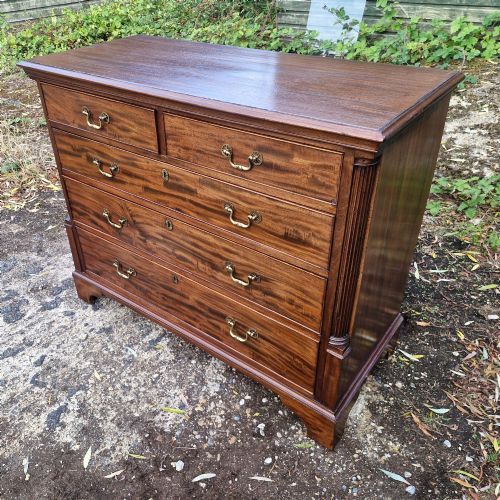
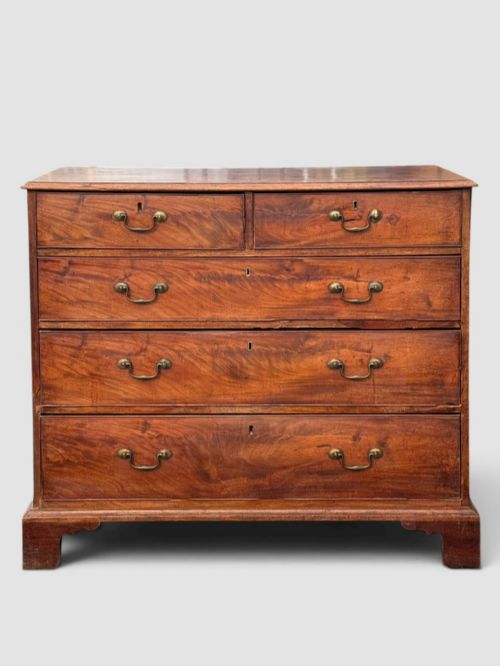
Traditional wooden bedroom drawers bring enduring storage and historical character to a room, ranging from compact pine pieces to grand mahogany chests.
Traditional Wooden Bedroom Drawers
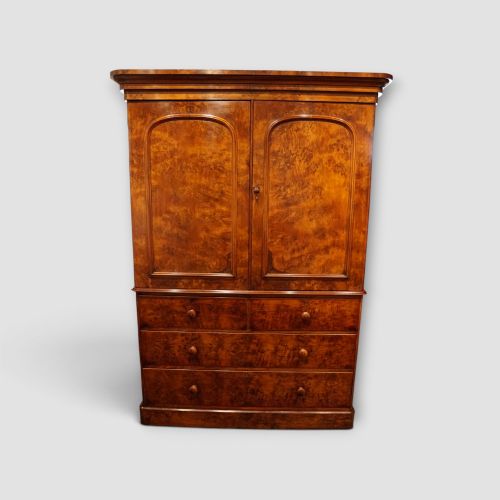
Traditional wooden bedroom drawers encompass standard chests of drawers, linen presses, compactum wardrobes and bedside tables designed for domestic storage. These items span periods from the eighteenth century through the Victorian and Edwardian eras up to the nineteen-thirties.
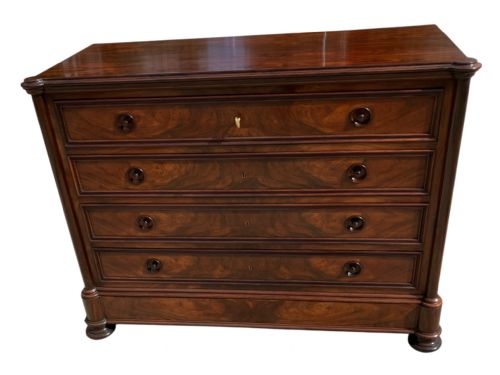
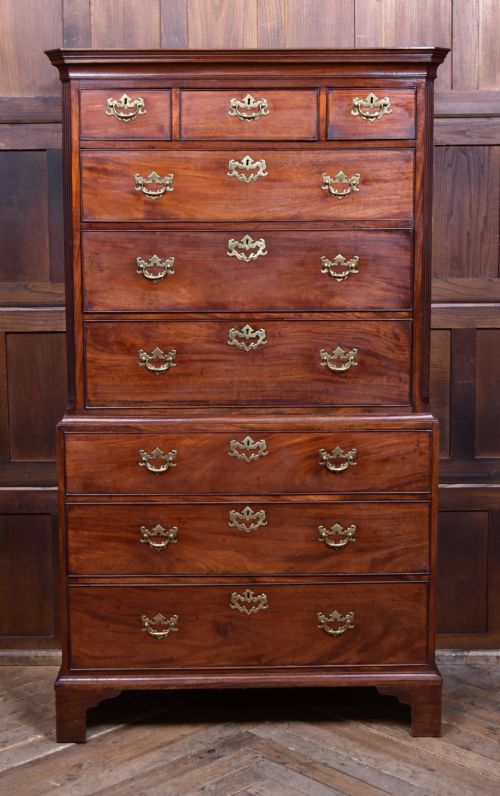
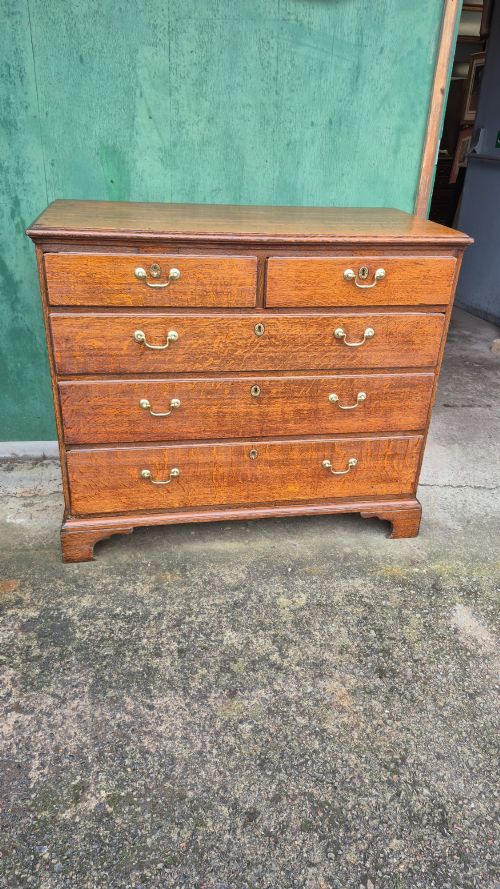
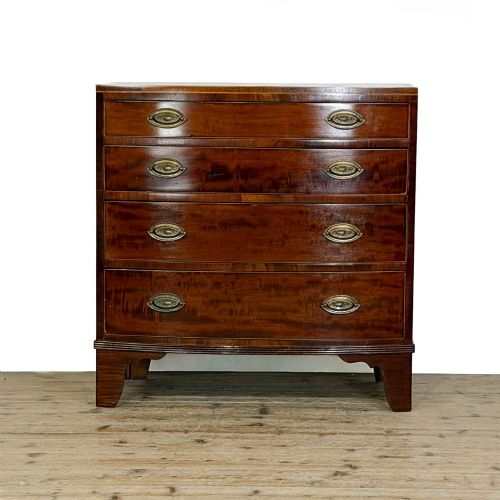
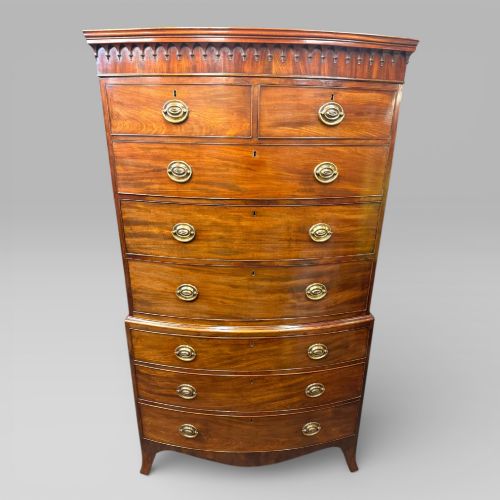
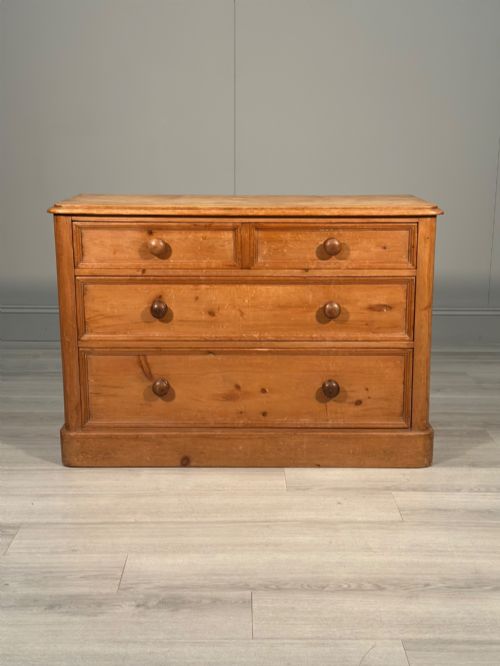
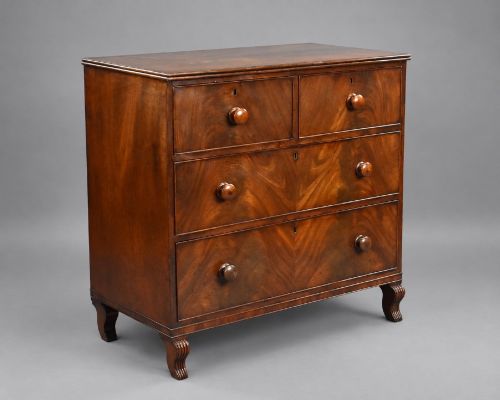
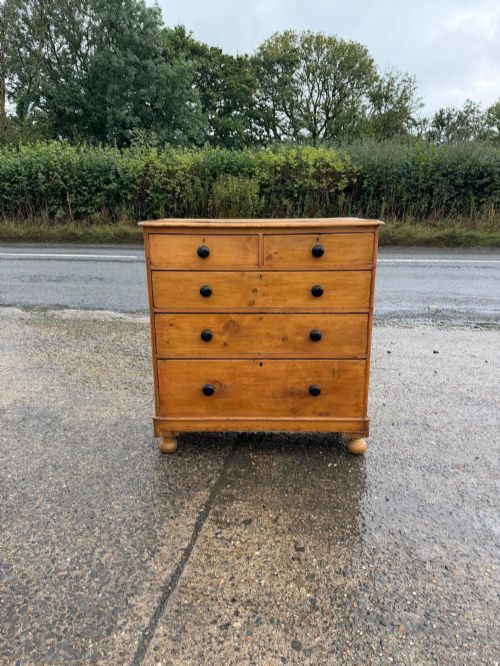
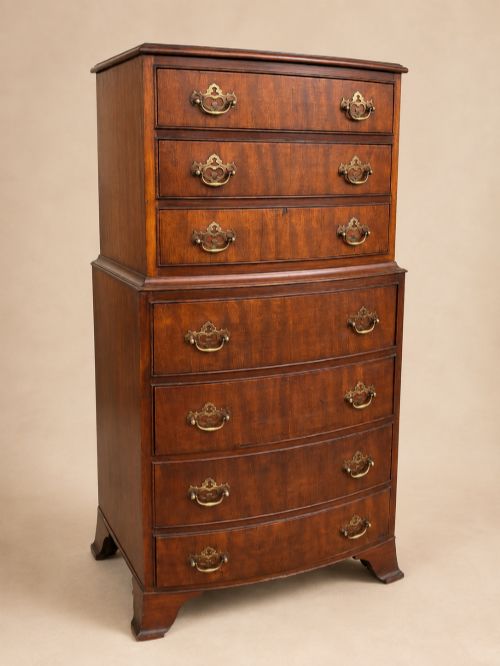
The most common pieces met on this page are upright mahogany and pine chests of drawers configured in standard multi-drawer layouts. Buyers encounter variations including bow-front shapes, tall narrow proportions and larger chest on chest structures.
Origins include formal Georgian and Regency designs alongside country pine vernacular pieces and later revival styles such as Jacobean and Georgian Revival. Each form serves the practical requirement of bedroom storage while displaying the distinct joinery of its period.
How they were made
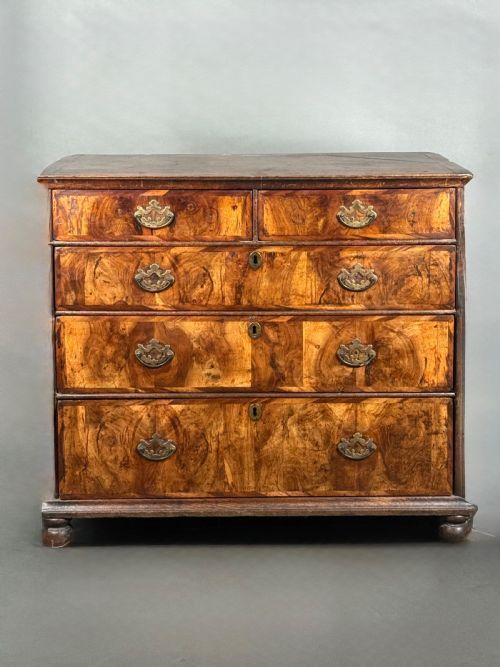
Cabinet makers utilised solid timbers including mahogany, oak, walnut, pine and yew wood for the primary carcases and drawer structures. Flame mahogany veneer and figured walnut were frequently applied to front surfaces to provide decorative grain patterns.
Metal hardware such as brass handles and drawer pulls accompanied wooden knobs and bun handles depending on the date and style of the piece. Construction involved traditional joints within drawer boxes and carcase frames to ensure stability over centuries of daily use.
Listings span multiple centuries from the eighteenth century to the nineteen-thirties, featuring pine, mahogany, oak and walnut.
What varies in quality
The choice of primary timber and secondary wood dictates the underlying grade of a piece, with figured veneers and dense hardwoods representing higher tiers of craftsmanship. Simple scrubbed pine utility items sit at the opposite end of the scale from polished eighteenth-century walnut or mahogany furniture.
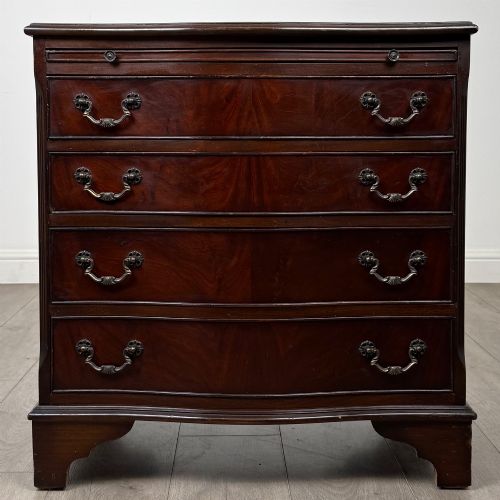
Finer examples demonstrate greater sophistication in proportion and drawer configuration, such as serpentine fronts or stacked chest on chest constructions. The refinement of the brass handles and the precision of the internal drawer divider construction further separate standard production from superior cabinet making.
Jas Shoolbred
The Traditional Wooden Bedroom Drawers Glossary
- Bow front
- A curved front convex in shape, frequently found on eighteenth and nineteenth-century mahogany chests.
- Chest on chest
- A tall storage unit formed of one chest stacked directly upon a larger base chest, also known as a tallboy.
- Linen press
- A tall cabinet featuring upper cupboard doors for storing textiles above a base section fitted with multiple drawers.
- Compactum
- A combined wardrobe and storage unit incorporating hanging space alongside internal drawers.
- Serpentine
- A front contour characterised by a convex central section flanked by concave curves, creating a fluid undulating line.
Traditional Wooden Bedroom Drawers: Frequently Asked Questions
How do I date a wooden chest of drawers?
Dating relies on identifying the timber species, handle styles, construction methods and overall aesthetic period such as Georgian or Victorian.
Examining the secondary woods inside drawer boxes and the cut of the dovetails provides further clues to the manufacturing decade.
What is the difference between pine and mahogany chests?
Pine pieces tend to originate from domestic vernacular workshops and present a lighter, often painted or scrubbed timber appearance suitable for country interiors.
Mahogany examples represent a harder tropical wood typically finished with a polished surface for formal urban bedrooms.
How were linen presses used historically?
Linen presses were designed to store household textiles and folded garments in the upper sliding trays or shelves before modern wardrobes became standard.
The lower drawers provided supplementary space for smaller clothing items.
Can I use an antique chest of drawers as a bedside table?
Compact chests, small mahogany drawers and dedicated bedside tables from the nineteenth century fit well beside modern mattress heights.
Their proportions offer surface space for lamps alongside functional drawer storage.