

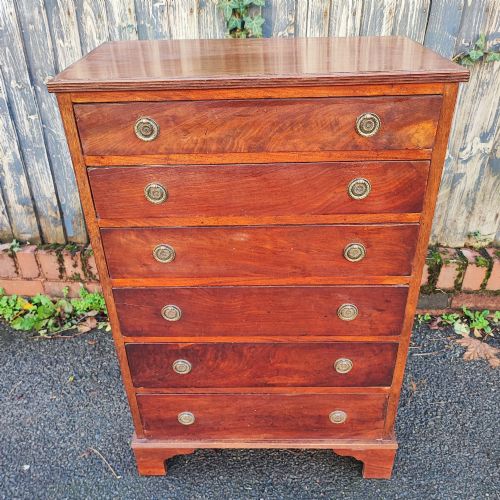
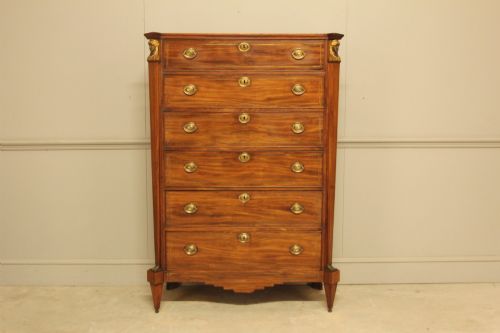
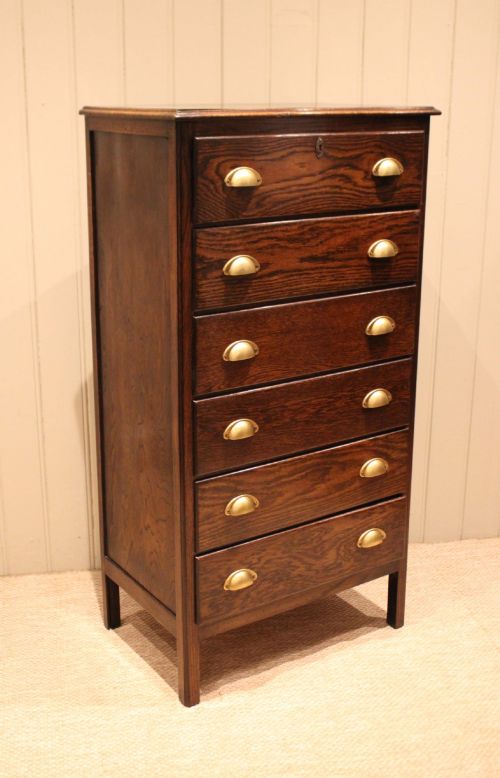

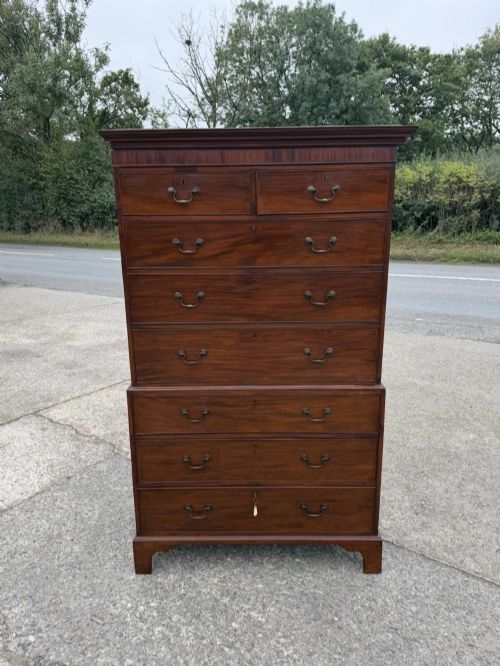
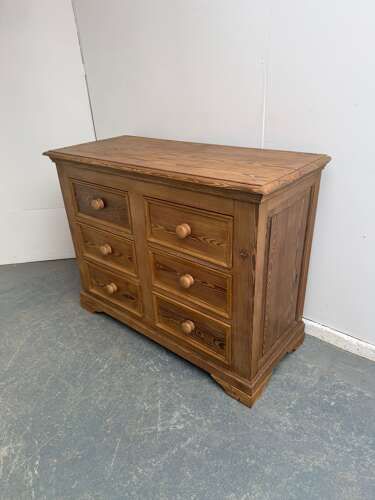
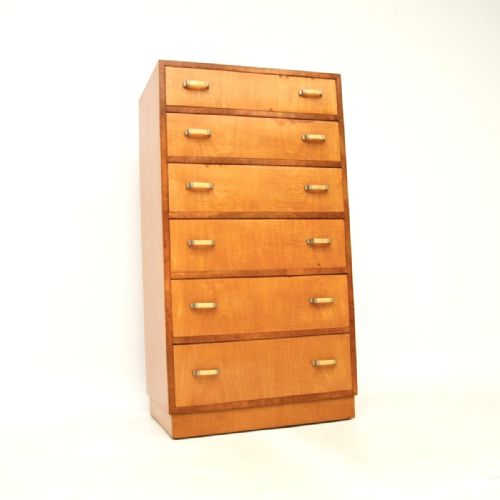


Six Drawer Tallboy Chest
A six drawer tallboy chest offers generous vertical storage with undeniable elegance, combining traditional craftsmanship and practical proportions.
Six Drawer Tallboy Chest
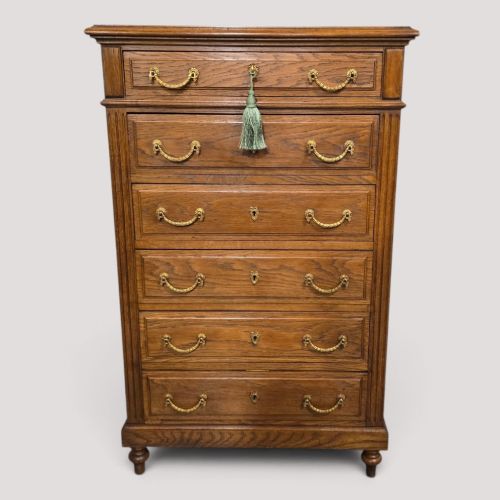
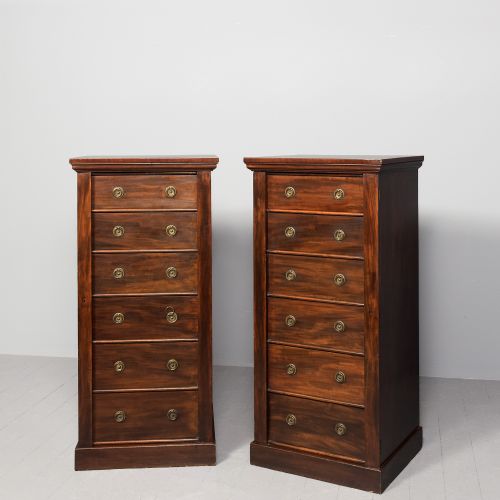
A six drawer tallboy chest provides vertical storage across multiple drawers while taking up minimal floor space in a room. These pieces appear in forms such as tallboys, Wellington chests, and narrow upright chests of drawers.
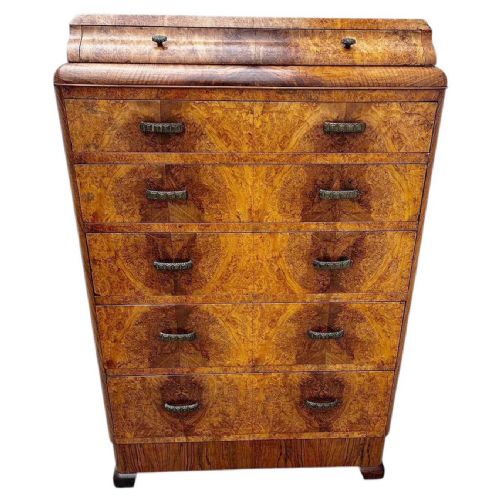
The pieces on this page span several distinct periods, including Victorian, Edwardian, and Art Deco eras, alongside earlier Georgian revival and 18th century Dutch influences. Mahogany and walnut dominate the selection, appearing alongside oak, ash, satinwood, and pine.
Buyers will most frequently encounter nineteenth century mahogany and walnut examples alongside early twentieth century interpretations. Regional variations range from French provincial and Empire designs to English and Irish country pieces.
Materials and construction methods
Cabinet makers utilised dense hardwoods like mahogany and walnut for primary structures, often applying burr walnut or satinwood veneers to create striking figure patterns on drawer fronts. Brass hardware, marble tops, and detailed inlay work provide decorative contrast.
Traditional joinery underpins the construction of these chests, ensuring stability across tall vertical frames. French polishing techniques and wax finishes are applied to protect the timber while enhancing its natural grain and colour.
Six Drawer Tallboy Chest Retail Price Guide 2026
Typical asking prices for six drawer tallboy chest among the pieces listed under this phrase on Sellingantiques today, from the lower quarter to the upper quarter. They describe what is for sale here now, not the wider market.
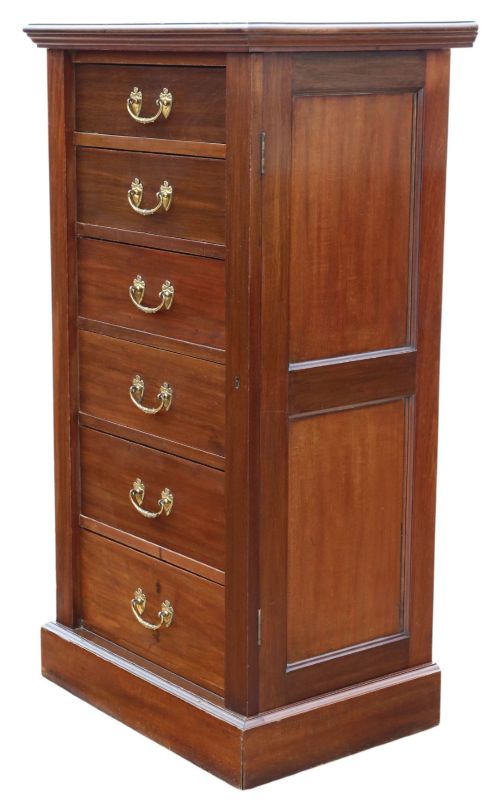
Some nineteenth century chests feature a locking side bar that secures all six drawers with a single turn of a key.
Distinctions in quality and finish
The refinement of timber selection and veneer matching defines the upper tier of these chests. Bookmatched grains and precise brass inlays indicate superior workmanship by skilled cabinet makers.
Structural integrity and the smoothness of drawer operation separate finer examples from standard utility pieces. Original hardware, intact marble surfaces, and well-preserved internal linings preserve the integrity and character of the piece.
The Six Drawer Tallboy Chest Glossary
- Wellington chest
- A tall, narrow chest of drawers typically secured by a hinged locking side flap. This design originates from the nineteenth century and maximises vertical storage.
- Tallboy
- A tall chest of drawers, often constructed in two sections with one chest stacked upon another. It elevates storage capacity while maintaining a compact footprint.
- Bookmatched
- A technique where two adjoining veneer surfaces are mirrored to create a symmetrical pattern. This method highlights the natural figuring of walnut or mahogany.
- Marquetry
- The art of applying pieces of veneer to a structure to form decorative patterns or pictures. Dutch examples frequently utilise floral or pictorial motifs.
- Bow front
- A convex curved front elevation on a chest of drawers. This styling softens the geometric lines of tall cabinet furniture.
Six Drawer Tallboy Chest: Frequently Asked Questions
What is a six drawer tallboy chest?
A six drawer tallboy chest is a tall, upright piece of furniture designed to maximise vertical storage capacity while occupying a minimal floor footprint.
These pieces typically feature six stacked drawers housed within mahogany, walnut, oak, or satinwood frames, sometimes incorporating specialised locking mechanisms or marble tops.
Where should I place a tallboy?
A tallboy suits bedrooms, dressing rooms, and hallways where floor space is restricted but vertical storage is required.
Its elevated proportions allow it to sit comfortably against narrow wall spaces without overpowering smaller domestic interiors.
How do I care for antique wood?
Antique wooden chests require stable indoor humidity levels and protection from direct sunlight to prevent timber warping and veneer cracking.
Regular dusting with a soft dry cloth and occasional application of appropriate wax polish maintains the lustre of the polished surface.
How do I identify Victorian pieces?
Victorian pieces often feature dense mahogany or walnut construction, substantial brass hardware, and robust joinery typical of nineteenth century manufacturing.
Examining the drawer linings, backboards, and secondary timbers helps confirm the period of construction.