


Traditional Wood Column Lamp
These traditional wood column lamp pieces bring solid timber presence and height to a room, offering both character and functional illumination.
Traditional Wood Column Lamp
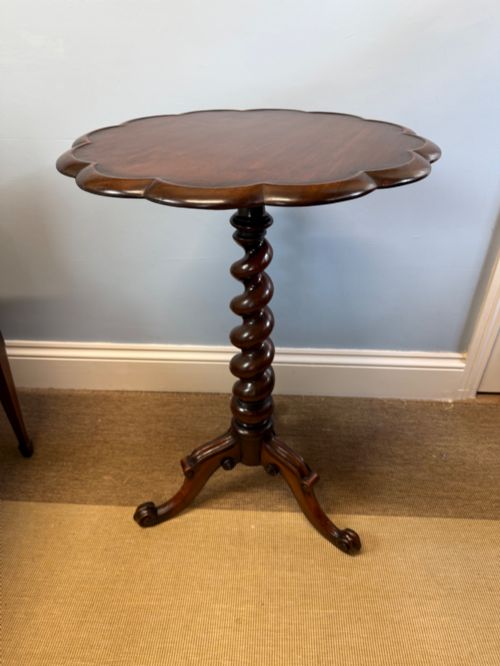
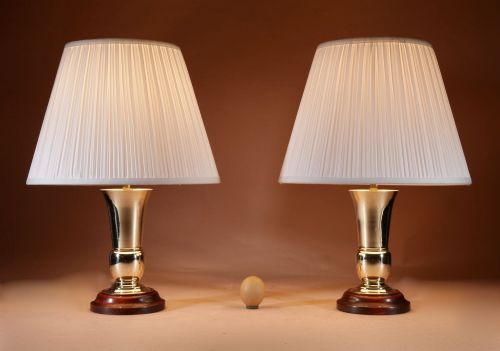
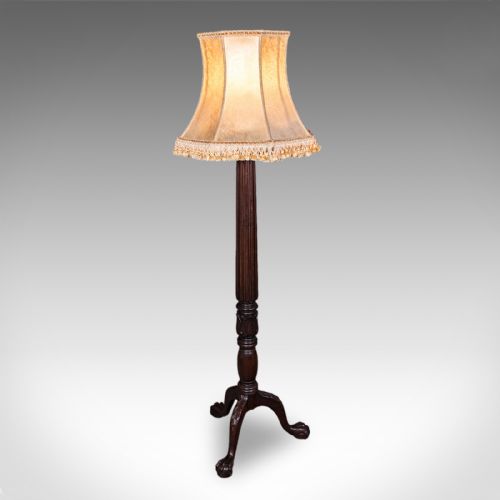
A traditional wood column lamp typically takes the form of a vertical pillar or standard designed to support a light fitting, often standing on a widened base. When you search for a traditional wood column lamp, you encounter items ranging from compact desk versions to tall floor-standing standard lamps.
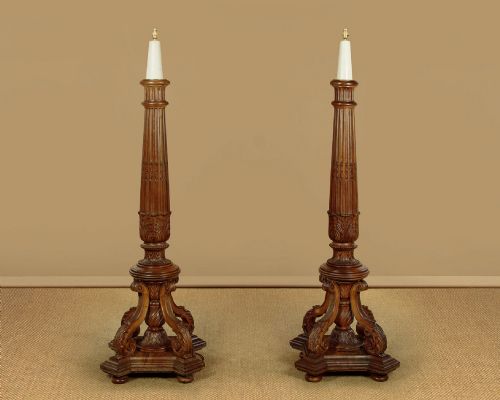
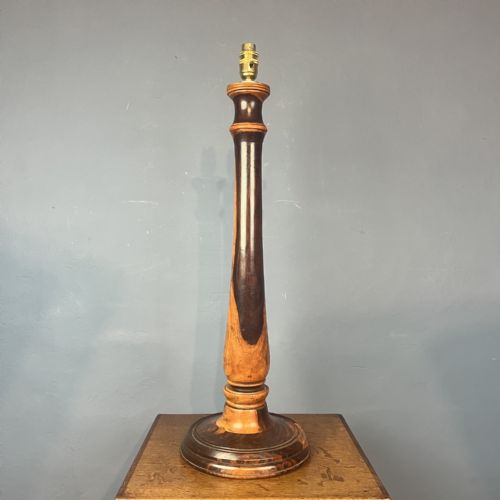
The pieces appearing on this page span several eras, incorporating Victorian examples alongside 19th-century interpretations and later revivals. Common formats include carved timber pillars, turned mahogany shafts, and substantial walnut or lignum vitae columns.
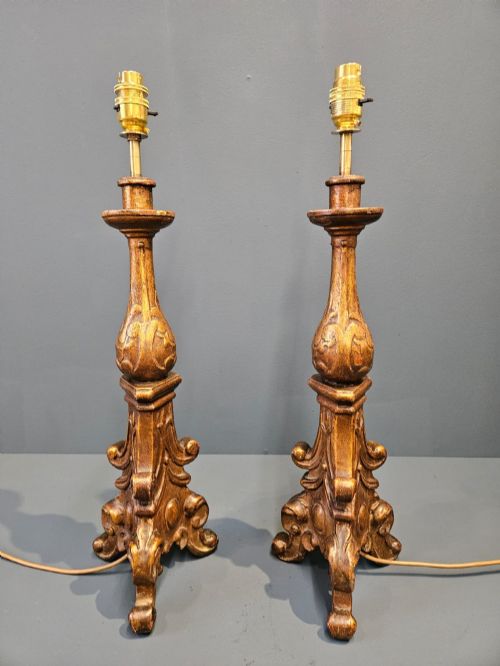
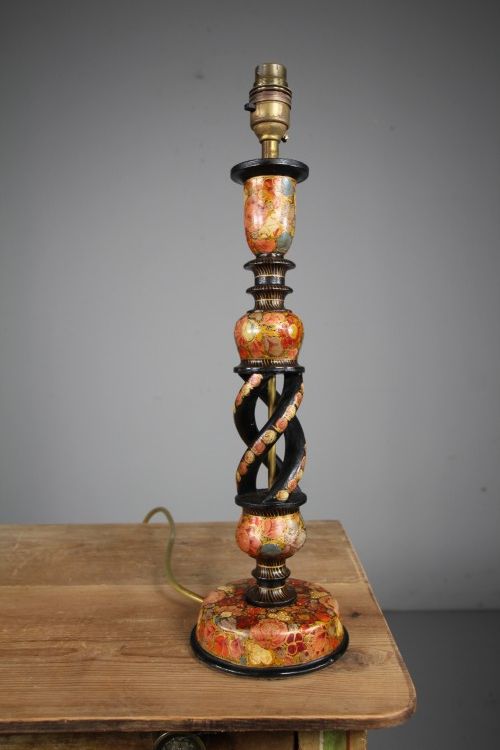
Makers drew on various historical aesthetics, producing items in Georgian Revival, William IV Revival, and Arts and Crafts styles. You also find regional variations, such as Anglo-Indian or Kashmiri pieces, alongside Spanish gilt wood examples.
Materials and construction methods
Makers utilised dense hardwoods such as mahogany, walnut, and lignum vitae, turning them on lathes to create slender, symmetrical columns. Some pieces also feature carved timber details, limed oak finishes, or applied gilt and paint.
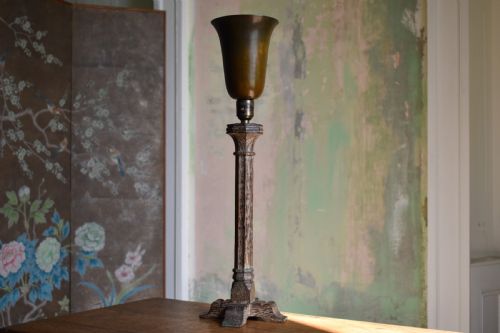
Many designs incorporate contrasting materials, pairing the wooden column with brass fittings, bronze elements, or fabric shades. Structural stability is achieved through heavy turned bases or stepped pedestals that anchor the vertical weight.
Some tall columns managed to double as candlesticks before conversion, proving that ancient wax drips make surprisingly honest roommates.
Assessing quality in turned timber lighting
Quality rests in the selection of the timber and the precision of the turning work, where crisp profiles and tight grain show the hand of a skilled artisan. Dense, heavy woods like lignum vitae or finely figured mahogany indicate superior material choices compared to softer timbers.
The integrity of the column construction and the weight distribution in the base dictate the overall stability and presence of the piece. Integrated metal components, such as original brass mounts or cast bronze details, further distinguish finer examples from simpler workshops.
The Traditional Wood Column Lamp Glossary
- Standard Lamp
- A floor-standing lighting column designed to illuminate a room from a raised height. These pieces often feature heavy bases to support long vertical shafts.
- Lignum Vitae
- A remarkably dense and heavy wood traditionally utilised for turned items requiring durability and weight. Its natural oils give the timber a dark, self-lubricating finish.
- William IV Revival
- A stylistic movement looking back to the robust classical forms of the 1830s. Pieces from this tradition favour heavy proportions and carved architectural details.
- Turned Timber
- Wood shaped on a lathe while rotating, producing symmetrical columns, pedestals, and baluster forms. This technique forms the primary structure of most column lamps.
Traditional Wood Column Lamp: Frequently Asked Questions
How do I choose the right height?
Table lamps function best on side tables or cabinets where the light source sits at comfortable eye level when seated.
Floor-standing standard lamps require open corner placements or positions beside seating to ensure the column and shade balance the proportions of the room.
Are these lamps wired for modern use?
Many antique and vintage lighting pieces have been rewired to meet contemporary safety standards while retaining their original aesthetic components.
It remains advisable to have any historical electrical item inspected and tested by a qualified professional before regular daily use.
How do I care for antique timber columns?
Dust the turned wood regularly with a dry, soft cloth to prevent particulate buildup in the carved recesses and grain.
Apply a traditional beeswax polish sparingly on unpainted hardwoods to nourish the surface, avoiding synthetic sprays that leave residue.
What distinguishes revival styles from original periods?
Revival pieces appropriate historical design idioms such as Georgian or William IV forms but are constructed during later Victorian or 20th-century periods.
Examining the internal fixings, timber seasoning, and tool marks helps determine the true age of manufacture versus the stylistic inspiration.