


Traditional Wingback Seating
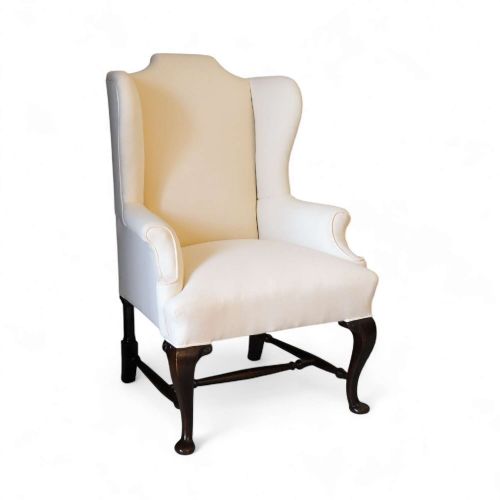
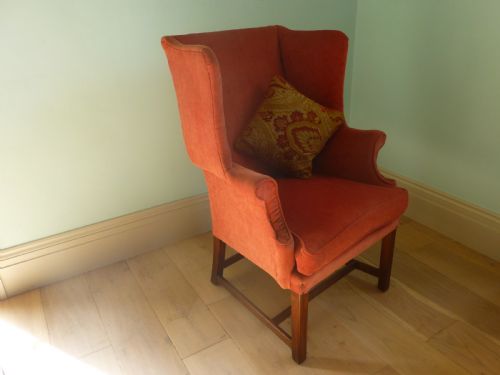
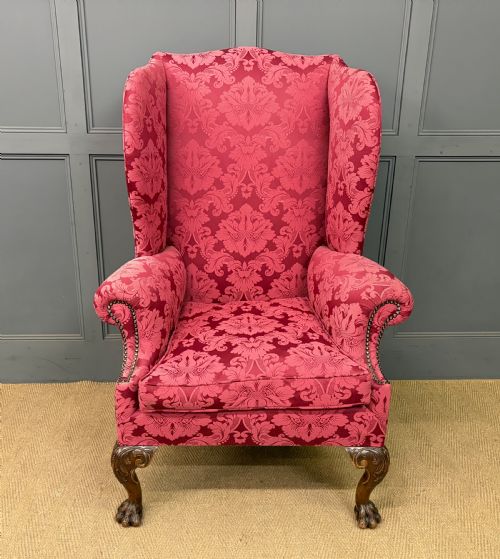
Traditional wingback seating offers deep upholstery and high side panels designed to block draughts by the hearth.
Traditional Wingback Seating
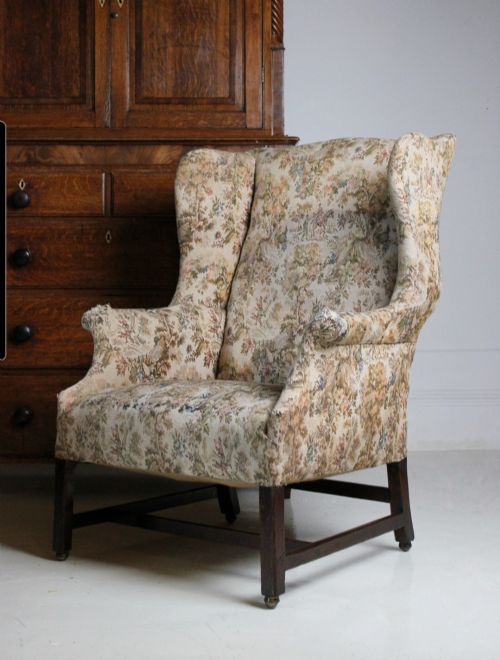
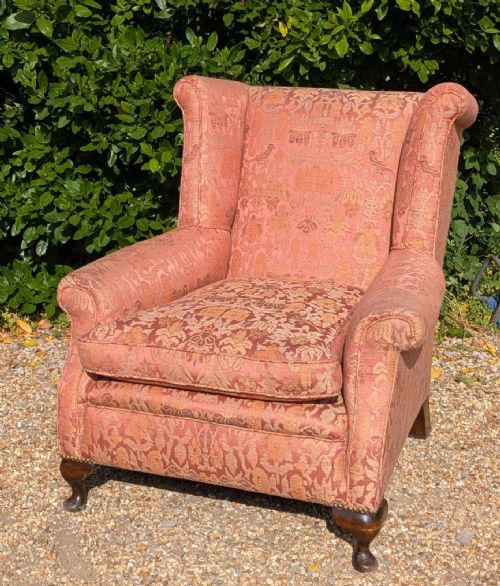
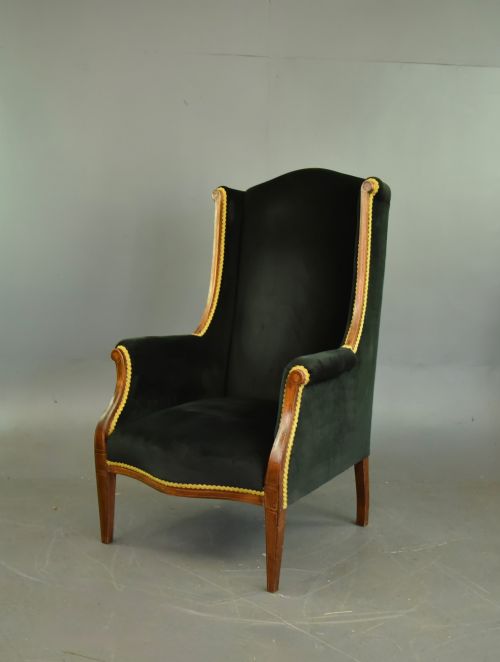
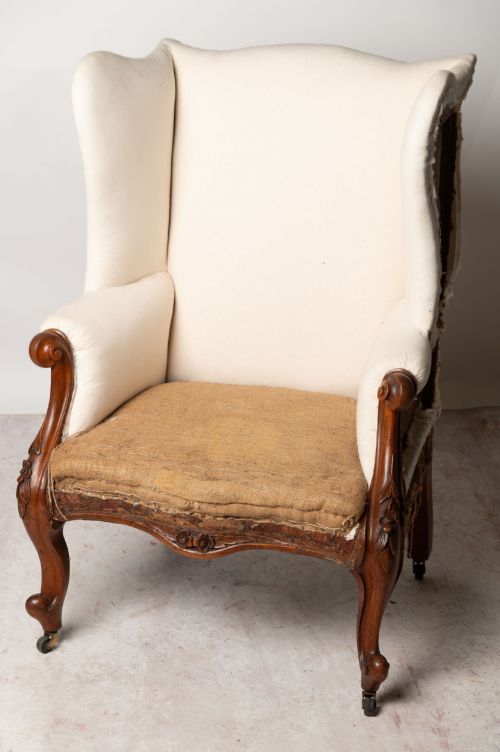
Traditional wingback seating encompasses large upholstered armchairs and sofas designed with protective side wings originating from earlier centuries. When searching for traditional wingback seating, buyers encounter pieces spanning the Georgian, Victorian, and Edwardian eras, alongside later revivals.
Examples from the nineteenth century sit alongside twentieth-century interpretations built in older styles. These seats serve as functional fireside furniture and architectural focal points in a room.
How they were made
Frames rely on sturdy timbers such as mahogany and walnut, often shaped with carved details or inlaid decoration. Joinery supports internal structures designed to bear heavy daily use.
Upholstery techniques employ textiles like velvet, leather, and woven fabrics stretched over supportive fillings. Feather filling and button-backed construction provide structural comfort within the enclosed wing framework.
The inventory spans the Georgian, Victorian, Edwardian, and Art Deco periods.
What varies in quality
The integrity of the underlying timber frame and the precision of the joinery set finer examples apart from simpler production. Period pieces demonstrate careful proportion in the curve of the wings and the stance of the legs.
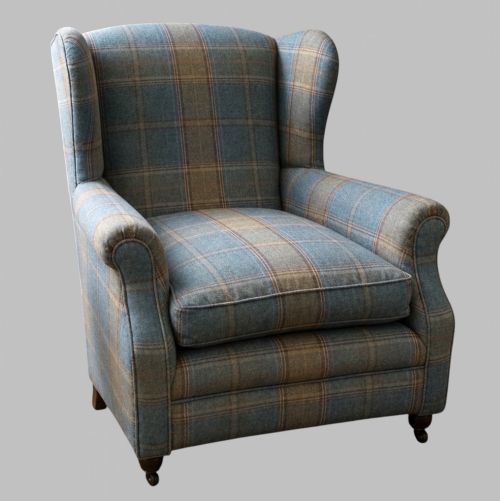
The standard of upholstery materials and execution dictates the finish, from standard woven fabrics to fine leather and specialised wool plaids. Original or sympathetic recovering preserves the proportional harmony intended by the maker.
Whytock and Reid·Sopwith
The Traditional Wingback Seating Glossary
- Wingback
- An armchair featuring projecting side panels designed to shield the occupant from draughts. These upholstered wings extend from the armrests up to the back frame.
- Bergere
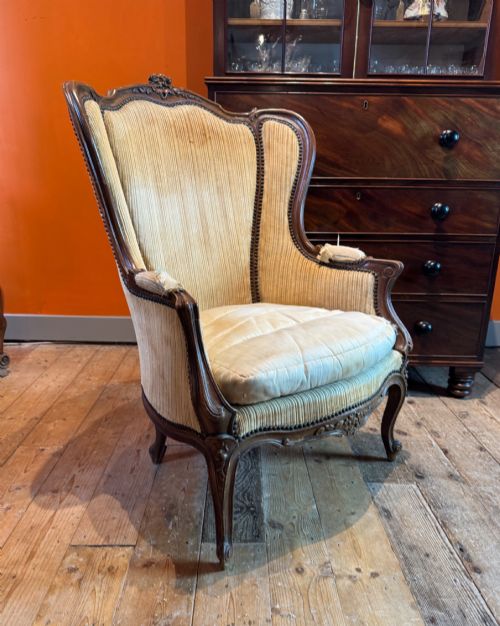
- An enclosed armchair with upholstered sides and a wooden frame, frequently associated with French design styles. It offers a lighter profile than a standard heavy wing chair.
- Library chair
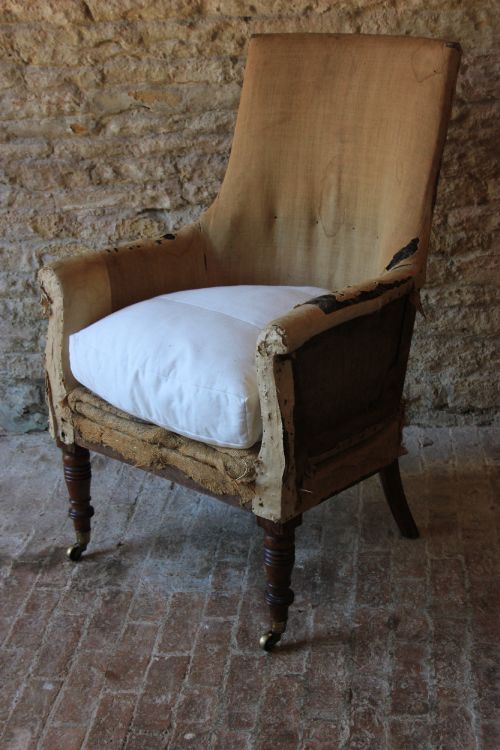
- A heavy reading chair designed for domestic study spaces, often rendered in mahogany or walnut. These pieces frequently incorporate leather upholstery for durability.
- Barrel back
- A seating form where the backrest curves continuously into the arms to form a semi-circular enclosure. This design provides heightened thermal insulation around the user.
- Settee
- A long upholstered seat for multiple occupants, sharing stylistic traits with matching armchairs. These items provide extended seating while retaining traditional frame characteristics.
Traditional Wingback Seating: Frequently Asked Questions
What is a wingback chair used for?
Traditional wingback chairs provide high-backed seating intended to retain heat around the head and shoulders near a fireplace. The side wings deflect cold air currents in high-ceilinged rooms.
Over time, these chairs transitioned from functional heating shields to prominent library and living room seating. Their enclosed profile creates a private space for reading and resting.
How do I identify a Georgian wing chair?
Georgian wing chairs typically display hand-carved mahogany or walnut frames with distinct period leg forms, such as cabriole or straight supports. Proportions tend to be generous and structural lines follow eighteenth-century conventions.
Subsequent revival pieces built in later decades often imitate these historic outlines. Examining the timber patination and internal frame construction helps clarify the true age of the piece.
What materials are used in traditional wingbacks?
Frames are constructed from hardwoods including mahogany, walnut, and general timber. Exposed wooden elements often feature inlay or carved detailing.
Upholstery utilises a broad range of textiles, spanning leather, velvet, chenille, cotton, and wool plaid. Internal padding relies on traditional stuffing methods, occasionally incorporating feather fillings.
Are wingback sofas common?
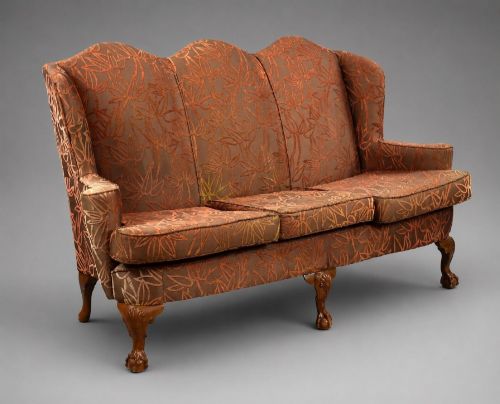
Wingback sofas and settees appear less frequently than single armchairs but follow the same stylistic design principles. They combine multi-seat capacity with the signature high back and protective side wings.
These larger seating forms emerge across various periods, including Georgian and Edwardian revivals. They suit spacious interiors requiring coordinated fireside furniture.
How do I care for leather wing chairs?
Leather wing chairs require regular dusting and occasional conditioning to maintain the suppleness of the hide. Keeping the leather away from direct heat sources prevents drying and cracking.
Avoiding abrasive cleaners preserves the original surface finish and natural patination. Professional leather care maintains the integrity of button-backed and plain upholstery alike.