
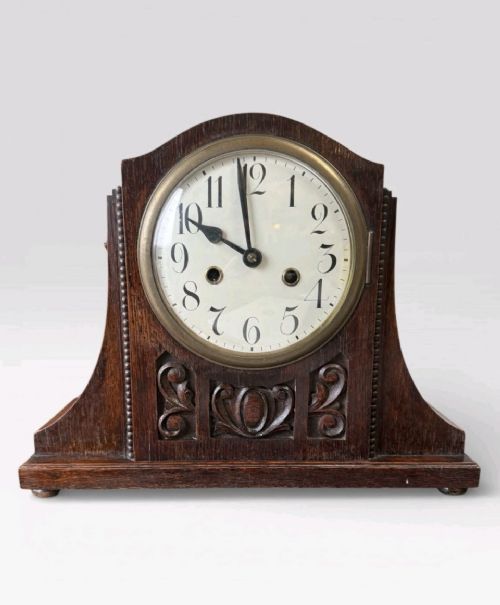


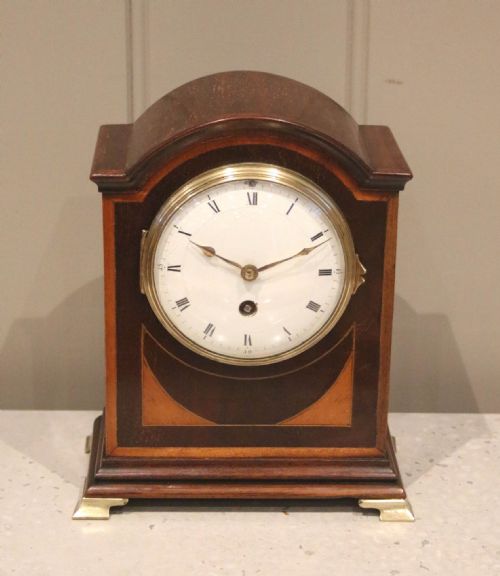


Traditional Winding Mantel Clock
These traditional winding mantel clock pieces keep time through mechanical movements, offering both dependable function and period character for any room.
Traditional Winding Mantel Clock
A traditional winding mantel clock sits on a shelf or tabletop, bringing mechanical timekeeping into domestic spaces. These pieces span the nineteenth century, the Edwardian era, the Art Deco period, and mid twentieth century examples from nineteen sixty.
The assortment on this page includes carriage clocks, bracket clocks, and table clocks housed in wooden or brass cases. Oak, rosewood, mahogany, satinwood, and walnut feature prominently among the timber options.
Victorian and Regency styles sit alongside Art Deco and French traditional designs. Dial materials commonly include enamel paired with glass panels or brass frames.
Materials and construction
Cases combine solid hardwoods like oak, mahogany, walnut, and rosewood, often enhanced with satinwood inlay. Brass provides the structural housing and detailing for carriage clocks and mechanical bezels.
Enamel dials display numerals behind protective glass covers, while internal mechanical movements utilise brass gears and twin fusee mechanisms. Heavy gorge cases and bracket structures require precise metalworking and joinery.
Periods represented span from the nineteenth century through Edwardian and Art Deco styles up to nineteen sixty.
Judgements of quality
Quality rests in the precision of the mechanical movement, such as twin fusee configurations or moon phase complications, alongside heavier metal casting in brass carriage cases. Maker signatures on the dial or movement elevate historical interest.
Cabinetwork distinguishes finer wooden examples, where figured mahogany, walnut, or intricate satinwood inlay display superior joinery and finishing. Simpler timber boxes or standard platforms represent the more straightforward end of the range.
S Simpson Southampton·DeLa Salle And Christie London·L Epee·Penlington And Batty
The Traditional Winding Mantel Clock Glossary
- Bracket clock
- A portable mechanical clock originally designed to sit on a wall bracket. They often feature robust wooden cases and carrying handles.
- Carriage clock
- A small, spring-driven clock with a glass-sided brass case made for travel. These portable timepieces originated in France during the nineteenth century.
- Twin fusee
- A mechanical movement using a cone-shaped pulley and chain. This system equalises the force of the mainspring as it unwinds to improve timekeeping accuracy.
- Gorge case
- A stepped brass housing used primarily on French carriage clocks. The design provides structural rigidity while framing the glass panels.
- Moon phase
- A dial complication that tracks the lunar cycle. It rotates behind an aperture to show the current phase of the moon.
Traditional Winding Mantel Clock: Frequently Asked Questions
How do I wind a mechanical mantel clock?
You insert a key into the winding arbor on the dial and turn it gently until you feel resistance. Do not overwind the spring, as this can damage the internal mechanism.
Most traditional movements require weekly attention to keep accurate time. Match the key size precisely to the square arbor to avoid rounding the metal.
Where should I place a mantel clock?
Position the clock on a stable, level surface away from direct sunlight, drafts, and sources of moisture. A solid mantelpiece or heavy sideboard works well.
Ensure the surface does not vibrate when people walk past, which can interfere with the pendulum or balance wheel.
How do I tell an Edwardian clock from a Victorian one?
Victorian clocks often feature heavy walnut or mahogany cases with ornate carvings and dark finishes. Edwardian pieces tend to show lighter satinwood inlay and refined proportions.
Examine the style of the numerals and the timber grain for clues regarding the period of manufacture.
What is the difference between a carriage clock and a bracket clock?
Carriage clocks utilise brass and glass construction with a top handle, designed for portability. Bracket clocks use wooden housings intended for stationary placement on tables or furniture.
Bracket clocks frequently house complex mechanical trains like twin fusee movements, whereas carriage clocks rely on compact platform escapements.