
Traditional Wardrobe
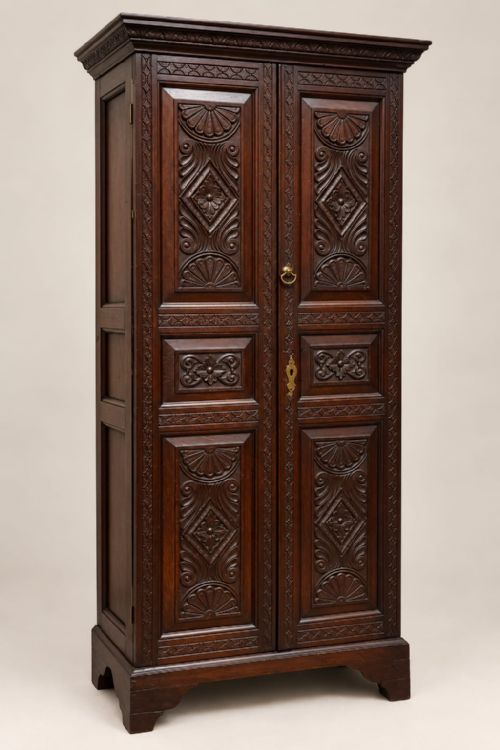
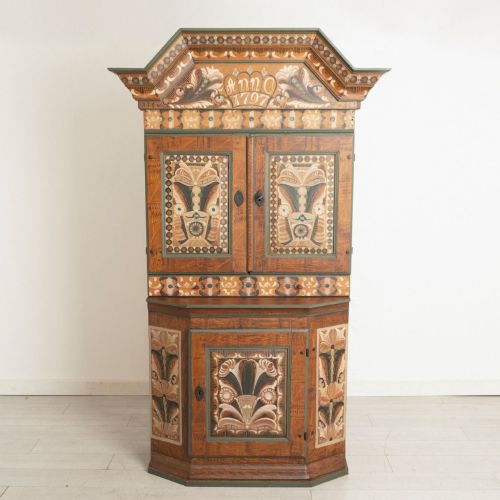
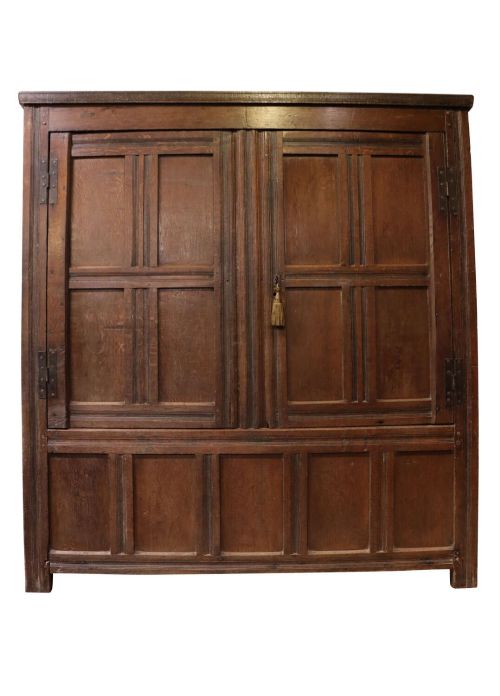
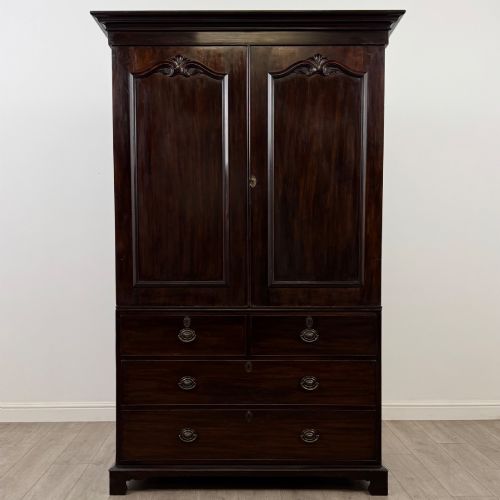
These traditional wardrobe examples span centuries of timber craftsmanship, offering substantial storage built to endure.
Traditional Wardrobe
A traditional wardrobe provides large-scale clothes storage through hanging space, shelves, and internal drawers within a freestanding wooden carcase. When exploring traditional wardrobe options, buyers encounter formats ranging from simple single-door cupboards to grand triple-door designs.
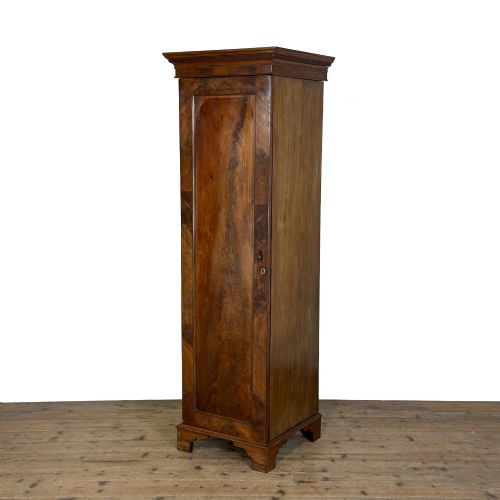
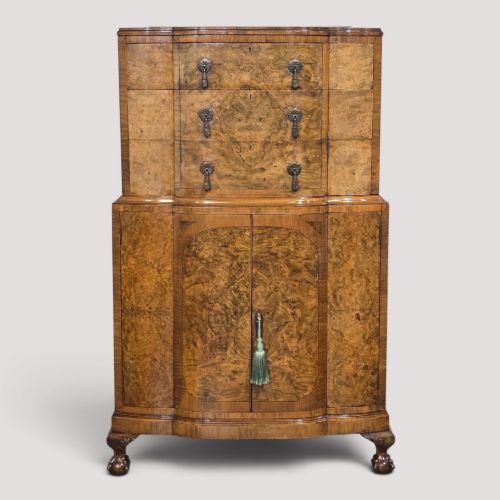
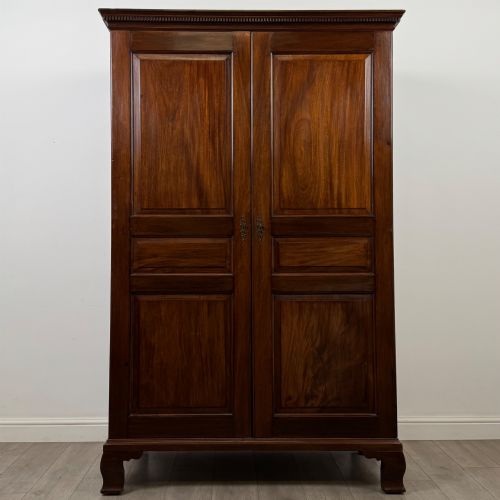
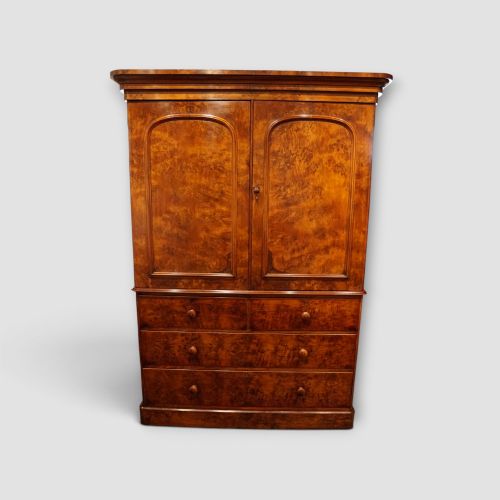
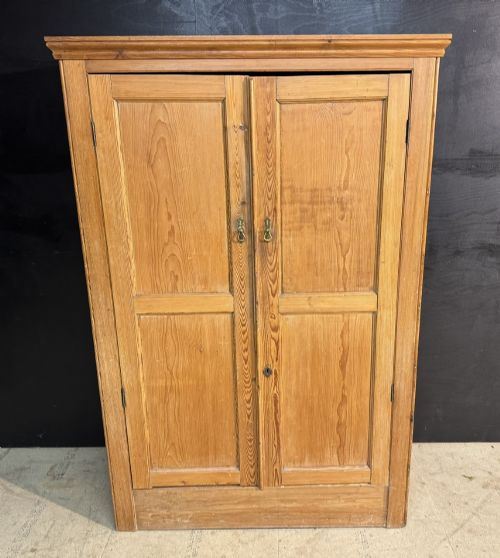
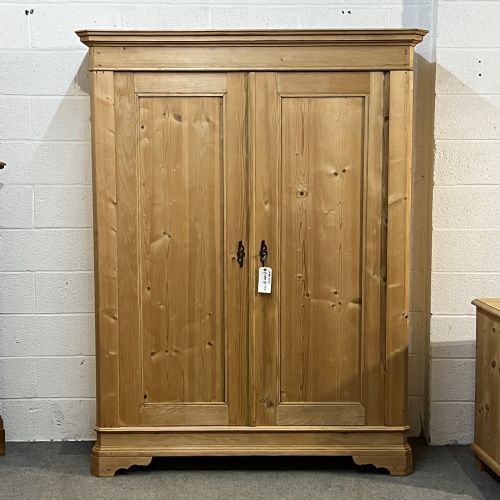
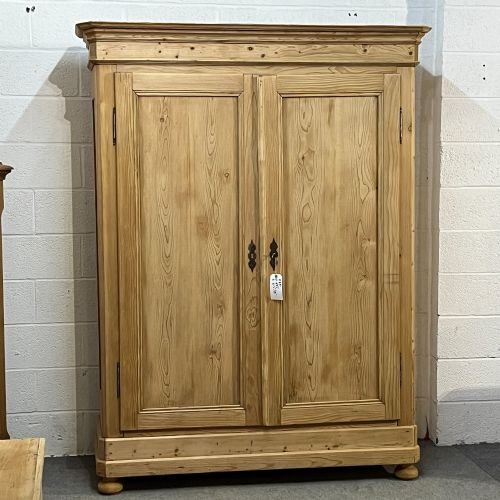
The pieces on this page originate across diverse eras, stretching from 17th-century craftsmanship through Georgian, Victorian, Edwardian, and early 20th-century periods. Common iterations include mahogany linen presses, painted pine farmhouse cupboards, and burr walnut wardrobe cabinets.
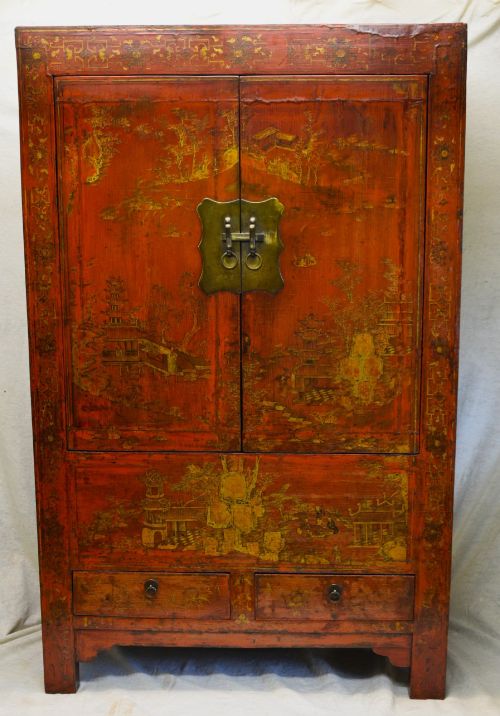
Regional variations appear frequently in the selection, encompassing British oak country pieces, French pine armoires, and Chinese lacquered marriage cabinets. Each regional variation brings distinct timber choices and surface treatments to the traditional wardrobe category.
How they were made
Cabinet makers utilised solid hardwoods like mahogany, oak, walnut, and elm alongside softer timbers such as pine and ash. Construction methods rely on traditional joinery, panelled doors, and heavy cornices, sometimes finished with bracket feet or plinth bases.
Surface treatments vary widely, incorporating polished flame mahogany veneers, hand-painted finishes, wax treatments, and red lacquer applied to Chinese wedding cabinets. Brass hardware frequently secures doors and drawers across multiple styles and centuries.
Several Chinese marriage cabinets arrive finished in vibrant red lacquer, originally designed to bring good fortune to newlyweds.
What varies in quality
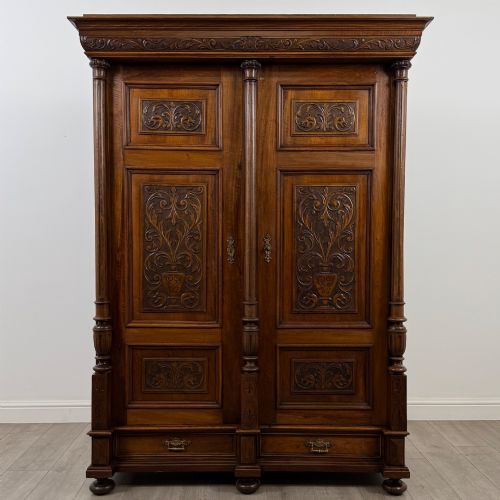
Superior examples within the traditional wardrobe category display refined timber selection, such as figured burr walnut or flame mahogany veneers, paired with crisp hand-carving and dental cornices. Construction depth, including heavy oak panelling and integrated drawer banks, separates exceptional pieces from simpler utilitarian storage.
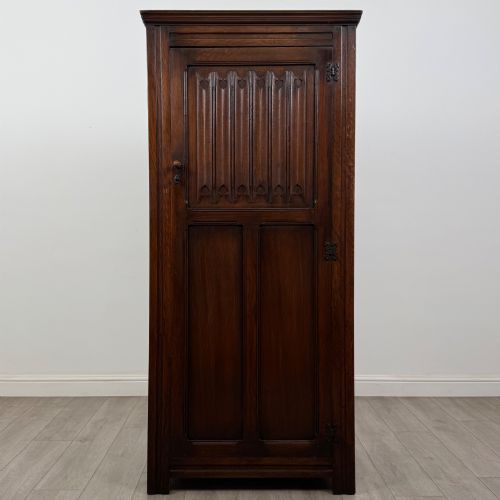
Maturity of design and proportion dictates overall standing, where balanced door layouts and well-executed period details like linenfold carving or Chinoiserie lacquer elevate a piece. The integration of functional internal fittings like sliding trays within linen presses also marks higher grade manufacture.
The Traditional Wardrobe Glossary
- Linen Press
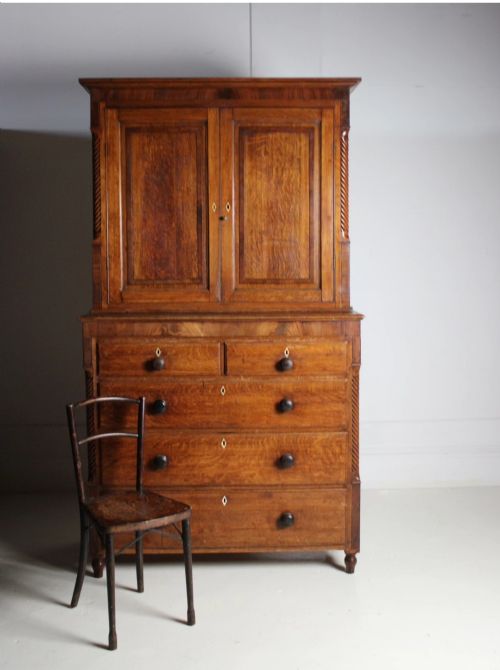
- A tall storage piece featuring upper sliding trays or shelves enclosed by doors, positioned above a base section fitted with drawers. These units originally stored folded linens before hanging garments became standard.
- Livery Cupboard
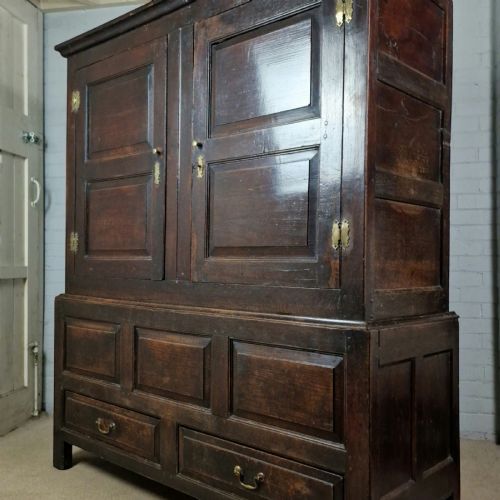
- An early form of freestanding storage cabinet traditionally used for provisions or garments, often characterised by panelled doors and sturdy oak construction. These cupboards date back to the 17th and 18th centuries.
- Compactum
- A multi-functional wardrobe layout combining hanging space, shelves, and multiple internal drawers within a single compact carcase. This configuration emerged strongly during the late 19th and early 20th centuries.
- Dentil Cornice
- A decorative architectural moulding featuring a series of small, evenly spaced rectangular blocks resembling teeth. This detail frequently crowns high-status Georgian wardrobes and linen presses.
- Knockdown Wardrobe
- A large wardrobe designed with pegged or bolted sections that can be dismantled for transport and reassembled on site. This clever construction enabled large furniture to move between rooms and properties.
Traditional Wardrobe: Frequently Asked Questions
How do I date a traditional wardrobe?
Dating relies on observing timber choices, construction techniques, and stylistic ornament. Georgian pieces often show mahogany with bracket feet, while Victorian examples frequently utilise burr walnut or heavy pine.
Hardware, hinge types, and interior layouts also offer clear clues to a piece's era of manufacture. Examining secondary woods inside drawers helps confirm the period.
What is the difference between an armoire and a wardrobe?
An armoire is a traditional European cupboard, often French, traditionally used for storing arms or clothes. They tend to feature deep proportions and heavily carved double doors.
A wardrobe specifically designates a piece built primarily for hanging garments, though historical terminology often overlaps between armoires, wardrobes, and linen presses.
Can I dismantle a large antique wardrobe?
Many larger Victorian and Edwardian examples were built as knockdown furniture specifically to allow transport between rooms. These pieces assemble using internal bolts, pegs, or tongue-and-groove joints.
Solid carcase pieces from earlier periods generally do not dismantle and require careful measurement of doorways and stairwells before purchase.
How do I care for antique wood furniture?
Maintaining traditional wooden wardrobes involves keeping them away from direct sunlight and dramatic humidity changes. These environmental controls prevent timber from splitting and veneers from lifting.
Periodic application of quality beeswax preserves the finish and nourishes older timbers, particularly on pieces finished in wax rather than modern varnish.