








Traditional Walnut Wall Clock
A traditional walnut wall clock brings deep timber grains and steady pendulum movement to a room, anchoring the wall with proper nineteenth-century weight.
Traditional Walnut Wall Clock
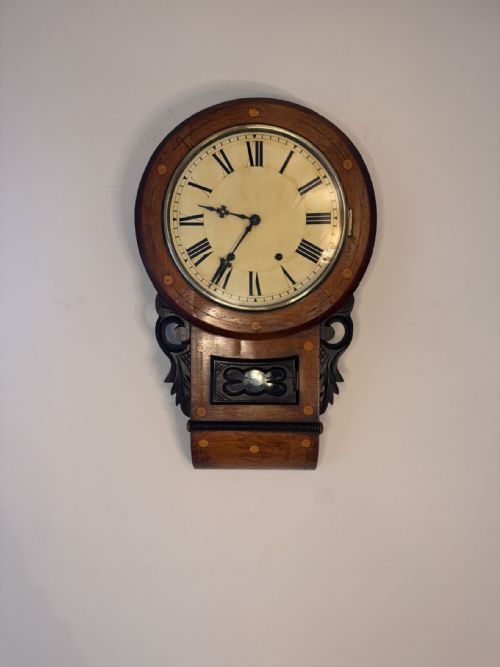
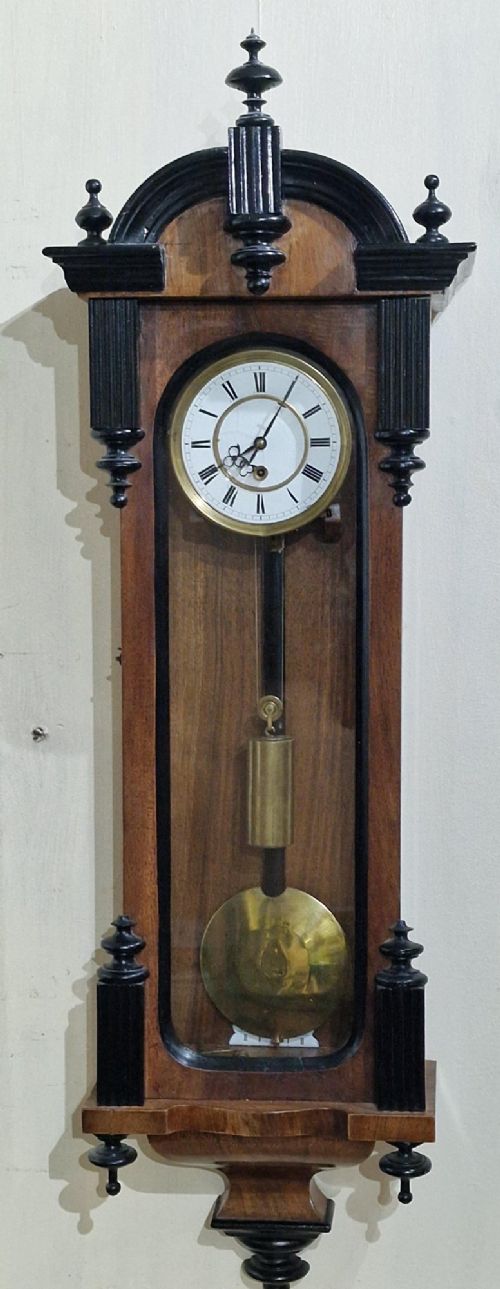
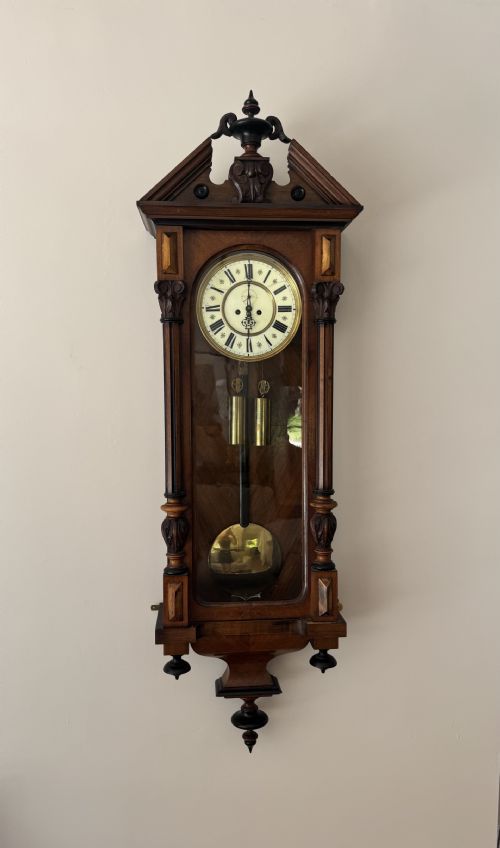
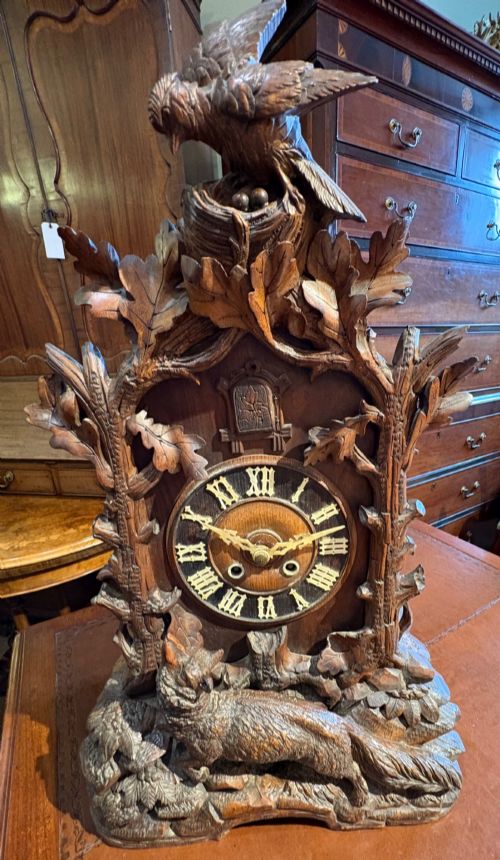
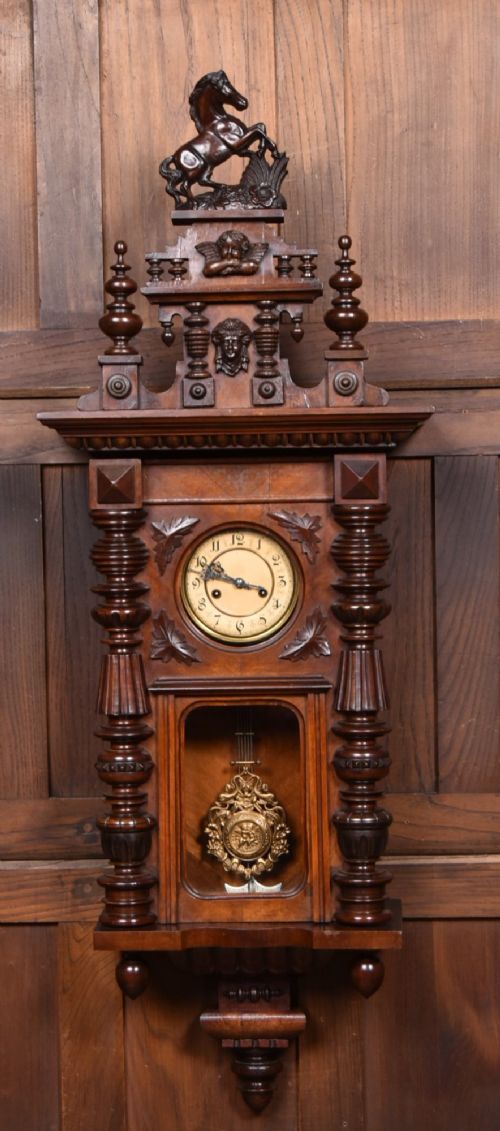
When you search for a traditional walnut wall clock, you meet a range of nineteenth-century timepieces spanning Victorian drop dials, Vienna regulators, and carved Black Forest cuckoo clocks. The typical piece on this page uses warm walnut timber in the case, often housing a brass movement driven by weights or a pendulum.
Many examples originate from German, Austrian, and British workshops active between eighteen-sixty and nineteen-hundred. You also encounter Georgian hooded wall clocks alongside combined barometers and thermometers housed in matching walnut frames.
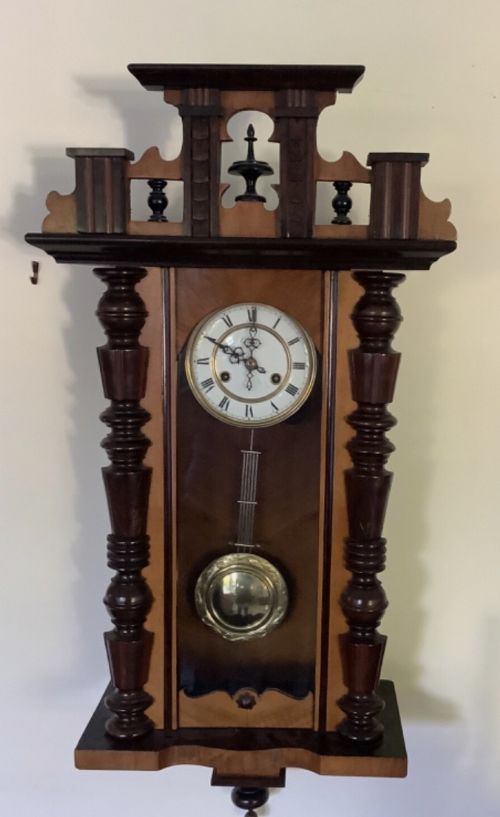
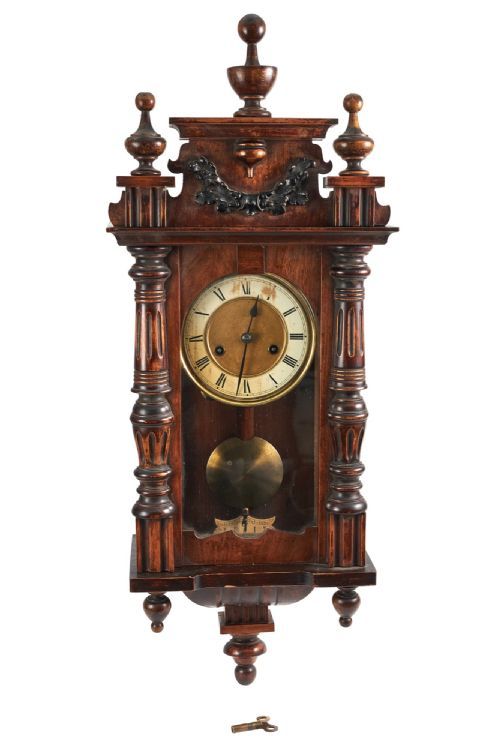
The Vienna regulator style appears frequently, offering long glazed doors and porcelain or enamel dials framed by turned walnut mouldings. Drop dial clocks provide a more compact silhouette suited to smaller wall spaces while retaining the bold grain of walnut.
Distinctions in quality
Quality rests in the crispness of the walnut carving, the depth of the timber grain, and the complexity of the brass movement within. Superior clocks exhibit hand-cut gear teeth and well-fitted cases with intact original mouldings and dial glass.
Lower tiers often show replacement parts, heavy timber alterations, or simplified movements lacking the refinement found in signed or regulated examples.
Traditional Walnut Wall Clock Retail Price Guide 2026
Typical asking prices for traditional walnut wall clock among the pieces listed under this phrase on Sellingantiques today, from the lower quarter to the upper quarter. They describe what is for sale here now, not the wider market.
Listings feature walnut, ebonised wood, and brass across nineteenth-century Victorian, Edwardian, and eighteenth-century periods.
Connell of London·Henry Deykin·Johann Baptist Beha·Lenzkirch
The Traditional Walnut Wall Clock Glossary
- Vienna Regulator
- A precision pendulum clock developed in Austria, noted for its long glazed door and slow-beating gridiron or brass pendulum. These timepieces were prized for their exceptional timekeeping accuracy.
- Drop Dial
- A wall clock featuring a circular dial above an extended wooden case that houses the pendulum. This form became a staple of nineteenth-century British commercial and domestic spaces.
- Fusee
- A conical pulley connected to the mainspring by a cord or chain, designed to equalise the declining power of the spring as it unwinds. It ensures even force is delivered to the gear train.
- Cartouche
- A distinct enamel numeral plaque applied to the dial face, common on nineteenth-century German and Austrian regulators. Each number is individually fired.
- Ebonised Wood
- Timber treated with a dark stain or finish to imitate ebony, frequently used to accent walnut cases on Victorian and Gothic revival clocks.
Traditional Walnut Wall Clock: Frequently Asked Questions
How do Vienna regulators work?
Vienna regulators use a precision pendulum movement, often powered by a single brass weight suspended on a fine cord. The long drop allows the pendulum to swing in a wide, measured arc for steady timekeeping.
The large glazed door protects the delicate movement while allowing a clear view of the swinging pendulum and weights. Most require weekly winding via a small key inserted into the dial face.
Where should I hang a wall clock?
Choose an interior wall free from dampness, direct sunlight, and excessive vibration to protect the walnut timber and mechanical movement. A sturdy fixing directly into masonry or a wall stud is essential to support the weight.
Position the dial at eye level so the pendulum can hang plumb and swing freely without touching the back of the case.
How do I tell a Victorian clock from an 18th century one?
Eighteenth-century examples, such as hooded wall clocks, typically feature simpler brass movements enclosed in smaller wooden hoods designed to mount directly onto the wall. Their dials are often brass with engraved chapter rings rather than white enamel.
Victorian pieces lean towards elaborate walnut cases, porcelain enamel dials, and mass-produced yet highly accurate mechanical movements. They frequently incorporate glass viewing doors and turned wooden finials.
What is a fusee movement?
A fusee is a conical drum attached to the clock's mainspring that maintains equal power as the spring runs down. This mechanism prevents the clock from losing accuracy as the power diminishes between windings.
You find fusee movements primarily in British bracket and drop dial clocks rather than continental Vienna regulators.