

Traditional Walnut Drawers
Traditional walnut drawers bring warmth and steady utility to a room, spanning periods from the eighteenth century through to the twentieth.
Traditional Walnut Drawers
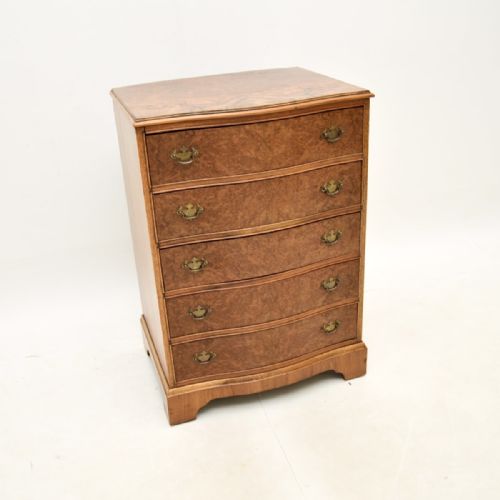
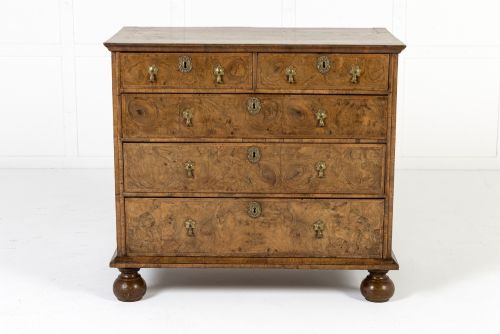
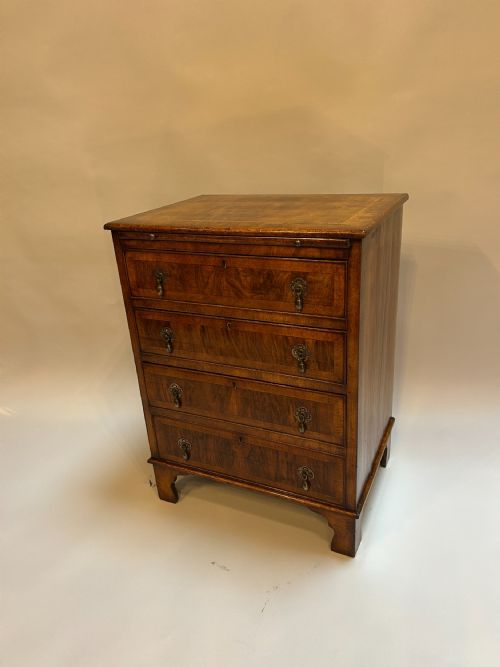
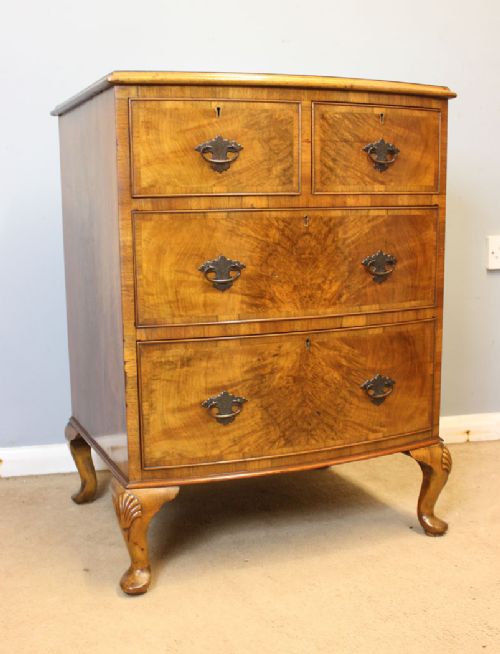
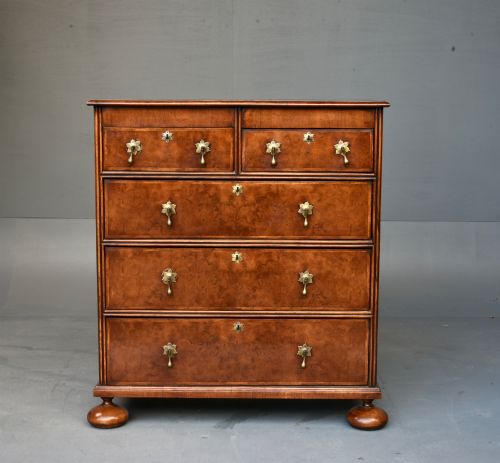
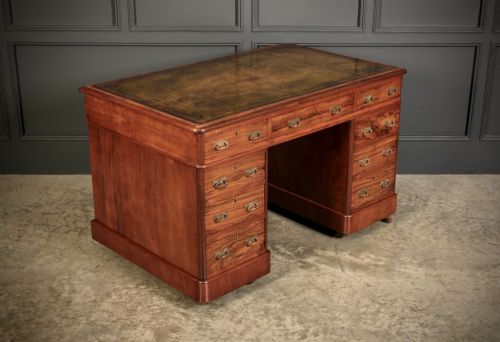
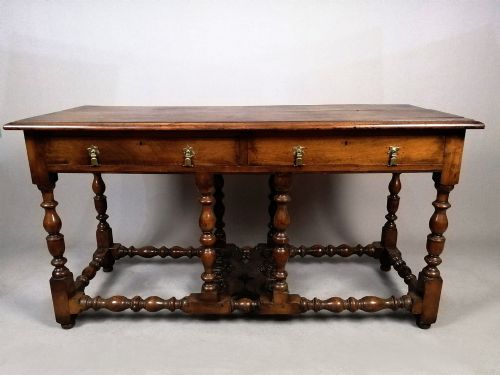
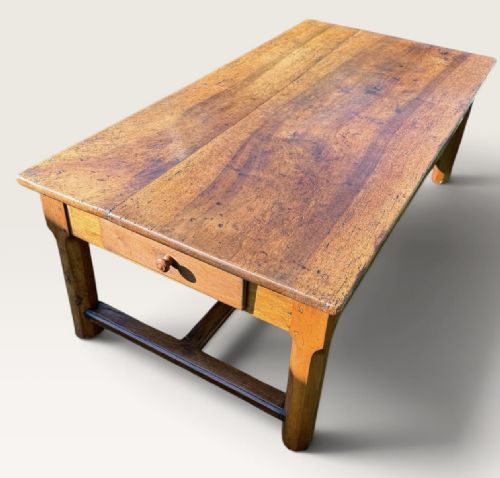
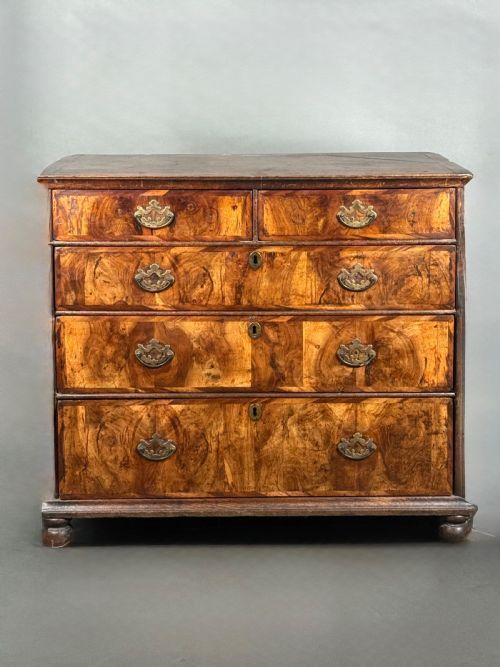
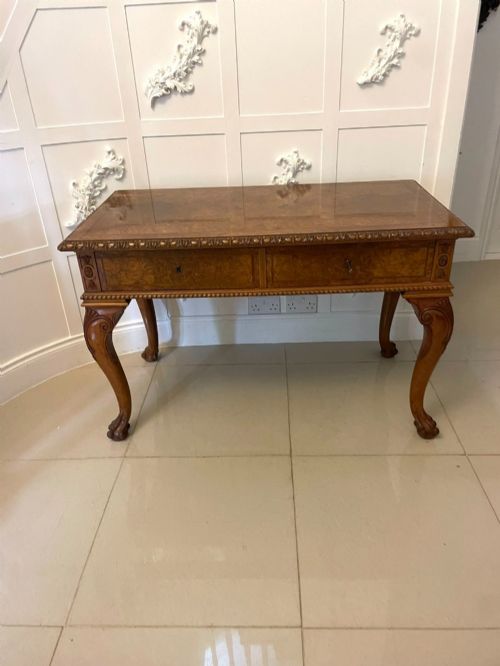
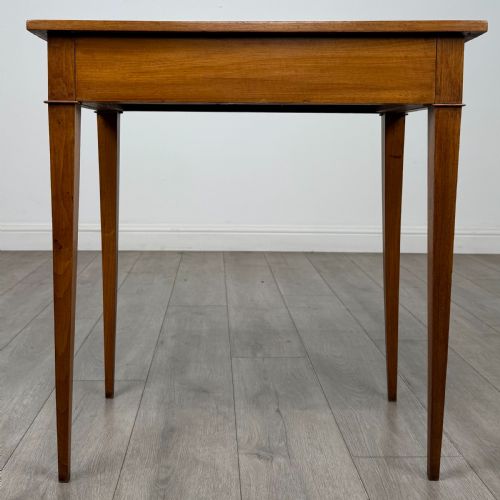
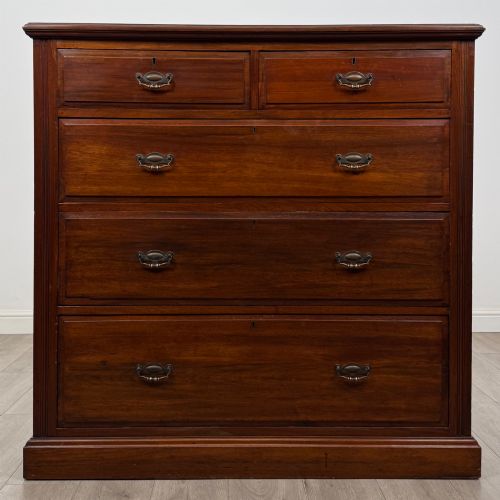
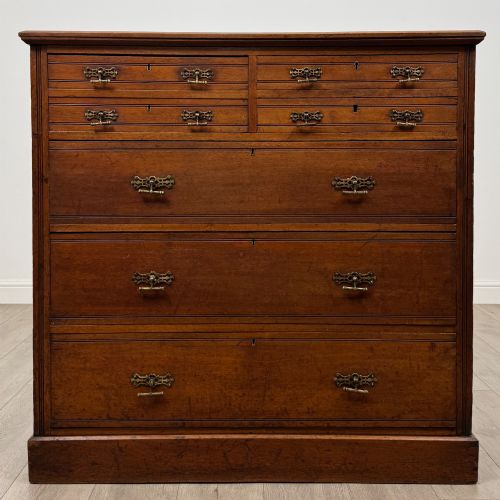
Traditional walnut drawers encompass a broad range of domestic forms, most frequently appearing as chests of drawers, pedestal desks, and side tables. Buyers seeking these pieces will encounter items originating from the eighteenth, nineteenth, and twentieth centuries, including revival styles that emulate earlier cabinet-making traditions. The selection spans compact bedside chests up to large tallboys and linen presses.
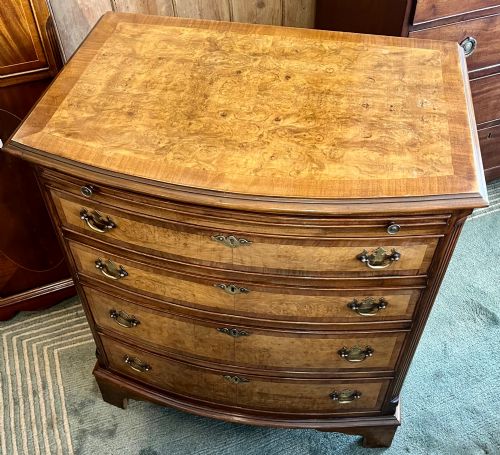
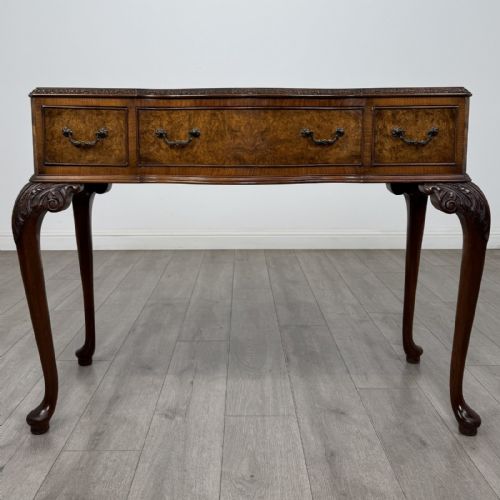
Chest of drawers configurations vary from small two-over-three arrangements to tall graduated tiers and bow-fronted designs. Desks and writing tables often incorporate leather writing surfaces alongside banks of pedestal drawers or hidden compartments. Side tables and lowboys provide alternative drawer storage on slender legs.
Origin dates spread across distinct eras, featuring Georgian, Victorian, and Edwardian pieces alongside early eighteenth-century examples and 1920s reproductions. Queen Anne style and revival pieces appear frequently alongside plain provincial or country house furniture. Walnut timber forms the primary structural and decorative constant across these varied forms.
Materials and Construction
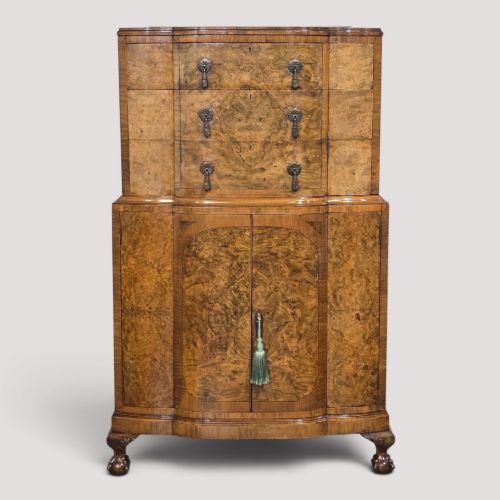
Makers utilised solid walnut alongside decorative veneers such as burr walnut, figured walnut, and oyster veneer to create patterned surfaces on drawer fronts and tabletops. Secondary timbers like oak occasionally appear in internal linings, whilst brass hardware provides handles and escutcheons. Leather inserts feature on the writing surfaces of desks.
Cabinet makers applied crossbanding and marquetry details to enhance the visual depth of the timber grain. Drawers were constructed with traditional joints and graduated depths, sometimes incorporating secret compartments or locking mechanisms. Timber selection focused on rich figuring and warm natural colouration.
Traditional Walnut Drawers Retail Price Guide 2026
Typical asking prices for traditional walnut drawers among the pieces listed under this phrase on Sellingantiques today, from the lower quarter to the upper quarter. They describe what is for sale here now, not the wider market.
The inventory combines storage forms like chests and linen presses with working furniture including pedestal desks, writing tables, and sideboards.
Quality Variations
The sophistication of the timber figure and the precision of the veneer work distinguish finer pieces from simpler examples. Burr and figured walnut demand careful matching across drawer fronts and top panels, creating symmetrical patterns that elevate the visual merit of a chest.
Structural integrity depends on the retention of original brass handles, functioning locks, and sound internal drawer construction. Pieces that maintain their original surface patination and unblemished crossbanding command greater appreciation among collectors than those with heavy alterations.
Jas Shoolbred·Gillow and Co
The Traditional Walnut Drawers Glossary
- Burr walnut
- A prized veneer taken from the knotted growth of a walnut tree, yielding intricate, swirling grain patterns. It is frequently applied to the main drawer fronts of Georgian and revival chests.
- Oyster veneer
- Slices cut transversely from small branches or roots to form circular, oyster-like patterns across a surface. This technique appears on seventeenth-century pieces.
- Crossbanding
- A narrow strip of veneer laid perpendicularly to the surrounding grain around the edge of a drawer front or tabletop. It creates a neat visual border.
- Graduated drawers
- A series of drawers decreasing in depth from the bottom to the top of a chest. This arrangement provides structural balance to the elevation.
- Lowboy
- A small dressing table or side table featuring one or more rows of drawers raised on four tall legs. They date predominantly from the eighteenth century.
Traditional Walnut Drawers: Frequently Asked Questions
How do I date a walnut chest?
Dating relies on observing construction methods, handle styles, drawer proportions, and timber preparation. Earlier pieces often display hand-cut joints and native walnut, whilst later revival pieces adopt machine-sawn elements.
Secondary woods and veneer thickness also offer clues to the period. Comparing the overall silhouette against known Georgian, Victorian, or Edwardian forms helps narrow the decade of manufacture.
What is burr walnut?
Burr walnut derives from a growth on the tree where the grain has grown in a deformed, swirling manner. When sliced into thin veneers, it produces highly decorative and complex patterns.
Cabinet makers used these veneers on prominent surfaces like drawer fronts and tabletops to catch the light and display rich texture.
How do I care for walnut furniture?
Walnut benefits from stable room temperatures away from direct sunlight and heat sources, which can dry out the timber and crack veneers. Regular dusting with a soft, dry cloth preserves the finish.
Applying occasional appropriate wax polish helps nourish the wood and maintain its natural lustre without building up sticky layers.
Where should I place a pedestal desk?
Pedestal desks suit home offices, studies, or living rooms where they can function as a central workspace. Freestanding or partner desks look effective positioned away from walls to display finished backs and side panels.
Ensure there is sufficient clearance around the chair space and drawers to allow comfortable daily access.