


Traditional Walnut Bedroom Dresser
A traditional walnut bedroom dresser brings rich grain and practical storage to a room, ranging from early eighteenth-century designs to later revivals.
Traditional Walnut Bedroom Dresser
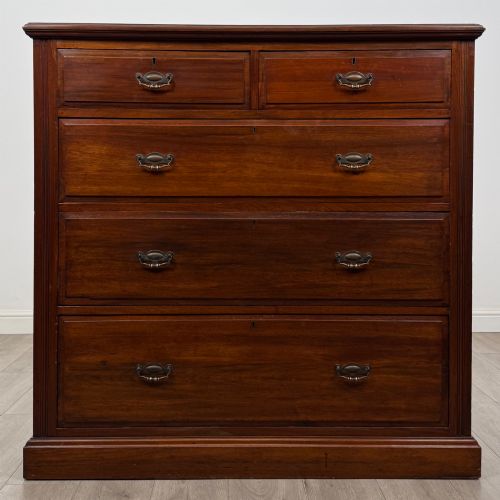
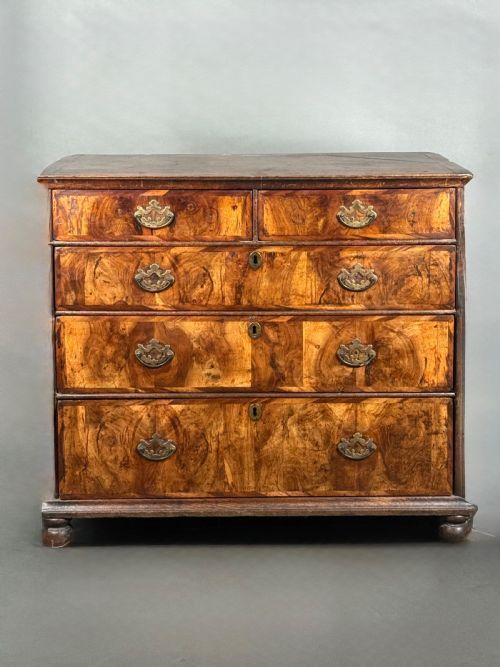
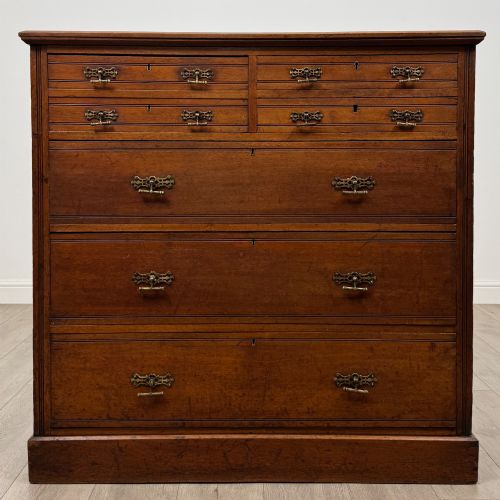
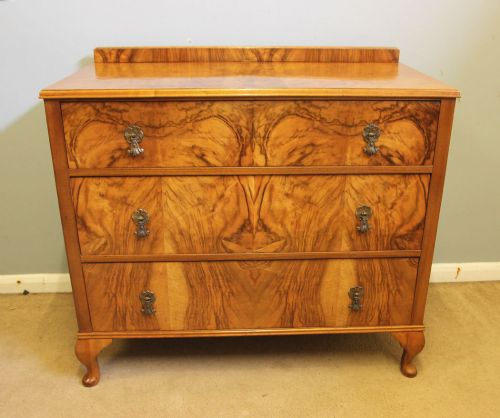
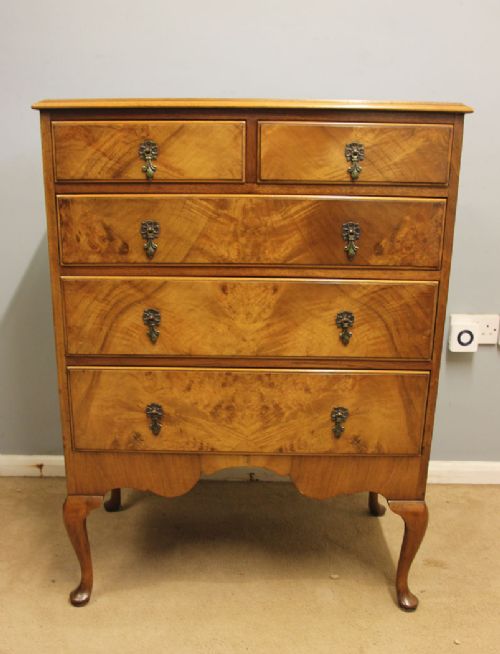
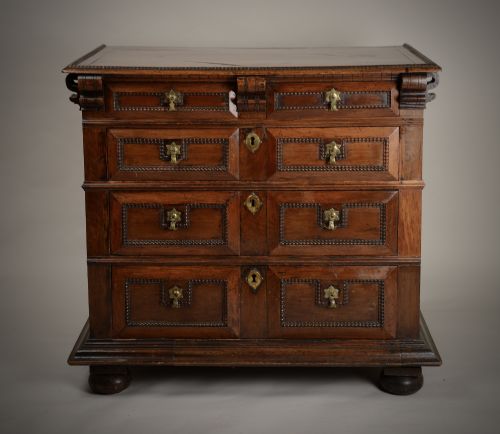
A traditional walnut bedroom dresser primarily takes the form of a chest of drawers, offering structured storage fashioned from rich timber. These pieces span centuries of cabinet-making, encompassing early eighteenth-century examples alongside later Edwardian and twentieth-century interpretations.
Distinctions in Quality and Execution
Quality rests upon the selection and matching of the walnut veneers across the drawer fronts and top surfaces. Superior examples demonstrate continuous grain patterns and meticulous timber preparation that enhances the natural figure.
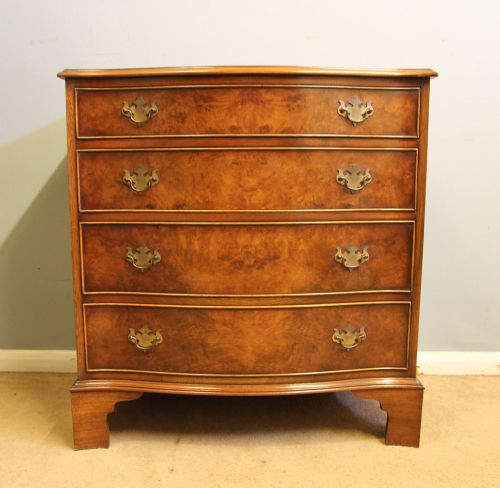
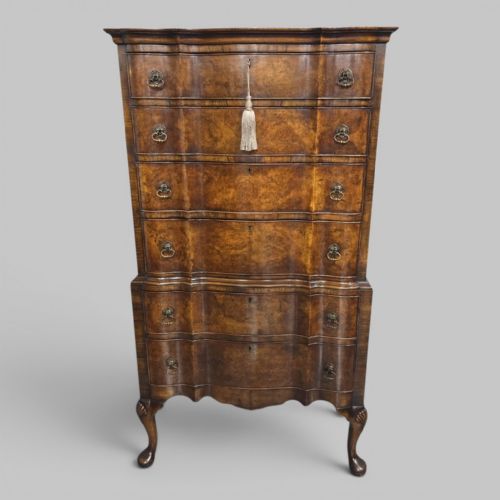
The refinement of the cabinet-making sets apart finer items, visible in the precision of the drawer construction, the handling of serpentine or concave forms, and the integrity of the period brass fittings.
Gentlemen's tallboys offer hidden vertical realms where stiff collars and waistcoats once rested out of sight.
Jas Shoolbred·WC Burt
The Traditional Walnut Bedroom Dresser Glossary
- Burr Walnut
- A specialised wood cut from the burl growth of a walnut tree, prized for its swirling, highly figured grain patterns. It frequently graces the primary surfaces of high-status furniture.
- Figured Walnut
- Timber displaying distinctive, decorative grain formations resulting from natural growth irregularities. Cabinet-makers arrange these boards to create symmetrical patterns on drawer fronts.
- Queen Anne Style
- A design movement characterised by graceful proportions, curved lines, and often featuring cabriole legs. Pieces from this tradition emphasise elegant simplicity over heavy ornamentation.
- Tallboy
- A tall chest of drawers, often constructed in two sections with a smaller chest sitting atop a larger base. This form maximises vertical storage capacity while maintaining a compact footprint.
Traditional Walnut Bedroom Dresser: Frequently Asked Questions
What defines a traditional walnut bedroom dresser?
These pieces primarily comprise chests of drawers fashioned from walnut timber, spanning periods from the late seventeenth century through the early twentieth century. They incorporate styles ranging from plain Georgian forms to ornate Queen Anne revivals.
Buyers encounter various formats, including tallboys, serpentine fronts, and chests mounted on stands, all serving as functional bedroom storage.
How do I care for walnut furniture?
Walnut surfaces respond best to regular dusting with a soft, dry cloth to prevent particulate accumulation. Maintaining stable indoor humidity levels protects the wood and veneer from undue stress.
Avoid placing these items in direct sunlight or near heat sources, which can cause the timber to dry out or the finish to degrade over time.
Are these dressers made of solid walnut?
Construction methods vary, with many pieces utilising walnut veneers applied over secondary woods such as oak or pine. This technique allowed cabinet-makers to display highly decorative burr and figured grain patterns across large surfaces.
Some examples feature solid walnut construction, particularly in specific periods or structural components, while veneers remain standard for primary aesthetic surfaces.
How do I distinguish between periods?
Period identification relies on observing structural proportions, hardware styles, and specific design motifs. Eighteenth-century examples often exhibit distinct joinery techniques and simpler carcass lines compared to later Victorian or Edwardian revivals.
Stylistic markers such as bracket feet, quarter-venetailed tops, and brass drop handles help assign a piece to eras like the Georgian or Queen Anne periods.