

Traditional Wall Tapestry
Traditional wall tapestry brings together woven panels, embroidered textiles and painted wall hangings from diverse global traditions.
Traditional Wall Tapestry
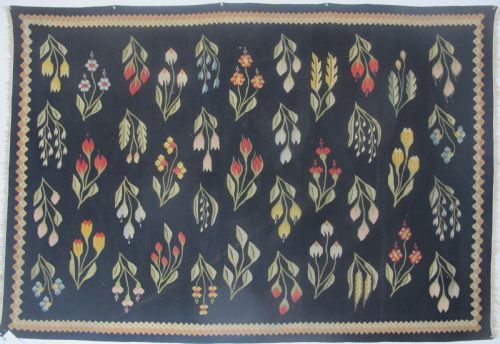
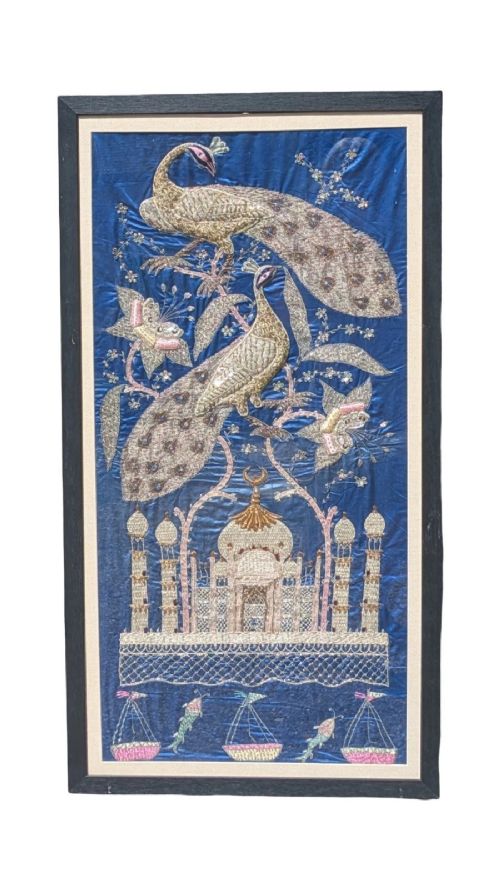
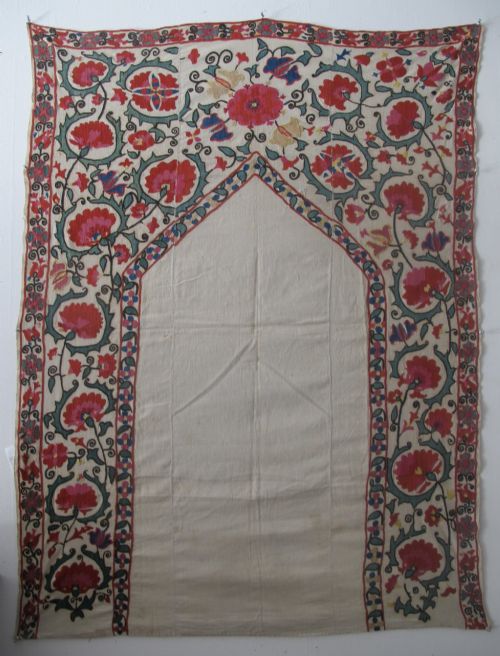
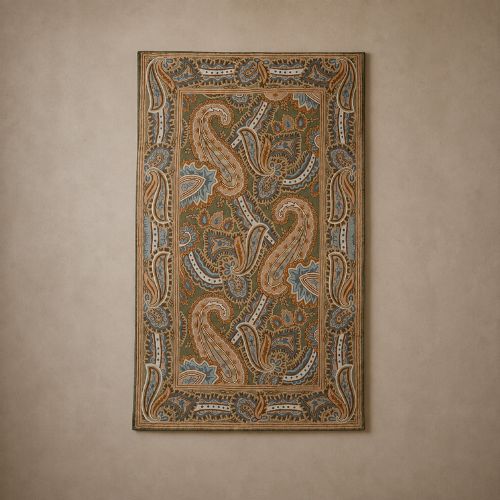
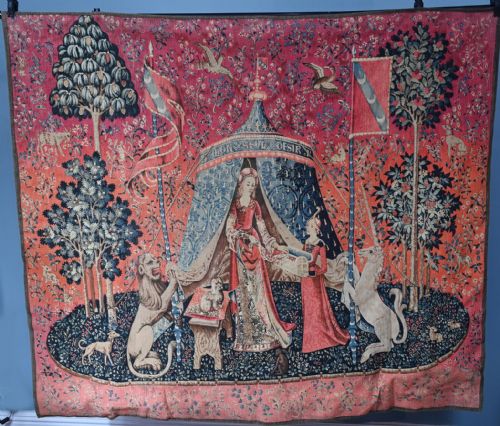
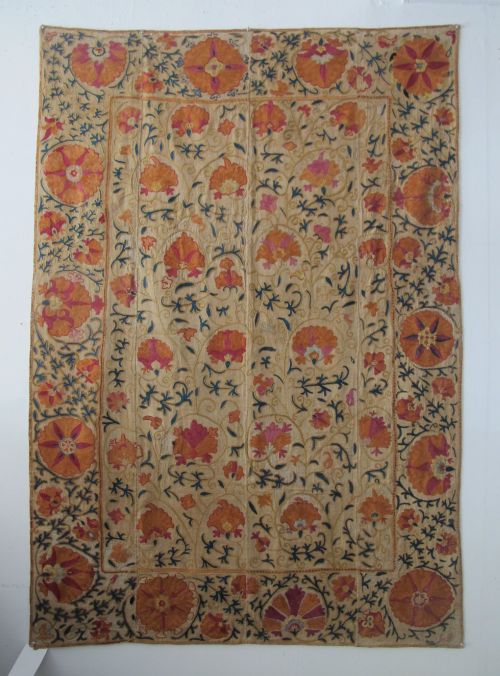
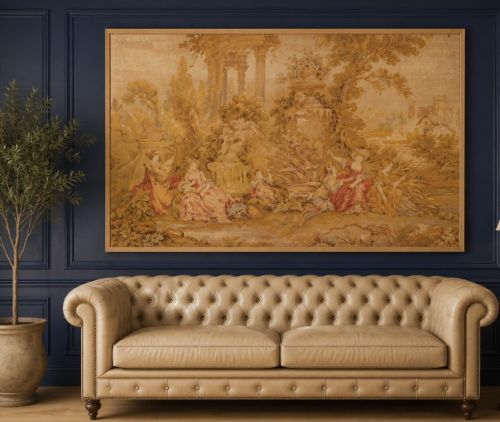
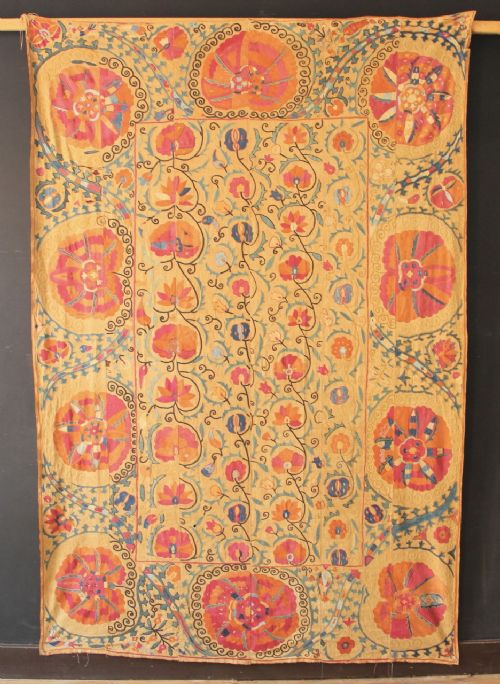
A search for traditional wall tapestry leads to textiles, wall hangings and panel art originating from distinct regional traditions. The selections on this page include Central Asian Suzanis, Caucasian tribal rugs, French woven panels and Indian embroideries.
Buyers encounter European floral and figurative wall coverings alongside Uzbek silk needlework and Scandinavian folk art pieces. These items span from the nineteenth century into the early twentieth century.
Many listings present specific regional forms such as Bokhara Suzanis, Persian Rasht embroidery and Turkish Cicim panels adapted for display on walls.
How they were made
Construction relies on natural materials including cotton, silk, wool and linen grounds embellished with metallic threads, felt applique and detailed needlework. Artisans stitch silk or wool yarns directly onto base fabrics to build complex floral and geometric motifs.
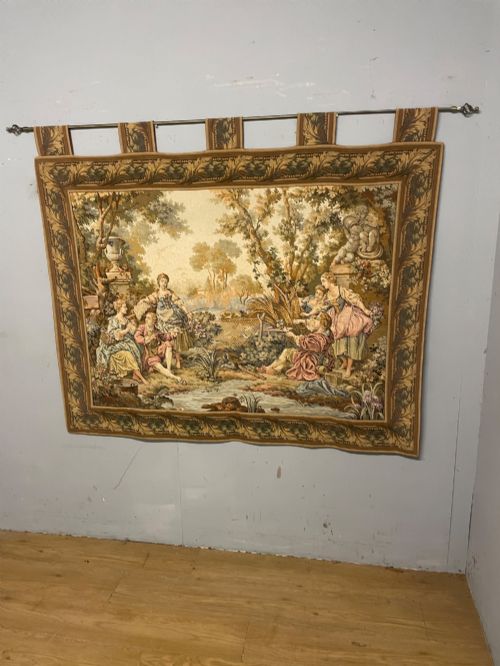
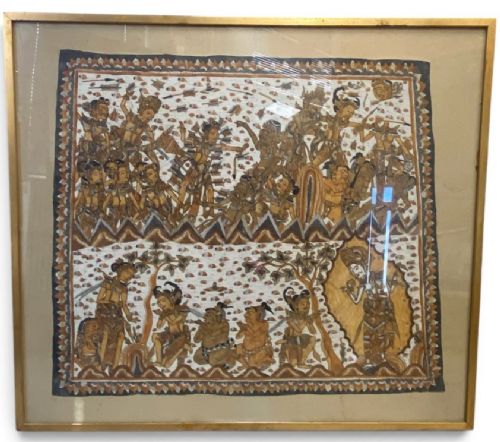
Techniques range from traditional loom weaving seen in French tapestries to intricate hand embroidery executed across Central Asian panels. Some examples incorporate painted textile methods on cotton and silk supports.
Materials span cotton, silk, wool, linen and felt, incorporating metallic thread and glass elements.
What varies in quality
Quality rests upon the density of the embroidery work and the complexity of the underlying design. Full-work panels display a higher saturation of stitchery across the ground fabric compared to simpler outline designs.
The fineness of the silk or wool yarns and the preservation of the original ground material determine the integrity of each textile. Pieces demonstrating meticulous execution and clear regional motifs stand apart within the range.
The Traditional Wall Tapestry Glossary
- Suzani
- An embroidered textile panel originating from Central Asia, typically featuring floral and medallion designs worked in silk on a cotton or linen ground.
- Crewelwork
- A type of embroidery executed using wool yarn on a sturdy fabric base, frequently deployed for heavy wall hangings and decorative carpets.
- Ikat
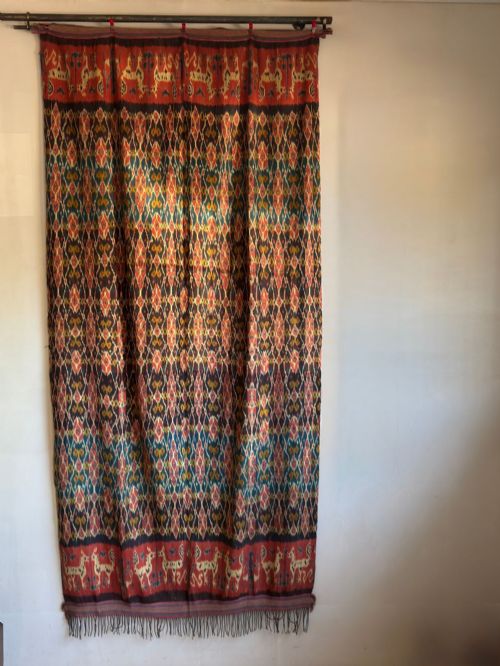
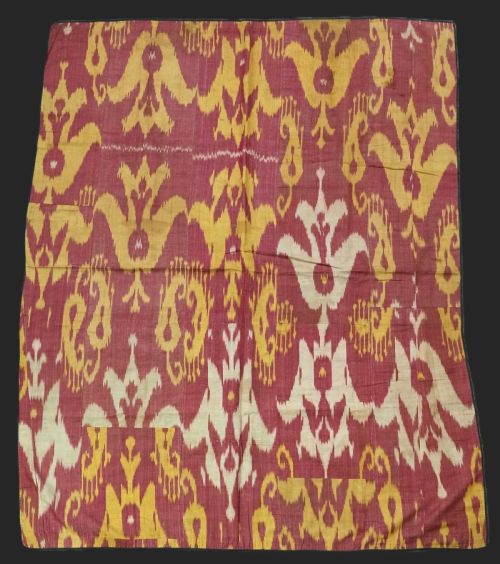
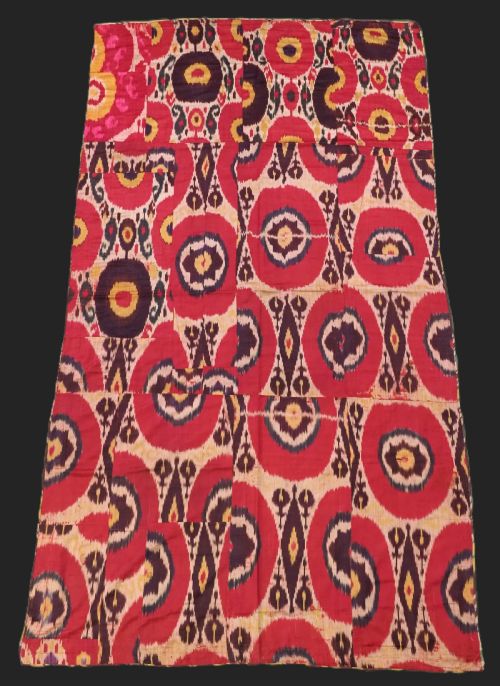
- A dyeing technique where yarns are pattern-dyed prior to weaving, producing characteristic feathered edges along the design motifs.
- Kilim
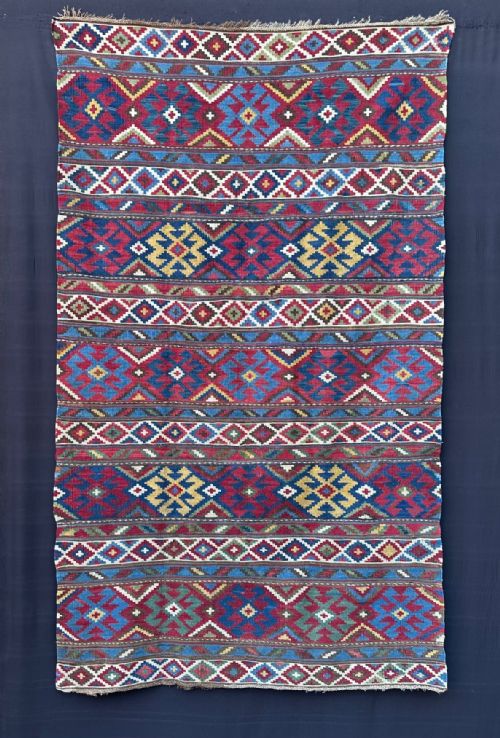
- A flatwoven carpet or rug lacking a pile, produced across regions including the Caucasus and Turkey for floor or wall use.
- Applique
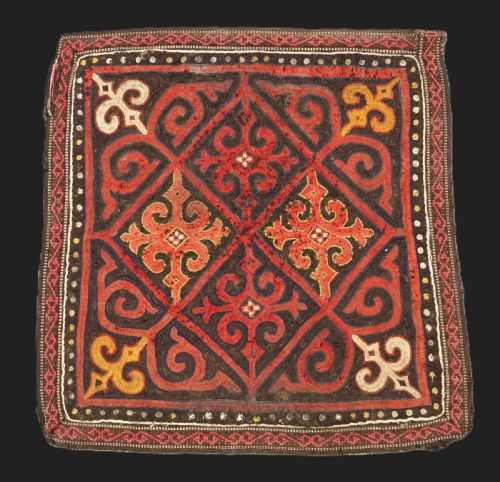
- A technique where pieces of fabric, such as felt or silk, are sewn onto a larger ground material to form decorative patterns.
Traditional Wall Tapestry: Frequently Asked Questions
How do I hang a textile safely?
Wall textiles require careful support to distribute weight evenly across the upper edge. Conservation methods often involve attaching a fabric sleeve to the reverse and sliding a padded batten through.
Direct hanging via nails or clips causes localized tension and tears the historic fibres. Professional framing with UV-protective glass suits smaller embroidered panels and delicate silk pieces.
What is a Suzani?
A Suzani is an embroidered wall hanging or bed cover made traditionally in Uzbekistan by brides as part of their dowry. These panels feature bold floral motifs, vines and medallions worked in bright silk threads.
Craftsmen and women stitched them in sections on narrow looms before joining the strips together. Collectors prize them for their vibrant colours and individual design variations.
How do I clean an antique textile?
Antique textiles require minimal intervention and professional conservation rather than domestic washing. Gentle surface dust removal using low suction through a mesh screen prevents fibre loss.
Water immersion causes dyes to bleed and weakens brittle historical threads, particularly in pieces containing metallic elements or felt applique. Specialist textile cleaners handle deep remediation when strictly necessary.
Are these pieces meant for walls?
Many items listed as wall hangings began life as functional domestic objects including bed covers, dowry panels, floor rugs or storage bags. Historic cultures frequently repurposed textiles for display on interior walls for insulation and decoration.
Sellers adapt items like tribal torba faces and grain bags into modern wall art. Their historical function dictates their construction method and shape rather than a pure decorative design intent.