






Traditional Uzbek Panel
These traditional uzbek panel examples bring vibrant Central Asian textiles into modern interiors, offering historic hand embroidery and warp-resist dyed patterns.
Traditional Uzbek Panel
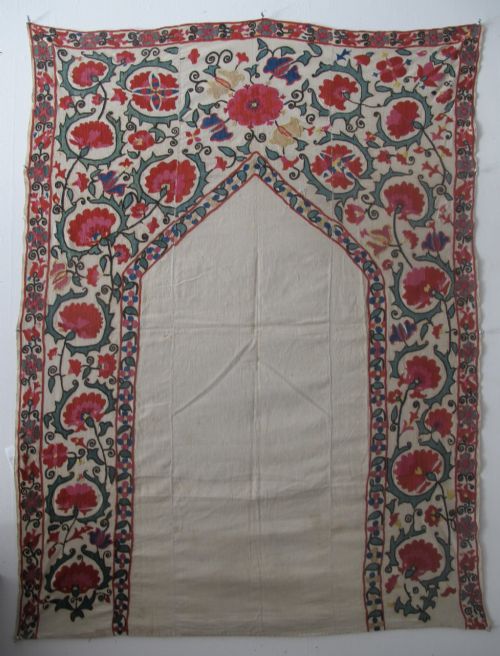
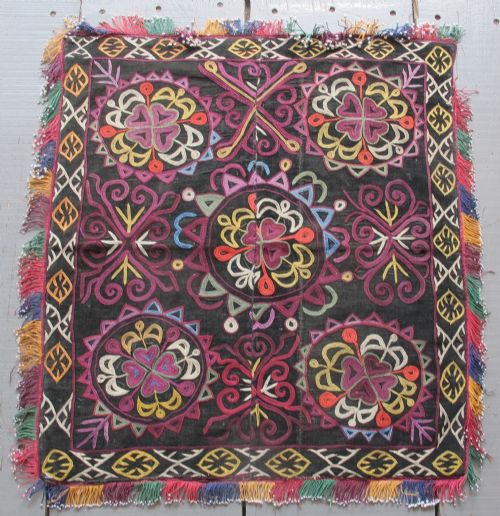
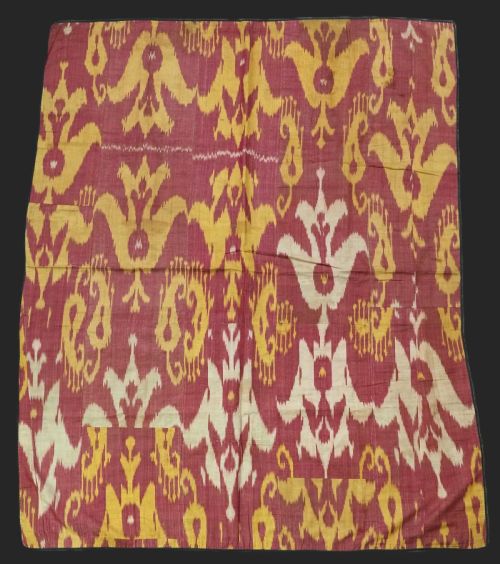
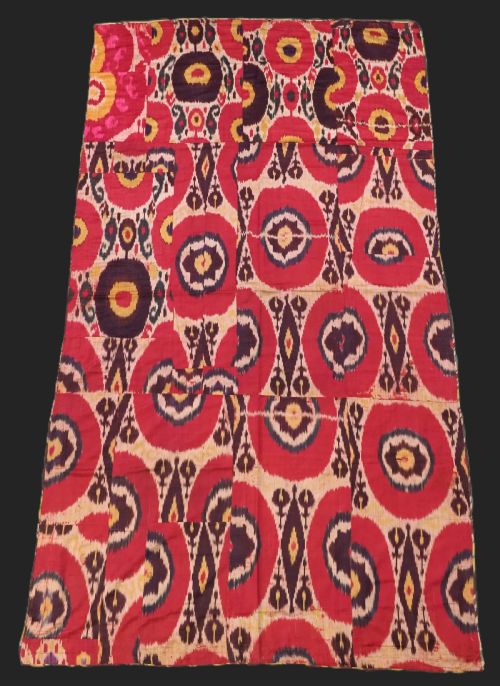
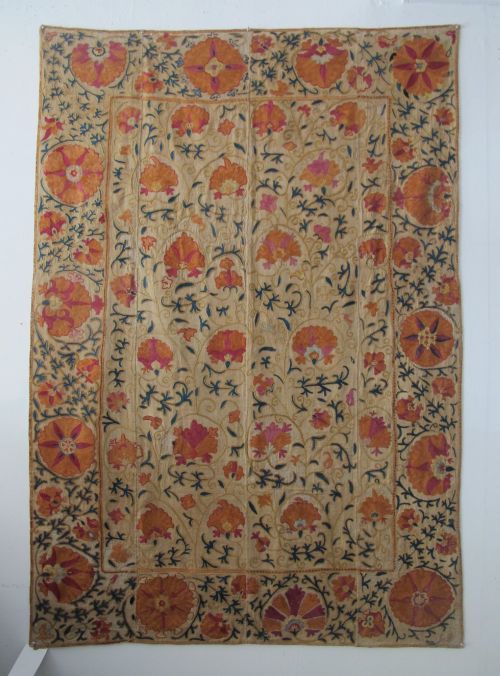
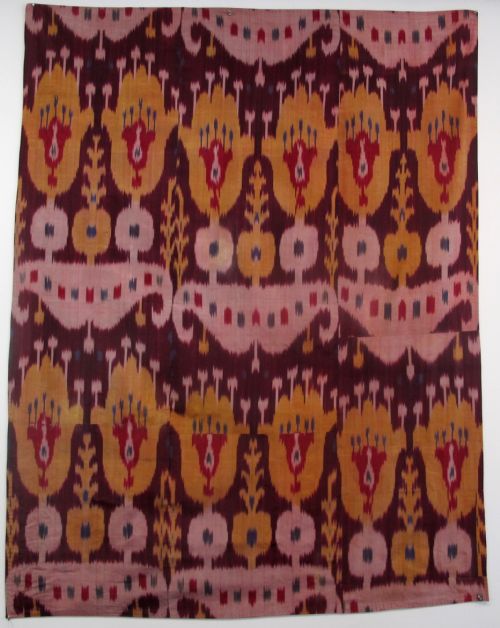
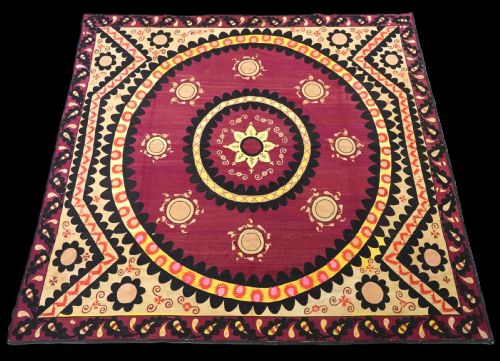
Traditional uzbek panel items encompass embroidered suzanis, ikat fabrics, and wall hangings originating from Central Asia, with dating spanning the mid nineteenth century into the early twentieth century. Pieces on this page frequently appear as Suzani embroideries, ikat panels, mirror covers, and small torba ilgich bag ornaments.
Makers across regions such as Bukhara, Shakrisabz, Tashkent, and Uratube produced these textiles using local cotton, wool, and silk materials. Formats range from large square wall hangings and prayer formats down to smaller nim suzani textiles.
The aesthetic bridges Central Asian folk art, tribal traditions, and urban workshop designs, often incorporating architectural motifs, palak patterns, and dense floral ornamentation on coloured grounds.
Quality differences
Visual impact relies upon the density of the embroidery and the complexity of the design layout, such as fully covered palak compositions or architectural motifs. Finer pieces demonstrate precise needlework execution and balanced colour palettes across the ground fabric.
Material choice separates standard examples from finer works, particularly where pure silk threads meet substantial adras or cotton foundations. The scale of the textile also alters the character of the piece, from small mirror covers to large wall hangings.
Traditional Uzbek Panel Retail Price Guide 2026
Typical asking prices for traditional uzbek panel among the pieces listed under this phrase on Sellingantiques today, from the lower quarter to the upper quarter. They describe what is for sale here now, not the wider market.
Certain small embroidered pieces known as torba ilgich were made by Lakai groups to hang utilitarian bags inside nomadic tents.
The Traditional Uzbek Panel Glossary
- Suzani
- An embroidered tribal textile from Central Asia. These wall hangings typically display floral motifs stitched with silk thread on a cotton or adras ground.
- Ikat
- A dyeing and weaving technique where threads receive pattern resistance before weaving. This creates characteristic feathered edges along the colour boundaries of the fabric.
- Adras
- A traditional Central Asian fabric woven with a silk warp and a cotton weft. It combines the lustre of silk with the stability of cotton.
- Palak
- A fully embroidered suzani variant. These large panels cover the entire ground fabric in dense needlework.
- Nim suzani
- A half-size or smaller suzani textile. These pieces were traditionally utilised for smaller wall spaces or specific domestic functions.
Traditional Uzbek Panel: Frequently Asked Questions
What is a suzani?
A suzani is a traditional embroidered textile from Central Asia, handmade by women as part of dowry items and household furnishings.
These pieces use silk thread on cotton or adras grounds, featuring regional floral and geometric designs.
How were traditional Uzbek panels used?
Historic households utilised these textiles primarily as wall hangings, decorative covers, and wrapping cloths for domestic items.
Certain formats served specific purposes, such as prayer suzanis or small mirror covers.
How do I hang a textile panel?
Collectors generally mount these textiles using a fabric sleeve sewn to the reverse, supporting a slim wooden batten or metal rod.
This method distributes the weight evenly across the upper edge without piercing the historic fabric.
How do regional styles differ?
Towns such as Bukhara, Tashkent, and Shakrisabz developed distinct palettes, compositions, and stitch densities.
Bukhara pieces often feature architectural or open floral layouts, while Tashkent palaks display dense, fully embroidered surfaces.