
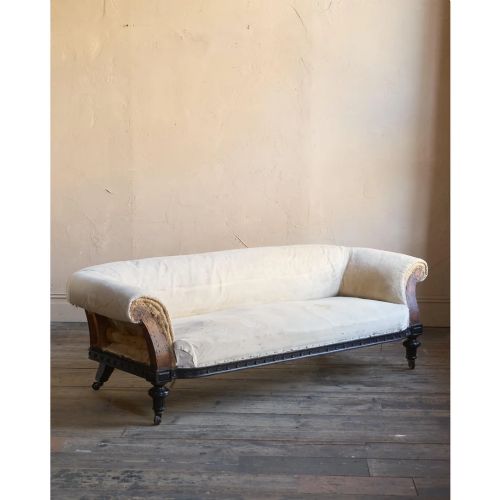
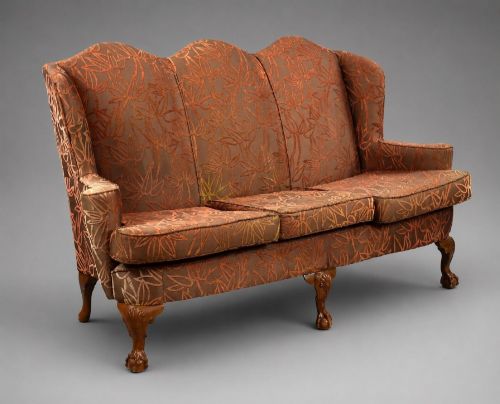
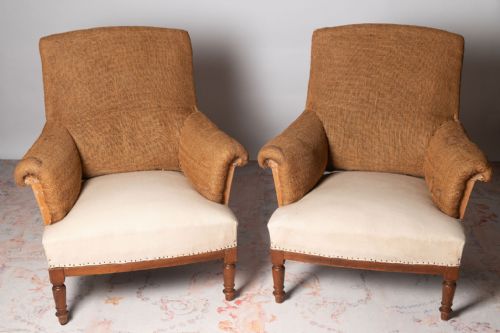
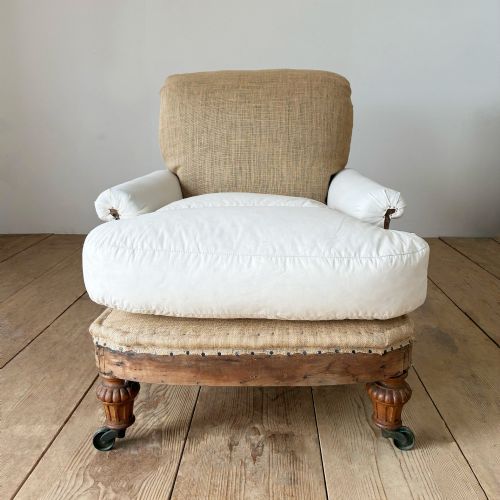



Traditional Upholstery Frame
A traditional upholstery frame is the bare wooden skeleton of a seat waiting for webbing, springs, and fabric to bring it back to life.
Traditional Upholstery Frame
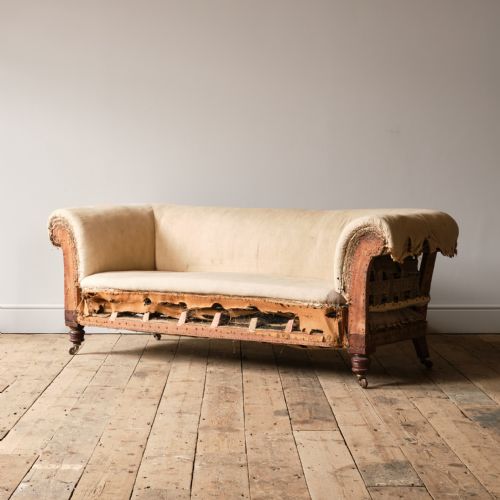
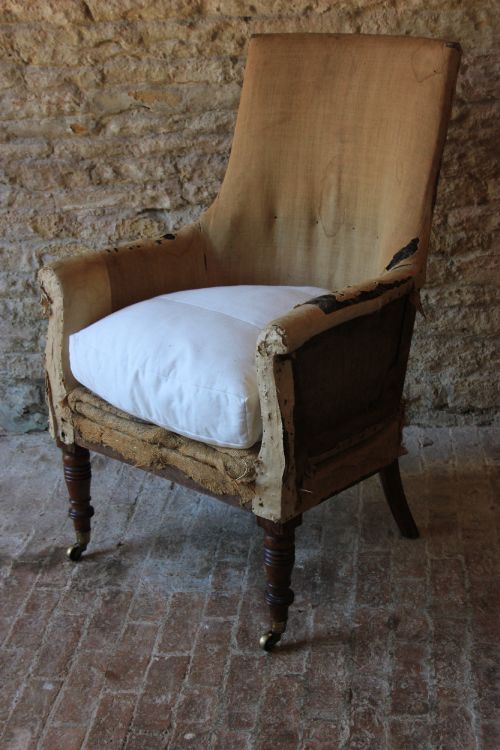
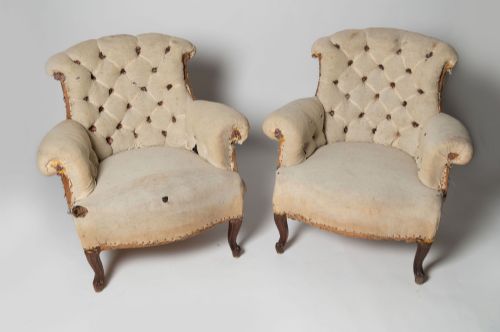
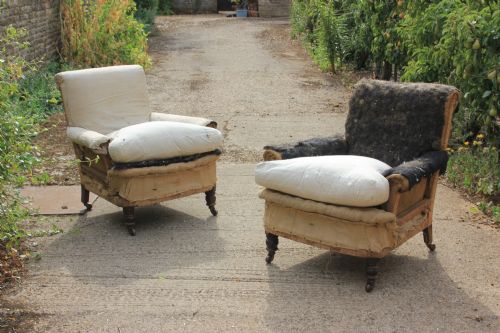
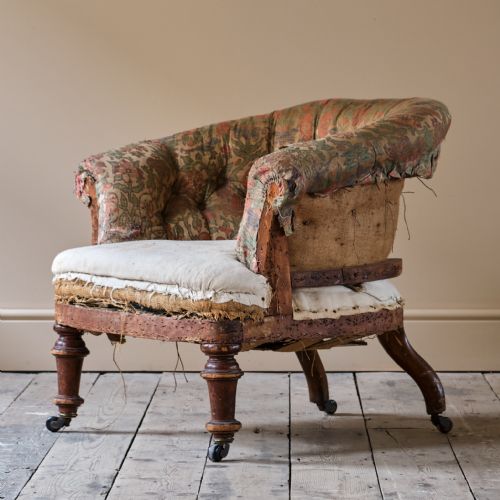
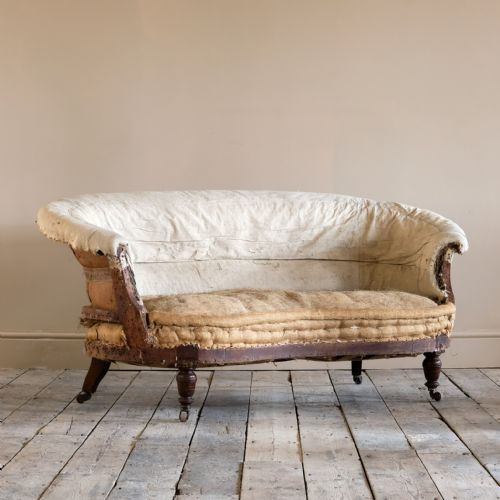
When you search for a traditional upholstery frame, you find skeletal furniture from the nineteenth and early twentieth centuries that requires new webbing and cloth. These pieces range from deep-seated armchairs and Chesterfield sofas to wingbacks, library chairs, and long benches.
These items exist as stripped structures or pieces awaiting restoration, offering a clear view of the underlying joinery before the final layers of calico and top fabric are applied.
Materials and construction
Makers built these frames using hardwoods such as mahogany, walnut, and beech to provide a sturdy structural skeleton that could withstand the tension of heavy internal webbing and springs. Exposed show-wood sections often feature polished mahogany or simulated rosewood.
Internal support relied on robust wooden joinery designed to hold heavy upholstery stuffing. Surviving examples sometimes retain traces of original hessian, calico, or cotton linings, alongside brass hardware and castors.
Listings feature frames spanning from the early nineteenth century through to the 1930s, constructed in mahogany, walnut, and beech.
Assessing build quality
Quality rests entirely in the integrity of the timber frame and the complexity of its joinery. A superior frame employs dense hardwoods and precise joints that remain rigid without relying on the upholstery for stability.
The sophistication of the silhouette defines the better pieces, from the fluid curves of a Regency sofa to the refined proportions of a maker-stamped armchair. Simpler country house frames contrast with elaborately carved or gilded French frames.
Gillows·Howard And Sons·Hampton And Sons
The Traditional Upholstery Frame Glossary
- Hessian
- A coarse woven fabric typically made from jute fibres. It acts as a traditional foundation layer stretched across the wooden frame to support stuffing.
- Calico
- A plain-woven cotton cloth used as an inner lining over the stuffing to contain the materials before the final decorative fabric is fitted.
- Webbing
- Strong woven bands stretched tightly across the seat and back rails. These bands form the baseline suspension grid that carries the weight of the springs.
- Show-wood
- The polished or carved parts of the wooden frame left visible outside the upholstered areas. Mahogany and walnut are common show-wood materials.
- Wingback
- An armchair featuring protective side panels attached to the arms and back. This design originally shielded the sitter from draughts in older houses.
Traditional Upholstery Frame: Frequently Asked Questions
What is a traditional upholstery frame?
It is the bare wooden structure of an antique seat, stripped of its fabric and stuffing.
Buyers acquire these frames to restore them completely using traditional methods and materials.
How do I choose the right frame?
Examine the timber quality, the rigidity of the joints, and the overall proportions.
Consider whether you want a formal Regency sofa, a deep Victorian armchair, or an Edwardian wingback.
Are these frames ready to use?
Most require full restoration, including new webbing, springs, stuffing, and top fabric.
Some listings note that the piece is sold as a bare frame or specifically for re-upholstery.
What woods were used in these frames?
Common structural timbers include beech and mahogany, with walnut appearing on specific styles.
Exposed wooden elements are often polished to highlight the grain.