

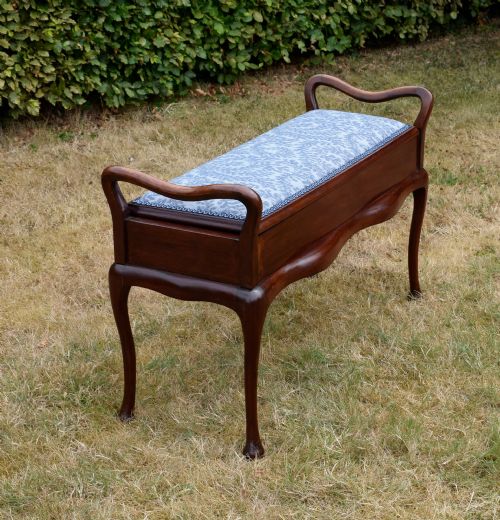


Traditional Upholstered Piano Bench
A traditional upholstered piano bench provides the right seat at the keyboard, combining sturdy timber frames with comfortable padded tops.
Traditional Upholstered Piano Bench
A traditional upholstered piano bench offers a practical seat for musicians, often featuring long oblong forms designed for solo players or duet performers. When searching for a traditional upholstered piano bench, buyers encounter various historical examples spanning the nineteenth and early twentieth centuries.
Makers constructed these seats in multiple stylistic revivals, drawing on Georgian, Queen Anne, Chippendale, and Jacobean designs. Common variations include single piano stools, duet benches, and long dressing stools equipped with lift-up seats or hinged storage compartments.
How they were made
Craftsmen built the structural frames using solid hardwoods such as mahogany, walnut, oak, and ebonised wood, sometimes incorporating decorative inlay or ball and claw foot details. These wooden bases provide the necessary stability for daily use at the instrument.
The upper sections utilise traditional padding covered in various textiles, including modern upholstery fabric, velvet, and deep buttoned treatments. Many Victorian and Edwardian examples incorporate brass hardware such as castors on the feet and hinges for seat compartments.
Traditional Upholstered Piano Bench Retail Price Guide 2026
Typical asking prices for traditional upholstered piano bench among the pieces listed under this phrase on Sellingantiques today, from the lower quarter to the upper quarter. They describe what is for sale here now, not the wider market.
Several Edwardian benches come equipped with lift-up seats, offering a discreet hiding place for decades of forgotten piano scales.
What varies in quality
The distinction between standard and superior pieces rests on the choice of timber and the refinement of the carved details on the legs and frame. Finer examples display meticulous cabinet-making, robust joinery, and faithful adherence to historical revival styles.
Upholstery execution and the preservation of original mechanical elements, such as lift-up seat mechanisms and brass castors, also influence the overall character of each bench. Pieces retaining harmonious proportions between the wooden base and the padded top represent the better tier of production.
The Traditional Upholstered Piano Bench Glossary
- Duet stool
- A wider piano bench designed to accommodate two players side by side. These longer seats frequently feature hinged lids providing internal storage for sheet music.
- Ebonised wood
- Timber treated with a special finish to resemble costly ebony. This dark, glossy surface appears frequently on Victorian seating.
- Deep buttoned
- An upholstery technique where twine is pulled tight through the padding and secured with buttons to create a diamond pattern. This method adds firmness and visual texture to the seat.
Traditional Upholstered Piano Bench: Frequently Asked Questions
What is a duet piano stool?
A duet piano stool is an extended bench built to seat two musicians simultaneously during practice or performance.
These wider variants often include hinged lift-up seats to store collections of sheet music beneath the cushion.
How do I identify Victorian piano benches?
Victorian piano benches typically display darker timbers like ebonised wood or mahogany, alongside heavier proportions and deep buttoned upholstery.
Many examples from this era also incorporate brass castors on the feet for ease of movement.
Are piano benches suitable for dressing tables?
Many long upholstered stools originally intended for music rooms function well as dressing table seating.
Their oblong proportions and padded tops provide comfortable height and surface area for bedroom use.
What wood types were used?
Cabinet-makers utilised solid hardwoods including mahogany, walnut, and oak for the primary frame construction.
Ebonised finishes also appear on nineteenth-century examples to create a formal dark appearance.