
Traditional Upholstered Easy Chair
A traditional upholstered easy chair brings generous proportions and deep seating into a room, offering a seat built for long hours of reading or conversation.
Traditional Upholstered Easy Chair
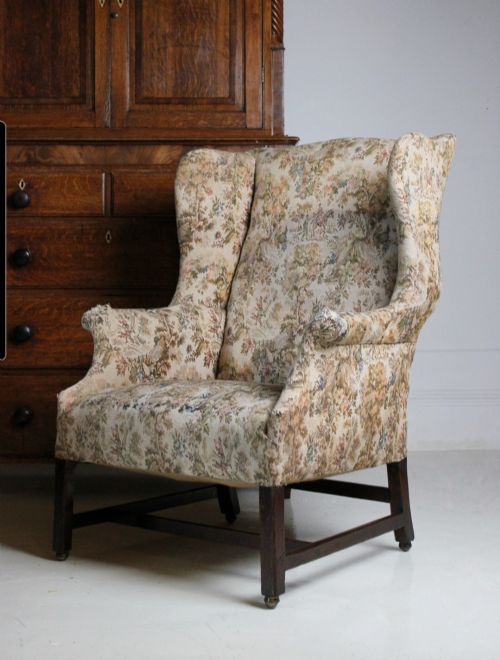
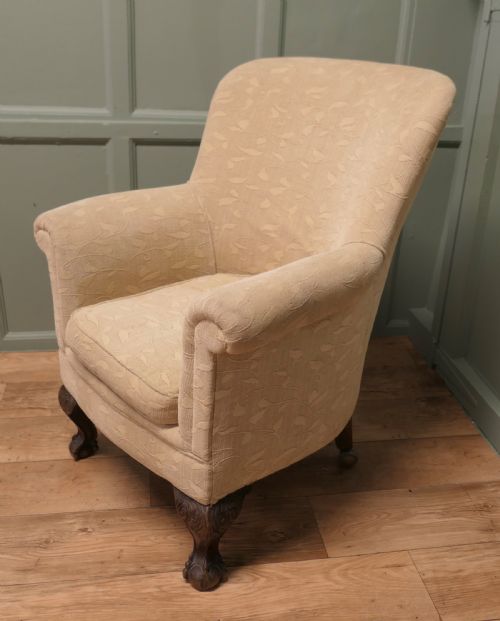
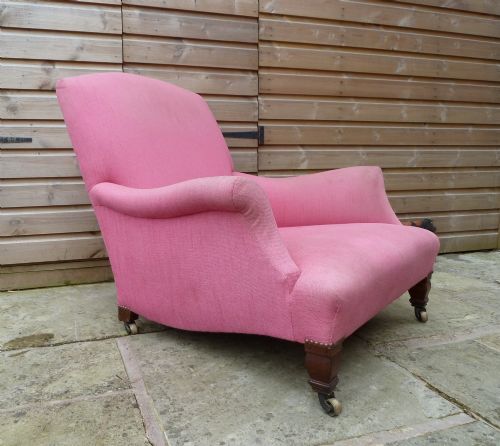
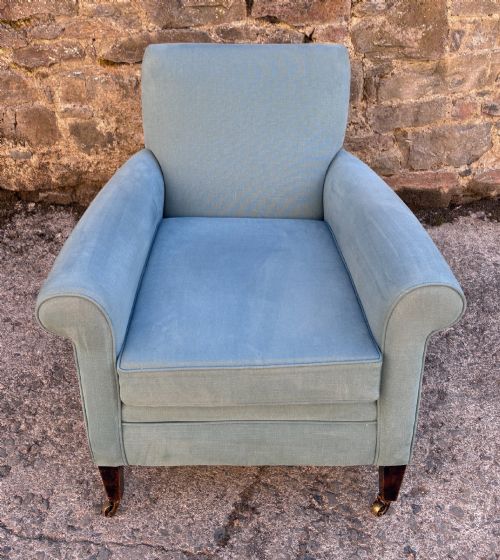
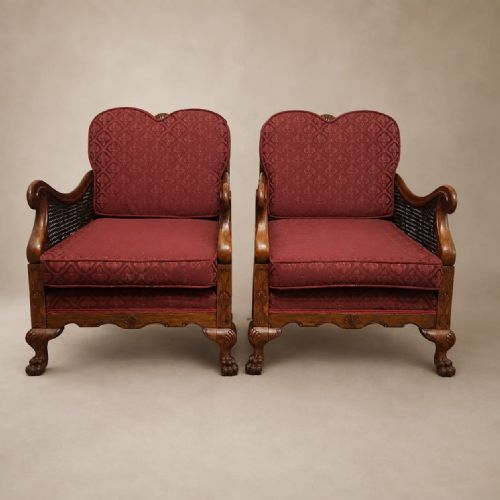
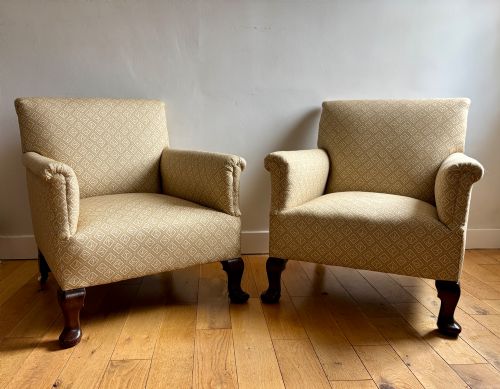
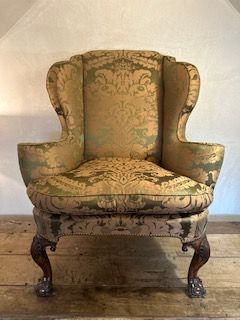
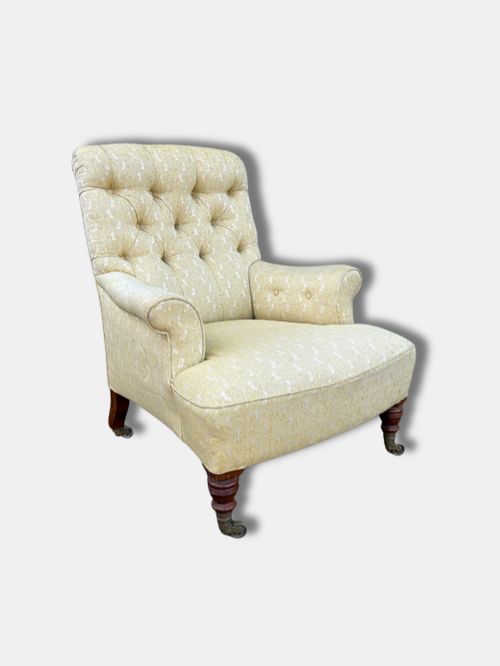
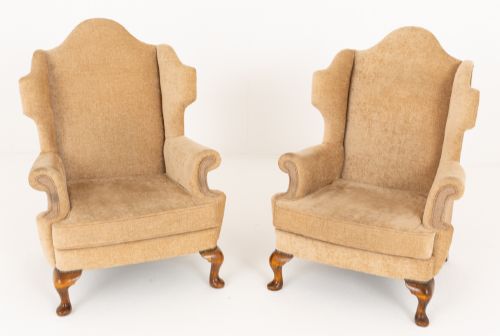
A traditional upholstered easy chair encompasses nineteenth-century country house seats, Victorian button-back designs, and eighteenth-century wing armchairs. Buyers searching for a traditional upholstered easy chair often encounter nineteenth-century examples alongside Edwardian deep-seated models and twentieth-century revival pieces.
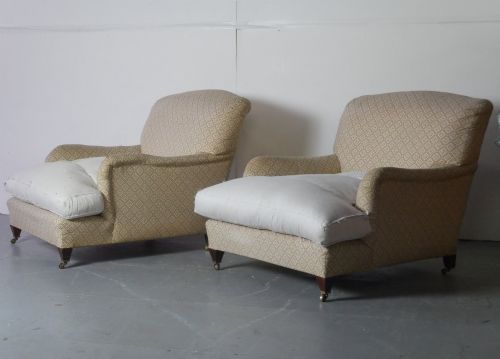
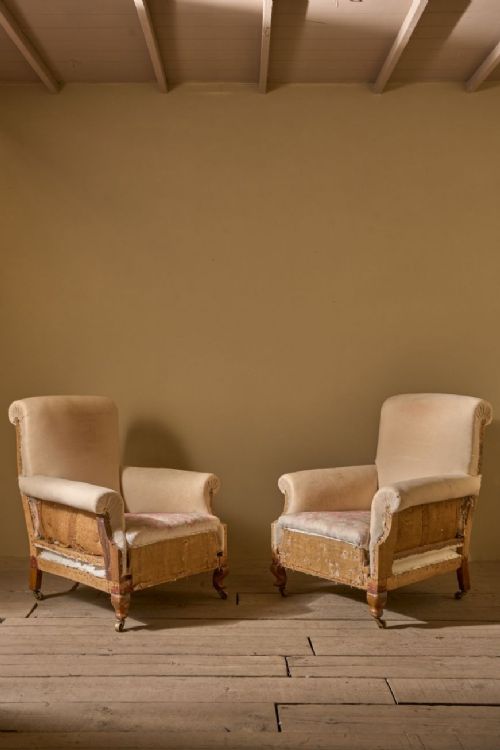
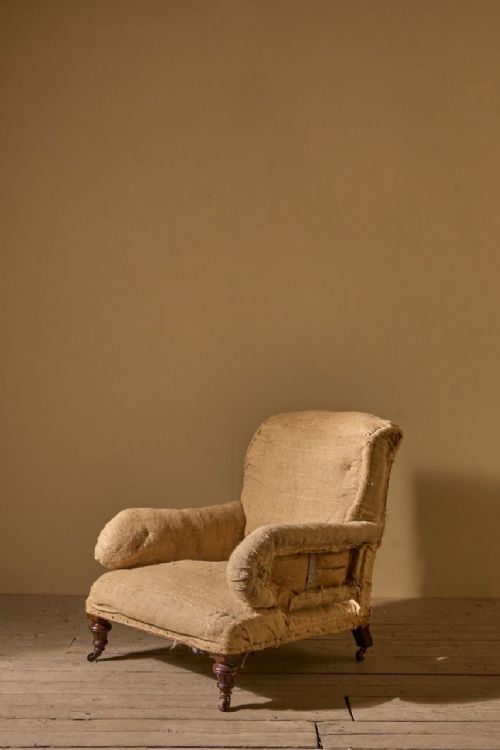
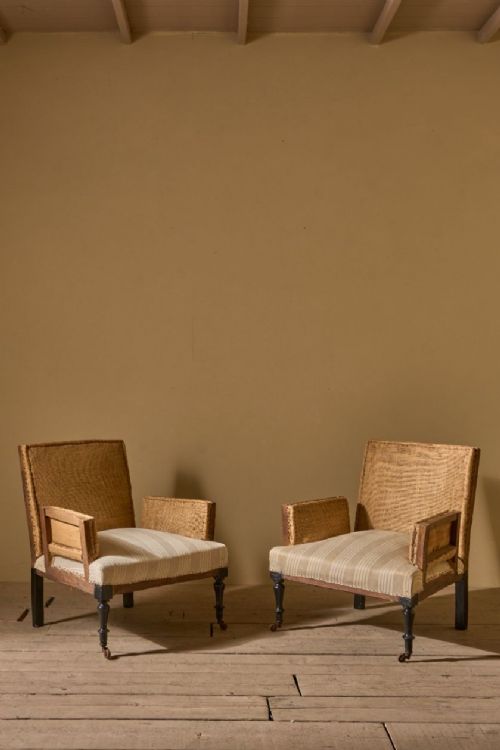
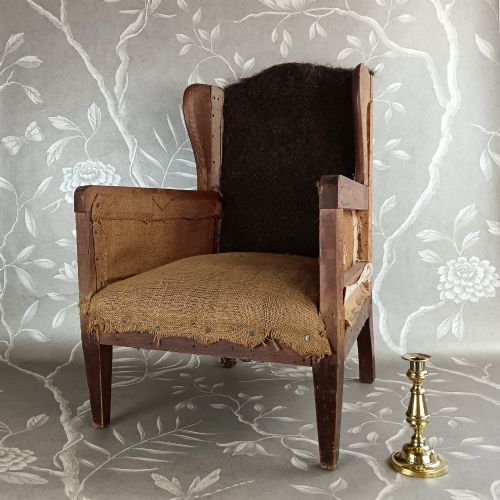
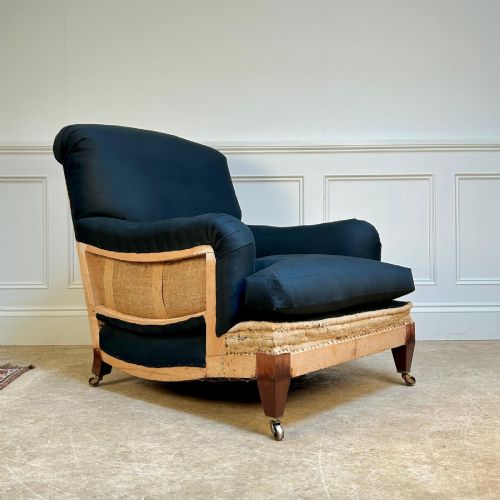
The form spans various distinct seating types, including wingbacks, slipper chairs, and low, deep armchairs designed for relaxation. Many pieces arrive ready for final covering or retain historical upholstery in calico, hessian, and velvet.
Origins stretch from English country houses to French workshops, utilising robust timber frames beneath the padding. The selection on this page demonstrates how makers adapted traditional forms across the Georgian, Victorian, and Edwardian eras.
How they were made
Construction relies upon solid timber frames fashioned from mahogany, walnut, oak, and other hardwoods to support the substantial internal stuffing. These structural skeletons provide the rigidity required for deep-sprung seating and heavy fabric coverings.
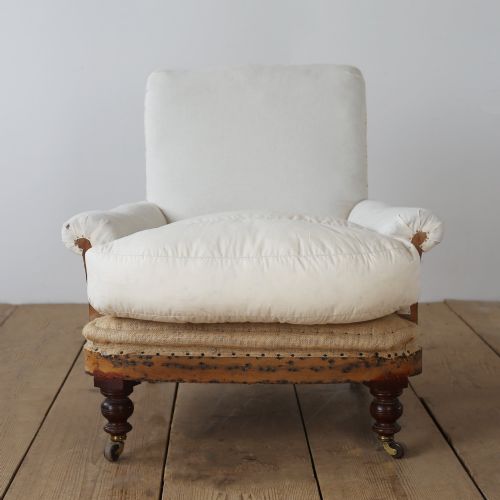
Traditional upholstery techniques incorporate hessian webbing, internal stuffing, and inner linings of calico before the final textile layer is applied. Brass tacks frequently secure the edges of the fabric and leather work to the wooden framework.
Coverings recorded across the inventory include velvet, calico, hessian, and fabric.
What varies in quality
The standard of a traditional upholstered easy chair depends upon the integrity of the underlying timber frame and the skill of its joinery. Master makers ensure the structural proportions remain balanced, whether shaping a wing chair or a low armchair.
Distinction also lies in the historical provenance of the piece, particularly when workshops such as Howard and Sons or Gillows stamped their frames. The fidelity of revival styles to their Georgian or French prototypes further separates standard production from exceptional examples.
Howard and Sons·Whytock and Reid·SF Cullen·Shoolbred·Gillows·Hampton and Sons
The Traditional Upholstered Easy Chair Glossary
- Calico
- A plain-woven cotton fabric used as an interior lining beneath the final decorative upholstery of traditional chairs.
- Hessian
- A coarse woven fabric, often utilised for internal webbing and foundation support in antique seating.
- Bergere
- An enclosed upholstered armchair with wooden framing and cane or upholstered sides common in period seating.
- Wingback
- An armchair featuring protective side panels designed to shield the occupant from draughts near a fireplace.
Traditional Upholstered Easy Chair: Frequently Asked Questions
What is a traditional upholstered easy chair?
A traditional upholstered easy chair is a comfortable, padded seat originating primarily from the eighteenth, nineteenth, and early twentieth centuries. These pieces encompass wingbacks, deep-seated country house chairs, and parlor seats.
They rely on sturdy wooden frames of mahogany, walnut, or oak, hidden beneath layers of hessian, stuffing, and fabric. Many examples survive from the Victorian and Edwardian periods with classic English or French styling.
How do I identify the period?
Dating these armchairs involves examining the timber species, leg styling, and overall proportions of the wooden frame. Georgian pieces often display distinct mahogany or walnut cabriole or straight legs, while Victorian examples lean towards heavier frames and deep buttoning.
Makers' stamps, where present on the castors or frame, provide precise attribution to workshops active in the nineteenth century. Stylistic revivals from the early twentieth century often emulate these earlier eighteenth and nineteenth-century forms.
Are these chairs comfortable for daily use?
These armchairs were originally built for relaxed sitting in drawing rooms, libraries, and country house sitting rooms. Their deep seats and upholstered backs offer substantial physical support for reading or resting.
Many listings note the presence of sprung interiors or deep cushioning designed precisely for prolonged seating. Buyers frequently place them in living spaces as primary reading chairs.
Why are some chairs sold in calico?
Upholstering a chair in plain calico prepares the piece for its final decorative fabric covering. This foundational layer holds the internal stuffing and springs firmly in place on the frame.
Selling a chair in calico allows the next owner to select a top textile that matches their specific interior design scheme. It represents an intermediate stage of traditional upholstery preparation.