

Calico Easy Chair
A calico easy chair is a foundational seating piece stripped back for custom upholstery, offering deep comfort and traditional proportions.
Calico Easy Chair
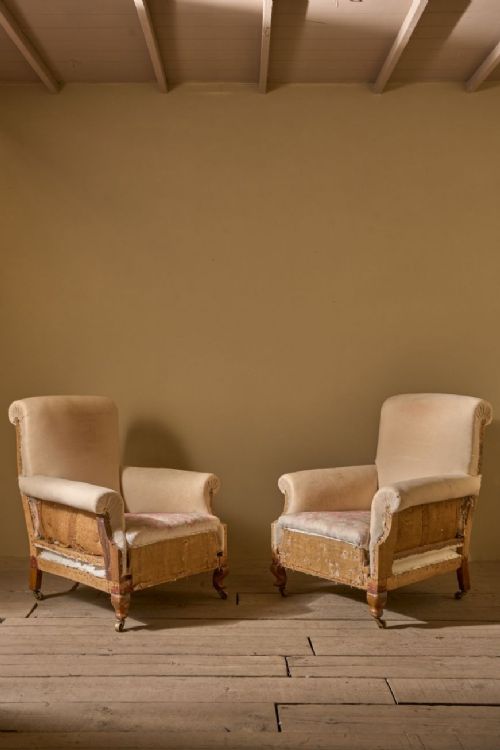
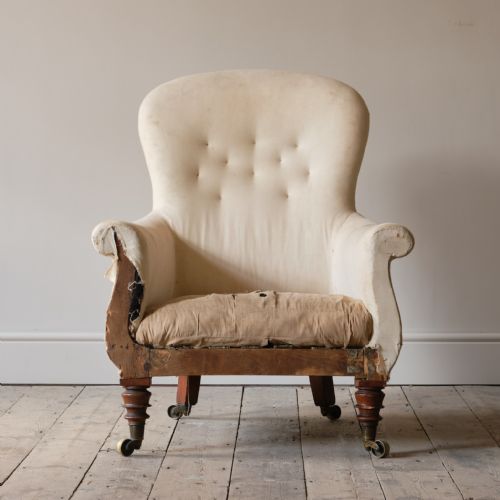
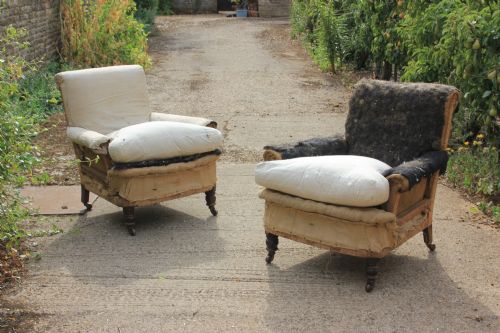
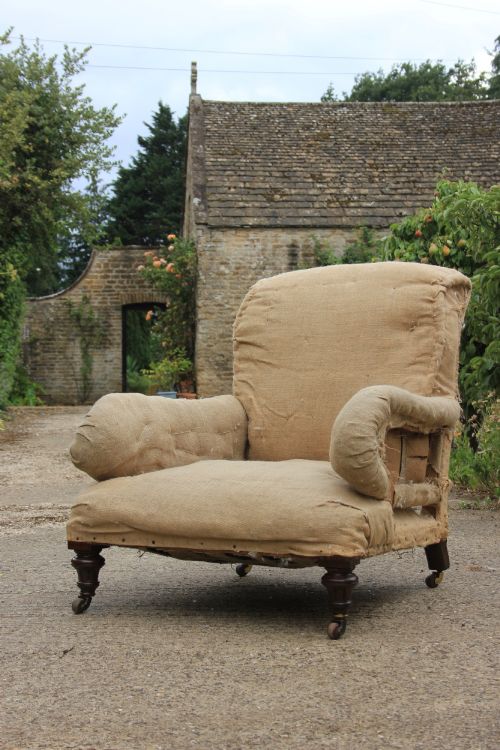
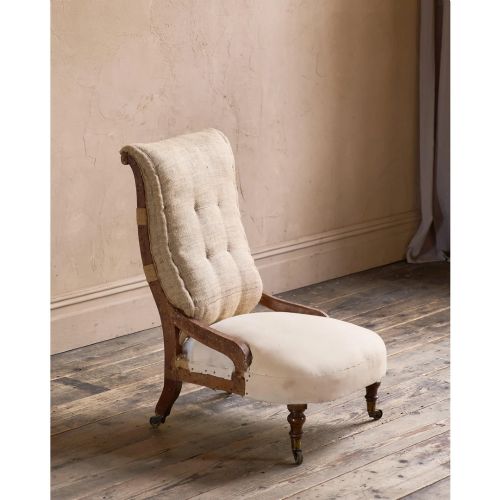
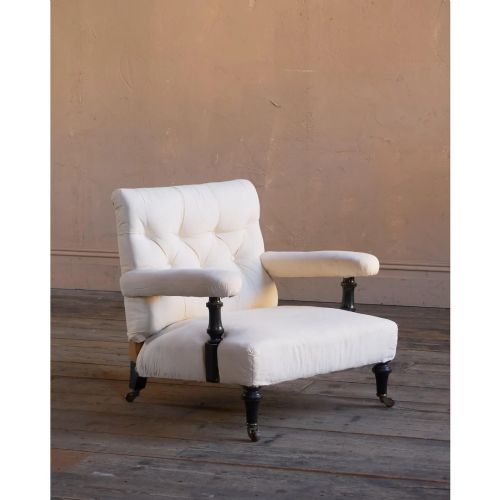
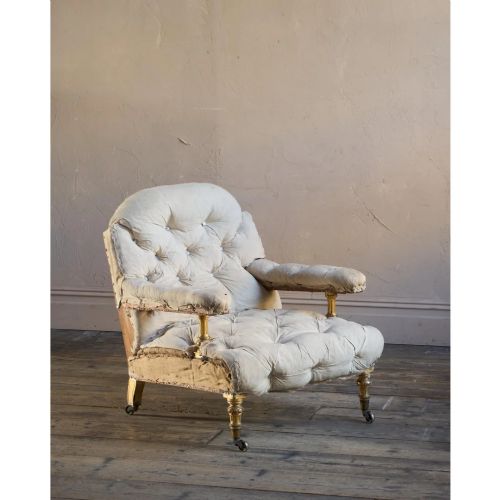
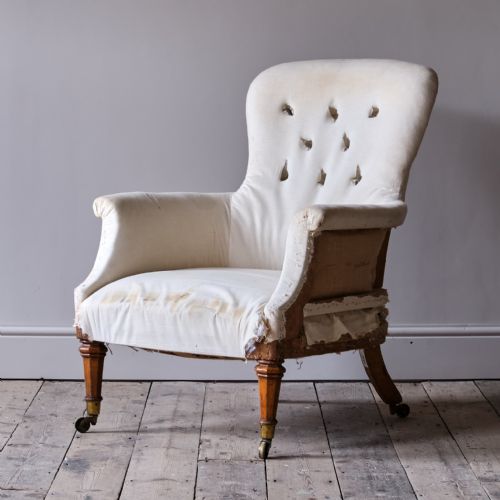
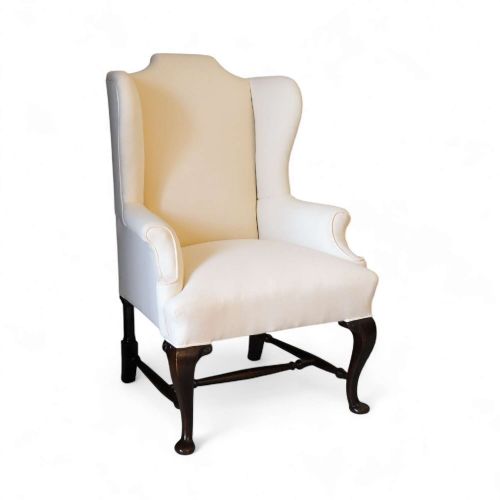
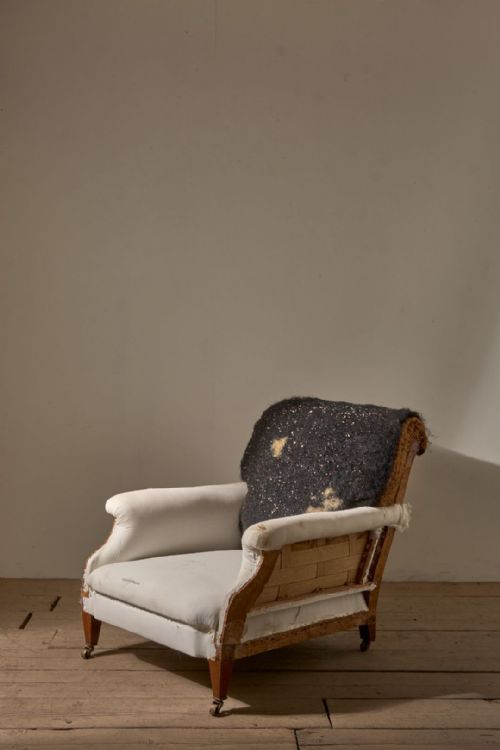
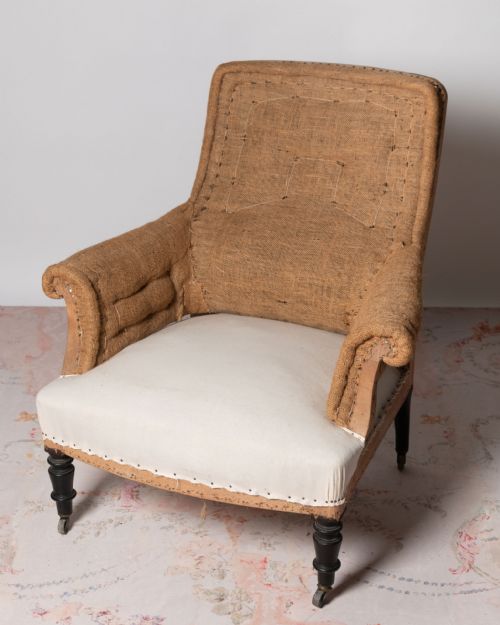
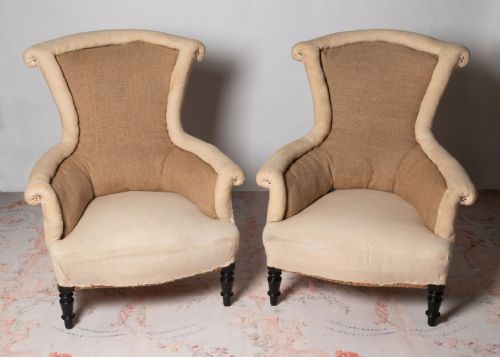
A calico easy chair is typically found in deep-seated armchairs and wingback forms from the eighteenth, nineteenth, and early twentieth centuries. These pieces arrive ready for final covering, having been built on robust frames of walnut, mahogany, or beech.
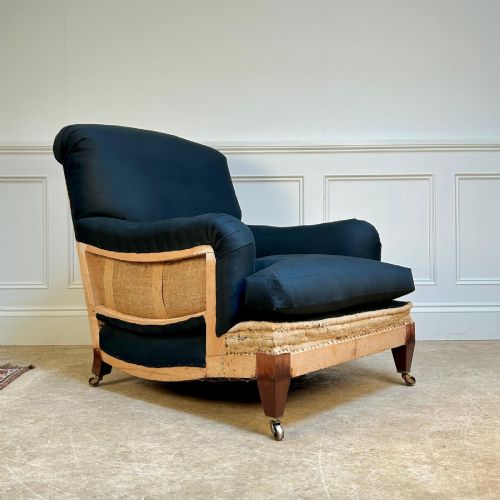
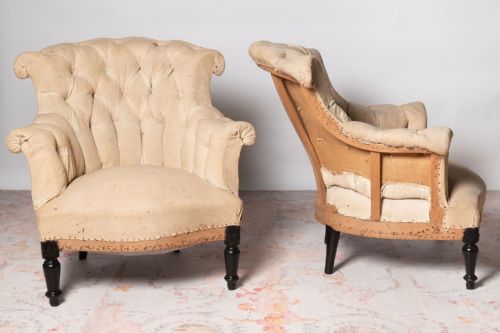
The selection ranges from English country house scroll backs and Howard styles to French Napoleon III frames and Georgian Chippendale style wingbacks. Many pieces originate from notable workshops, presenting deep proportions and generous padding beneath their unadorned cotton covers.
How they were made
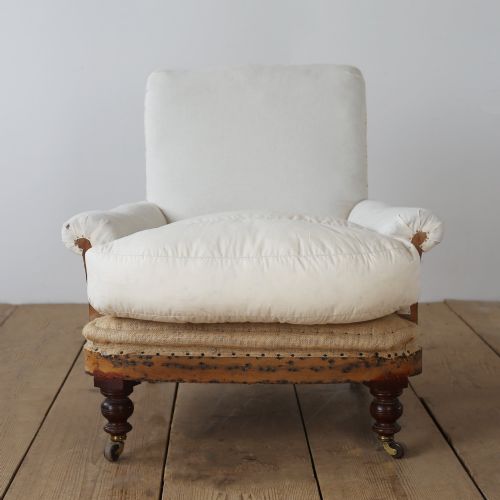
Makers constructed these frames using sturdy hardwoods such as mahogany, walnut, beech, and general timber, ensuring structural longevity beneath the upholstery. Traditional webbing and hessian provide the internal support network for the sprung seats and backs.
Calico fabric serves as the tight inner lining stretched directly over the stuffing before any decorative textile is applied. Brass tacks often secure the edges of the calico and underlying hessian to the wooden framework.
The inventory spans English country house styles, French Napoleon III frames, and Georgian Chippendale wingback forms.
What varies in quality
The distinction between ordinary and exceptional frames lies in the original cabinetmaking and timber selection. Pieces originating from premier nineteenth-century workshops display superior carving, more balanced proportions, and heavier hardwood frames.
The integrity of the internal stuffing and springing architecture dictates the seating comfort. Chairs retaining their original robust webbing and deep pocket springing hold their shape far better than those with compromised internal foundations.
Howard and Sons·Gillows·Trollope and Sons·Hamptons and Sons·William Birch
The Calico Easy Chair Glossary
- Calico
- A plain-woven unbleached cotton textile used traditionally as the tight inner cover for upholstered seating. It holds the internal stuffing firmly in place before the final decorative fabric is fitted.
- Hessian
- A coarse woven fabric made from jute fibres used for internal webbing and stuffing containment. It forms the breathable foundation beneath the calico layer.
- Scroll back
- An armchair design featuring arms or a backrest that curve outward in a tight scroll shape. This profile is frequently seen in nineteenth-century English country house seating.
- Wingback
- An armchair style featuring protective side panels attached to the backrest to shield the sitter from draughts. Georgian and Victorian examples often arrive at the calico stage awaiting new fabric.
Calico Easy Chair: Frequently Asked Questions
Why buy a chair in calico?
A calico easy chair provides a clean slate for interior decoration, allowing the buyer to select their own top fabric.
Buying at this stage also reveals the underlying timber frame and structural condition without decorative textiles concealing the work.
How do I choose the right period?
Selecting a period depends on the interior scheme and the desired scale of the seating. Eighteenth-century wingchairs offer formal upright lines, while Victorian and Edwardian easy chairs prioritise deep lounging comfort.
Earlier frames generally showcase finer hardwood construction, whereas later nineteenth-century pieces lean toward generous proportions and sprung seats.
Where were these chairs used originally?
These seating pieces populated the drawing rooms, libraries, and bedrooms of English country houses and town residences. Deep-seated variants were designed for extended lounging.
French models served formal reception rooms, while sturdy club styles suited smoking rooms and studies.
How do I care for exposed wooden frames?
Exposed mahogany, walnut, and beech components require gentle cleaning with a soft cloth and occasional application of traditional beeswax. Direct sunlight and sudden temperature changes should be avoided to prevent timber splitting.
Keeping the calico clean protects the internal stuffing from dust accumulation until final upholstery takes place.