
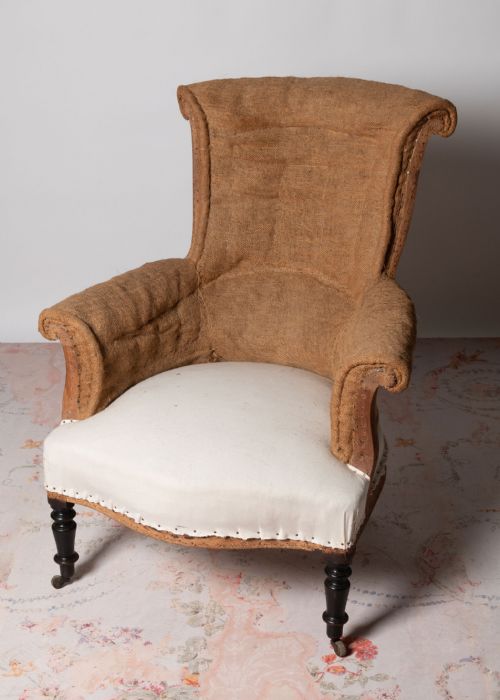


French Upholstery Project Chair
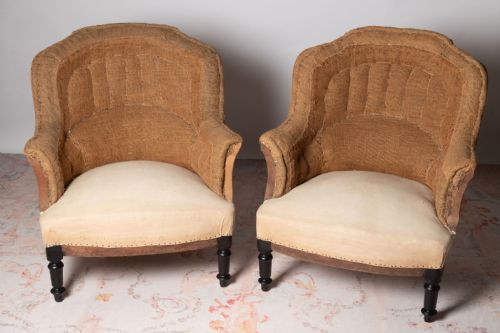
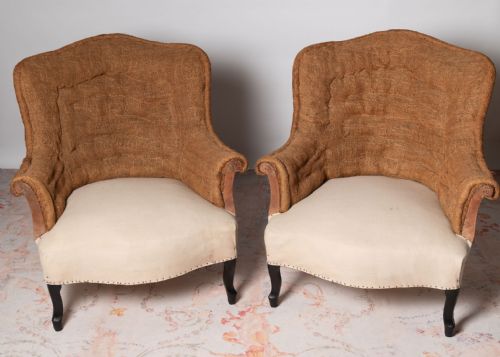
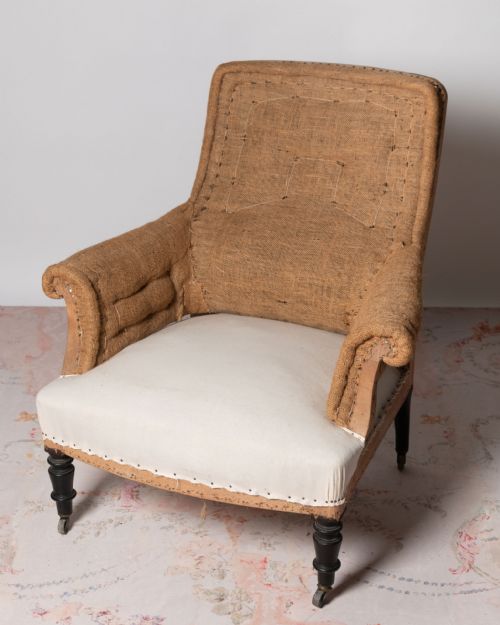
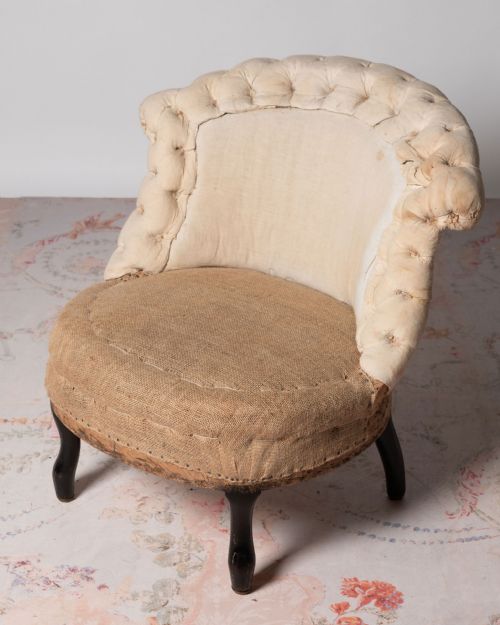
These french upholstery project chair examples give you raw frames and partially covered seats ready for your own textile choices.
French Upholstery Project Chair
When you search for a french upholstery project chair, you encounter seating frames from the nineteenth century through the early twentieth century that require restorative textile work. These items primarily manifest as armchairs, slipper chairs, dining chairs, and salon chairs originating from French traditions.
The selection frequently includes Napoleon III, Louis XVI, Louis XV, and French Provincial styles. You meet single pieces, pairs, and sets of five, many stripped down to bare beech or walnut frames waiting for fresh webbing and top covers.
How they were made
The makers built these structural frameworks using solid timbers like beech, beech wood, and walnut, often shaped with curved lines and carved details typical of French provincial and period design. Joinery relied on traditional wooden joints designed to withstand decades of heavy usage in drawing rooms and salons.
Traditional internal build-ups employed materials such as hessian, calico, and linen stretched over frames, secured with brass tacks. Finished surfaces sometimes combined exposed polished wood with portions left unrefined for subsequent fabric application.
Object forms span armchairs, slipper chairs, dining chairs, and salon chairs in Louis styles and Napoleon III designs.
What varies in quality
The distinction between standard examples and superior ones rests upon the integrity of the underlying woodwork and the precision of the original carved details. Chairs featuring robust walnut or shaped beech frames retain their structural rigidity much better over time than lighter alternatives.
Completeness also sets pieces apart, as items retaining their original spring units, brass fixings, and stable foundational webbing require considerably less joinery intervention during the restoration process.
The French Upholstery Project Chair Glossary
- Hessian
- A coarse woven fabric typically utilised as the foundational scrim layer in traditional upholstery. It provides the tight base necessary for stuffing materials.
- Calico
- A plain-woven cotton cloth placed over the internal stuffing to create a smooth, firm sub-layer before the decorative top fabric is applied.
- Beech Wood
- A dense, hard timber commonly selected by makers for its ability to hold intricate carved details without splitting.
- Napoleon III
- A nineteenth century eclectic French design style known for blending historical revival motifs with comfortable domestic scaling.
French Upholstery Project Chair: Frequently Asked Questions
What is a french upholstery project chair?
It is an antique seating frame sold without a finished outer cover, intended for buyers who wish to choose their own upholstery fabric.
These pieces range from small slipper chairs to large salon armchairs from the nineteenth century.
How do I choose the right fabric?
Consider the period style of the frame and the intended room usage when selecting linens, velvets, or heavy cottons.
Traditional styles like Louis XVI benefit from classic weaves, while simpler frames suit plain linens.
Are these chairs structurally stable?
Most frames remain solid, though the underlying webbing and stuffing usually require complete replacement before use.
Inspect the wood joints and beech or walnut frames to ensure they need no major carpentry work.
Can I mix different chair styles?
You can combine matching pairs or individual salon and dining chairs around a room to create an eclectic interior.
Mixing nineteenth century provincial pieces adds character and variety to a seating arrangement.